





A row of single-story houses with porches behind a manicured lawn and trimmed hedges, framed by large oak trees draped with Spanish moss.

AC Maintenance in Goose Creek, SC

Tell us about the job

Takes about a minute. No obligation.

Tune-up, service, or cleaningCentral ACBerkeley County, SC
Step 1 of 2

What ZIP code is the job in?

A system that needs a look doesn't always announce it with a breakdown. Watch for the air taking longer to feel cool after you bump the thermostat down, or the unit cycling on and off more than it used to. Listen for it too. A hum that wasn't there before, a rattle when the compressor kicks on, or air handling noise that sounds like it's working harder than it should. Check the vents around the house. If some rooms feel right and others don't, airflow is telling you something. Water pooling near the indoor unit, or a musty smell when the air kicks on, points to a drain line that isn't clearing like it should. None of these mean the system is about to fail, but they're the kind of thing worth having a tech look at before they turn into a bigger repair.

6 months
May through October, your air conditioner is on duty
91°F
the average summer afternoon it cools against
61 hail events
in ten years, and hail bends the fins on outdoor coils
146 wind events
in ten years, and wind drives debris into outdoor units
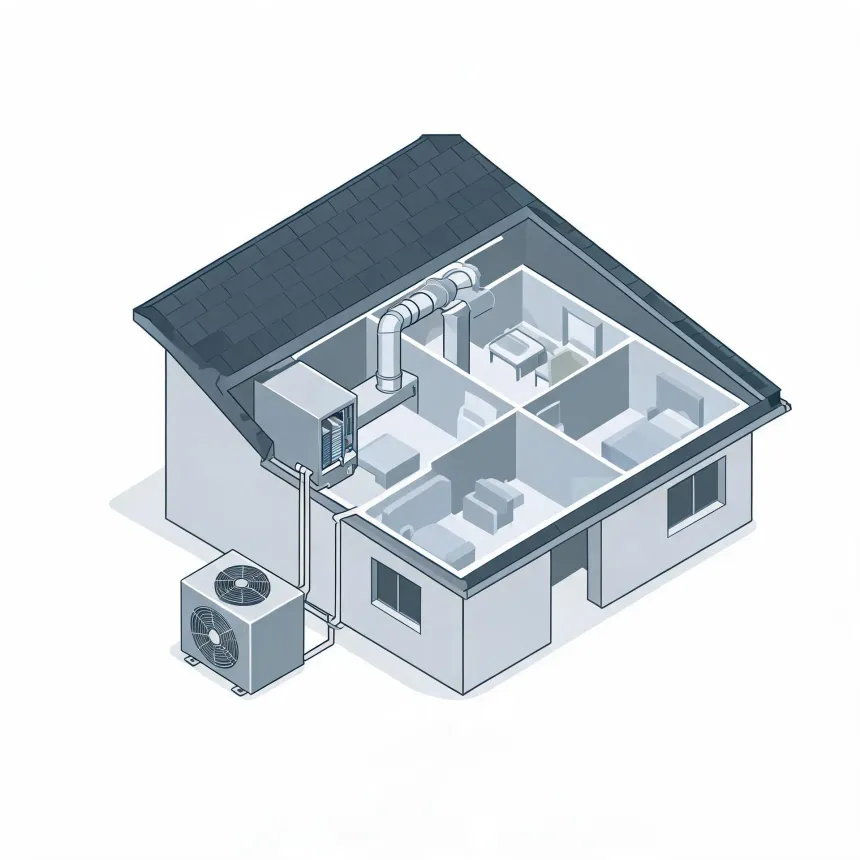
Isometric cutaway illustration of a single-story house showing interior rooms, ceiling ductwork connected to an indoor air handler, and an outdoor condenser unit beside the exterior wall.
Your air conditioner works hardest from June through September.

NOAA nClimDiv, 1991–2020 normals

Cooling runs about six months here, May through October, with afternoon highs averaging 91°F in June, July and August.

Six months of South Carolina heat wears down a condenser and compressor faster than a mild climate ever would, and a maintenance visit catches the worn part before the season does.

A dirty, neglected system pulls more power, and power here already costs more

Power costs 14.23 cents a kWh statewide
Cooling runs May through October
Summer afternoons average 91°F
Most homes here are newerHalf the homes in Berkeley County were built in 2002 or later, and a newer system still earns a yearly check.

May is when cooling starts here, so April is the month to get the system looked at. Wait until the first hot week and you're booking the check at the same time everyone else is, after something already went wrong. A tech going over the condenser and coil in April catches the weak capacitor or low charge before the unit has to run on it for six straight months. Once May hits, this system doesn't get a break until October, so whatever shape it's in going in is the shape it'll fight through summer in.

Check it before the season

It works hard here, so worn parts show up fast once the season starts. Get it checked before then.

Find a contractor
An outdoor residential air conditioning condenser unit mounted on a concrete pad, surrounded by gravel with a blue sky in the background.

What you can check yourself

The filter is the one thing worth your attention between visits. A dirty filter chokes airflow across the coil, and the system has to run longer to move the same amount of cool air through the house. Check it by pulling it out and holding it up to a light. If light barely comes through, swap it. Beyond that, keep the area around the outdoor unit clear. Grass clippings, leaves and mulch piled against the condenser block the airflow it needs to shed heat, and that makes the compressor work harder than it should. Walk past it now and then and clear anything stacked against the sides. Don't point mulch or sprinklers at it either. Past the filter and the clearance around the unit, leave it alone. The refrigerant charge, the electrical connections and the condensate drain aren't something to open up yourself, and a system that sounds or smells off between visits is worth a call rather than a guess.

What the gauges show that your ears can't

A tech connects gauges to check the refrigerant charge, something no amount of listening or watching the vents will tell you. A system can blow cool air and still be low on charge, running the compressor harder than it needs to and wearing it down faster. Low charge also points to a leak somewhere in the lines, and that's worth finding before it empties out again.

What gets measured instead of guessed at

A tech checks the temperature drop between the air going into the system and the air coming out, and that number says more about how well the system is actually cooling than a hand held up to a vent ever could. The same visit checks capacitor strength and amp draw on the compressor and fan motor, catching a part that's weakening before it quits outright.

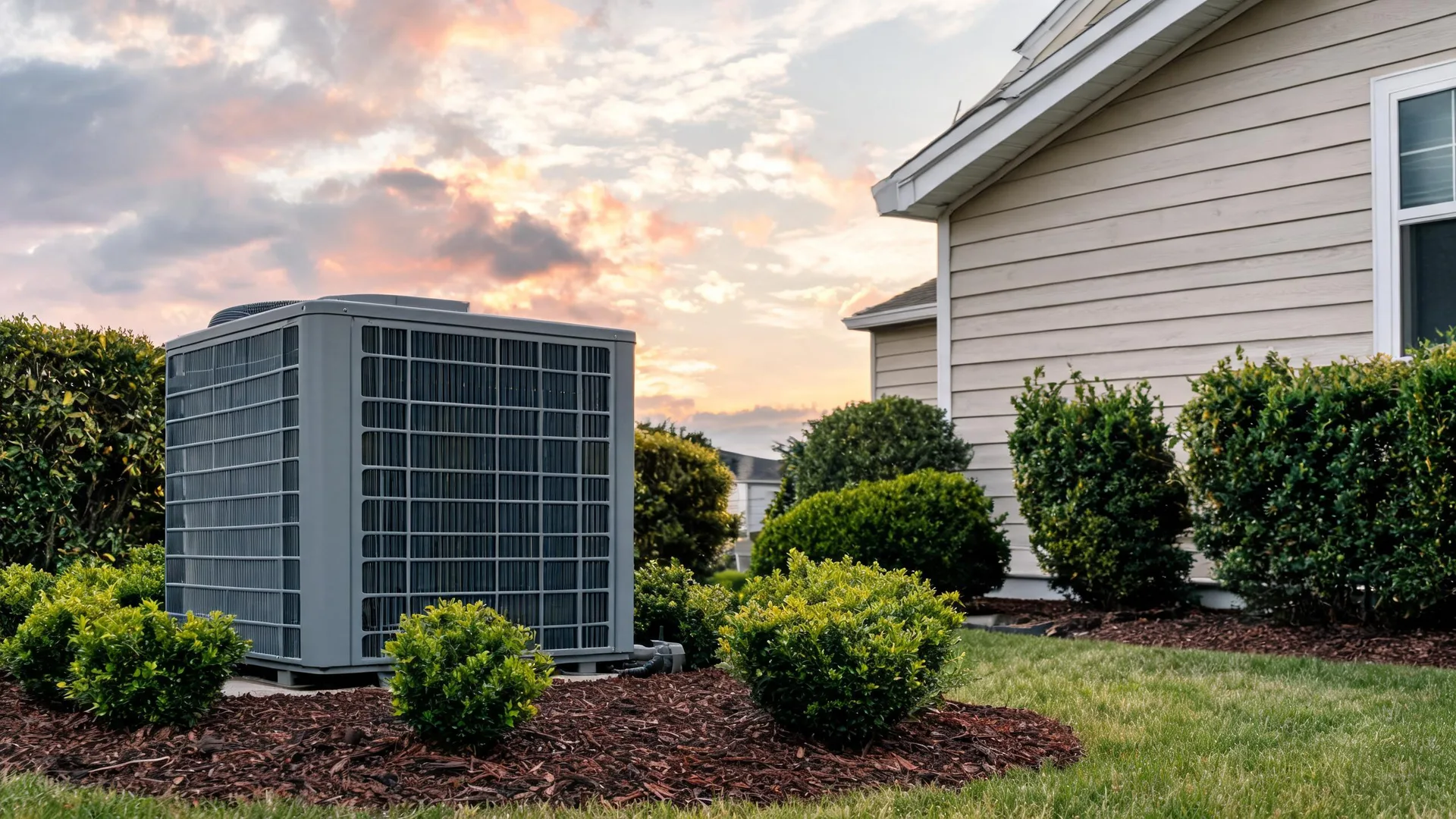
An outdoor air conditioning condenser unit mounted on a concrete pad next to a blue-sided residential house at sunset.

Book your AC tune-up in April, before homes here start needing cooling in May.

  1. Jan
  2. Feb
  3. Mar
  4. Apr
  5. May
  6. Jun
  7. Jul
  8. Aug
  9. Sep
  10. Oct
  11. Nov
  12. Dec

A tune-up checks the refrigerant charge, cleans the coils, tests the capacitor and tightens the electrical connections.

A real tune-up starts outside at the condenser. The tech pulls the panel and cleans the coil fins, because dirt and grass caked between them block the airflow the system needs to dump heat, and a dirty coil makes the compressor run longer to do the same job. Inside, the evaporator coil gets checked too, since a coil coated in dust can't pull heat out of the air the way a clean one does. The tech flushes or checks the condensate drain so it isn't sitting there waiting to clog and back up into the house. Electrical connections get tightened, because a loose connection heats up under load and that's how a wire or a terminal burns. Every moving part, the fan motor, the blower, the compressor, gets checked for the kind of wear that turns into a breakdown mid-summer rather than one caught in the spring.