




Low-angle view along a red brick wall with flowering pink shrubs at its base, a mown lawn extending to a distant single-story house and tall pine trees under an overcast sky.

AC Maintenance in Spartanburg, SC

Tell us about the job

Takes about a minute. No obligation.

Tune-up, service, or cleaningCentral ACSpartanburg County, SC
Step 1 of 2

What ZIP code is the job in?

Between visits, the main thing you can do is keep the filter clean. A clogged filter starves the system of airflow, and that makes the coil work harder than it should and can ice it over. Check it monthly and swap it when it looks gray or thick with dust. Outside, keep the condenser clear. Grass clippings, leaves and mulch pile up against those fins and block airflow the unit needs to dump heat. A gentle hose rinse on the fins, from the inside out, keeps that clear without bending them. Walk past the unit while it runs now and then. A new rattle, a hum that wasn't there, or ice on the lines is worth a call before it turns into a bigger repair.

5 months
May through September, your air conditioner is on duty
88°F
the average summer afternoon it cools against
53 hail events
in ten years, and hail bends the fins on outdoor coils
125 wind events
in ten years, and wind drives debris into outdoor units
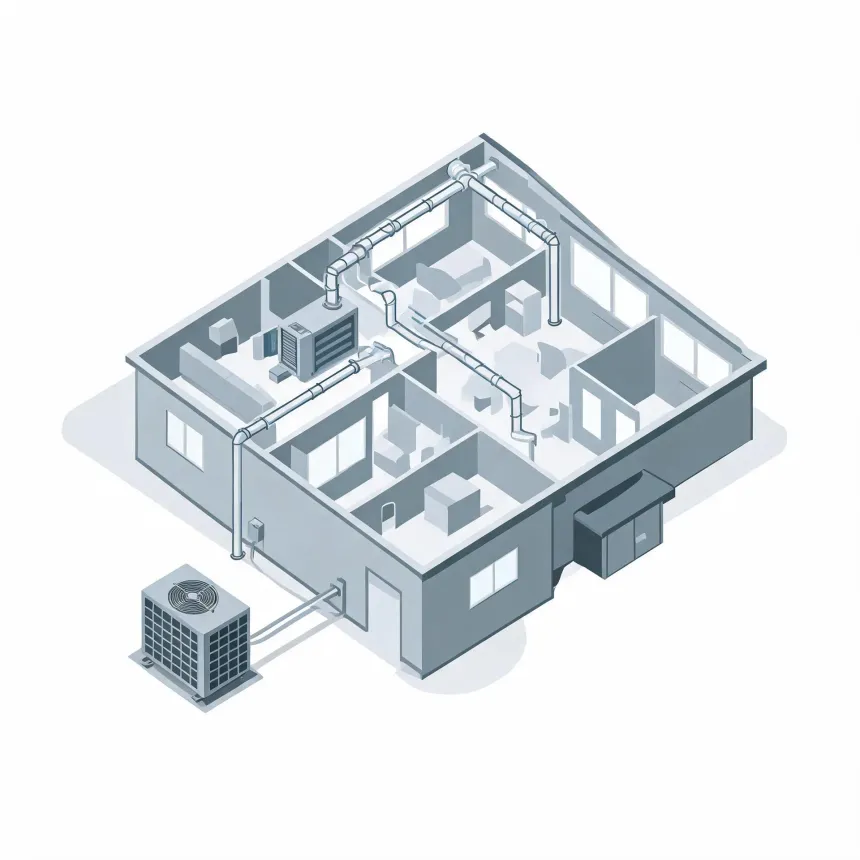
Isometric grayscale illustration of a cutaway house showing interior rooms, ceiling ductwork connected to an indoor air handler, and an outdoor condenser unit linked by lines along the exterior wall.
Your air conditioner works hardest from June through August.

NOAA nClimDiv, 1991–2020 normals

Summers here sit at 88 degrees for June, July and August, and the system runs from May through September to keep up.

Five months of afternoons near 90 wear a compressor down early, so a check before the heat sets in catches what's already weak.

Half the homes here are new enough that a yearly check is all this system should need

Half the homes here were built by 1990
Cooling runs May through September
Summer afternoons average 88°F
Running this machine costs more hereSouth Carolina electricity ran 14.23 cents per kilowatt-hour in 2024, and a dirty system burns more of it.

A yearly check is enough to keep a newer system running the way it should. The technician cleans the coil, checks the refrigerant charge, and tests the capacitor before any of it gets weak enough to leave you without air. That one visit a year catches a part going bad while it still has a season or two left in it. If your system came with the house, ask when it was last serviced. It may never have had a real checkup at all. A mobile home's system is worth the same visit. Those units sit outside exposed to the same weather as any other house here.

Check it before the season

It works hard here, so worn parts show up fast once the season starts. Get it checked before then.

Find a contractor
An outdoor residential air conditioning condenser unit mounted on a concrete pad, surrounded by gravel with a blue sky in the background.

What a real tune-up actually covers

A quick visit means someone glances at the gauges, maybe hoses off the condenser, and leaves. A thorough one means the panel comes off. The technician checks refrigerant pressure against what the system is supposed to run, not just whether it's low. They test the capacitor under load, since a capacitor can read fine sitting still and still fail the moment the compressor tries to start. They check the contactor for pitting, because a pitted contactor can stick closed and run the compressor when it shouldn't, or fail to close at all. They pull the blower wheel and look at it, not just the filter, since dust builds up on the blades themselves and cuts airflow even with a clean filter in place. They check the start-up and shut-down of the compressor, listening for a hard start that means a weak capacitor is already struggling. Ask what they checked and what the readings were. If the answer is a shrug, that was the quick version.

The system runs for a while before it fails outright

A capacitor weakens, a contactor pits, a coil gets a little more restricted, and the system keeps running through most of it. Cooling gets worse by degrees instead of stopping all at once, so the signs are easy to write off as just a hot day.

What to listen and look for between visits

A compressor that hesitates or hums before it starts, air coming out warmer than it used to, ice forming on the line where there shouldn't be any, or a musty smell when it kicks on. Any one of those means something is already wearing, not something that might wear eventually.

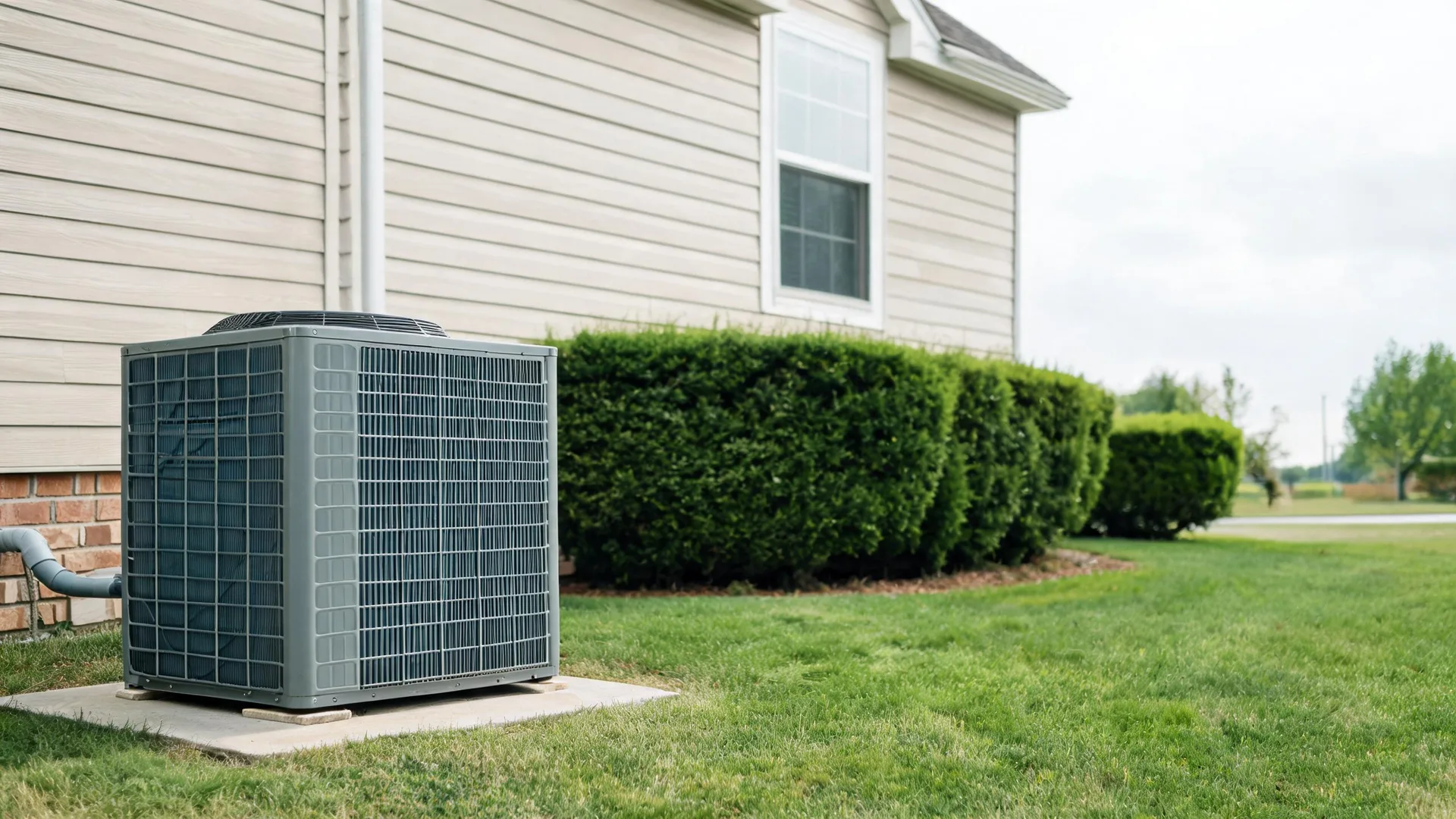
An outdoor central air conditioning unit mounted on a concrete pad beside a blue-sided house at sunset.

Book your AC tune-up in April, before homes here start needing cooling in May.

  1. Jan
  2. Feb
  3. Mar
  4. Apr
  5. May
  6. Jun
  7. Jul
  8. Aug
  9. Sep
  10. Oct
  11. Nov
  12. Dec

A tune-up checks the refrigerant charge, cleans the coils, tests the capacitor and tightens the electrical connections.

A tune-up worth paying for starts with the coil. A technician checks it for dirt and mold buildup, since a coated coil can't absorb heat the way a clean one does, and that alone makes the system run longer to do the same job. From there it's the drain line. Algae and dust build up inside it over time, and a blocked line backs up and spills water into the house instead of outside. The technician also checks the refrigerant lines for proper insulation, since bare or worn insulation lets the line sweat and waste cooling before it ever reaches the house. Last, they check that the thermostat is reading the actual room temperature and not calling for cooling it doesn't need. None of this shows up by looking at the unit from across the yard.