AC won't turn on in Spartanburg, SC

Find my pro

A dead AC on a hot Spartanburg afternoon doesn't wait for a convenient time. Maybe the thermostat screen is blank. Maybe you hear a click and nothing after it. Either way, you're left guessing whether it's something small or something that's about to cost real money, and that's not a guess you should have to make alone. Spartanburg County summers run long and muggy, and a system that won't start is the kind of problem that gets worse the longer it sits. What you need isn't a list of possible causes. It's someone local who works on these systems all season, who's seen what usually knocks out an AC in this kind of heat, and who can look at yours directly. Answer a few questions about your home and your system, and you'll be matched with one licensed contractor in the Spartanburg area, not a handful of companies competing for your callback. They'll reach out to you directly to sort out what's actually going on.

Why won't my AC turn on at all in Spartanburg?

You've checked the thermostat, maybe flipped the breaker, and the outside unit still won't come on. In Spartanburg heat that's not something to leave alone for a day while you figure it out. Before anything gets taken apart, it helps to know what actually stops an AC from starting at all, since the answer usually comes down to one of a few places: power getting to the unit, the thermostat telling it to run, or a safety switch stopping it on purpose.

Usually a tripped breaker, a blown fuse, or a safety switch stopping the unit on purpose

Most of the time an AC that won't start at all has lost power somewhere between the breaker panel and the unit itself, or something inside the system has told it to stop. A tripped breaker or a blown fuse at the outdoor disconnect is common, especially after the unit has been working hard through a hot stretch. Some systems also have a float switch near the indoor coil that shuts the whole unit down if the condensate drain backs up, which happens more in a humid summer when the system is removing more moisture from the air. None of these mean the compressor itself is damaged. They mean something cut power or signal to it, and that's usually the easier problem to find than a failed part.

A woman with long brown hair in a cream knit sweater sits on a light sofa in a living room, looking toward a window with sunlight on her face.
A woman with long dark hair leans back against a gray sofa with her eyes closed, in a living room with a curtained window, a potted plant, and a dark screen in the background.
A woman with wavy blonde hair wearing a grey knit cardigan over a green top sits on a sofa in a living room, looking off to the side.
A woman in a gray sweater sits in a chair in a living room with a dark sofa, wooden coffee table with a potted plant, and a staircase behind her, looking toward a window.

Is this just a dead thermostat or something more

Walk through what you've actually got. The thermostat might be dark or stuck on a setting that won't change. Maybe the indoor blower runs but no cool air comes through the vents. Maybe you hear the outdoor unit hum or click, then nothing, or it trips the breaker again a few minutes after you reset it. Some houses have a condensate switch that shuts the whole system down when a drain line clogs, so a wet spot near the furnace or air handler is worth a look too. The longer the house sits without cooling in Spartanburg's summer heat, the harder it is on anyone inside who's older, very young, or has a health condition that makes heat dangerous.

A gray outdoor air conditioning condenser unit on a composite pad beside a house with horizontal lap siding, with a wall-mounted disconnect box, refrigerant lines, and a wooden fence and shrubs to the left.

The outdoor unit running as it should

You walk by and hear the low hum of the fan, feel warm air pushing out the top, and the lines running up the wall are doing their job. The disconnect box stays closed. Nothing trips, nothing clicks and stops. This is what tells you the unit itself is fine.

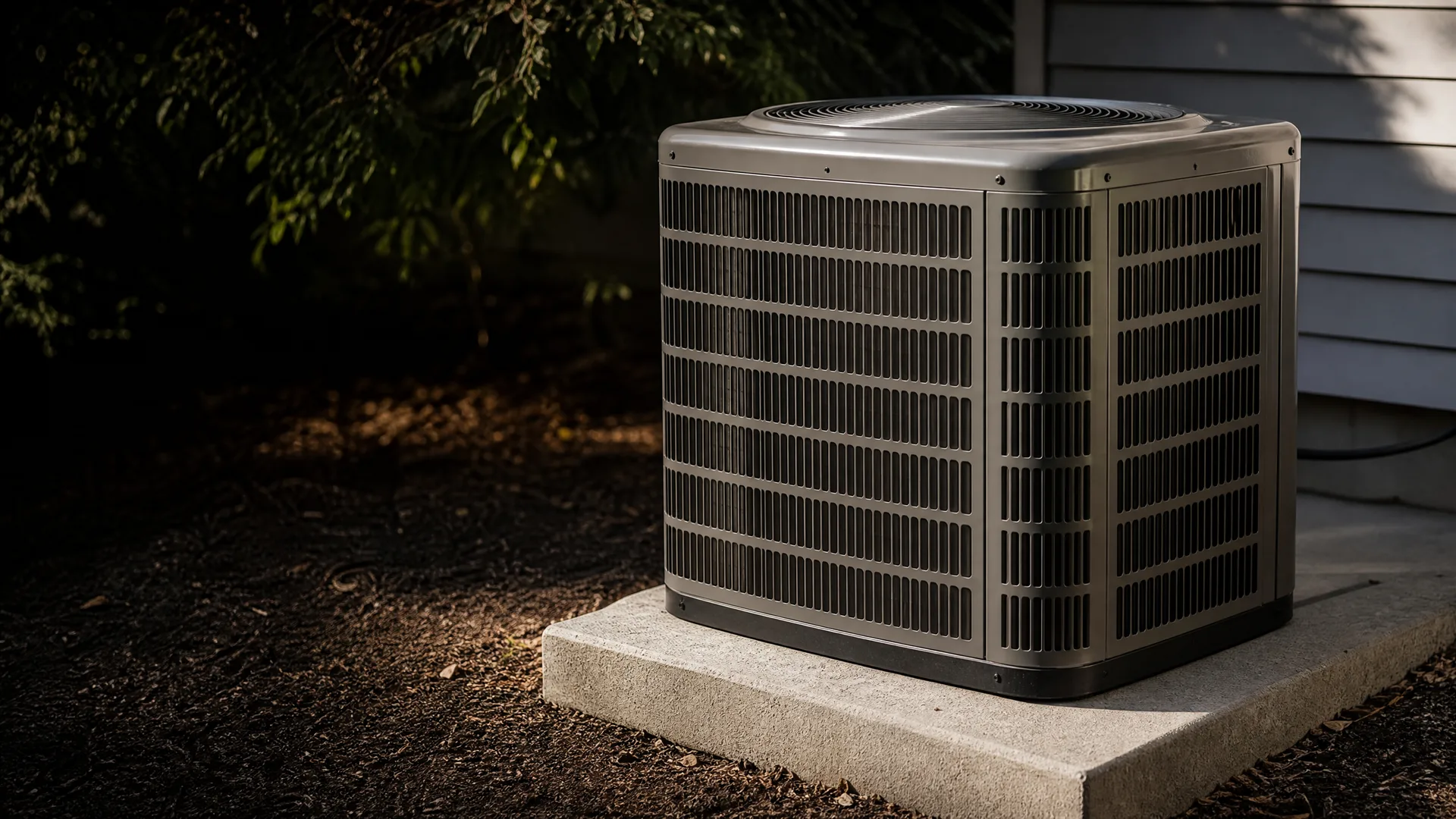
An outdoor air conditioning condenser unit on a concrete pad beside a house with light vinyl siding, with electrical conduit running to a wall-mounted disconnect box and a shrub in mulch to the right.

The outdoor unit sitting silent

No hum, no fan turning, no air moving off the top of the unit. The wiring runs from the wall box down to the condenser same as always, but nothing is drawing power through it. If the breaker's good and the thermostat's calling for cool, something between that box and the compressor isn't passing the signal.

A woman stands in the open black front door of a white-sided house with a dark shingled roof while a man in a navy jacket approaches along the walkway, with lantern wall lights, a potted shrub, and flowering garden beds nearby.

What has to happen before the outdoor unit ever starts

When you turn the thermostat down, it sends a low voltage signal to a control board, and that board has to close a circuit before anything outside even tries to run. If a fuse on that board has blown, or a safety switch somewhere in the system is open, the signal never makes it out to the condenser. That's why you can have power to the house, a breaker that hasn't tripped, and still nothing happening outside. The contactor is the part that actually makes the connection, a small switch that pulls in when it gets that signal, and if its contacts are pitted or stuck, the unit stays silent even though every other part of the system is ready to go.

This is where a local contractor earns their keep, because the fix depends entirely on where in that chain things stopped. Someone who works on Spartanburg systems all summer has already seen which parts fail first in this heat and humidity, and when you're matched with a licensed contractor who handles exactly this situation, they're not starting from scratch when they get to your house.

Interior corner with a beige sofa holding a dark green and a light cushion and a textured throw, a potted small-leaved tree beside a white-framed window, and a dark shallow bowl on a wooden coffee table in the foreground.
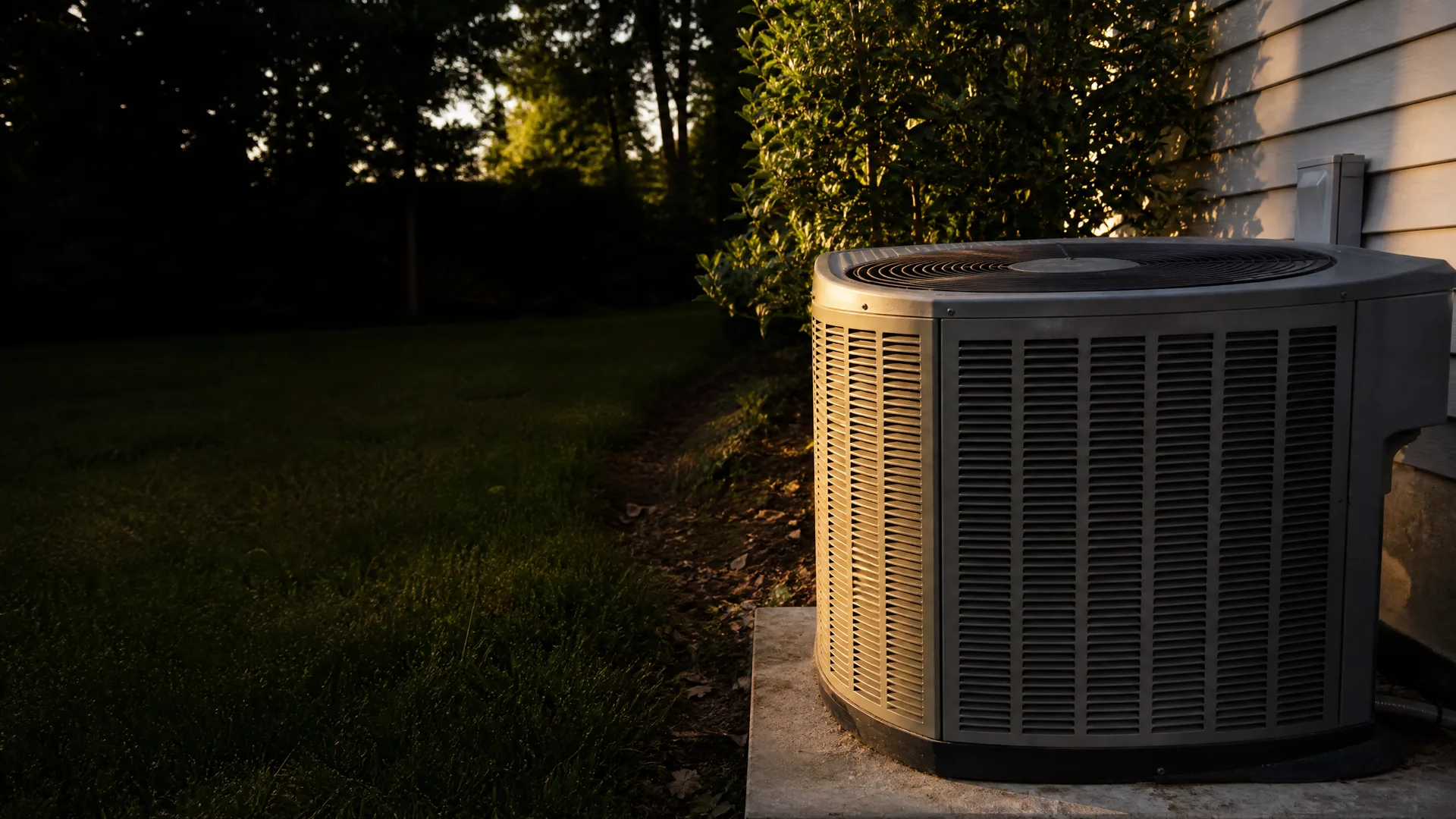
An outdoor air conditioning condenser unit on a concrete pad beside a house with horizontal siding, with shrubs and a dark lawn in the background at low evening light.

The sun's low over the fence line, that orange it gets around seven-thirty in August. You're out back with the hose in your hand, about to water the hostas, and you notice it: the condenser isn't humming. No fan turning behind the grille. You stop and stand there a second, waiting for it to kick on like it should.

Inside, your spouse has the kids pulled into the one room with a window unit, and somebody's asking when it'll be cool again. You crouch by the disconnect box, not sure what you're looking for, just looking. A Spartanburg County evening like this doesn't cool off much before midnight. Whatever's wrong with that fan, you'd rather have someone who works on these units every day take a look than keep guessing at it yourself in the dark.

Get the right pro for your air conditioner

A no-start can be a five-dollar capacitor or a compressor that's done, and there's no way to tell which from the back porch. What you can tell is that Spartanburg in July doesn't give you much runway to sit on it. A tripped disconnect or a blown fuse is a quick fix. A seized compressor is a different conversation, and either one can look the same from where you're standing. That's the kind of call a local contractor makes in a few minutes, because they've seen this exact unit fail this exact way before, more than once this summer probably. You get matched with one contractor who works on this equipment around here, not a handful of names to sort through and call back. If your AC won't come on at all, that's worth having someone look at before the house holds this heat another afternoon.

Why the breaker trips twice

A single tripped breaker can mean the condenser pulled too hard for a second and settled, or it can mean the compressor is dragging current it shouldn't. If you reset it and it holds, that's one thing. If it trips again within a few minutes, something inside the unit is pulling too many amps, and running it again on that same breaker won't fix it. A contractor checks the amp draw against what the compressor is rated for before touching anything else, because that number tells you whether you're looking at a short or a motor on its way out.

What a hard start sounds like

Some compressors need a strong jolt of current just to get the motor spinning, more than the run cycle needs once it's going. A weak capacitor can't deliver that jolt, so you'll hear a hum, maybe a click, and then nothing as the unit gives up and shuts itself down to protect the motor. That sound is different from a healthy start, which is quiet. If you've heard that hum more than once this week, the unit is already telling you where the problem sits before anyone opens the panel.

An outdoor air conditioning condenser unit sits on a concrete pad beside a house with horizontal vinyl siding, with a gray electrical disconnect box and insulated refrigerant line on the wall above, surrounded by bare mulched ground.
Before you get your air conditioner repair
A gray outdoor air conditioning condenser unit sits on a concrete pad beside a house with horizontal siding, connected by insulated lines to a wall-mounted disconnect box, with a shrub and gravel bed to the right.
After you get your air conditioner repair

Waiting it out

The unit sits dead another day while you hope it's nothing. Spartanburg heat doesn't ease up, and a small problem left alone can turn into a bigger repair.

Get one local pro

Getting it looked at

A local contractor who works on these systems every summer checks the disconnect, the fuses, the capacitor, and tells you what actually failed.

Get one local pro

Call it in or keep troubleshooting

Call a contractor now

  • A licensed contractor who works on these systems every Spartanburg summer can usually tell a tripped disconnect from a failing compressor within minutes.
  • You get matched with one contractor local to the area, not a handful of companies calling you back at once.
  • Catching a weak capacitor or a stuck contactor early can keep it from taking the compressor down with it.
  • A system that's been sitting dead doesn't get better in the heat, and the contractor can tell you what's actually wrong instead of you guessing.
  • If it's something simple like a blown fuse on the control board, that's a quick fix once someone's looking at it directly.

Keep checking it yourself

  • You can reset the breaker or confirm the disconnect is seated, and that's worth doing before anyone comes out.
  • If the breaker trips again right after you reset it, that tells you the problem is electrical and past what you can fix from the panel.
  • Swapping a thermostat battery or checking the batteries costs you nothing and rules out the simplest cause.
  • Without a meter or the panel open, there's no way to tell a bad capacitor from a seized compressor by listening at the unit.
  • Every hour spent guessing is an hour the house sits without cool air while Spartanburg stays hot into the evening.
A single-story red brick house with a gray shingled roof and white-framed windows, fronted by a large empty asphalt driveway with sun glare, surrounded by dense green trees under a bright hazy sky.

Spartanburg County summers carry a dew point around 66°F on average through June, July and August, according to NOAA climate data. That's thick, heavy air, the kind that makes your AC work harder just to pull moisture out before it can even cool the room. When a system that's already straining against that load suddenly won't start, you don't get the slow creep of a warm house. You get it fast, often within the hour, with humidity climbing right alongside the temperature.

NASA POWER T2MDEW

A smiling older woman with short gray hair in a light knit sweater sits in a dimly lit kitchen behind a round loaf of bread on a wooden board, with a frost-covered dark window to her side.
A woman with her hair in a bun holds a sleeping child against her chest, both wrapped in a grey knit blanket on a sofa in a dimly lit room with a lamp and houseplant behind them.
A gray outdoor air conditioning condenser unit on a concrete pad beside a house with horizontal vinyl siding, a brick foundation, downspout, electrical disconnect box, mulch bed and a green shrub.
The fins are clean, the pad is clear, and air moves through the coil the way it's built to.
An outdoor air conditioning condenser unit with a dirty mesh coil guard sits on a concrete pad beside a house with horizontal lap siding, a wall vent, and conduit running to an electrical disconnect box.
That coating of dirt and debris on the fins chokes airflow, and a unit working that hard to breathe is closer to a no-start than it looks.

Cooling runs May through September

Five months of that is a lot of hours on one system, with no real break for it to coast. When yours won't start in the middle of that stretch, it's not an odd one-off, it's the system hitting its busiest stretch of the year right when you need it most.

NOAA nClimDiv 1991-2020

  1. Thermostat sends a low voltage signal calling for cooling

  2. Control board closes the circuit that feeds the outdoor unit

  3. Contactor pulls in and sends power to the compressor and fan

  4. Capacitor gives the compressor and fan motor their starting jolt

A dead AC usually comes down to one of a handful of things: a tripped disconnect, a blown fuse on the control board, a bad capacitor, or a compressor that's given out. Some of those you fix in minutes. Others take a trained eye to catch before they turn into a bigger repair bill. Either way, the fix starts with someone who can look at your unit and tell you which one it is, not a guess made from the back porch. A contractor who works on these systems every Spartanburg summer has likely seen this exact unit fail this exact way before, on someone else's house a few streets over. You'll be matched with one licensed contractor local to this area, so you're dealing with one company that knows the work, not a string of calls from companies you don't know. Your AC isn't running right now. That part is simple. What's behind it isn't always, and that's worth having someone qualified look at before the next hot afternoon rolls in.

A gray outdoor air conditioner condenser unit sits on a concrete pad beside a house with horizontal lap siding, with shrubs and bare soil to the left.

Get your air conditioner to the right pro

RepairCentral ACSpartanburg County, SC
Step 1 of 2

What ZIP code is the job in?