Why your AC is running but not cooling in South Carolina

Send the request today and stop worrying about who to call.

Hand it off

Why is my AC running but not cooling my house?

The air is on, the unit sounds fine, and the house still isn't cooling down. In South Carolina summers that gap is hard to ignore, because the heat and humidity outside don't let up for long. You're not looking for a reason to panic, just a straight answer about what's keeping cool air from reaching the rooms you're sitting in tonight.

Your AC isn't moving enough cold air through the house, even though it's running

Most of the time this comes down to one of two things: the system has lost refrigerant, or it has lost airflow. A low charge means the air coming out of the vents is weak and barely cool. A clogged filter or blocked return does the same thing by choking off the air before it ever gets cold. Either way, the compressor keeps running because it's trying to catch up, and the thermostat still reads warm. With the humidity South Carolina holds through the summer, a system working this hard also leaves the air feeling damp and heavy even when the temperature on the thermostat looks close to right. A technician can check the charge and airflow in one visit and tell you which one it is.

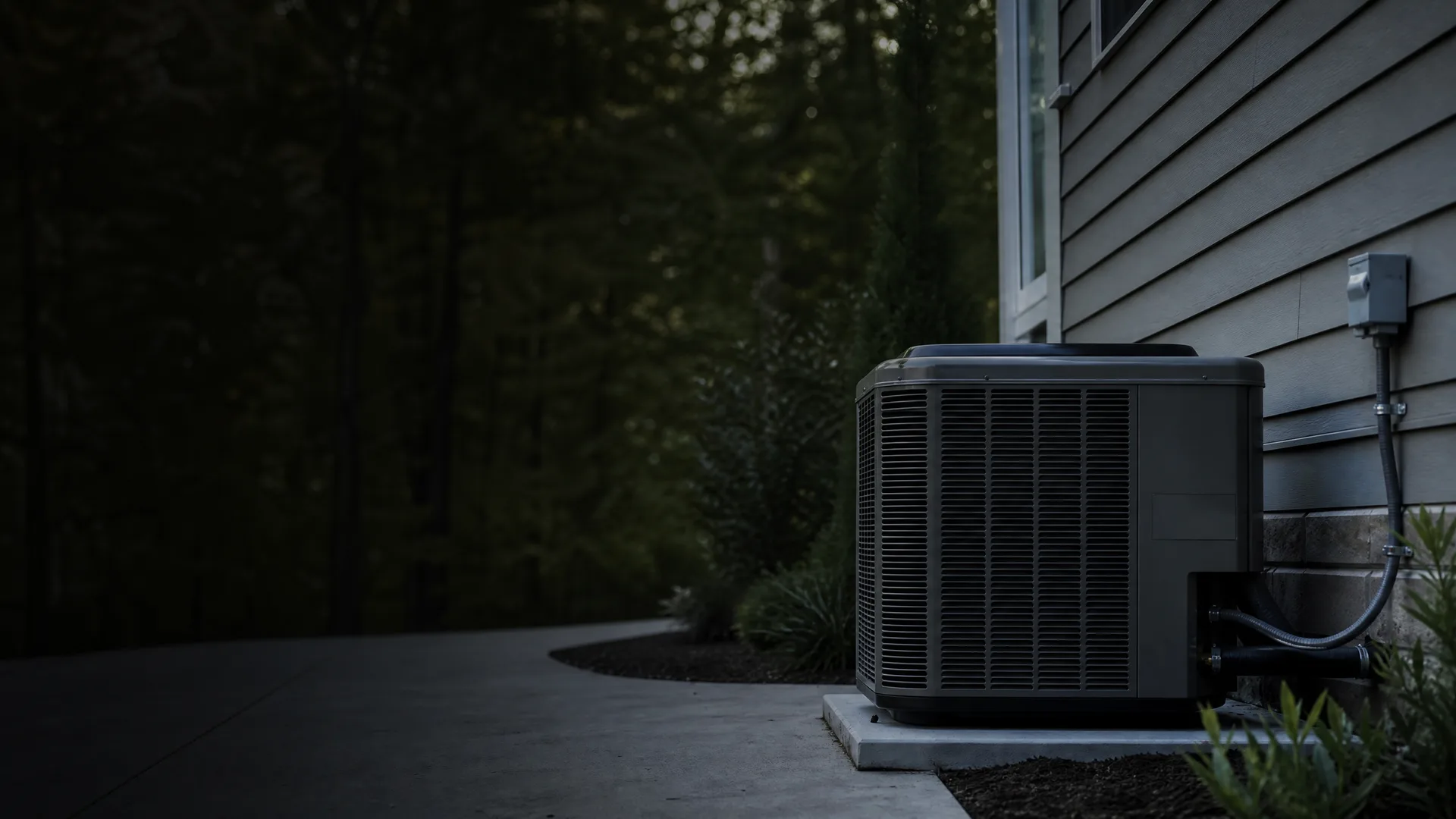
A gray outdoor air conditioning condenser unit on a concrete pad beside a house with horizontal siding and a stone veneer base, with refrigerant line and electrical disconnect box on the wall and flowering shrubs to the left.

Cooling the way it should

Air comes out of the vents noticeably colder than the room, and the house catches up within a reasonable stretch after you set the temperature. The unit cycles off for a while instead of running nonstop. You walk past the condenser outside and it's quiet, clean, running steady on the pad.

An outdoor air conditioner condenser unit on a concrete pad beside a house with light gray horizontal siding, with mulch and green shrubs on either side and a concrete walkway in the foreground.

Running, not cooling

The condenser outside runs and runs, fins caked with dirt and grime built up over time. Inside, the air from the vents feels barely cooler than the room, if at all. The thermostat says it's working toward the set point, but the house stays warm and sticky no matter how long you wait.

A smiling man in a dark navy sweater sits on a light sofa in a living room, with a glass bowl of popcorn on a wooden coffee table and bookshelves behind him.
A smiling man in a dark green sweater sits on a tan leather sofa in a dimly lit living room, with a bowl of popcorn in the foreground and a kitchen area blurred behind him.
A smiling middle-aged man in a dark shirt sits on a gray sofa in a living room, with a bowl of popcorn on a side table and shelves, a window and kitchen area behind him.
A smiling bearded man in a dark gray t-shirt sits on a gray couch in a living room, with a large glass bowl of popcorn on a wooden table in the foreground.

A clogged filter or iced coil cuts airflow fast

When air can't move across the coil, it drops below freezing and ice builds up. Once that happens, the system keeps running but stops pulling heat out of the house.

Hand off the search

One call instead of a list of them

Skip finding a contractor, calling around, and explaining the problem more than once. Send the form and let someone sort out the diagnosis and the fix.

Hand off the search
A woman with dark hair in a bun reclines on a sofa with her eyes closed, wrapped in a cream fleece blanket, a closed blue hardcover book resting in front of her, with a lit lamp and a vase of dried flowers in the background.
A smiling bearded man in a navy sweater sits at a candlelit dinner table with a glass of red wine, a bowl of salad, and plates of food in the foreground.

The compressor outside and the coil inside are supposed to work as a pair, moving heat out of your house and dumping it outdoors. When something breaks that pairing, the blower keeps pushing air through the vents, so the system sounds normal, but the air isn't cold anymore. Low refrigerant means the coil doesn't have enough to absorb heat with, even with full airflow. A weak capacitor can leave the outdoor unit barely running, so heat never gets pulled from the refrigerant in the first place. Dirt on the outdoor coil has the same effect, trapping heat the system is trying to release. None of that shows up as a strange noise or a dead unit. It shows up as warm air and a house that won't cool down. The thermostat makes it worse if it's reading a room that already warmed back up, since it just tells the system to keep running. Leaky ducts can lose the cold air entirely before it reaches a single vent.

What's actually happening inside the system

  • A low refrigerant charge means the coil can't absorb enough heat even though air still moves across it fine.
  • A failing capacitor can let the compressor hum or try to start without actually running, so the outdoor unit does little work.
  • A dirty condenser coil outside traps heat against the refrigerant and keeps the system from shedding it into the air.
  • Closed or blocked supply vents push the system to run full time while only a fraction of the house gets any cold air.
  • A stuck or miscalibrated thermostat can keep calling for cooling long after the air coming out has already warmed back up.
  • Leaky ducts in the attic or crawlspace lose cold air before it ever reaches the rooms the thermostat is reading.
A weathered outdoor air conditioning condenser unit on a concrete pad beside a house with light horizontal siding, an electrical disconnect box and conduit on the wall, and mulched soil on either side.
Before you get your air conditioner repair
A gray outdoor air conditioner condenser unit on a concrete pad beside a house with horizontal vinyl siding, surrounded by mulch, flowering shrubs, and lawn.
After you get your air conditioner repair

Send one request and you're done looking

A house that won't cool down in July or August isn't something to sit with while you figure out who's free to come look at it. You could spend an afternoon calling around, telling each one the same story about the vents blowing warm and the unit running nonstop, then wait on quotes and try to judge who actually knows what they're doing. Send the request instead and that work is off your plate. One contractor gets it, not five, and there's nothing to pay for the request itself and no obligation once it's sent. In South Carolina heat, with humidity that doesn't ease up for months, a system that runs without cooling isn't going to fix itself, and every day it runs that way is a day of electric bills for air that isn't doing its job. Handing this off now means someone qualified is looking at your coil, your charge, your capacitor, instead of you guessing from a search result.

A dimly lit living room with a black pedestal fan on a wood floor beside a gray sofa with a patterned pillow, a wooden coffee table in the foreground, potted plants at left, and a curtained window with blinds behind.

It's a little after three in the afternoon and you've had the blinds shut since lunch, trying to keep the sun off the couch. The floor fan is going full speed next to you, pushing the same warm air around the room. You can hear the AC running outside, that steady hum it's had for years, but the air coming through the vent above the window is barely cooler than the room itself. You checked the thermostat twenty minutes ago and it hasn't moved. Outside, the heat sits heavy the way it does every July in South Carolina, and the house just isn't keeping up with it. You turn the fan a few degrees toward your chair and go back to what you were doing.


What does it feel like in your house right now

You've probably got a hand in front of a vent, checking if it's actually cold. Maybe it is, a little, but the room still feels thick. Bedrooms upstairs lag behind the rest of the house. The thermostat says one thing and your skin says another. You notice it most in the evening, when the sun's been on the roof all day and the house never caught up. If this drags on through a South Carolina summer, it's not just comfort. Humidity that doesn't get pulled out of the air sits on furniture, windows, and anywhere moisture can collect, and that's a problem that gets worse the longer the system runs without actually cooling.

  1. Warm air from the house passes over the indoor evaporator coil.

  2. Refrigerant inside the coil absorbs that heat and turns to gas.

  3. The compressor outside pressurizes the gas and heats it further.

  4. The outdoor condenser fan blows across the coil to release that heat.

Power costs 15.12 cents per kilowatt-hour statewide

At 15.12 cents per kilowatt-hour, every hour your AC runs flat out without actually cooling the house is adding up for nothing. A unit stuck running on a low charge or a frozen coil still pulls power the whole time, it just isn't turning that power into cold air.

EIA-861 2025 statewide residential average

An AC that runs without cooling almost always comes down to airflow, refrigerant, or a part that's failing to do its job, and none of those get better on their own while the heat outside holds steady. You don't need to know which one it is before you ask for help. What you don't need is an afternoon lost to calling one company after another, repeating the same description of warm vents and a unit that won't quit running, then trying to weigh one quote against another with no way to tell if either price is fair. Send the request once and that search is someone else's job from there. You'll still be waiting on a hot house today, but you won't be waiting on hold, and you won't be the one tracking down who's even available to come look at it.

An outdoor air conditioner condenser unit sits on a concrete pad beside a house with horizontal lap siding, with a refrigerant line, electrical disconnect box, a concrete driveway and dark trees in the background.

Finding a pro stops being your job

Answer a few questions instead of calling shop after shop.

RepairCentral ACSouth Carolina
Step 1 of 2

What ZIP code is the job in?