A row of single-story cottages, one brick and the others light gray siding with covered porches, behind a trimmed hedge and lawn, under large oak branches draped with Spanish moss.

AC Repair in Charleston, SC

Tell us about the job

Takes about a minute. No obligation.

RepairCentral ACCharleston County, SC
Step 1 of 2

What ZIP code is the job in?

How old the unit is matters more than what's wrong

A compressor or a coil leak on an older system is a sign the whole unit is wearing out, not just that one part. The same failure on a newer system is usually a one-time repair. Ask the tech how old your condenser is before deciding anything.


A repair that works can still be the wrong call

If the system has needed a service call every season for a few years running, fixing the current problem just gets you to the next one. A unit that keeps failing isn't unlucky, it's telling you something about its age or how it was sized for the house.

6 months
May through October, your air conditioner is on duty
89°F
the average summer afternoon it cools against
61 hail events
in ten years, and hail bends the fins on outdoor coils
304 wind events
in ten years, and wind drives debris into outdoor units
Isometric cutaway illustration of a single-story house showing interior rooms with ductwork and an air handler, connected by refrigerant lines to an outdoor condenser unit on the left.
Your air conditioner works hardest from June through September.

NOAA nClimDiv, 1991–2020 normals

Electricity in South Carolina runs 14.23 cents per kilowatthour.

An AC limping along on a low charge or a bad capacitor is burning that rate every day it's not fixed.

Six months of 89 degree afternoons wear a system down fast

Cooling runs May through October
Summer afternoons average 89°F
304 damaging wind events from 2015 to 2024
Half the homes in Charleston County were built in 1991 or laterIf your AC came with a newer house, it's probably still within its working life.

A technician looking at your system has a good idea where to check first. Weak capacitors, low refrigerant, a struggling compressor, that's what six months of 89 degree afternoons does to a unit. Add the wind and hail this area gets, and outdoor coils and fan blades take hits a system inland never sees. Ask for a real diagnosis, not just a fix for the symptom you noticed. If the problem traces back to storm damage or a part worn thin from overwork, you want to know that before you pay for a repair that only holds until the next heat wave.

Get it checked after a storm

Storms hit hard here. If the outdoor unit took hail or debris, have it checked even if it still runs.

Find a contractor
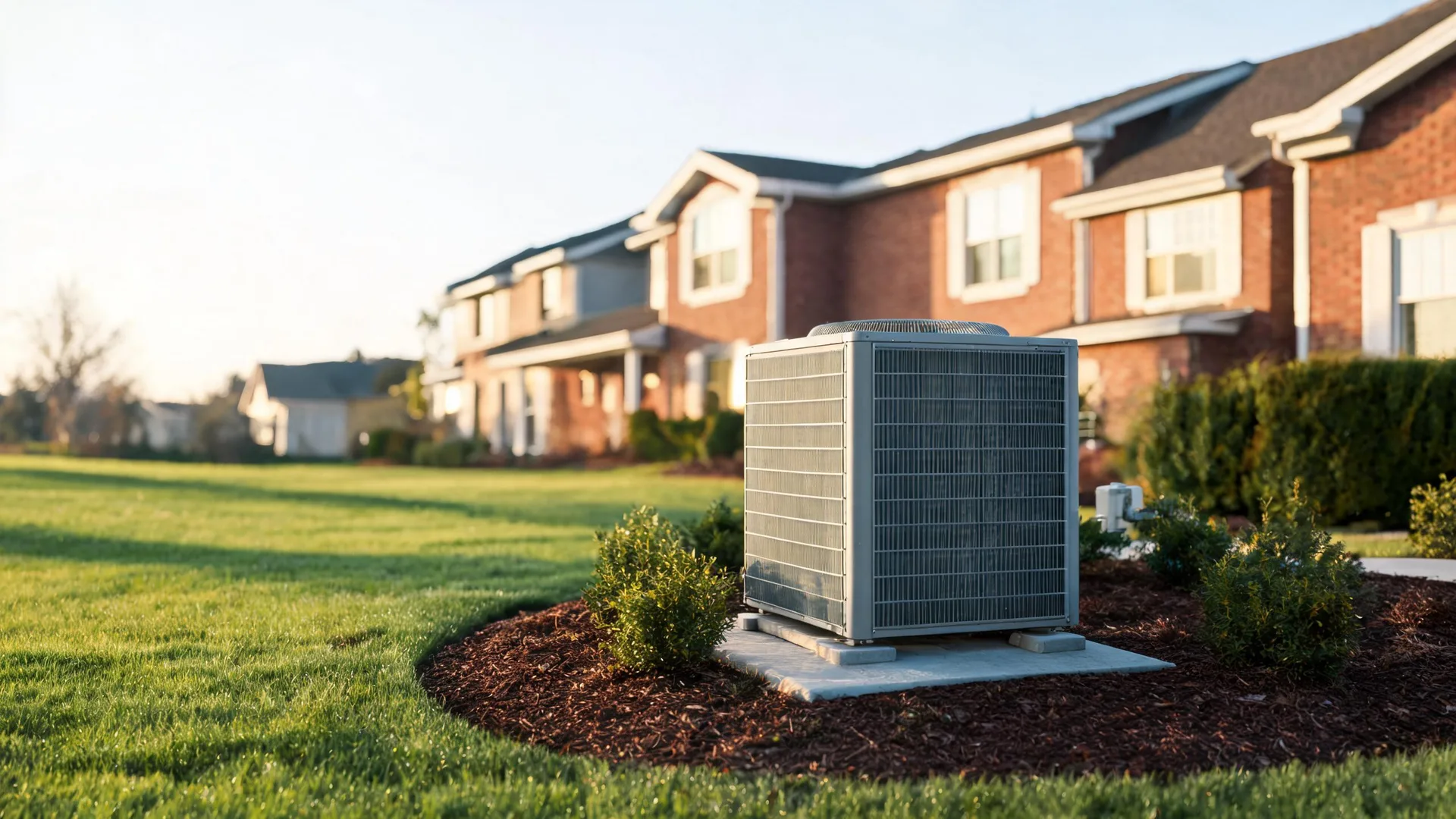
A gray residential air conditioning condenser unit mounted on a concrete pad outdoors, surrounded by green grass under a partly cloudy blue sky.

A newer system is worth fixing

If your system is still the one that came with the house, ask the technician for its age before you approve anything. A unit from the last several years is usually a single repair, not the start of a string of them. Fix the part in front of you and move on.

A low charge makes the compressor work to fail

Refrigerant doesn't get used up, so a system low on charge has a leak somewhere. Run it that way and the compressor has to push harder to move heat, building up head pressure it wasn't built to handle. A slow leak left alone can end with a seized compressor, and that part doesn't get repaired, only replaced.

A struggling part drags down the parts around it

A weak capacitor makes the compressor and fan motor draw more current trying to start. Keep running it that way and the extra draw heats the motor windings every cycle. A capacitor is a quick swap on its own, but a motor that's been straining for weeks may already be damaged by the time anyone looks at it.

Overhead view of a gray residential air conditioning condenser unit mounted on a concrete pad beside a house with asphalt shingle roofing.

A new air conditioner would cut about $70 a year off cooling for a typical Charleston County home.

  • A new one at the federal minimum, 14.3 SEER2$450 a year
  • An older air conditioner$520 a year

Estimates for a typical Charleston County home, compared with an older unit built to the previous federal minimum, from EIA household energy data, South Carolina fuel prices and NOAA climate normals. Your home will differ.

Repair makes sense when a part like a capacitor or contactor has failed.

Replacement makes sense when the compressor has failed or the system uses R-22 refrigerant, which is no longer made.

A diagnostic starts outside at the condenser, checking the capacitor and the compressor's amp draw before anyone touches the thermostat. The tech hooks up gauges to read the refrigerant charge and the pressures on both sides of the system. Low charge on its own doesn't explain much, so they trace it to find where it's leaking out. Inside, they check the evaporator coil for ice or restricted airflow, since a frozen coil can look like several other problems until it thaws. They also check the electrical connections and the contactor, since a burnt or loose connection can cause the same symptoms as a failing part. The point of all this is to find the actual cause before replacing anything, not to swap parts until the system runs again.