What to check before calling for AC repair in South Carolina

One request and the search for a pro is handled.

Hand off my repair

What should I check before calling for AC repair?

You catch it when it's small, the warm air from a vent or the outside unit running longer than usual, before it turns into a system that won't cool at all. Before you pick up the phone, there are a few things worth checking yourself. Some fixes take two minutes. Others tell the contractor exactly what's wrong before they set foot in your house.

Check the thermostat, the filter, the breaker and the outdoor unit first

Make sure the thermostat is set to cool and a few degrees below the room temperature. Look at the filter next. A filter clogged with dust blocks airflow and can make the whole system struggle, and in South Carolina, where the air conditioner runs most of the year, that filter fills up faster than people expect. Check the breaker box for anything tripped. Then walk outside and look at the condenser. Leaves, grass clippings and pollen build up on the coil and the fan, and that alone can stop a unit from cooling a house properly. If all of that looks fine and the air still isn't cold, the problem is inside the system, and that's where a contractor's diagnosis takes over.

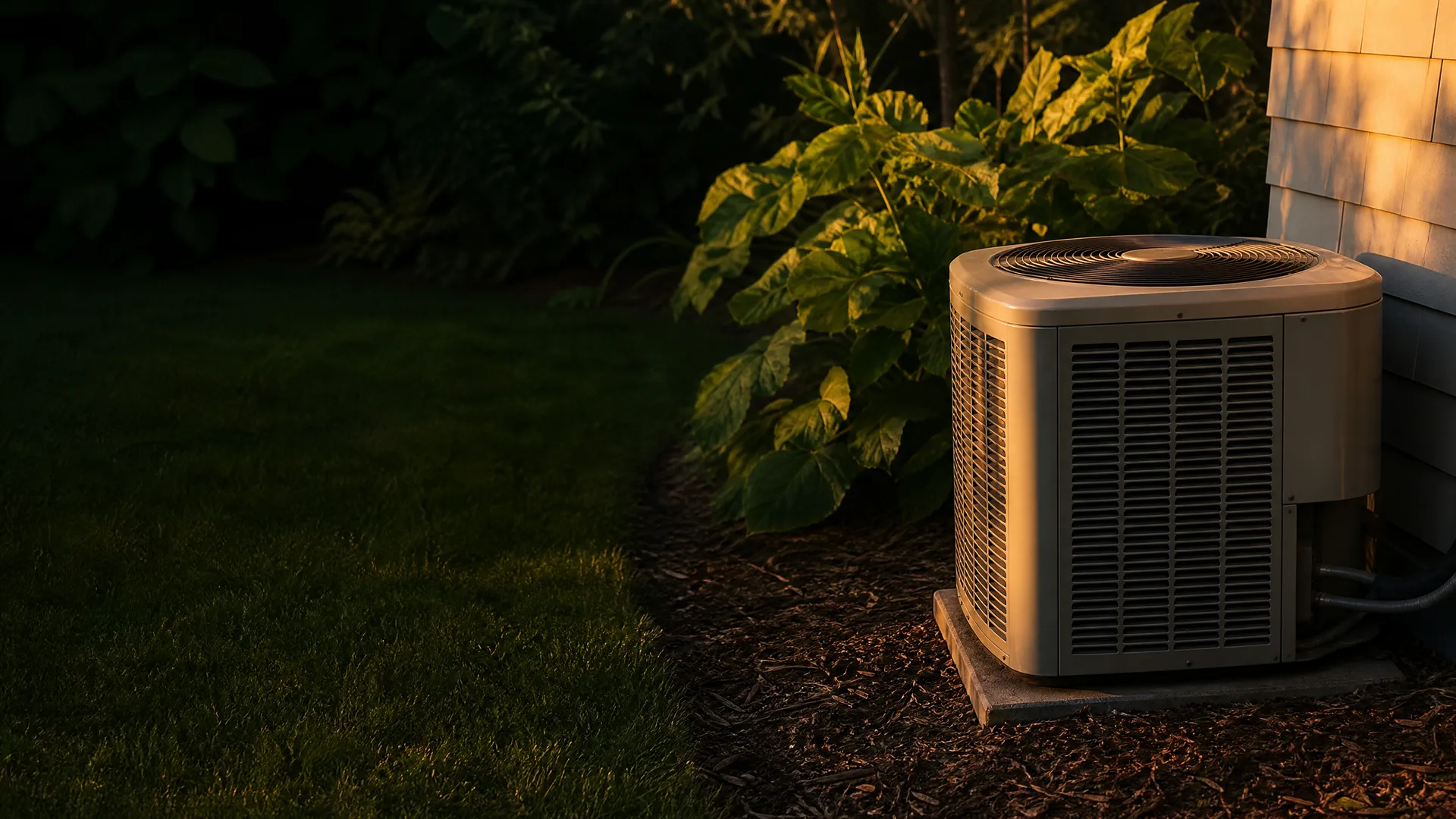
An outdoor air conditioner condenser unit sits on a concrete pad beside a shingled house wall, surrounded by mulch, broad-leaved shrubs and a lawn in low evening light.

You're out on the back steps around seven, when the air finally starts to let up. The unit against the house is running, or it's supposed to be. The fan on top isn't moving. No hum under it, just the hiss of cicadas and whatever's left of the day's heat. You crouch down and feel the side of it, warm metal, no air pulling through the top grille. Inside, the vents are still breathing but it's not cold anymore, just moving air. You check the breaker out of habit. It's fine. The light's going gold over the fence line and the house behind you is starting to hold onto the heat it took in all afternoon.


What You Can Check vs What Needs a Call

Check it yourself

  • Look at the breaker panel first, since a tripped breaker is a five-minute fix and costs you nothing.
  • Check the thermostat batteries and the setting, because a dead battery can look exactly like a dead system.
  • Pull the filter and hold it to the light. If you can't see through it, swap it before you do anything else.
  • Walk outside and listen for the fan. If the unit is humming but nothing is spinning, that's not something to keep testing on your own.
  • Check for ice on the copper lines running into the house. If they're frosted over, turn the system off and let it thaw before anyone touches it.

Call for repair

  • If the outside fan isn't turning and you've already checked the breaker, that's a job for someone who works on these units all season.
  • If you smell anything burnt near the indoor unit or the thermostat, shut the system off and get a local contractor out rather than waiting it out.
  • If the air from the vents is warm and the filter is clean, something past the filter has failed and needs a licensed eye on it.
  • A local contractor who works on South Carolina systems every summer has seen which parts give out first in this heat and checks those before anything else.
  • One contractor gets the call, not three or four, so you're not fielding competing quotes while you're standing in a hot house.
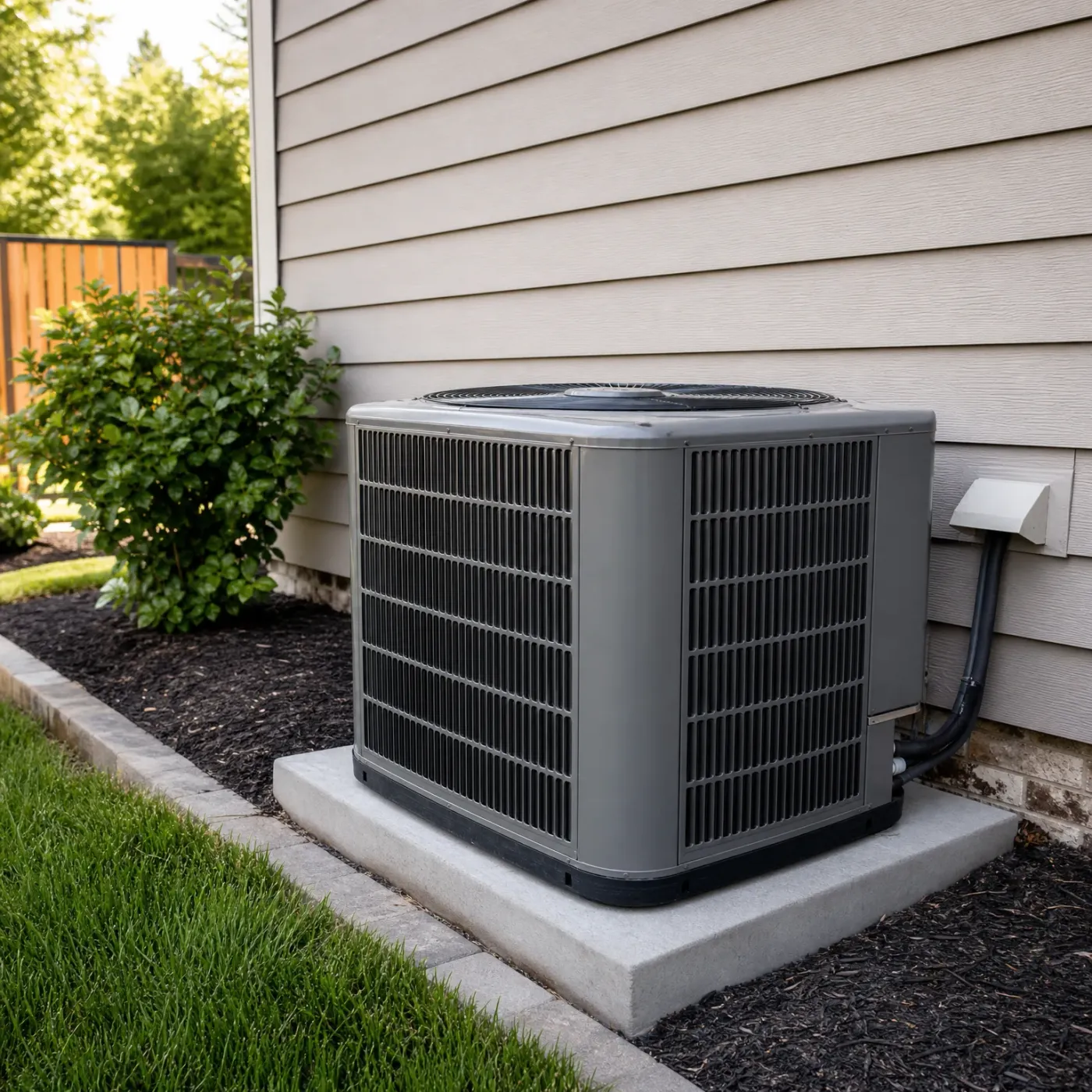
A gray outdoor air conditioner condenser unit on a concrete pad beside a house with white horizontal siding and a brick foundation, with a wall-mounted disconnect box and conduit, and a green shrub with mulch at left.

Running the way it should

This is a system doing its job. The pad is clean, the lines run straight to the disconnect, and nothing around it is choking the airflow. A unit kept clear like this is one a tech can diagnose fast if something does go wrong.

An outdoor air conditioning condenser unit on a concrete pad beside a house with white horizontal vinyl siding, with a gray electrical disconnect box and refrigerant lines on the wall behind it.

Signs it's falling behind

Grime like this on the grille and top cover means the coil underneath is probably coated too, and a dirty coil makes the system work harder to pull heat out of your house. Left alone, that extra strain is what burns out a capacitor or a compressor early.

A smiling man in a dark green shirt over a white t-shirt sits at a kitchen counter with a dark mug, looking off to the side, with shelves, plants and a bright living area behind him.
A man in a gray long-sleeve waffle-knit shirt smiles and looks off to the side in a kitchen with open shelving, a refrigerator, a wooden sideboard with a potted plant, and a glass door to the right.
A man in a dark green ribbed sweater stands smiling and looking off to the side beside a stone kitchen counter with a ceramic mug, with a dining table, pendant lights, and large windows in the background.
A bearded man in a gray long-sleeve shirt stands smiling and looking off-camera beside a kitchen counter with a white mug, with a living room, fireplace and wall-mounted television behind him.
A gray outdoor air conditioning condenser unit on a concrete pad beside a house with horizontal vinyl siding, with mulch, a shrub, and lawn nearby.

Hand off the search today

Your request goes to one pro, not a list of companies.

Send it once and finding someone is no longer on you.

Send it today

No fee to send it, and nothing to sign.

Why does my house feel muggy even when the AC is running

You set the thermostat where you always do, but the air coming out feels damp instead of dry, and the inside of the windows are sweating. Rooms farther from the unit stay warm while the one closest to it is fine. The system cycles on and off more than it used to, running short bursts instead of settling in. Maybe you've noticed a musty smell in the hallway, or the air handler closet feels wet to the touch. Left alone, that moisture has somewhere to go besides the air: into the drywall, the trim, the carpet pad. A South Carolina summer doesn't give that kind of damp anywhere to dry out on its own.

A bearded man in a dark blue T-shirt sits on a gray couch, smiling and looking down to his left, with a bookshelf and a bright window behind him.
A bearded man in a plaid flannel shirt looks out a window at snow-covered conifer trees, with a steaming ceramic mug on the sill and wooden shelves holding dishes and a plant behind him.

Why the outside unit works harder

An air conditioner in South Carolina spends more hours running than it would somewhere drier, because the system is pulling moisture out of the air along with heat. That outside unit, the condenser, is built to shed heat into the air around it, and when the air itself is heavy and wet, it has less room to do that. The coil has to work longer to get the same drop in temperature. That's why a dirty coil or a blocked fan shows up faster here than it would in a dry climate. It's also why clearing leaves and cutting back grass around that unit matters more than people think.

What the thermostat can't tell you

A thermostat reads air temperature at one point in the house, usually a hallway, and nothing more. It can't tell you the coil inside is icing over, or that the refrigerant charge has dropped, or that the blower motor is straining. It only reports what the air feels like where it sits, which is why a house can read 72 degrees and still feel damp. If the number on the thermostat matches the setting but the air coming out doesn't feel right, the problem is usually somewhere the thermostat can't see at all.

Power costs 15.12 cents per kilowatt-hour statewide

An AC that's low on refrigerant or straining to push air through a dirty coil draws more power to do the same job, and at 15.12 cents a kilowatt-hour that shows up on the bill before you've even noticed the house feels warmer. Catching the problem early keeps the run time from creeping up.

EIA-861 2025 statewide residential average

  1. Warm air inside pulls across the evaporator coil and gives up its heat.

  2. Refrigerant inside that coil absorbs the heat and turns to gas.

  3. The compressor in the outside unit squeezes that gas and raises its temperature further.

  4. Hot refrigerant moves through the condenser coil and releases heat outdoors.

You've checked the breaker, the thermostat, the filter. If the unit is still warm or still silent, that's your answer: it's time to get someone out to look at it. The checks you just ran matter because they tell a technician what's already ruled out, which means less time spent retracing your steps and more time spent on the actual problem. The contractor who takes this job knows South Carolina summers, knows what a coil looks like after a few years of this humidity, and knows the handful of things that usually fail first in a system working this hard. You'll hear from one licensed, local contractor, not a handful of companies competing for your number. Send the request and let someone who does this every season take it from here.

A shingled two-story house with lit windows and stone accents at dusk, with a stone paver walkway and landscape lighting leading past ornamental grasses toward a calm bay under an orange and blue sky.

Air Conditioner Repair

Hand off the air conditioner problem

RepairCentral ACSouth Carolina
Step 1 of 2

What ZIP code is the job in?

  • A gray upholstered sofa arm with a cream knit fringed throw sits beside a wooden side table holding a stack of books, a shallow wooden bowl, and a ceramic vase of leafy branches, on a wood floor near a window.
    • Tell a local repair pro what your air conditioner is doing.
    • Say what's going on with your air conditioner, and a pro who works on them reaches out.
  • A living room corner with a cream upholstered sofa and cushion beside a wooden side table holding a ceramic vase of olive branches and a small dark bowl, with a framed landscape painting on the gray wall and a linen curtain at the window.
    • Get the air conditioner repair search off your mind today.
    • Once you send the form, finding a pro is off your list.
  • A wood-framed armchair with a beige cushion and knitted throw sits beside a round wooden side table holding a ceramic mug, with a potted green plant near a window in the corner and a framed picture on the wall.
    • Describe what your air conditioner is doing once, in one form.
    • Fill out one short form instead of calling around.
  • Interior corner with beadboard wainscoting, a gray cabinet with wood countertop holding a vase of greenery below a window, and a potted leafy plant in a woven basket on a wood floor with a fringed jute rug.
    • Only one pro gets your request, so you hear from one company.
    • Your request stays with one local pro.