






Three white clapboard houses with wraparound porches glow with warm interior and landscape lighting beneath Spanish moss-draped oak trees at dusk.

AC Repair in Cheraw, SC

Tell us about the job

Takes about a minute. No obligation.

RepairCentral ACChesterfield County, SC
Step 1 of 2

What ZIP code is the job in?

Most AC calls come down to a handful of parts. The capacitor fails more than anything else. It gives the compressor and fan motor the jolt they need to start, and once it weakens the unit either won't kick on or hums without starting. Low refrigerant is another common cause, and it's never a fluid that just runs low on its own. If the charge is down, there's a leak somewhere in the coil or line set, and that spot needs to be found and sealed, not just topped off. A dirty condenser coil outside or a clogged filter inside will starve the system of airflow, and the compressor can overheat trying to make up for it. Contactors and relays wear out from the arcing every time they switch on, and when they stick the outdoor unit may not run at all. A compressor itself rarely fails out of nowhere. It's usually the last part to go after something else has been stressing it for a while.

5 months
May through September, your air conditioner is on duty
90°F
the average summer afternoon it cools against
43 hail events
in ten years, and hail bends the fins on outdoor coils
111 wind events
in ten years, and wind drives debris into outdoor units
Isometric 3D cutaway render of a house with dark siding showing interior rooms, ductwork and an air handler, connected by lines to an outdoor condenser unit on a white background.
Your air conditioner works hardest from June through September.

NOAA nClimDiv, 1991–2020 normals

Electricity in South Carolina ran 14.23 cents per kilowatt-hour in 2024.

A failing capacitor or a dirty coil makes your AC run longer to do the same job, and here that shows up on every bill until it's fixed.

May is when a weak part gets found

Cooling runs May through September
Summer afternoons average 90°F
111 damaging wind events from 2015 to 2024

Chesterfield County has logged 174 severe weather events between 2015 and 2024, and damaging wind was behind most of them. Your outdoor unit sits through all of it, exposed to whatever the wind throws at the coil and fan. Hail has come through plenty of times in that span too, and a dented cabinet or bent fins don't always stop the unit from running. They just make it work harder or tear into the coil slowly. If a storm came through recently and the AC still turns on, that's not proof it came through fine. Power cuts matter here too. A hard outage can be rough on a compressor that was already weak before the lights went out.

Most AC trouble in Cheraw is a known part, not a mystery

Half the homes in Chesterfield County were built in 1986 or earlier. None of that changes what's likely wrong with your AC. A weak capacitor or a dirty coil shows up the same way whether the house is new or old, and it's still the first thing worth checking.

Find a contractor
A man in a dark shirt and brown work pants, seen from behind, carries a worn duffel bag up stone steps toward a dark green front door of a house with light siding and a potted shrub.
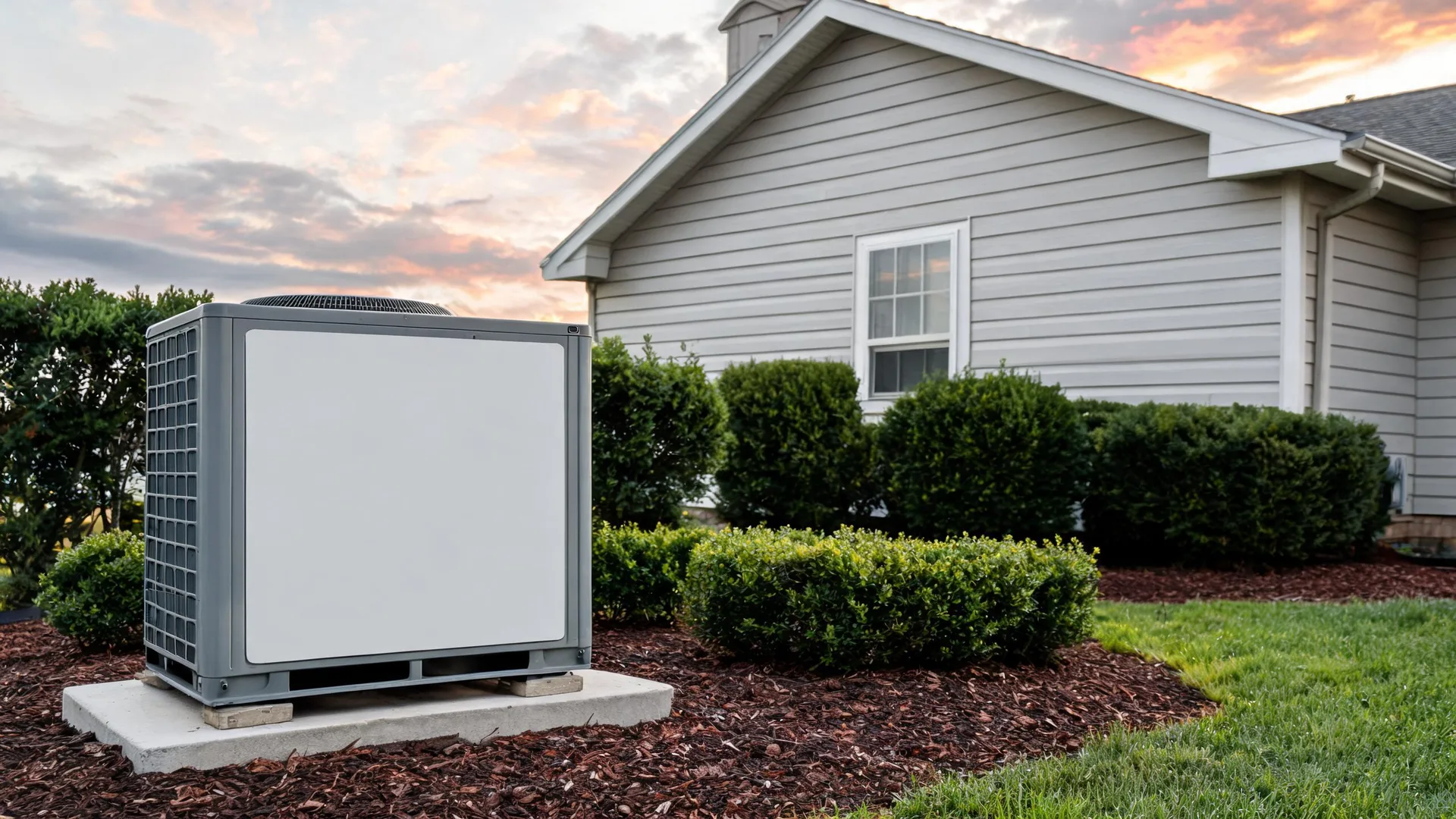
A gray cylindrical air conditioning condenser unit mounted on a concrete pad next to a light-colored vinyl-sided house exterior.

Five months of afternoons near 90

Cooling runs about five months a year here, May through September, and the afternoon high averages 90°F through June, July and August. That's five straight months of the compressor cycling on and off most of the day. The parts that fail first, the capacitor, the coil, the contactor, wear from that steady load before they wear from age. A unit that's been running hard all summer and starts acting up now is telling you something wore thin, not that something broke at random.

What you'll notice first

Warm air coming from the vents while the thermostat still shows the set temperature is the most common sign. The unit may short cycle, shutting off soon after it starts instead of running a full cycle. Some units run nearly nonstop and still can't reach the set point. Ice on the indoor coil or the line running outside is another sign worth knowing, even though the actual problem is the system struggling, not getting too cold.

What those signs mean for the job

Warm air and short cycling point toward different parts than a coil caked in ice, so what you describe shapes what gets brought to the house. A unit that still runs but can't keep up is usually safe to wait on. One that trips the breaker repeatedly or won't shut off at all needs attention sooner, before the compressor takes more strain than it already has.

Aerial view of a gray central air conditioning condenser unit on a concrete pad next to a house with vinyl siding.

A new air conditioner would cut about $50 a year off cooling for a typical Chesterfield County home.

  • A new one at the federal minimum, 14.3 SEER2$360 a year
  • An older air conditioner$410 a year

Estimates for a typical Chesterfield County home, compared with an older unit built to the previous federal minimum, from EIA household energy data, South Carolina fuel prices and NOAA climate normals. Your home will differ.

Repair makes sense when a part like a capacitor or contactor has failed.

Replacement makes sense when the compressor has failed or the system uses R-22 refrigerant, which is no longer made.

A diagnostic call starts with the tech asking what you noticed and when, then running the system to watch it happen. Gauges go on the lines to check refrigerant pressure, since that number alone points toward a clean system, a leak, or a coil that's not getting airflow. The capacitor gets tested under load, not just looked at, because a weak one can still look fine sitting still. Electrical connections get checked at the contactor and the disconnect, since loose or burnt wiring causes the same symptoms as a bad part. Amp draw on the compressor and fan motor tells the tech whether a motor is pulling more current than it should, which usually means it's on its way out even if it's still running today. By the time the panel goes back on, the tech should be able to say which part failed and why, not just that the unit is broken.