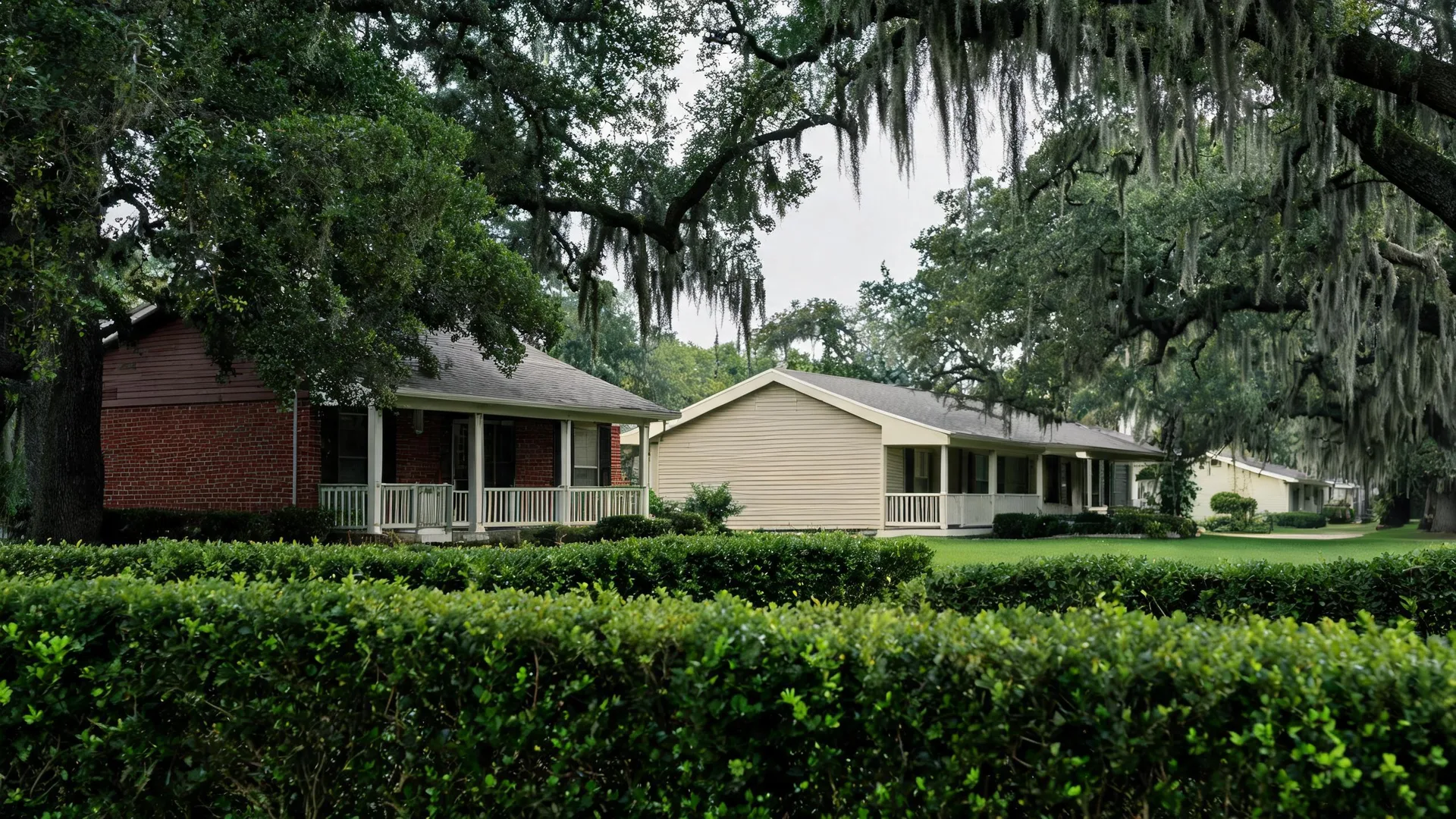






Single-story brick and cream-sided houses with covered porches behind a trimmed hedge and lawn, shaded by large oak trees draped with Spanish moss under an overcast sky.

AC Repair in Columbia, SC

Tell us about the job

Takes about a minute. No obligation.

RepairCentral ACRichland County, SC
Step 1 of 2

What ZIP code is the job in?

Richland County saw 360 damaging wind events and 49 hail events over the past decade. That's a lot of chances for an outdoor AC unit to take a hit. Hail dents the fins on the condenser coil, and wind throws branches and debris into the cabinet. A unit can take that kind of hit and keep running for months before the damage shows up as a real failure. If a storm has come through and the system still seems fine, that doesn't mean it is.

5 months
May through September, your air conditioner is on duty
91°F
the average summer afternoon it cools against
49 hail events
in ten years, and hail bends the fins on outdoor coils
360 wind events
in ten years, and wind drives debris into outdoor units
Isometric line illustration of a cutaway house showing interior rooms, ceiling ductwork connected to an indoor air handler, and an outdoor condenser unit linked by refrigerant lines.
Your air conditioner works hardest from June through September.

NOAA nClimDiv, 1991–2020 normals

Electricity in South Carolina ran 14.23 cents per kilowatthour in 2024.

A struggling AC unit burns more of it every single day you put off the repair.

Five months of 91 degree afternoons is hard work for one machine

Cooling runs May through September
Summer afternoons average 91°F
360 damaging wind events from 2015 to 2024
May is when weak units failCooling runs May through September here. April is for catching what won't make it.

Half the homes in Richland County were built in 1989 or later. If yours is one of them, your AC unit hasn't been fighting these summers for as long as you might think. A system installed with a newer house still has a lot of working life in it, storm damage or not. That changes the math on a repair. A compressor or a control board replacement makes a lot more sense on a unit with years left than on one already near the end. Worth finding out when yours was put in, if you don't already know.

If a storm came through, have the outdoor unit checked before summer proves it

A unit that rode out a hailstorm or a wind event doesn't always show it right away. If a storm has come through since the system last ran fine, get the outdoor coil and cabinet looked at now, before a dented fin or a cracked line turns into a system down for the summer.

Find a contractor
A gray residential air conditioner condenser unit mounted on a concrete pad in an open grass field.

This is the stretch that finds the weak part

Five straight months of afternoons near 91 degrees doesn't give a struggling unit any room to coast. If yours is already short on refrigerant or running a weak capacitor, this is the stretch that finds it. When something's been off for a while, get it looked at now instead of waiting to see if it holds through September.

A weak capacitor turns into a dead compressor

A capacitor that's starting to go makes the compressor work harder to start up every cycle. Keep running it that way and the compressor windings take the damage instead. A capacitor is a simple swap. A compressor is often the whole system.

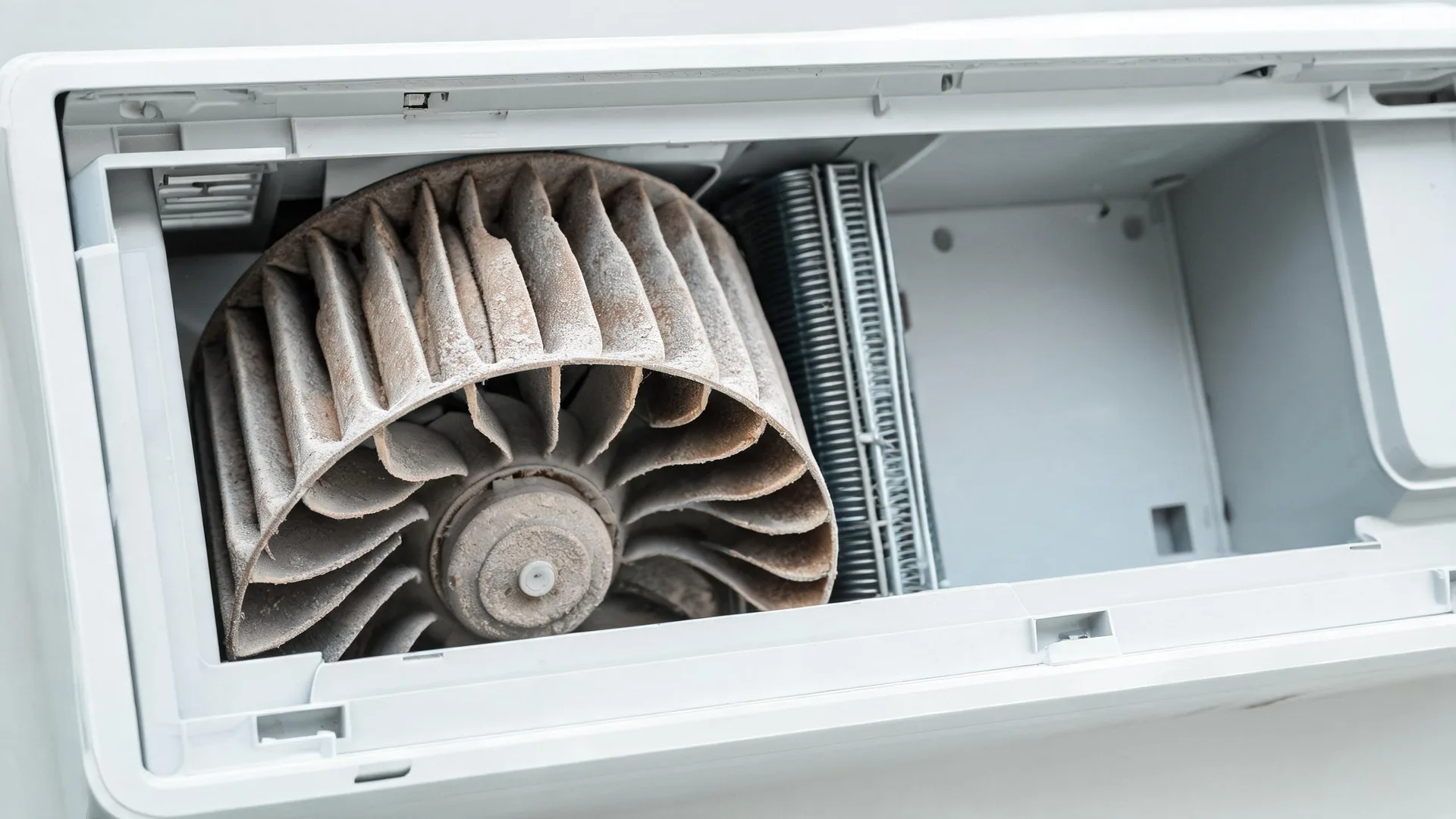
Low refrigerant gets worse on its own

A system low on refrigerant doesn't just cool less, it runs colder on the coil than it should. That coil can ice over, and a running compressor pushing refrigerant through a frozen coil is how you damage the compressor itself. The leak doesn't fix itself by running the system longer.

Aerial view of a gray central air conditioning condenser unit on a concrete pad next to a house with vinyl siding.

A new air conditioner would cut about $60 a year off cooling for a typical Richland County home.

  • A new one at the federal minimum, 14.3 SEER2$410 a year
  • An older air conditioner$470 a year

Estimates for a typical Richland County home, compared with an older unit built to the previous federal minimum, from EIA household energy data, South Carolina fuel prices and NOAA climate normals. Your home will differ.

Repair makes sense when a part like a capacitor or contactor has failed.

Replacement makes sense when the compressor has failed or the system uses R-22 refrigerant, which is no longer made.

A repair decision usually comes down to what broke and what's old. A failed capacitor, a bad contactor, a blown fan motor. Those are wear parts, and swapping one doesn't say anything bad about the rest of the system. A compressor going, or a coil leaking in more than one spot, is a different question. Now you're paying for a major part on a system that's already logged a lot of running hours. Age matters less than how the unit has been maintained, but it still matters. A unit that's had its coils cleaned and its refrigerant charge checked every year has an easier case for repair than one that's been ignored, because neglect tends to take more than one part down at a time. If the repair bill is creeping up toward what a new outdoor unit costs, that's the point to ask a contractor to lay out both options before deciding.