





A lit antebellum-style two-story house with white columns and a wraparound porch at night, framed by live oak trees draped in Spanish moss.

AC Repair in Dillon, SC

Tell us about the job

Takes about a minute. No obligation.

RepairCentral ACDillon County, SC
Step 1 of 2

What ZIP code is the job in?

AC here runs about five months straight, May through September. Afternoon highs average 90°F through June, July and August, so the system isn't just turning on now and then, it's answering that heat for hours every day. That kind of steady demand wears on parts faster than it would somewhere cooler. A capacitor or contactor can hold up for years in a milder climate and still give out early under this kind of load. If something's acting up, there's usually a reason tied to how hard the system has been working.

5 months
May through September, your air conditioner is on duty
90°F
the average summer afternoon it cools against
4 hail events
in ten years, and hail bends the fins on outdoor coils
36 wind events
in ten years, and wind drives debris into outdoor units
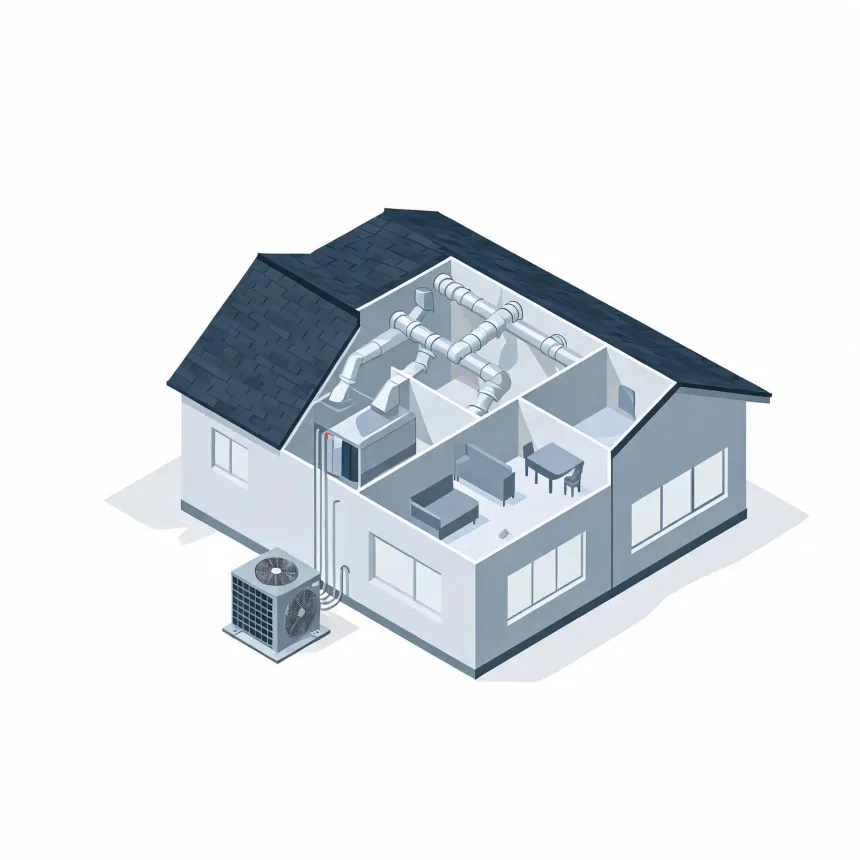
Isometric illustration of a cutaway single-story house showing attic ductwork, an indoor air handler, interior rooms with furniture, and an outdoor condenser unit connected by lines, on a white background.
Your air conditioner works hardest from June through September.

NOAA nClimDiv, 1991–2020 normals

A weak capacitor can't kick the compressor into gear.

A system that hums for a second and clicks off usually has a capacitor on the way out.

Nothing unusual here, just heat and age doing what they do

Half the homes here were built by 1984
Cooling runs May through September
Summer afternoons average 90°F
Running costs more hereSouth Carolina electricity ran 14.23 cents per kilowatt-hour in 2024, and a struggling AC burns through it.

April is worth paying attention to. The system has sat idle since fall, and May is when it starts running for real. Whatever was already weak, a tired capacitor or a contactor with pitted contacts, tends to show itself in those first few weeks, not in the middle of the season. The jump from barely running to running most of the day is what finds the weak part. Getting the system looked at before May, or right when it starts up, catches a lot of problems before they turn into a breakdown later on.

Have it checked, not just patched

Get a diagnosis instead of a guess. A tech who knows what five months of 90 degree heat does to a capacitor or contactor can find the weak part before it strands you without cooling.

Find a contractor
An outdoor residential air conditioning condenser unit mounted on a concrete pad, surrounded by gravel with a blue sky in the background.

What to check before you call

Start with the thermostat. Make sure it's set to cool and set below the room temperature, and swap the batteries if you can't remember the last time you did. Walk outside and look at the condenser. If the fan isn't turning at all, or it's turning but no air seems to be moving off it, that's worth telling the tech. Check the breaker panel too. A tripped breaker on the AC circuit shuts the whole system down, and it takes a few seconds to rule out. Pull the filter and hold it up to a light. If you can't see light through it, airflow is choked and the system will struggle or freeze up trying to push air past it. If the indoor coil is covered in frost, shut the system off and let it thaw before anyone goes near it again. Pay attention to what the unit does when it starts. A hum with no start, a click that repeats, or a unit that runs for a few seconds and quits all point to something electrical, and that's good to mention before the tech even walks in.

Warm air from the vents means the system isn't finishing the job

The blower can still be moving air while the compressor outside has stopped cooling it. Warm or barely cool air from the vents usually points to the compressor, the refrigerant charge, or a coil that's frozen over and blocking airflow.

Short cycling wears out the compressor faster than running long hours ever would

A system that shuts off a few minutes after starting and then kicks back on is short cycling. Each start pulls a hard jolt of current through the compressor, and a system doing that over and over is headed toward a compressor replacement instead of a repair.

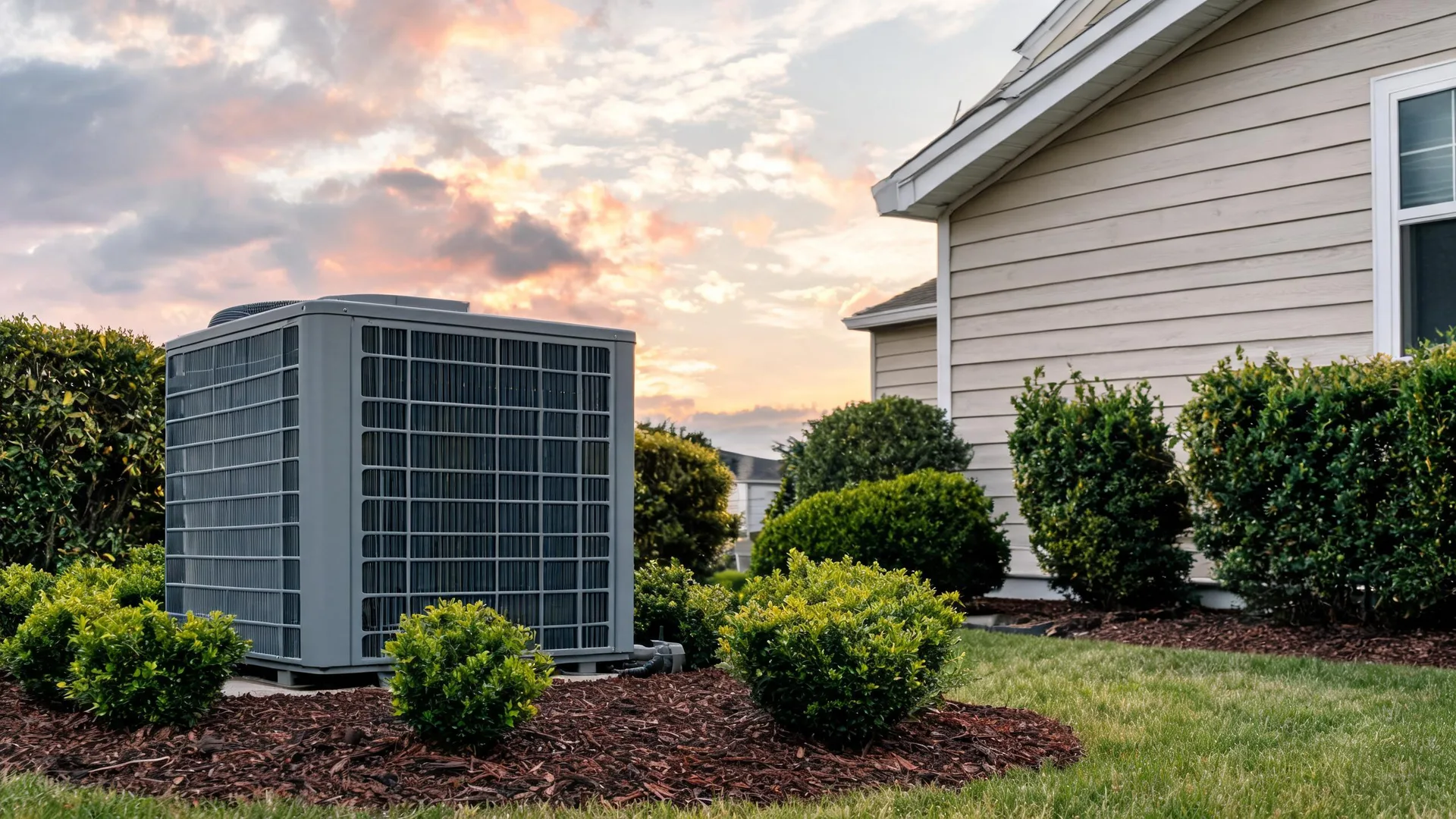
An outdoor air conditioning condenser unit mounted on a concrete pad next to a blue-sided residential house at sunset.

A new air conditioner would cut about $60 a year off cooling for a typical Dillon County home.

  • A new one at the federal minimum, 14.3 SEER2$390 a year
  • An older air conditioner$450 a year

Estimates for a typical Dillon County home, compared with an older unit built to the previous federal minimum, from EIA household energy data, South Carolina fuel prices and NOAA climate normals. Your home will differ.

Repair makes sense when a part like a capacitor or contactor has failed.

Replacement makes sense when the compressor has failed or the system uses R-22 refrigerant, which is no longer made.

A diagnostic visit starts before any panel comes off. The tech asks what the system was doing, the hum, the click, the warm air, and when it started. Then comes the thermostat, the breaker, the condenser fan, the readings off the refrigerant lines. A gauge set tells a tech whether the charge is low, and low charge almost always means a leak somewhere, not just a top-off and done. Electrical parts get tested with a meter rather than guessed at, since a capacitor can look fine and still fail its readings. The point of the visit is to find the one part that's actually failing instead of swapping parts and hoping.