






Overhead view of a gray residential air conditioning condenser unit mounted on a concrete pad beside a house with asphalt shingle roofing.

AC Repair in Edgefield, SC

Tell us about the job

Takes about a minute. No obligation.

RepairCentral ACEdgefield County, SC
Step 1 of 2

What ZIP code is the job in?

Most AC calls come down to a handful of parts. The capacitor is the big one, it gives the compressor and the fan motor the jolt they need to start, and it weakens over time until the system either won't start or the fan just hums. A dirty condenser coil outside makes the system work harder to dump heat, and if it goes on long enough the compressor runs hot and wears early. Low refrigerant almost always means a leak somewhere in the coil or the line set, not normal use, a sealed system doesn't lose charge on its own. The contactor that switches the compressor on and off pits and sticks with age and stops making good contact. And a clogged filter or a dirty evaporator coil can starve the system of airflow until it ices over and stops cooling altogether.

5 months
May through September, your air conditioner is on duty
91°F
the average summer afternoon it cools against
19 hail events
in ten years, and hail bends the fins on outdoor coils
73 wind events
in ten years, and wind drives debris into outdoor units
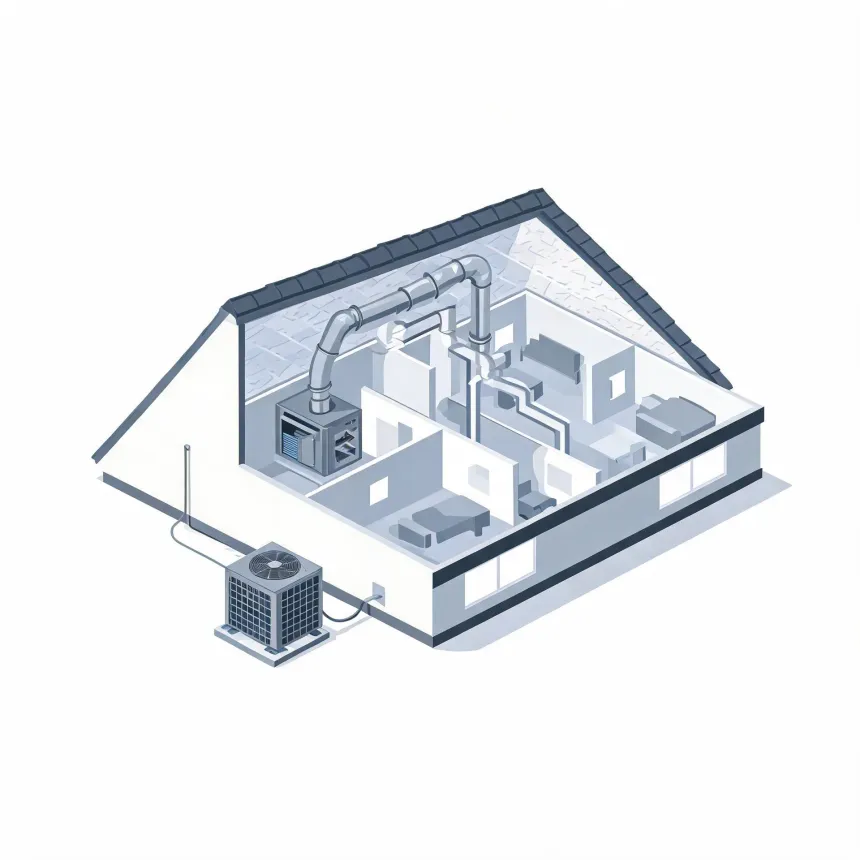
Isometric illustration of a cutaway house showing interior rooms, an attic furnace with large ducts, and an outdoor condenser unit connected by a line set, on a white background.
Your air conditioner works hardest from June through September.

NOAA nClimDiv, 1991–2020 normals

Electricity in South Carolina ran 14.23 cents a kilowatt-hour in 2024.

A struggling AC pulls more power to do less cooling, and in Edgefield that shows up fast.

May is when a weak capacitor finally gives out

Cooling runs May through September
Summer afternoons average 91°F
Power costs 14.23 cents a kWh statewide
Nothing unusual about an Edgefield AC, just an older oneHalf the homes in Edgefield County were built in 1988 or earlier, old enough for original equipment to be on its last legs

The AC here runs May through September, five months of real work, not just a handful of hot days. Afternoon highs average 91°F through June, July and August, and the system has to keep up with that for hours at a stretch, day after day. That kind of load wears parts down faster than they'd wear in a milder place. A capacitor on its way out or a coil caked with dirt tends to show up here first, and it tends to show up in summer.

Stop paying for a struggling machine

Power costs more here, so a machine that's running badly costs you every month. Get it fixed soon.

Find a contractor
A man in a dark T-shirt, tan work pants and a backward cap walks up stone steps toward a dark green door, carrying a worn canvas tool bag, with a potted shrub in a green ceramic planter beside him.
A gray metal air conditioning condenser unit mounted on a concrete pad in a flat grassy field under a partly cloudy sky.

Five months in, now is when it shows

Five months of 91 degree afternoons doesn't leave much room for a weak part to coast along. If the system is losing the fight with the heat, that's a reason to get it looked at now instead of waiting to see if it gets worse. A tech can tell you whether it's the capacitor, the coil, or something else, and whether the fix will hold for the rest of the summer.

Warm air from the vents

If the air coming out feels barely cool, or cool for a minute and then warm, that's usually the compressor losing the fight, not the thermostat lying to you. It can still mean a bad capacitor or a dirty coil outside, the same parts that cause a no-start. Worth a look before the system gives up completely on a hot afternoon.

Short cycling or won't stop running

A system that shuts off a few minutes after it starts, over and over, is usually tripping on heat or pressure it shouldn't be seeing, often a sign the contactor or capacitor is failing under load. One that runs constantly and never satisfies the thermostat is losing the battle against the heat, usually low refrigerant or a coil so dirty it can't dump heat anymore. Either pattern is worth having a tech check before it turns into a no-start.

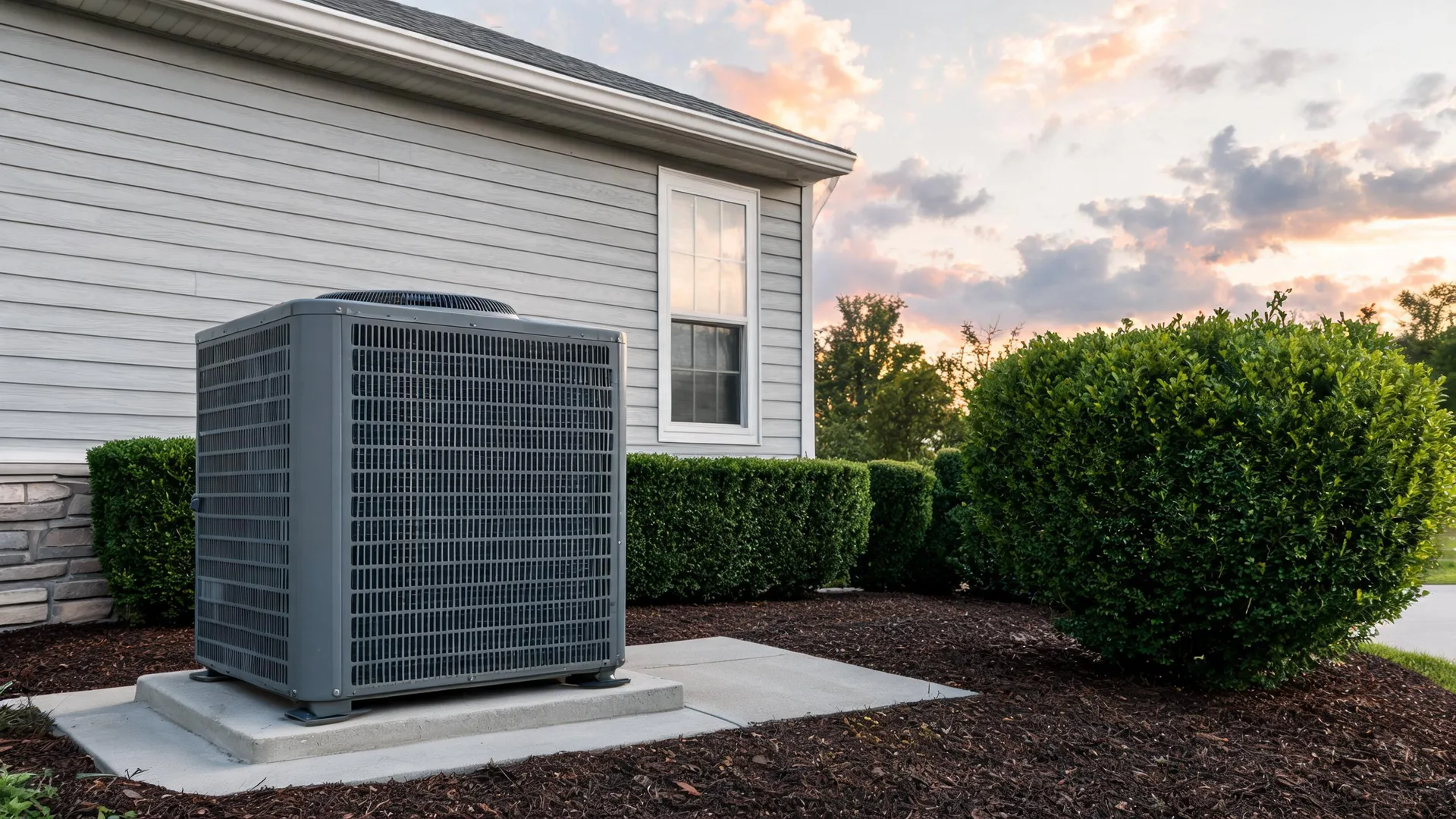
Overhead view of an outdoor AC condenser unit on a concrete pad next to a house with a dark shingle roof.

A new air conditioner would cut about $50 a year off cooling for a typical Edgefield County home.

  • A new one at the federal minimum, 14.3 SEER2$400 a year
  • An older air conditioner$450 a year

Estimates for a typical Edgefield County home, compared with an older unit built to the previous federal minimum, from EIA household energy data, South Carolina fuel prices and NOAA climate normals. Your home will differ.

Repair makes sense when a part like a capacitor or contactor has failed.

Replacement makes sense when the compressor has failed or the system uses R-22 refrigerant, which is no longer made.

A repair makes sense when the rest of the system is sound and the failed part is an isolated one, a capacitor, a contactor, a fan motor. Those fail on their own schedule, and swapping one back in brings the system back to normal. Replacement starts to make more sense when the compressor itself is failing, or when the coil has leaked and been patched before, because those are the parts that make the system what it is, and they're not worth opening the cabinet for again and again. Age matters too, not because old means broken, but because a unit near the end of its life tends to fail again somewhere else once the first part goes. A tech who's already inside the cabinet can tell you which kind of problem this is, and whether what's left of the system is worth fixing for.