Single-story brick and siding houses with covered porches behind a trimmed hedge and lawn, framed by large oak branches draped with hanging moss under an overcast sky.

AC Repair in Goose Creek, SC

Tell us about the job

Takes about a minute. No obligation.

RepairCentral ACBerkeley County, SC
Step 1 of 2

What ZIP code is the job in?

Check the thermostat and the breaker first

Make sure the thermostat is set to cool and the set temperature is actually below room temperature. Then check the breaker panel for the outdoor condenser and the air handler. A tripped breaker can mean something as simple as a loose connection, or it can mean the compressor is drawing too much current. Either way, flipping it back on once is fine. If it trips again, stop and leave it alone.


Look at the filter and the outdoor unit

Pull the air filter and hold it up to a light. If you can't see light through it, it's choking airflow and that alone can cause the system to ice up or shut down. Outside, look at the condenser for leaves, grass clippings or anything blocking the fins. A unit that's starved for airflow on either end will struggle no matter what else is wrong with it.

6 months
May through October, your air conditioner is on duty
91°F
the average summer afternoon it cools against
61 hail events
in ten years, and hail bends the fins on outdoor coils
146 wind events
in ten years, and wind drives debris into outdoor units
Isometric cutaway illustration of a house showing interior ductwork, an air handler, and an outdoor condenser unit connected by lines, with simple furniture in the rooms.
Your air conditioner works hardest from June through September.

NOAA nClimDiv, 1991–2020 normals

A weak capacitor shows up as a slow fan or a compressor that hums but won't kick in.

A compressor forced to run on a failing capacitor will eventually burn out the motor.

May turns on the system that's been sitting idle

Cooling runs May through October
Summer afternoons average 91°F
146 damaging wind events from 2015 to 2024
This county's homes are newer than mostHalf the homes in Berkeley County were built in 2002 or later.

South Carolina homes paid 14.23 cents per kilowatthour in 2024. A system that's low on refrigerant or struggling against a dirty coil runs longer to hit the same set temperature, and every one of those extra minutes gets billed at that rate. It doesn't go back down on its own. The longer a weak capacitor or a dirty coil gets left alone, the more it costs you to keep the house cool while it's broken, and that's before it takes the compressor with it.

Get it looked at early

Problems tend to show up in the first weeks of the season, when the load hits a part that was already weak.

Find a contractor
A man in a cap, gray long-sleeve shirt and tan pants climbs concrete steps toward a dark green front door, carrying a worn canvas tool bag.
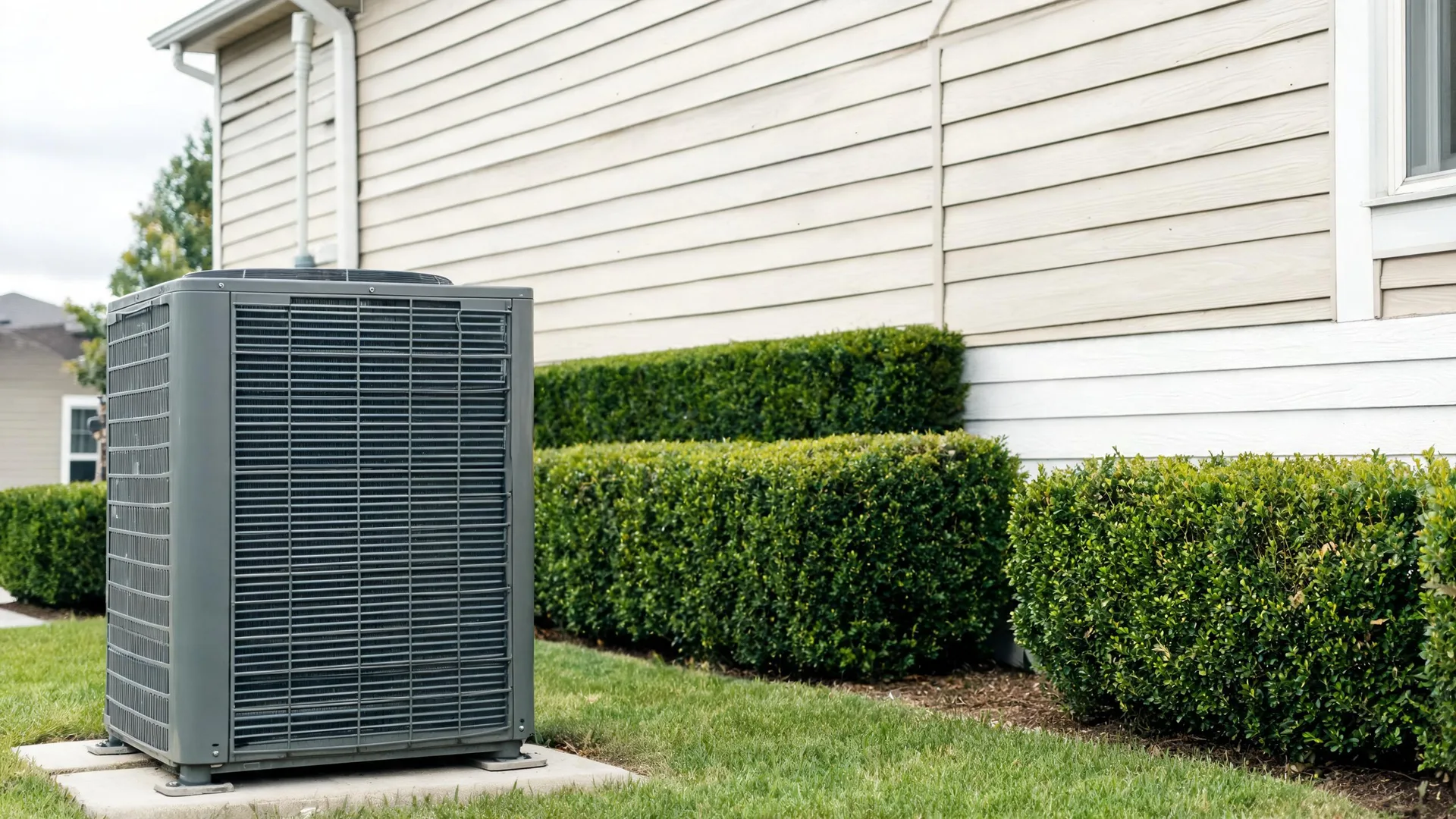
A gray residential air conditioning condenser unit mounted on a concrete pad outdoors, surrounded by green grass under a partly cloudy blue sky.

Repair makes sense on a system this age

Most of the systems in Goose Creek are running in homes built in 2002 or later. A unit that came in with a house that age has not been out there long enough to wear out. If a capacitor or a refrigerant leak is the problem, fixing that one part is almost always the right call over replacing the whole system.

Short cycling or runs without stopping

A system that shuts off within a few minutes of starting is usually tripped up by a dirty coil, a stuck sensor, or refrigerant that's too low to satisfy the thermostat. One that never shuts off at all is losing the fight against the heat, often because of the same low charge or a coil so dirty it can't dump heat outside. Both patterns wear on the compressor faster than normal cycling does.

Sounds and smells that weren't there before

A hard rattle usually means something loose in the blower or a fan blade hitting its housing. A high pitched squeal points to a motor bearing going bad. A burning smell from the air handler or the vents means wiring or a motor winding is overheating, and that one is worth shutting the system off for until someone looks at it.

An outdoor air conditioning condenser unit mounted on a concrete pad next to a blue-sided residential house at sunset.

A new air conditioner would cut about $60 a year off cooling for a typical Berkeley County home.

  • A new one at the federal minimum, 14.3 SEER2$440 a year
  • An older air conditioner$500 a year

Estimates for a typical Berkeley County home, compared with an older unit built to the previous federal minimum, from EIA household energy data, South Carolina fuel prices and NOAA climate normals. Your home will differ.

Repair makes sense when a part like a capacitor or contactor has failed.

Replacement makes sense when the compressor has failed or the system uses R-22 refrigerant, which is no longer made.

A diagnostic visit starts before any panel comes off. A tech runs the system and watches how it behaves. How long it takes to kick on, what the air feels like at the vents, whether the compressor cycles the way it should. Gauges go on the lines to check refrigerant pressure. That one reading points toward a leak, a bad coil, or a failing compressor depending on what it shows. Electrical parts get tested under load rather than just looked at. A capacitor or contactor can look fine sitting still and still fail the moment it has to do its job. The goal is to find the one thing actually causing the symptom, not to replace parts until something works.