





An overhead view of a residential air conditioning condenser unit mounted on a concrete pad next to a house with vinyl siding.

AC Repair in Greenville, SC

Tell us about the job

Takes about a minute. No obligation.

RepairCentral ACGreenville County, SC
Step 1 of 2

What ZIP code is the job in?

Greenville County has had 215 severe weather events over the past ten years, most of them damaging wind or hail. Hail dents coils and bends fins on an outdoor unit, and wind throws branches and debris into the cabinet. The unit can keep running after that and the damage shows up later as a refrigerant leak or a coil that can't shed heat the way it used to. If a storm has come through since the system was last checked, have the outdoor unit looked at even if it's still cooling fine. Power cuts are common here too, so it's worth knowing whether your AC starts back up on its own once the power returns.

5 months
May through September, your air conditioner is on duty
87°F
the average summer afternoon it cools against
78 hail events
in ten years, and hail bends the fins on outdoor coils
122 wind events
in ten years, and wind drives debris into outdoor units
Isometric line illustration of a cutaway house showing interior rooms with furniture, ceiling ductwork, an indoor air handler, and an outdoor condenser unit connected by lines.
Your air conditioner works hardest from June through August.

NOAA nClimDiv, 1991–2020 normals

South Carolina electricity ran 14.23 cents per kilowatthour in 2024.

An AC unit that's struggling to cool pulls more power the whole time it's running, and here that's not cheap.

Five months of cooling, at 87 degrees, is what wears a unit down here

Cooling runs May through September
Summer afternoons average 87°F
122 damaging wind events from 2015 to 2024

Half the homes in Greenville County were built in 1992 or later, so a lot of the AC units here haven't hit old age yet. If yours came with a newer house, it's got a good case for being fixed rather than swapped out. A system still within its working life that's cooling poorly is usually dealing with something specific, a dirty coil, a weak capacitor, a low charge, not a reason to replace the whole thing. Worth finding out which one it is before anyone tells you otherwise.

Get it checked after a storm

Storms hit hard here. If the outdoor unit took hail or debris, have it checked even if it still runs.

Find a contractor
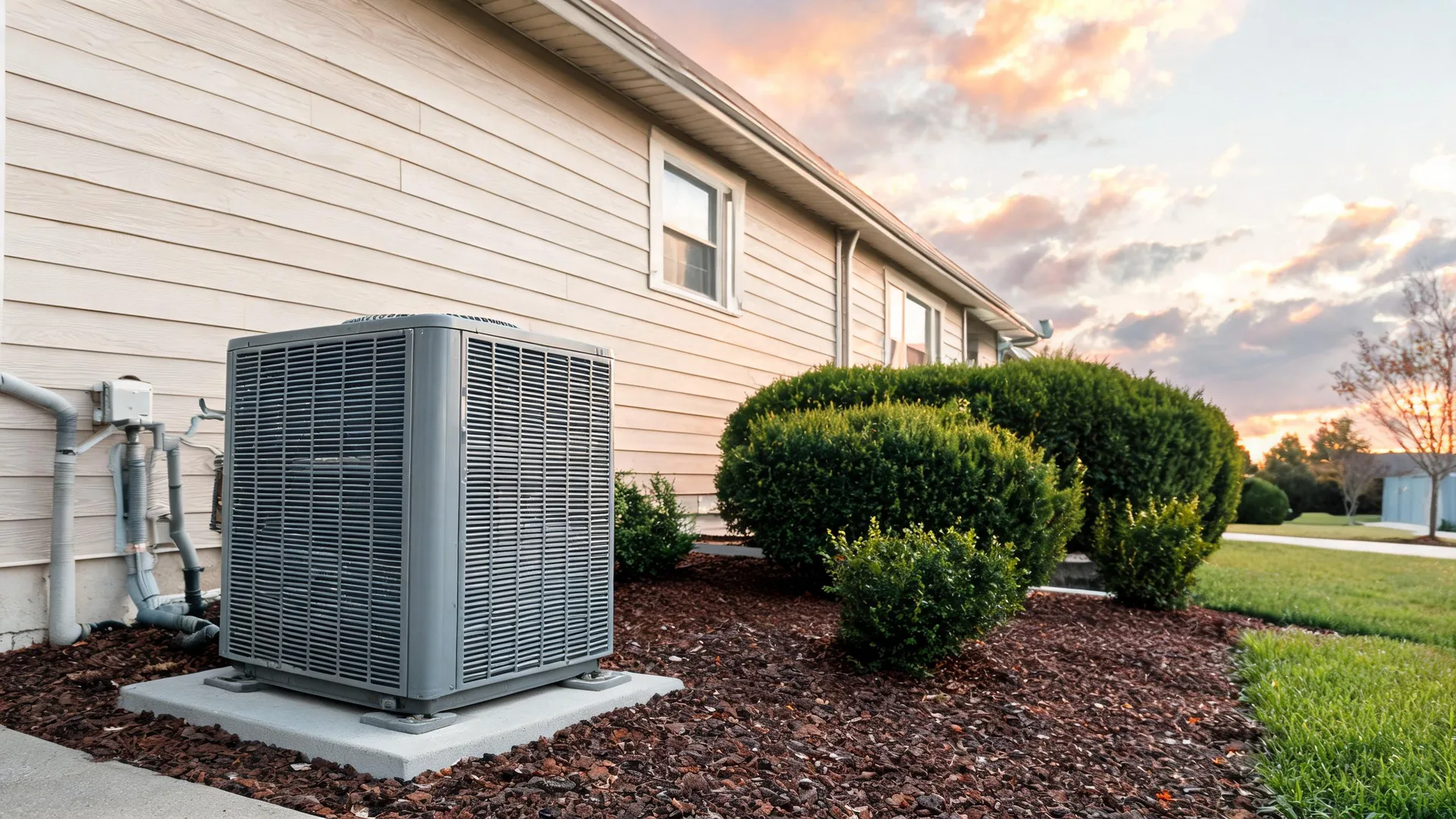
An outdoor air conditioning condenser unit mounted on a concrete pad beside a house, with electrical conduit running to a wall-mounted disconnect box.

Know the unit's age before anyone tells you it's done

A unit still inside its working life is worth getting diagnosed, not quoted for a new installation. Ask for the actual reading, the charge level, the capacitor test, whatever told them what's wrong, before agreeing to replace anything. If the house came with the system, check the install date against the permit or the sticker on the unit itself. That number settles more than a guess about the home's age ever could.

A weak capacitor turns into a dead compressor

A capacitor that's starting to fail makes the compressor struggle every time it kicks on. Run it like that long enough and the compressor overheats and burns out. A capacitor swap is a small job. A compressor is most of the unit.

A refrigerant leak gets worse while the system runs

Low charge makes the compressor work harder to move less heat, and it runs hotter than it should the whole time. Left alone, that heat and strain is what kills the compressor next, not the leak itself.

Aerial view of a residential air conditioning condenser unit mounted on a concrete pad next to a house with vinyl siding and a sliding glass door.

A new air conditioner would cut about $50 a year off cooling for a typical Greenville County home.

  • A new one at the federal minimum, 14.3 SEER2$290 a year
  • An older air conditioner$340 a year

Estimates for a typical Greenville County home, compared with an older unit built to the previous federal minimum, from EIA household energy data, South Carolina fuel prices and NOAA climate normals. Your home will differ.

Repair makes sense when a part like a capacitor or contactor has failed.

Replacement makes sense when the compressor has failed or the system uses R-22 refrigerant, which is no longer made.

A diagnostic starts outside at the unit itself, not with a clipboard of guesses. The tech checks the refrigerant charge with gauges, tests the capacitor under load, and looks at the coil and fins for anything bent or blocked. Inside, they'll check the air handler and the return air, since a system can test fine outside and still cool poorly because air isn't moving through the house right. Electrical connections get checked too, since a loose or corroded one causes the same weak cooling as a bad part. The point of all this is to find the one thing that's actually wrong rather than replace parts until something works. A tech who can show you the reading, the test result, or the part that failed has done the job right.