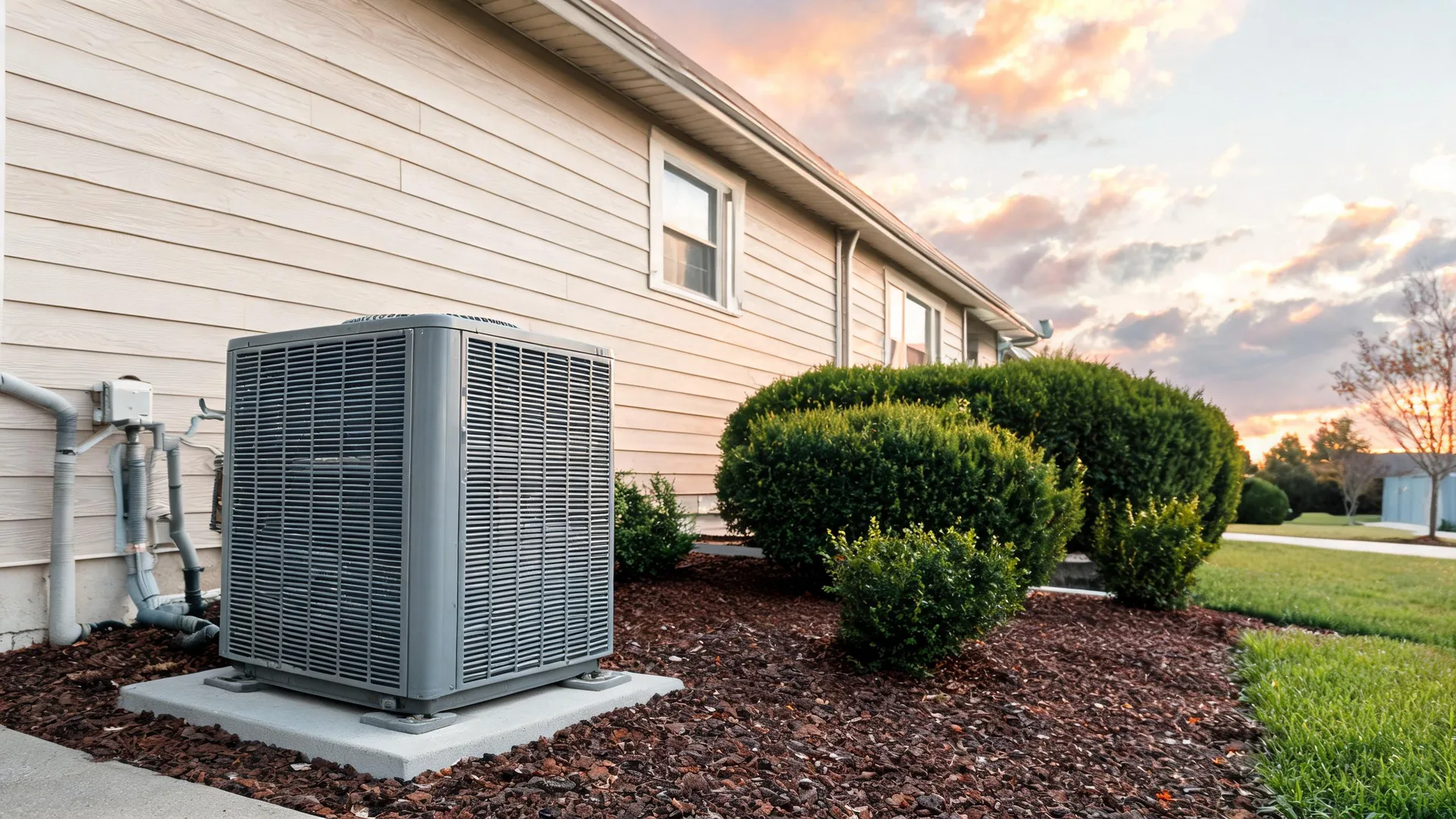
An overhead view of a residential air conditioning condenser unit mounted on a concrete pad next to a house with vinyl siding.

AC Repair in Greenwood, SC

Tell us about the job

Takes about a minute. No obligation.

RepairCentral ACGreenwood County, SC
Step 1 of 2

What ZIP code is the job in?

Check the thermostat and the breaker first

Make sure the thermostat is set to cool and the temperature is actually below room temperature. Then check the breaker panel for a tripped breaker on the AC circuit. Outdoor units also have their own disconnect box mounted on the wall nearby, and that switch can get bumped or shut off during yard work.


Look at the filter and the outdoor unit

Pull the air filter and hold it up to a light. If you can't see light through it, that's restricting airflow and can cause the coil to ice up. Walk outside and check that the condenser isn't buried in leaves, grass clippings or anything blocking the fins. A unit that's running but blowing warm air after sitting iced over needs time to thaw before anyone can diagnose it properly.

5 months
May through September, your air conditioner is on duty
90°F
the average summer afternoon it cools against
8 hail events
in ten years, and hail bends the fins on outdoor coils
53 wind events
in ten years, and wind drives debris into outdoor units
Isometric line illustration of a cutaway house showing interior rooms with furniture, ceiling ductwork, an indoor air handler, and an outdoor condenser unit connected by lines.
Your air conditioner works hardest from June through September.

NOAA nClimDiv, 1991–2020 normals

April is the last quiet month before cooling starts in Greenwood County.

A weak capacitor or low charge usually waits for that first real load in May to show itself.

Half these homes are older, but that's not why your AC quit

Half the homes here were built by 1977
Cooling runs May through September
Summer afternoons average 90°F
Running costs more hereSouth Carolina electricity ran 14.23 cents per kilowatt-hour in 2024.

Five months of cooling a year is more than most of the country asks of a system, and the afternoon load here doesn't let up. Ninety degrees by mid-afternoon is normal for June through August, not a rare peak. That's the outdoor unit running near its limit for hours at a stretch, day after day, all summer. A capacitor or a contactor that would last years somewhere milder gets pushed harder here and wears faster. If your AC is acting up now, that kind of steady strain is usually part of why. Get it looked at properly so whatever's actually worn gets replaced, not just patched.

Get it looked at early

Problems tend to show up in the first weeks of the season, when the load hits a part that was already weak.

Find a contractor
A man in a cap, gray shirt and tan pants steps up a concrete porch stair toward a dark green front door, carrying a canvas tool bag filled with hand tools, beside a potted shrub.
An outdoor air conditioning condenser unit mounted on a concrete pad surrounded by gravel, photographed against a partly cloudy blue sky.

Worn parts don't fix themselves

Five months of hard running already adds up by August. If something's acting up now, don't wait for it to get worse or quit outright. Have it checked and whatever's worn replaced, so the fix holds for what's left of the season.

The capacitor goes first, usually

A capacitor is a small cylinder that gives the compressor and the fan motor the kick they need to start. Heat breaks it down from the inside even when nothing's running wrong, and once it's weak the outdoor unit may hum and not start, or the fan may spin slow. A failing capacitor rarely gives warning beyond that.

A dirty coil makes everything work harder

The outdoor coil has to shed heat for the system to cool anything. Dirt, grass and cottonwood fluff coat the fins over time and choke that off. The compressor ends up straining against heat it can't get rid of, and that strain is what eventually takes it out.

Aerial view of a residential air conditioning condenser unit mounted on a concrete pad next to a house with vinyl siding and a sliding glass door.

A new air conditioner would cut about $60 a year off cooling for a typical Greenwood County home.

  • A new one at the federal minimum, 14.3 SEER2$370 a year
  • An older air conditioner$430 a year

Estimates for a typical Greenwood County home, compared with an older unit built to the previous federal minimum, from EIA household energy data, South Carolina fuel prices and NOAA climate normals. Your home will differ.

Repair makes sense when a part like a capacitor or contactor has failed.

Replacement makes sense when the compressor has failed or the system uses R-22 refrigerant, which is no longer made.

Repair makes sense when one part failed but the rest of the system is sound. A capacitor, a contactor, a fan motor, these are wear items, and replacing one doesn't say anything bad about the compressor or the coil next to it. The compressor is the part that matters most, because it's the one nobody can replace cheaply and the one that ends a system's life when it goes. If a contractor finds the compressor itself is failing, that's a different conversation than swapping a capacitor. Age matters less than what's actually worn. A unit that's been maintained and just lost a capacitor has plenty of life left. One that keeps needing something new every season is telling you where it's headed.