






A nighttime street scene featuring a row of lit white colonial-style houses with wrap-around porches, flanked by oak trees draped in Spanish moss.

AC Repair in Hartsville, SC

Tell us about the job

Takes about a minute. No obligation.

RepairCentral ACDarlington County, SC
Step 1 of 2

What ZIP code is the job in?

The question is usually not whether a repair can be made, almost anything can be patched once, it's whether this unit is worth patching again. A capacitor or a contactor is cheap to replace and doesn't say much about the rest of the system. A compressor or a coil is a different story, and if either one is failing on a unit that's already had other repairs, you're looking at good money going into a machine that's telling you it's done. Age matters more than any single symptom. A system still under warranty is worth fixing almost no matter what breaks. One that's past it, with a tech telling you the next failure is probably the compressor, is usually better replaced before that happens on the hottest day of the year.

5 months
May through September, your air conditioner is on duty
90°F
the average summer afternoon it cools against
18 hail events
in ten years, and hail bends the fins on outdoor coils
129 wind events
in ten years, and wind drives debris into outdoor units
Isometric line illustration of a cutaway house showing an indoor air handler with branching ducts in the attic space, connected by a line set to an outdoor condenser unit beside the building, with simple furniture in two rooms.
Your air conditioner works hardest from June through September.

NOAA nClimDiv, 1991–2020 normals

AC runs May through September here.

Get it checked in April, before the first hot week finds the weak part.

At 14.23 cents a kWh, a struggling AC runs up a bill before it fails outright

Power costs 14.23 cents a kWh statewide
Cooling runs May through September
Summer afternoons average 90°F
Five months of 90 degree afternoonsCooling runs May through September here, with afternoon highs averaging 90°F in June, July and August.

Half the homes in Darlington County were built in 1984 or earlier, so plenty of the AC units here are old enough to be on their original equipment or close to it. That's not a county problem. It's just the odds of an aging unit showing up more often where the houses are older. Mobile homes make up close to a third of the housing stock in Darlington County too, and those units often work in a tighter space than a unit tucked beside a house with a basement or a crawl space. That changes where a tech looks first, not what's likely to be wrong. Most calls still come down to the same handful of parts, a tired capacitor, a failing contactor, a compressor giving out, whether the unit sits under a mobile home or a house built last year.

Get it looked at early

Problems tend to show up in the first weeks of the season, when the load hits a part that was already weak.

Find a contractor
A gray metal air conditioning condenser unit mounted on a concrete pad in a flat grassy field under a partly cloudy sky.

Five months a year of this, every year

That heat is hard on a system, year after year. Parts wear sooner when a unit runs this long under afternoon highs like that. If it's acting up now, that's worth having a tech look at before the next hot stretch finds whatever's already weak. Five more months of it are coming.

The capacitor goes first, usually

The capacitor is a small part that holds a charge to kick the compressor and fan motor into motion, and it weakens with heat and age before it quits outright. A unit that hums, clicks, or takes a few tries to start is telling you the capacitor is on its way out. Caught early, it's a quick swap. Ignored, the motor it was supporting can take the damage instead.

A failing compressor changes the math

The compressor is sealed and not something a tech patches more than once. When it's low on charge, running hot, or seized, the usual question isn't how to fix it. It's whether a unit old enough to lose a compressor is worth that repair at all, or whether a new system is the better move before the next part goes.

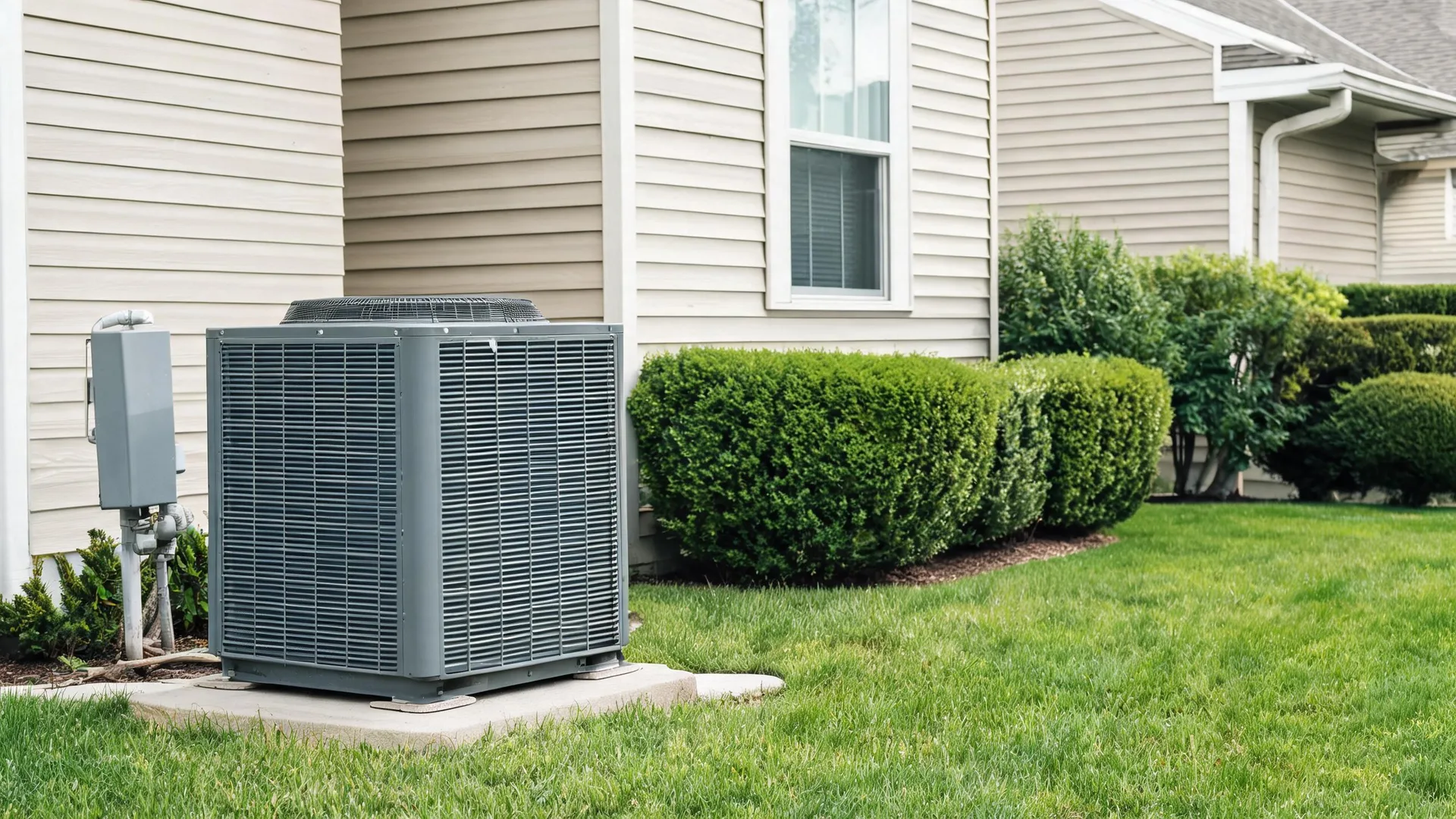
Aerial view of a gray outdoor air conditioning condenser unit mounted on a concrete pad next to a house with vinyl siding.

A new air conditioner would cut about $50 a year off cooling for a typical Darlington County home.

  • A new one at the federal minimum, 14.3 SEER2$390 a year
  • An older air conditioner$440 a year

Estimates for a typical Darlington County home, compared with an older unit built to the previous federal minimum, from EIA household energy data, South Carolina fuel prices and NOAA climate normals. Your home will differ.

Repair makes sense when a part like a capacitor or contactor has failed.

Replacement makes sense when the compressor has failed or the system uses R-22 refrigerant, which is no longer made.

Most of the time the unit tells you something is wrong before it quits. Warm air coming out of the vents when the thermostat is set low is one of the clearest signs, it means the system is running but not doing the one job it has. Short cycling is another, the unit kicks on, runs a few minutes, shuts off, and starts again before the house has cooled at all. Ice on the indoor coil or the line running outside is never a good sign, even though people sometimes take it as the system working hard rather than failing. Water pooling near the indoor unit usually means a clogged drain line, not a refrigerant problem, but it still needs attention before it damages the floor or the unit itself. A unit that used to run quiet and now grinds, squeals, or bangs when it starts is wearing out a motor or a bearing, not just getting older gracefully. Any of these is worth a call before the next hot stretch finds the part that's already failing.