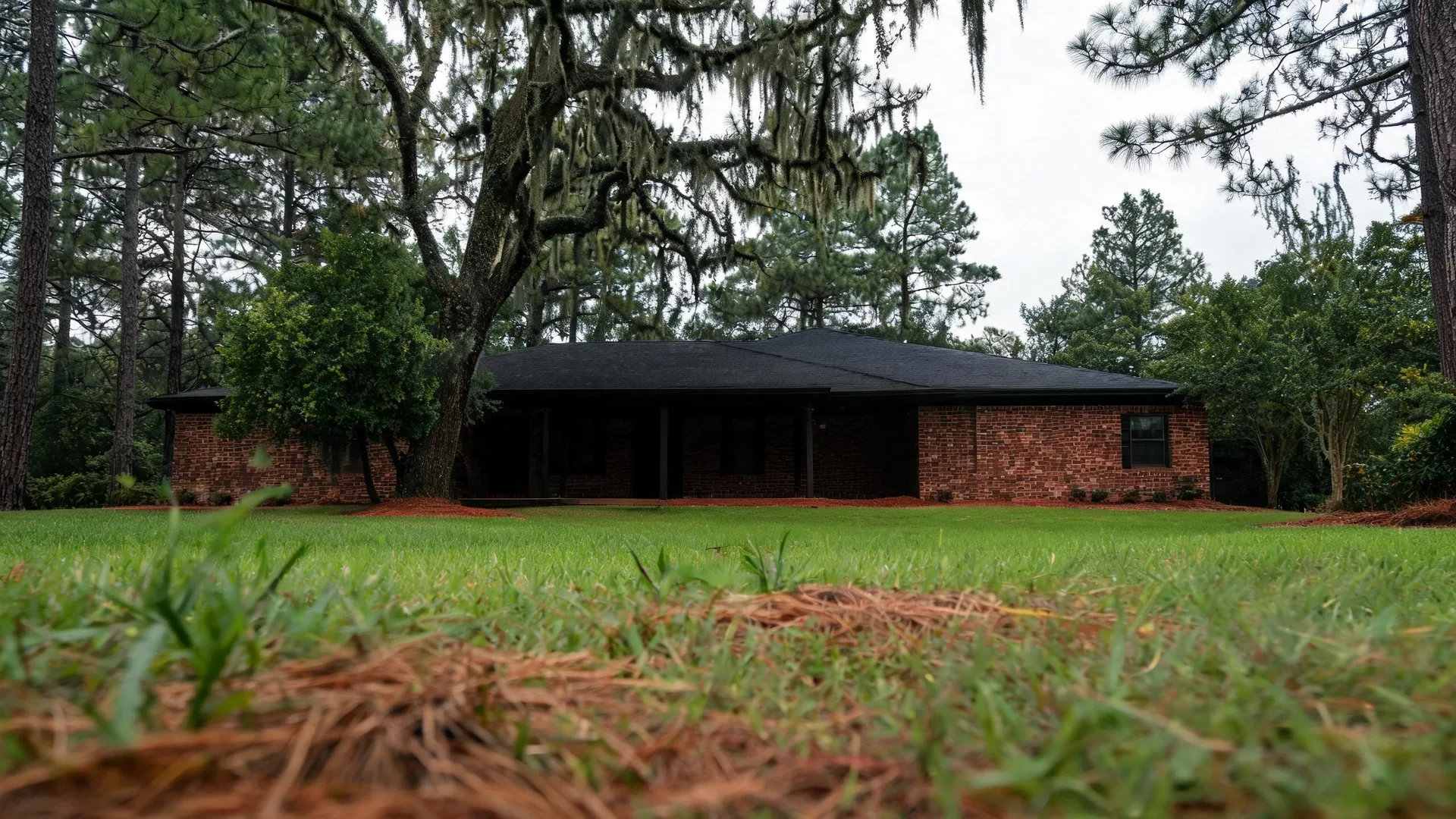





Single-story brick house with a dark shingled roof set behind a lawn and tall pine and moss-draped trees, photographed low to the ground with pine straw in the foreground.

AC Repair in Laurens, SC

Tell us about the job

Takes about a minute. No obligation.

RepairCentral ACLaurens County, SC
Step 1 of 2

What ZIP code is the job in?

Laurens County saw 84 severe weather events between 2015 and 2024, and most of those were damaging wind. That matters for the part of your AC that sits outside and takes the hit. Wind-blown branches and grit can bend the fins on the condenser coil or chip the fan blades, and the unit can keep running for a while after with the airflow restricted. Hail gets at that same coil, denting it in ways you won't notice just looking at it from a few feet back. If your outdoor unit sat through a bad storm, it's worth having someone look at it even if the air is still coming out cold.

5 months
May through September, your air conditioner is on duty
89°F
the average summer afternoon it cools against
12 hail events
in ten years, and hail bends the fins on outdoor coils
59 wind events
in ten years, and wind drives debris into outdoor units
Isometric cutaway illustration of a small house showing interior rooms, ductwork, an indoor air handler, and an outdoor condenser unit connected by lines, on a plain white background.
Your air conditioner works hardest from June through September.

NOAA nClimDiv, 1991–2020 normals

May is when cooling starts in Laurens County.

Whatever strain sat in that condenser all winter shows up the first hot week.

At 14.23 cents a kilowatt-hour, a struggling AC runs up a bill all summer

Power costs 14.23 cents a kWh statewide
Cooling runs May through September
Summer afternoons average 89°F

Half the homes in Laurens County were built in 1985 or earlier, half later, so an AC acting up here isn't a sign of something unusual in the house around it. A system that won't cool right is still most likely a low charge, a dirty coil, or a capacitor on its way out, the same handful of things that go wrong on any central AC. Mobile homes make up close to a third of the housing here, and those often run on a smaller split system or a package unit set right outside, which a contractor will want to know before they come out. Either way, the fix is usually the ordinary one.

Five months of 89 degree afternoons wear an AC down

Cooling runs May through September here, and the afternoon high averages 89°F through June, July and August. That's months of steady hard running, and it's usually what's behind a unit that's struggling. Have it looked at properly so the fix holds for the rest of the summer.

Find a contractor
An outdoor air conditioning condenser unit mounted on a concrete pad surrounded by gravel, photographed against a partly cloudy blue sky.

Get it checked before it picks the worst day to quit

A unit that's been running flat out since May doesn't need guesswork. Get a contractor to check the charge, the coil and the capacitor before the next heat wave finds the weak spot for you.

A weak capacitor won't wait for a good time to fail

A capacitor that's starting to go still gets the compressor started, just with more strain each time. Every cycle it runs on borrowed strength makes the next start harder, until one day it doesn't catch at all. The unit gives no warning in between.

Low refrigerant gets worse the longer it runs

A system low on charge still moves air, so it's easy to let it go. But the compressor was built to run with a certain amount of refrigerant moving through it, and running low means it's working harder and running hotter than it should. Left alone, that heat is what takes the compressor out.

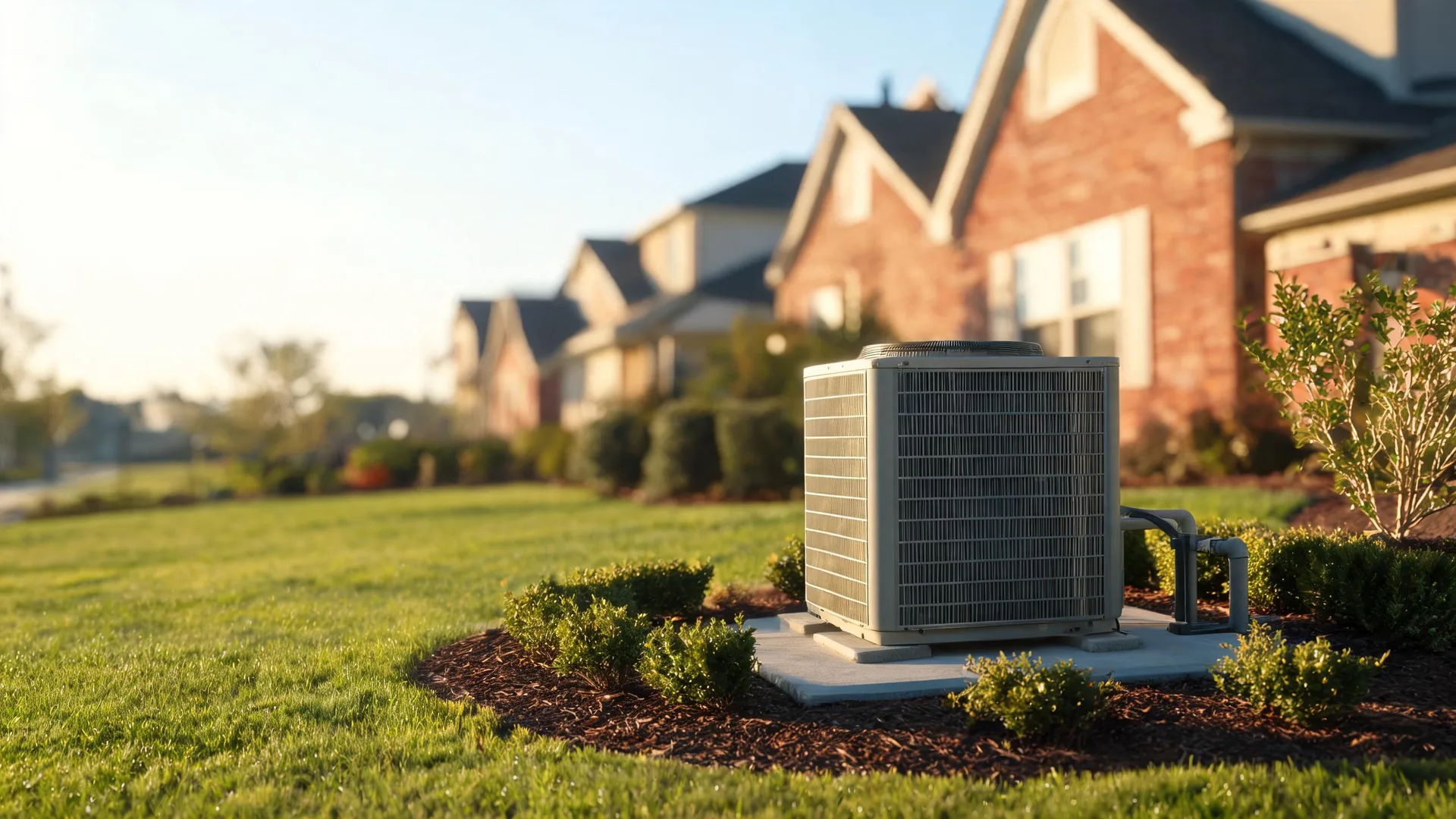
An outdoor air conditioning condenser unit on a concrete pad next to the gray vinyl siding of a residential home.

A new air conditioner would cut about $50 a year off cooling for a typical Laurens County home.

  • A new one at the federal minimum, 14.3 SEER2$350 a year
  • An older air conditioner$400 a year

Estimates for a typical Laurens County home, compared with an older unit built to the previous federal minimum, from EIA household energy data, South Carolina fuel prices and NOAA climate normals. Your home will differ.

Repair makes sense when a part like a capacitor or contactor has failed.

Replacement makes sense when the compressor has failed or the system uses R-22 refrigerant, which is no longer made.

A repair makes sense when the compressor itself is still sound. Capacitors, contactors, fan motors and coils all fail on their own and get replaced without touching the compressor, and an AC with a healthy compressor is usually worth fixing no matter what else has gone wrong. Replacement starts to make more sense when the compressor is the problem, since that part alone costs more than most of what sits around it, and a contractor won't put a new one in an old unit. Age matters too, not because a system quits at a certain birthday, but because the parts around an old compressor tend to fail again soon after the first one is fixed. If you're being told the same unit needs its second or third repair in a couple of years, that pattern is worth more than any single diagnosis.