A white Southern-style house with a wraparound porch photographed at night, surrounded by Spanish moss-draped oak trees lit by landscape lights.

AC Repair in Manning, SC

Tell us about the job

Takes about a minute. No obligation.

RepairCentral ACClarendon County, SC
Step 1 of 2

What ZIP code is the job in?

How old the unit is matters more than what just broke

A capacitor or a contactor is a cheap, quick fix on a unit of any age, and worth doing. The same part failing on a system near the end of its working life is often just the first of several things about to go. If the compressor itself is failing, or the coil is leaking refrigerant, replacing those costs enough that putting it toward a new system usually makes more sense than sinking it into the old one.


A repair that keeps happening is telling you something

One breakdown is just a part wearing out. The same symptom coming back after it was supposedly fixed, or a different part failing every season, means the system as a whole is wearing down, not just the piece that got replaced. At that point the question isn't whether this repair is worth it. It's whether the next one will be too.

5 months
May through September, your air conditioner is on duty
91°F
the average summer afternoon it cools against
8 hail events
in ten years, and hail bends the fins on outdoor coils
98 wind events
in ten years, and wind drives debris into outdoor units
Isometric cutaway illustration of a single-story house showing interior rooms with ductwork and an air handler, connected by refrigerant lines to an outdoor condenser unit on the left.
Your air conditioner works hardest from June through September.

NOAA nClimDiv, 1991–2020 normals

Most AC calls turn out to be a bad capacitor, a worn contactor, a failing fan motor, or a slow refrigerant leak.

Which one it is tells you whether this is a quick fix or the start of something bigger.

At 14.23 cents a kWh, a struggling AC runs up your bill every one of those afternoons

Power costs 14.23 cents a kWh statewide
Cooling runs May through September
Summer afternoons average 91°F

Half the homes in Clarendon County were built in 1990 or earlier, half in 1990 or later. That split does not tell you much about the AC itself. A system gets replaced on its own schedule, not the house's, so an older home can easily have a newer unit and the other way around. What matters more is whether yours is the one that came with the place or one put in since then. One thing worth knowing about the county is that mobile homes make up about a third of the housing stock. The AC in one of those often sits on a pad outside or in a closet rather than in a basement or attic, which changes what a tech has to work around, not what's actually wrong with the unit.

Get your AC checked before May in Manning

Cooling starts in May here, and runs through September. A weak capacitor or motor that limped along all winter usually gives out in the first real stretch of heat, not months into the season. Getting it looked at before May puts you ahead of that.

Find a contractor
A gray residential air conditioner condenser unit mounted on a concrete pad in an open grass field.

What you can check before anyone comes out

Before calling anyone, look at the outside unit. If the fan isn't spinning but you can hear it humming, that's often a capacitor, not a motor, and it's worth saying so when you describe the problem. Check the thermostat batteries and make sure it's set to cool and set below room temperature. Go inside and pull the filter. If you can't see light through it, that's restricting airflow enough to cause real problems, and it's something you can fix yourself right now. Look at the indoor unit for ice on the lines or coil. If you see ice, turn the system off and let it thaw completely before anyone touches it, since running it iced up can push liquid refrigerant back into the compressor. Check the breaker box too. A tripped breaker that won't reset, or trips again right away, means something is drawing too much current, and that's not a job to keep forcing by resetting it.

Ice on the coil spreads if you keep the system running

A coil that's icing over usually means airflow is restricted or the refrigerant charge is low. Either way, running the system longer doesn't melt that ice, it builds on it. Once ice covers enough of the coil, liquid refrigerant can make it back to the compressor instead of boiling off like it should, and a compressor doesn't recover from that.

A struggling compressor pulls more current the longer it runs

A compressor that's starting hard or short cycling is already under strain. Every cycle after that asks the windings to push through the same resistance, and heat builds in the motor a little more each time. Eventually the windings short internally, and at that point you're replacing the compressor instead of whatever was wrong with it in the first place.

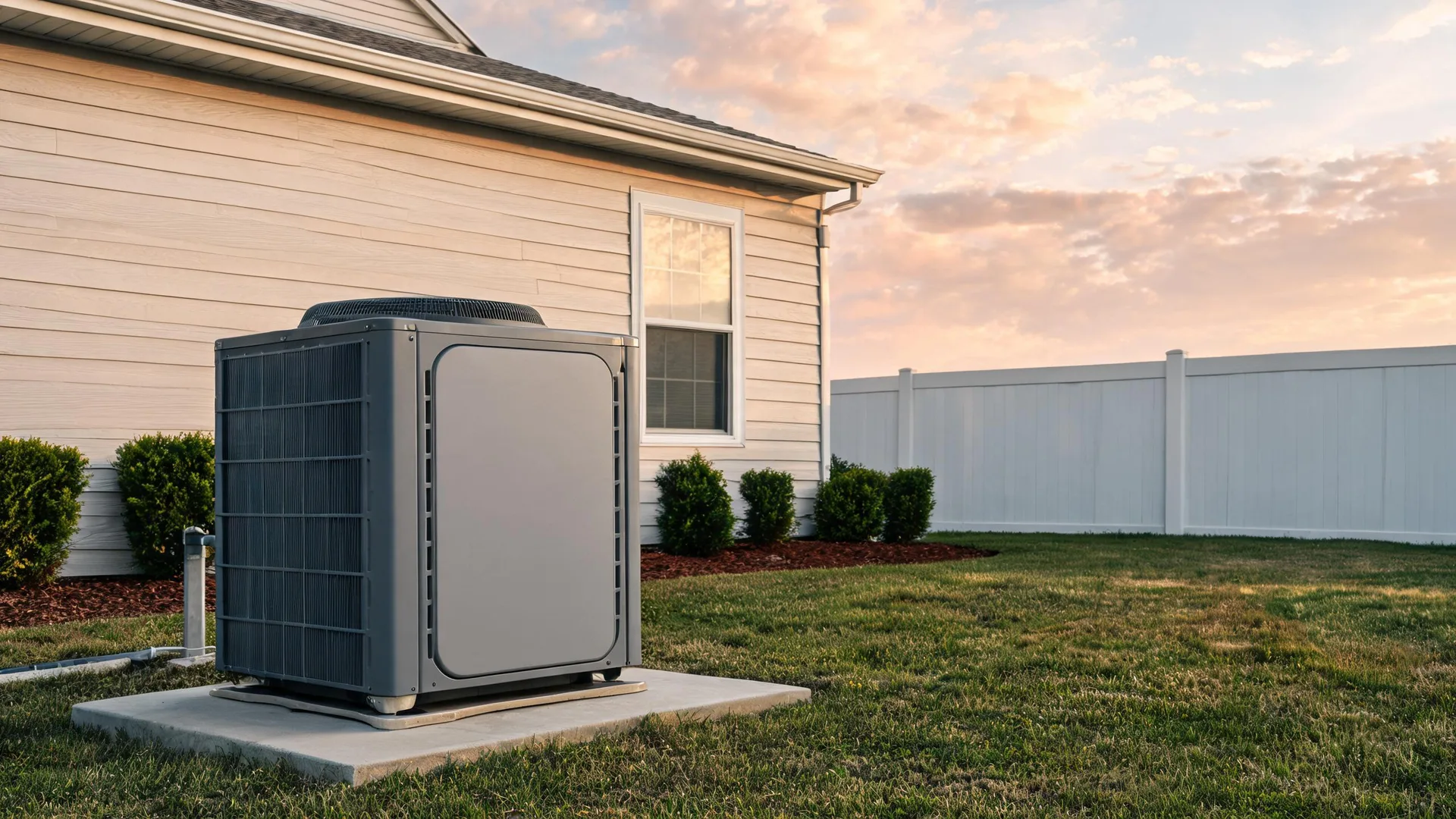
An outdoor air conditioning condenser unit positioned beside a blue-sided house at sunset.

A new air conditioner would cut about $60 a year off cooling for a typical Clarendon County home.

  • A new one at the federal minimum, 14.3 SEER2$410 a year
  • An older air conditioner$470 a year

Estimates for a typical Clarendon County home, compared with an older unit built to the previous federal minimum, from EIA household energy data, South Carolina fuel prices and NOAA climate normals. Your home will differ.

Repair makes sense when a part like a capacitor or contactor has failed.

Replacement makes sense when the compressor has failed or the system uses R-22 refrigerant, which is no longer made.

A diagnostic visit starts outside at the condenser, not inside at the thermostat. A tech checks the capacitor's readings first. Then the contactor, to see if it's pitted or stuck shut. Then the fan motor, to see if it spins freely or drags. Refrigerant pressures get checked next. A high reading points to a different problem than a low one, so which direction it's off matters. Inside, the coil and the airflow across it get a look too. A coil that's starving for air can mimic a refrigerant problem that isn't actually there. None of this takes guesswork once the gauges and meter are on the system. It takes going through things in order, so the part that gets replaced is the one that actually failed.