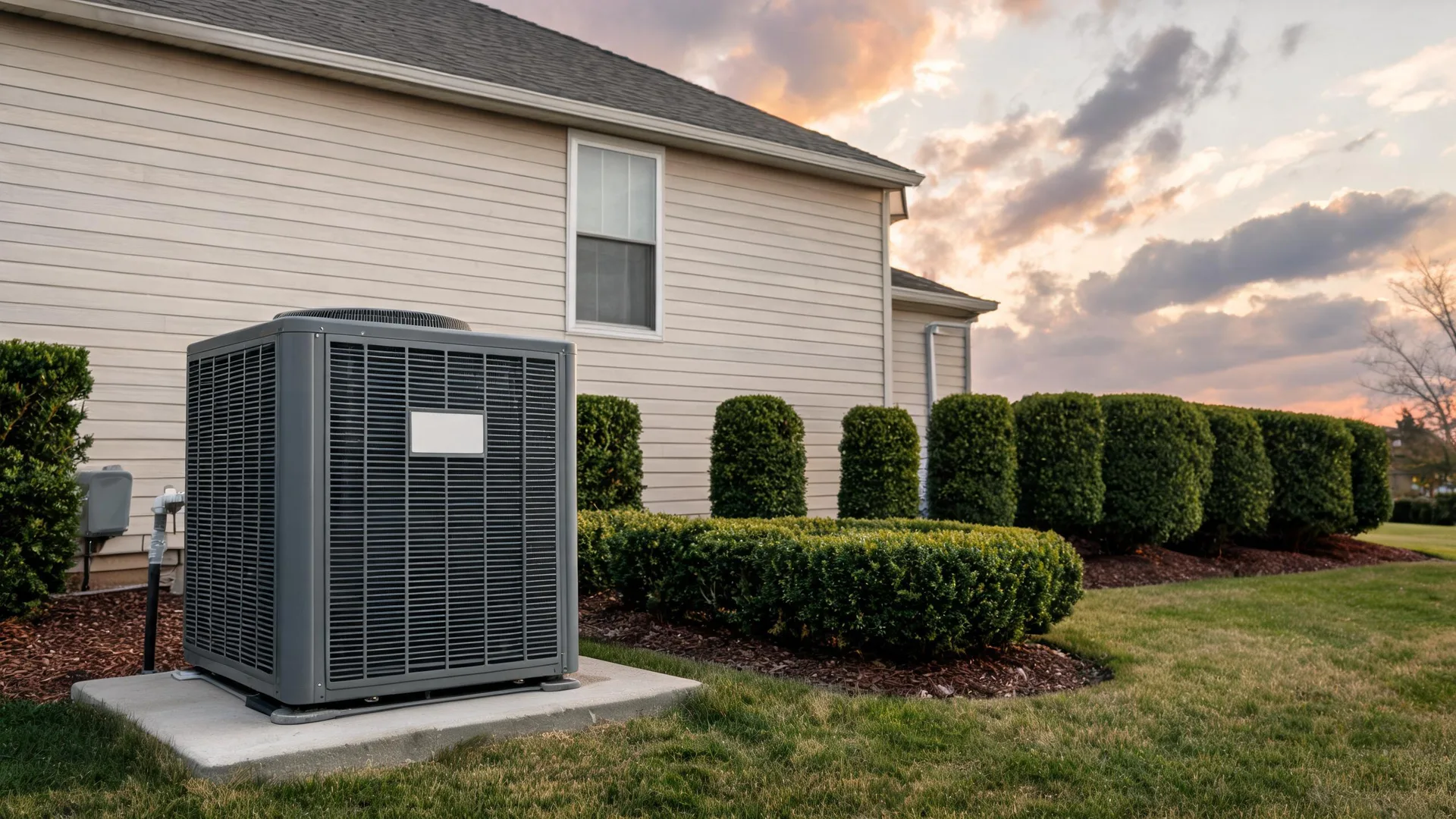
Aerial view of a residential air conditioning condenser unit mounted on a concrete pad next to a house with vinyl siding and a sliding glass door.

AC Repair in Marion, SC

Tell us about the job

Takes about a minute. No obligation.

RepairCentral ACMarion County, SC
Step 1 of 2

What ZIP code is the job in?

Check the thermostat and the breaker first

Make sure the thermostat is set to cool and the temperature is actually below room temperature. Then check the breaker panel for your AC and furnace. A tripped breaker or a thermostat bumped to the wrong setting looks exactly like a dead system, and either one takes a minute to rule out.


What you find changes who you need

If the breaker keeps tripping when you reset it, that points to the compressor or a wiring problem, and you need a tech out before you try again. If the power and thermostat check out but the air isn't cold, look at the filter and the outdoor unit next. A dirty filter or a condenser coil packed with grass and leaves can stop a system cold, and clearing it might be all it needs.

5 months
May through September, your air conditioner is on duty
90°F
the average summer afternoon it cools against
5 hail events
in ten years, and hail bends the fins on outdoor coils
48 wind events
in ten years, and wind drives debris into outdoor units
Isometric cutaway illustration of a single-story house showing interior rooms with furniture, attic ductwork connected to an indoor air handler, and an outdoor condenser unit on a pad linked by refrigerant lines.
Your air conditioner works hardest from June through September.

NOAA nClimDiv, 1991–2020 normals

A tech checks pressures and amp draw on the compressor instead of guessing from the thermostat.

Refrigerant pressure and amp draw point straight at a weak capacitor, a low charge, or a compressor on its way out.

Power here runs 14.23 cents a kilowatt-hour, and a struggling AC burns through it all summer

Power costs 14.23 cents a kWh statewide
Cooling runs May through September
Summer afternoons average 90°F

Cooling starts in May here, and April is worth paying attention to. A system that limped through last September doesn't fix itself over the winter. The first hot stretch puts real load on a capacitor or a contactor that was already marginal, and that's usually when it quits for good. Getting a tech out before May means you're scheduling on your own timeline instead of waiting for a hot day with no air moving. Five months of steady running here is enough to turn a small problem into a no-cool call fast.

Most AC problems in Marion County are ordinary, and worth fixing

Half the homes in Marion County were built in 1982 or earlier, and that alone doesn't make an AC problem unusual. Most no-cool calls here still come down to a capacitor, a low charge, or a dirty coil, the same things that fail on any system this age anywhere. If yours is acting up, it's worth getting a straight answer on which one it is before the next hot stretch.

Find a contractor
A gray residential air conditioner condenser unit mounted on a concrete pad in an open grass field.

Five months of afternoons near 90, and this system rarely gets a break

Cooling runs May through September here, five months straight, with afternoons averaging 90 in June, July and August. That's five months of a compressor cycling on nearly every afternoon just to keep up. It's not that these systems are unusual. It's that they get less rest than one in a milder climate, so the same capacitor or contactor wears down sooner here than it would somewhere cooler. Catching what's actually wrong now keeps a small part from becoming a dead system on the next 90 degree day.

Capacitors wear out before they quit outright

A run capacitor keeps the compressor and fan motor turning under load, and it weakens slowly over years of heat cycling. A weak capacitor shows up first as a slow start, a hard click, or a fan that spins up on its own if you nudge it. By the time the system won't start at all, the capacitor has usually been marginal for a while.

Low refrigerant means a leak, not just old age

A system doesn't use up refrigerant the way a car uses gas. If the charge is low, it's low because it's leaking out somewhere, through a worn coil, a bad fitting, or a rubbed-through line. Adding refrigerant without finding the leak just buys a little time before the same problem comes back.

Overhead view of a gray outdoor AC condenser unit on a concrete pad beside a mulched garden bed and a house with vinyl siding.

A new air conditioner would cut about $60 a year off cooling for a typical Marion County home.

  • A new one at the federal minimum, 14.3 SEER2$400 a year
  • An older air conditioner$460 a year

Estimates for a typical Marion County home, compared with an older unit built to the previous federal minimum, from EIA household energy data, South Carolina fuel prices and NOAA climate normals. Your home will differ.

Repair makes sense when a part like a capacitor or contactor has failed.

Replacement makes sense when the compressor has failed or the system uses R-22 refrigerant, which is no longer made.

Age by itself doesn't mean replace it. What matters is what's actually failing and whether it's a part or the compressor. A capacitor, a contactor, a fan motor, these are normal wear items on any system, and swapping one out is a straightforward repair regardless of how old the unit is. A compressor is different. If the compressor itself is failing, you're often better off putting that money toward a new system instead of a repair that only buys a short stretch of time. The other thing worth asking is how often this same system has needed a tech out. One repair is just a repair. A pattern of repeat calls on the same unit, especially for different parts each time, usually means the system as a whole is wearing out, not just the piece that failed this week.