







Aerial view of a square outdoor air conditioning condenser unit on a concrete pad beside a house wall with a sliding glass door.

AC Repair in Spartanburg, SC

Tell us about the job

Takes about a minute. No obligation.

RepairCentral ACSpartanburg County, SC
Step 1 of 2

What ZIP code is the job in?

A compressor straining against a bad capacitor doesn't just struggle, it draws more current than the wiring and the windings were built for. Keep running it and the motor overheats, and what started as a part worth replacing turns into a compressor that needs the whole outdoor unit swapped. The same goes for a refrigerant leak. Run the system low on charge and the compressor starts pulling in gas instead of a mix of gas and oil, which means it's not getting lubricated the way it should. A frozen evaporator coil has its own version of this. Ice buildup blocks airflow, so the system keeps trying to cool against a block of ice, and liquid refrigerant can end up where only vapor should be, which damages the compressor fast. None of these get better by waiting. They get worse, and they take more of the system down with them.

5 months
May through September, your air conditioner is on duty
88°F
the average summer afternoon it cools against
53 hail events
in ten years, and hail bends the fins on outdoor coils
125 wind events
in ten years, and wind drives debris into outdoor units
Isometric grey illustration of a cutaway single-story house showing interior rooms, ceiling ductwork connected to an indoor air handler, and an outdoor condenser unit linked by lines outside the wall.
Your air conditioner works hardest from June through August.

NOAA nClimDiv, 1991–2020 normals

Warm air from the vents when the thermostat is set low enough to run the system is a sign worth acting on fast.

A compressor that keeps running without doing its job takes more damage the longer it goes unchecked.

Half the homes in Spartanburg County were built in 1990 or later

Half the homes here were built by 1990
Cooling runs May through September
Summer afternoons average 88°F
Cooling starts in May hereApril is the month to get it checked before the heat hits.

Electricity in South Carolina ran 14.23 cents per kilowatt-hour in 2024, and a struggling AC pulls more of it than one running right. A dirty coil, a low charge, a bad capacitor all make the compressor work harder to do the same job, and that shows up on the meter every single day it keeps running that way. This isn't a system you wait out for a few weeks to see if it gets better. The longer it runs strained, the more it costs you while it's also wearing itself toward a bigger repair.

Repair it

If your system came with a newer house, it likely has plenty of life left. Repair is usually the right call.

Find a contractor
A man in a cap, gray shirt and tan pants steps up a concrete porch stair toward a dark green front door, carrying a canvas tool bag filled with hand tools, beside a potted shrub.
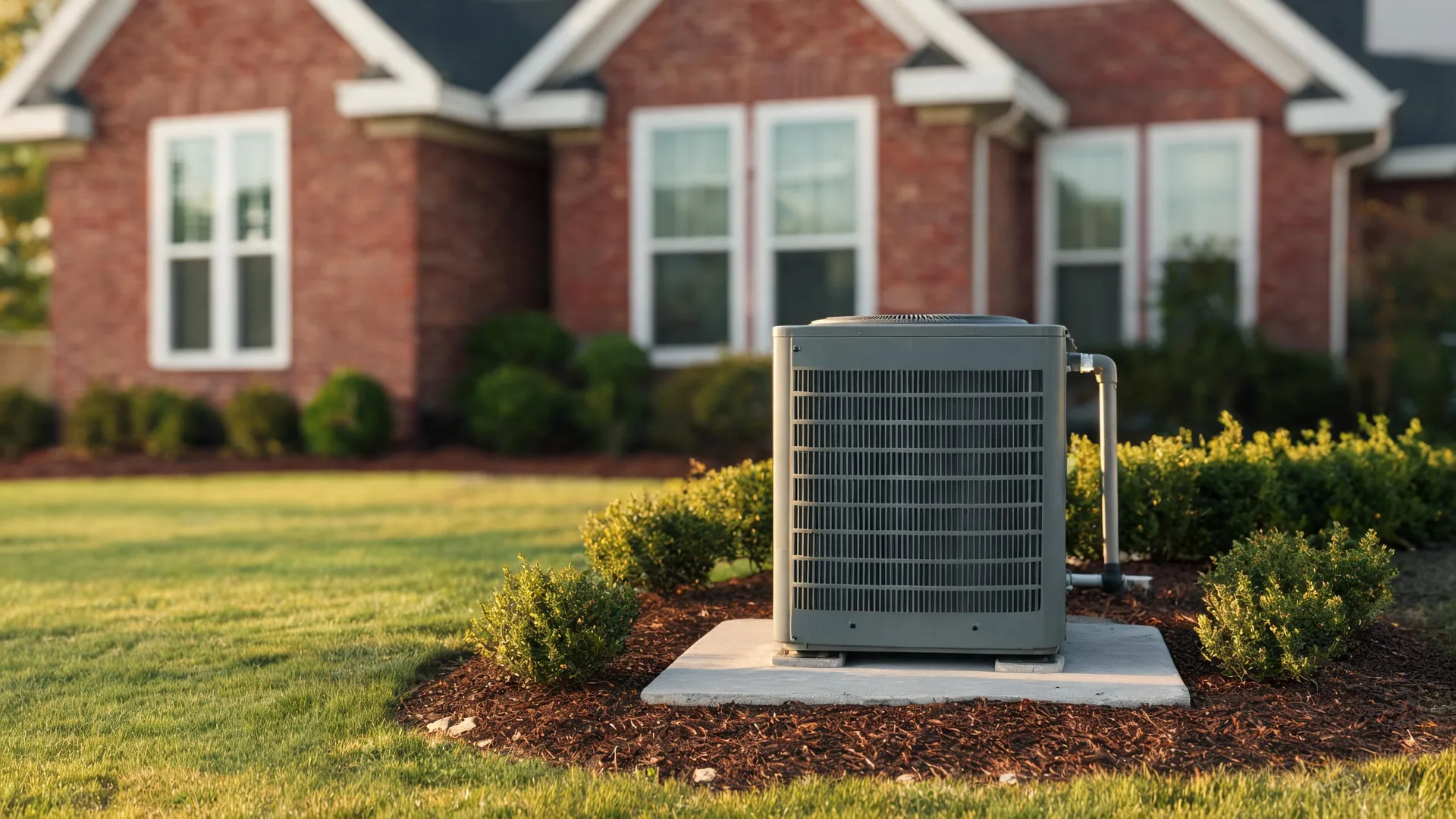
A gray residential air conditioner condenser unit mounted on a concrete pad in an open grass field.

Five months of hard running, every year

This system runs five months a year here, May through September, with afternoon highs averaging 88 in June, July and August. That's sustained load, not just a few hot days. The outdoor unit also sits outside through whatever the weather brings, and Spartanburg County sees damaging wind and hail more years than not. Parts under that kind of strain give out sooner. A capacitor weakens, a contactor pits, a coil gets dirty faster than it would somewhere milder. Whatever's going wrong now has likely been building for a while.

Dirt is the quiet one

A dirty outdoor coil can't shed heat the way it's built to, so the compressor runs longer and hotter to hit the same temperature. A clogged filter does the same thing from the other end, starving airflow across the indoor coil. Neither looks urgent. Both wear down the same parts a hard summer already stresses.

Electrical parts fail without warning

A capacitor doesn't weaken gradually and then announce itself. It holds its charge until it doesn't, and the compressor or fan motor it was supposed to kick-start just sits there humming or doesn't start at all. A contactor works the same way, pitting a little more with every cycle until the points don't make contact anymore. These are wear parts. They fail on a schedule you can't see from outside the cabinet.

Overhead view of a gray residential air conditioning condenser unit mounted on a concrete pad beside a house with asphalt shingle roofing.

A new air conditioner would cut about $40 a year off cooling for a typical Spartanburg County home.

  • A new one at the federal minimum, 14.3 SEER2$320 a year
  • An older air conditioner$360 a year

Estimates for a typical Spartanburg County home, compared with an older unit built to the previous federal minimum, from EIA household energy data, South Carolina fuel prices and NOAA climate normals. Your home will differ.

Repair makes sense when a part like a capacitor or contactor has failed.

Replacement makes sense when the compressor has failed or the system uses R-22 refrigerant, which is no longer made.

Some repairs are worth it and some aren't, and the difference usually comes down to what broke, not how old the unit is. A capacitor, a contactor, a fan motor, these fail on their own without taking the rest of the system down with them. Replace the part and the unit runs like it did before. A compressor is a different story. Once it's damaged, from a refrigerant leak run too long or a bad part that made it overwork, the repair is really a replacement of the whole outdoor unit, because the compressor is most of what that unit is. A coil leak late in the system's life raises the same question, since a new coil on an old unit still leaves you with an old unit. The question worth asking isn't just what this repair costs, it's whether the thing that failed is a part the system depends on or the part the system is built around.