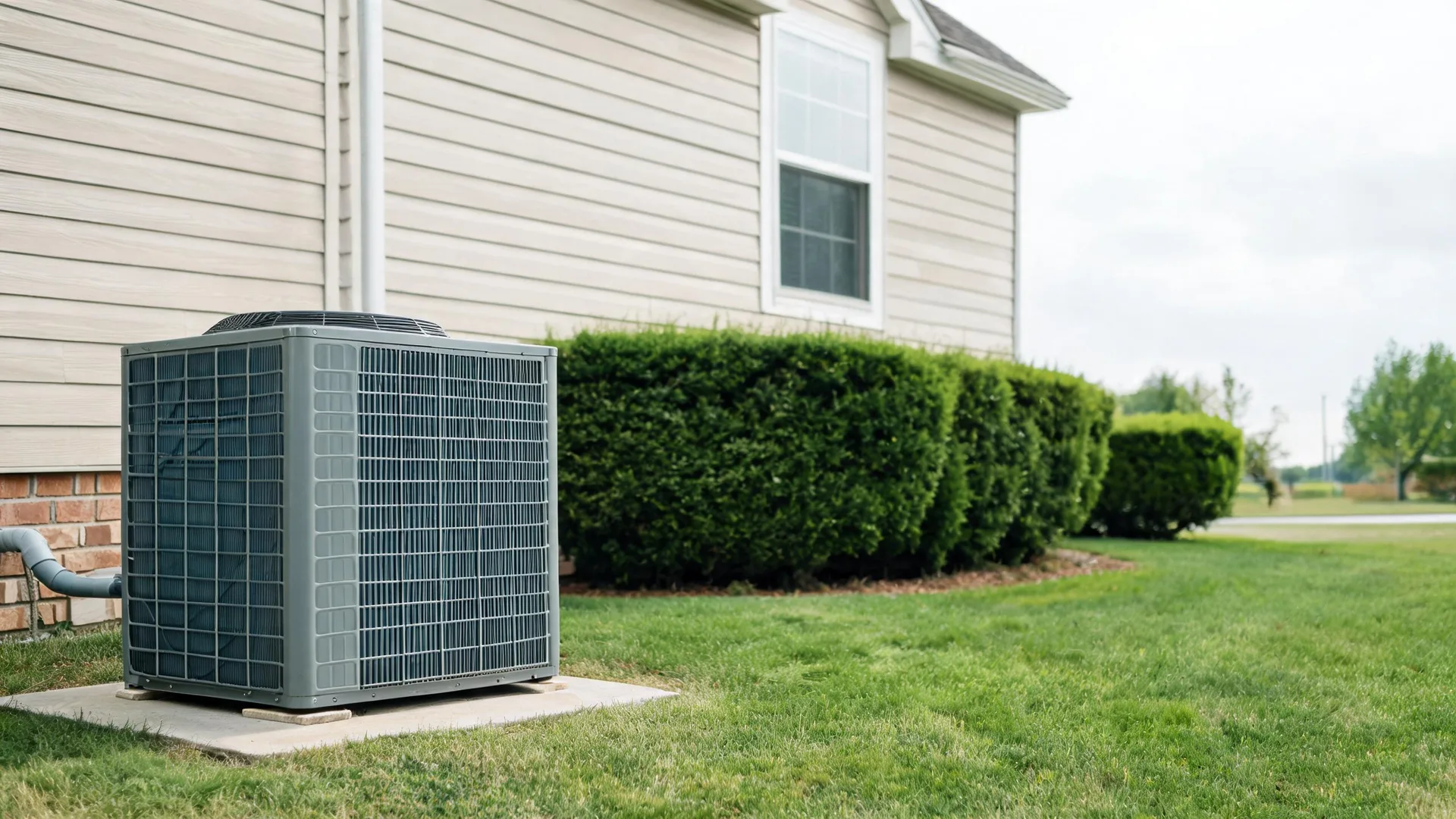
An outdoor air conditioning condenser unit installed beside the exterior wall of a blue vinyl-sided house at sunset.

AC Repair in Sumter, SC

Tell us about the job

Takes about a minute. No obligation.

RepairCentral ACSumter County, SC
Step 1 of 2

What ZIP code is the job in?

What the repair history tells you

A compressor that trips the breaker, a coil that keeps freezing, a capacitor that already got swapped out. Each repair is a data point. One fix on an older unit is just a fix. A pattern of fixes means the system is wearing out faster than it can be patched, and the next part to go is rarely the last.


The compressor changes the math

Most repairs, a capacitor, a fan motor, a contactor, are worth doing no matter the age of the unit. A failed compressor is different. It's the most expensive part in the system, and on an older unit, paying for one often doesn't make sense next to putting that money toward a new system instead.

5 months
May through September, your air conditioner is on duty
90°F
the average summer afternoon it cools against
24 hail events
in ten years, and hail bends the fins on outdoor coils
182 wind events
in ten years, and wind drives debris into outdoor units
Isometric cutaway illustration of a single-story house showing interior rooms, ductwork and an air handler in the attic space, and an outdoor condenser unit connected by lines at the exterior wall.
Your air conditioner works hardest from June through September.

NOAA nClimDiv, 1991–2020 normals

Half the homes in Sumter County were built in 1987 or later.

A system that came with a newer house usually still has years in it, and that makes repair the right call first.

Cooling starts in May here, and that's when a weak part gives out

Cooling runs May through September
Summer afternoons average 90°F
182 damaging wind events from 2015 to 2024
Running it costs more hereSouth Carolina homes paid 14.23 cents per kilowatthour in 2024, so a system running wrong costs you every month it goes unfixed.

May through September, the afternoon high in Sumter County averages 90 degrees, and the system runs most of those hours to keep up. That kind of steady load wears parts down faster than a milder climate ever would. Sumter also gets hit with damaging wind more than most places, 182 times over the past decade, and each one means a power cut followed by the system working hard to catch the house back up. If something's acting up now, there's usually a real reason behind it, not just bad luck. Worth having it looked at properly so whatever gets fixed actually holds.

Repair it

If your system came with a newer house, it likely has plenty of life left. Repair is usually the right call.

Find a contractor
An outdoor residential air conditioning condenser unit mounted on a concrete pad, surrounded by gravel with a blue sky in the background.

Five months in, and counting

Five months of cooling here means the heat the system is dealing with right now has already been going since May. If a part was going to show stress, this stretch of the year is when it does it. Get the actual cause checked before it takes anything else with it.

Check the simple things first

Look at the thermostat before anything else. Make sure it's set to cool and the temperature is actually below room temperature. Check the breaker box for a tripped breaker, especially after a storm. Go outside and look at the condenser unit. If the fan isn't spinning and you don't hear any hum, that's worth noting when you call. Check the air filter too. A filter packed with dust chokes the airflow and can make the whole system struggle.

What not to touch

Don't open the condenser cabinet or touch anything inside it. The capacitor in there holds a charge even with the power off. Don't pour water or anything else on a coil you think might be frozen. Turn the system off and let it thaw on its own, that part you can do safely. If the unit is tripping the breaker more than once, stop resetting it. Repeated trips usually mean a short or a failing compressor, and running it again can turn a repair into a replacement.

An outdoor air conditioning condenser unit positioned on a concrete pad next to a blue-sided house, surrounded by green shrubs and flowering hydrangeas at sunset.

A new air conditioner would cut about $60 a year off cooling for a typical Sumter County home.

  • A new one at the federal minimum, 14.3 SEER2$400 a year
  • An older air conditioner$460 a year

Estimates for a typical Sumter County home, compared with an older unit built to the previous federal minimum, from EIA household energy data, South Carolina fuel prices and NOAA climate normals. Your home will differ.

Repair makes sense when a part like a capacitor or contactor has failed.

Replacement makes sense when the compressor has failed or the system uses R-22 refrigerant, which is no longer made.

A diagnostic visit starts with questions, not tools. What is the system doing, when did it start, does it happen all the time or only in the afternoon. Then gauges go on the lines to check the refrigerant charge and pressures, because that tells you right away if the system is low or if something downstream is restricting flow. The tech checks amp draw on the compressor and fan motor against what those parts are rated for, since a motor pulling too many amps is a motor about to fail. Electrical connections get checked too, a loose or corroded connection can cause the same symptoms as a bad part. The capacitor gets tested under load, not just looked at, because a capacitor can look fine and still be weak. By the end you should know exactly which part is failing and why, not just that something is wrong.