
Heat pump making a loud noise in Rock Hill, SC
Get matched with someone who does this kind of work in York County.
Get my matchA loud noise from your heat pump usually points to something specific, not a mystery. A banging or clanking sound often means a loose part inside the outdoor unit, sometimes a bent fan blade hitting its cover. A high-pitched squeal can mean a motor bearing wearing out. Buzzing points to an electrical problem, like a failing capacitor or a contactor arcing. Rattling that comes and goes with the wind might just be debris caught in the outdoor cabinet, which winters here can blow in along with leaves and twigs. A hissing or screeching noise when the system switches between heating and cooling can mean refrigerant trying to move through a restriction. None of these get quieter on their own, and a few, like a bad bearing or a refrigerant restriction, can turn into a bigger repair if the unit keeps running while they get worse. Worth having someone look at it before it costs more to fix.
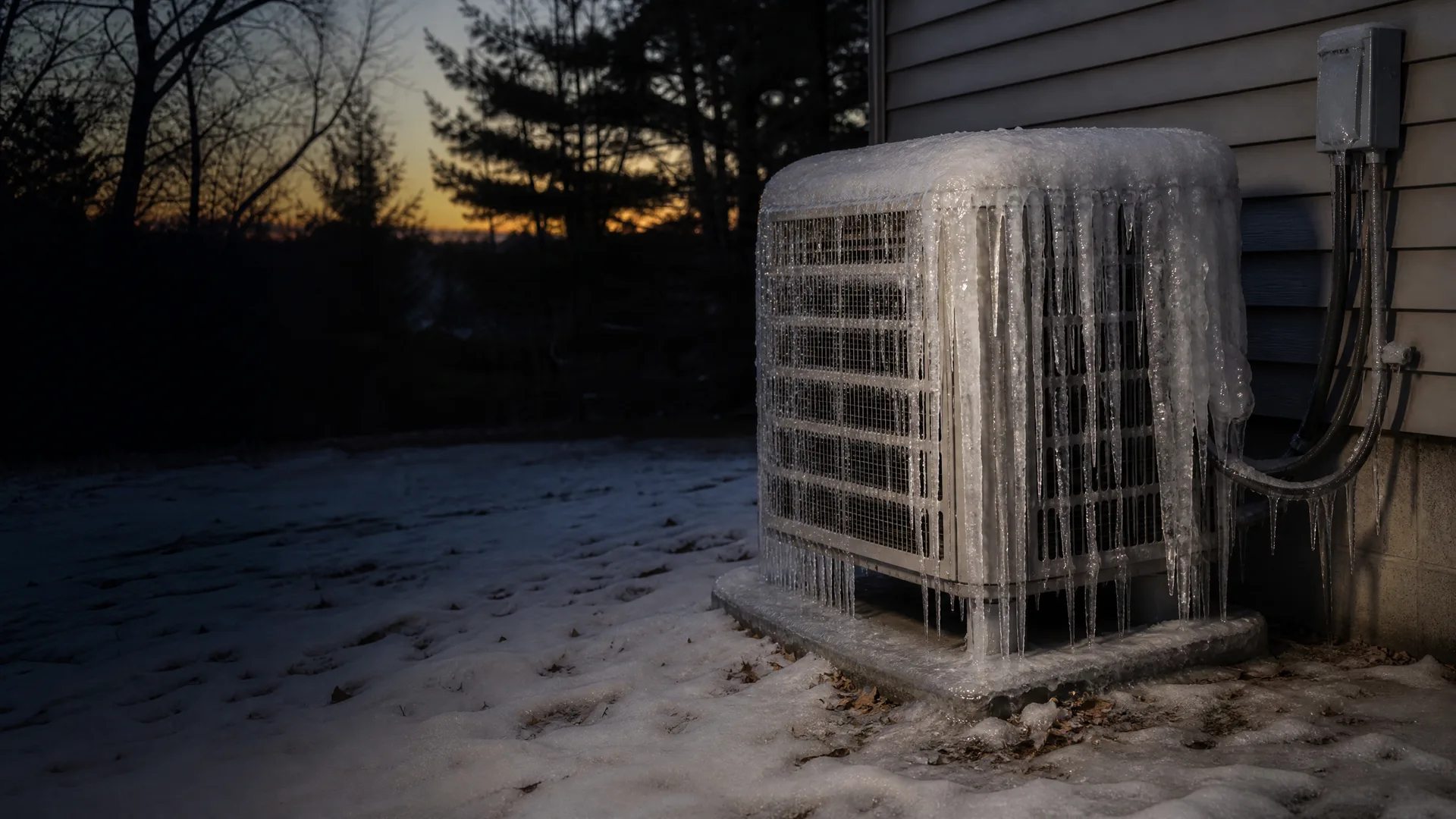
You go out for the paper before sunup and hear it before you see it, a low grinding coming from the side yard. Frost is already heavy on the grass. The outdoor unit is wrapped in ice, thick over the coils and climbing the sides, and the fan is dragging against it, trying to turn. It is January, and this is the kind of cold morning York County gets a handful of times a season, the kind that asks a lot of a heat pump running its defrost cycle. The noise doesn't stop when you knock on the casing. Inside, the air coming from the vents feels cooler than it should for how hard the system sounds like it's working.
Why does your heat pump work so hard in Rock Hill?
Winter nights average 33°F
Winter nights here average 33°F, cold enough that your heat pump defrosts often, and that cycling is when loose parts start banging.
Heat runs October through April
Heat runs October through April here, about seven months. That's seven months of moving parts wearing before a noise shows up.
Cooling runs May through September
Cooling runs May through September here, about five months. A noisy unit gets worked hard in both directions, all year.
NOAA nClimDiv 1991-2020
A noise you can ignore for now
Some sounds are worth living with for a bit. A faint click when the compressor kicks on is normal. A soft whoosh of air is normal. Even a brief rattle during defrost, when the system reverses to melt frost off the coils, often clears up on its own once the cycle ends. If the noise is quiet, short, and tied to the unit starting up or switching modes, you can wait and listen for a pattern before you call anyone. Write down when it happens and what you were doing, running the heat, the system defrosting, a windy day. That pattern is useful if the noise comes back.
A noise that means stop and look
Grinding that does not let up, metal striking metal, or a noise that gets louder over an hour is different. Those point to a part already failing, a fan blade out of balance, a motor bearing going, a compressor under strain. Running a heat pump through a loud grinding noise on a cold night can turn a repair into a replacement. If the sound is constant rather than occasional, or it showed up suddenly and stayed, that is not one to sit on. Shutting the system off at the thermostat until someone looks at it protects the parts that are still working.




Get matched with a heat pump pro in York County
A heat pump that's been banging or grinding through a York County winter doesn't get better with another cold night on it. Parts that are loose or dragging keep loosening and dragging until something gives out, and that often happens on the night you need the heat most. Finding someone to look at it is its own chore, searching, calling around, telling three different people the same thing about the sound your unit makes. That's the part you can hand off. Someone who works on these systems in the Rock Hill area can hear a description like yours and already have an idea what's loose or worn before they ever pull the panel. The sooner that happens, the sooner the grinding stops being part of your mornings. Use the button above and let someone who does this work take it from here.
What That Noise Comes Down To
- A loud noise from your heat pump almost always traces back to one specific part, not a mystery breakdown.
- Banging or clanking usually means something loose or a bent fan blade, while a squeal often points to a motor bearing.
- York County winters put your system through frequent defrost cycles, and that's when loose parts tend to announce themselves.
- A sound you can ignore today is rarely the same sound a month from now, since loose and dragging parts only get looser.
- Instead of searching for contractors, calling around, and explaining the noise over and over, you answer a few questions once.
- You get matched with a contractor who handles heat pump repairs in your area, and they reach out to you directly.
A heat pump that's making noise is telling you something, and that something is almost always one part, not a failing system. Bang or clank, and you're likely looking at a loose panel, a bolt that worked itself free, or a fan blade that's bent enough to catch its cover on every rotation. A squeal points to a bearing that's worn dry and is wearing faster by the hour. None of this is random, and none of it needs guessing once someone's hands are on the unit.
What makes York County hard on these parts is how often your system defrosts through the winter. Each defrost cycle is a small jolt to anything already loose, and a part that rattles a little in December is grinding by February. Waiting doesn't buy you anything here. A sound you can shrug off tonight is rarely the same sound in a few weeks, because loose stays loose until it's fixed, and dragging stays dragging until something gives.
The part most people dread isn't the repair, it's everything before it: finding a contractor who actually works on heat pumps, calling two or three of them, describing the noise again each time, then sitting with quotes that are hard to compare because nobody saw the same thing. None of that is necessary here. Answer a few questions about what you're hearing and where, and you get matched with a contractor who handles this kind of repair in your area. They call you. You explain it once.

Heat Pump Repair
Find a heat pump repair pro in York County

- A York County pro who repairs heat pumps gets your request.
- Your request goes to a York County pro who takes heat pump jobs.

- After this form, you can stop searching for a heat pump pro.
- One request and the search for a pro is handled.

- Describe your heat pump job once, to one pro.
- Fill out one short form instead of calling around.

- A licensed pro who repairs heat pumps in York County gets your request.
- The pro who gets in touch is licensed in South Carolina and works in York County.