Is a high-efficiency AC worth it in South Carolina
A local installer who puts in air conditioners gets your project.
Your AC runs most of the year here. South Carolina summers are muggy, and that unit works hard from spring through early fall just to keep the house dry as much as cool. Whether a high-efficiency model is worth the switch depends on what you have now, how your house holds up to heat, and what you're paying to run it today.
Most homes in this state heat with electricity, and power here runs at a typical rate, not high and not low. That matters for the math on a new system. A higher SEER2 rating means the compressor and fan use less electricity to move the same amount of heat out of your house. Whether that difference adds up to something worth the upfront cost is a question with a real answer, but it depends on your current unit's age, its rated efficiency, and your actual summer bills.
Getting that answer usually means calling a few contractors, walking each one through your house and your equipment, and waiting on quotes that are hard to compare because they're never for quite the same thing. That part can be handed off.
A contractor who installs AC systems in South Carolina can look at what you have, tell you what a high-efficiency replacement would actually change for your house, and give you a straight answer instead of a guess. You'd be matched with one who works on homes like yours, and they'd reach out directly. No repeating your situation to five different companies, no sorting through quotes that all measure something different.
What they find and what they recommend is between you and them. What this page can do is get that conversation started instead of leaving you to track down who's worth calling.
Is a high-efficiency AC worth it in South Carolina?
Your current AC runs for months on end here, and you're wondering if upgrading to a high-efficiency unit actually pays off in a state where summers stay muggy and the power bill never really goes away. You're not looking to replace it just to replace it. You want to know if the higher price buys you something real.
It depends on what you're replacing, not on living in South Carolina
A high-efficiency AC uses less electricity to pull the same heat and moisture out of your house. The real gain comes from the gap between what you have now and what you'd install. If your current unit is old, the jump to a high-efficiency model can cut what it draws by a wide margin, because older compressors run less efficiently all the way through the season. If your unit is only a few years old, that gap is smaller, and the new one buys you less. Power here runs at a typical price, so the savings come from how much less electricity the unit pulls, not from a higher rate per kilowatt. A load calculation from a contractor, sized to your house, tells you which side of that gap you're on.
A unit that's kept clean and clear
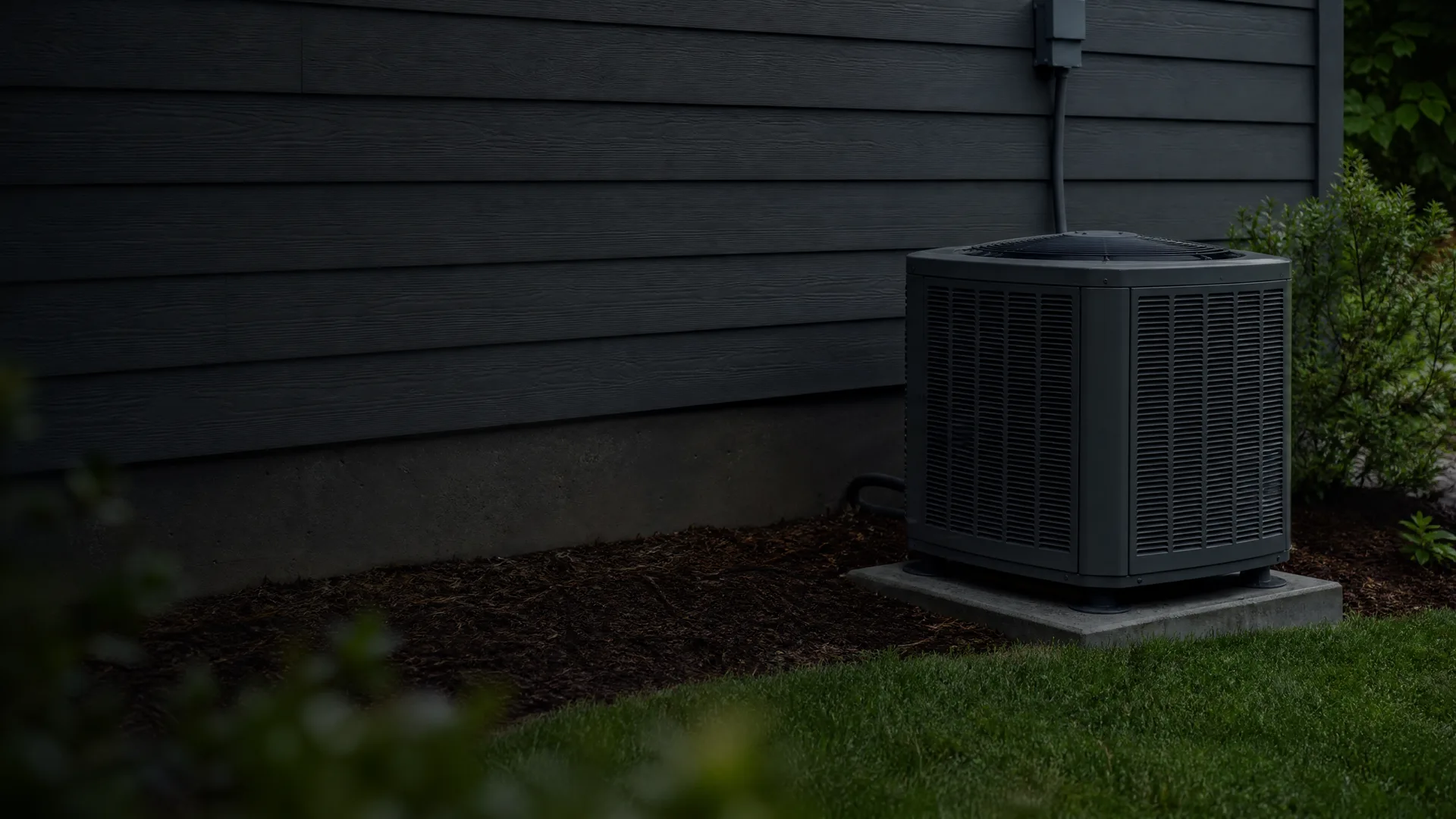
The condenser sits on its pad with open air around it. Coil fins are clean, so the unit can shed heat the way it was designed to. A homeowner who keeps mulch and shrubs trimmed back is giving the system room to work without strain.
A unit buried in dirt and debris
Grime coats the coil fins and the cage around them. Airflow through a dirty coil drops, and the compressor has to work harder to move the same heat outside. Left this way through a South Carolina summer, that strain doesn't let up.
What an old, strained unit is doing to your house
If your AC is older, it's likely running longer stretches to hold the same temperature, and that shows up as higher humidity indoors even when the thermostat looks right. Musty smells, damp-feeling rooms, or windows that fog on the inside are signs the unit isn't pulling moisture out the way it used to. Over a South Carolina summer that runs for months, that moisture has time to work on wood trim, drywall, and anything stored in a closet or garage that doesn't get much airflow.
There's also the question of what happens if it fails outright in July. Finding a contractor at that point usually means calling around while the house sits at 85 degrees, explaining the same problem to each one, and waiting to see who can actually come out that week. Getting matched with a contractor now, before anything breaks, means that conversation already happened and someone who knows your situation is the one reaching out to you.
Describe the project once instead of to every installer.
Asking costs nothing, and the choice to hire stays yours.
What SEER2 actually measures
SEER2 is a ratio of cooling output over a season to the electricity a unit draws, tested under conditions that put more weight on long, humid runtimes than the old rating did. A higher number means the unit moves the same heat out of your house for less electricity. It says nothing about how big a unit you need or how fast it cools a room on a hot afternoon. A correctly sized high-efficiency unit and an oversized one can carry the same SEER2 label and behave very differently in your house, especially on the humid days when your current unit runs longest.
Why South Carolina runtime changes the math
An AC's efficiency rating only pays off across the hours it actually runs. In a place where the unit cycles on and off a few times a day, a higher SEER2 model takes a long time to make up the cost difference. In South Carolina, where the unit runs for stretches of the day across spring, summer, and early fall, those hours add up fast, and every one of them is billed at whatever your electric rate is. That's the whole case for efficiency here: not that the technology is better, but that your house gives it more hours to work.
Staying with what you have
If your current AC is still holding its temperature and your bills haven't climbed, there's no rule that says you have to replace it early. A unit that's maintained, with clean coils and good airflow, can run efficiently for years yet. Replacing it before it's worn down just to chase a SEER2 number means paying for equipment before you need it. If the humidity stays manageable and the system isn't short-cycling or running constantly, the money is better spent on upkeep than on a new install.
Moving to a high-efficiency unit
If your AC is old enough that it runs long stretches all summer just to keep up, a high-efficiency replacement will draw less power to do the same job, and in a state where the unit runs for months, that difference shows up on the bill. A new system also tends to control humidity better, since it can run longer at lower output instead of blasting cold air and shutting off. The tradeoff is the upfront cost of installation, which only makes sense once the old unit is actually struggling.
Power costs 15.12 cents per kilowatt-hour statewide
At just over 15 cents a kilowatt-hour, power here isn't cheap or expensive next to the rest of the country. That means the savings from a high-efficiency unit come down to how many hours your AC actually runs each summer, not a steep rate working in your favor.
EIA-861 2025 statewide residential average
1
Heat moves from indoor air into the refrigerant at the coil
2
The compressor raises the refrigerant's pressure and temperature
3
Hot refrigerant travels outside to the condenser coil
4
The condenser fan pulls outside air across the coil to release heat
A high-efficiency AC pays off in South Carolina when the unit it's replacing is old, strained, or already costing you in comfort as much as in dollars. It doesn't pay off just because the rating number is higher. If your current system holds its temperature and keeps the house dry without running nonstop, that's worth something too. The honest answer depends on your equipment, your house, and what you're seeing on your bills, not on a rule that applies to every home in the state. What you don't have to do is figure out the rest of this alone. You don't have to search through contractors, call around for quotes, explain your system's age and symptoms to five different people, then sit with a stack of estimates trying to compare them against each other. A contractor who knows your equipment and your house can look at what you have and tell you where you actually stand.
A local pro for your air conditioner installation
Skip collecting and comparing quotes for the new air conditioner.