
A large spreading tree draped with hanging moss stands at the edge of a flat green marsh grassland, with a narrow water channel in the foreground and a hazy sky at dusk.Find my pro

What SEER rating makes sense for a South Carolina home

A local installer who puts in air conditioners gets your project.

A South Carolina summer asks a lot of an air conditioner. The unit runs long hours against heat and humidity both, and the SEER rating on a new system decides how much electricity it uses to do that. Since most homes here heat with electric heat too, the equipment you pick affects the bill in both July and January.

Power here is typical in price, not the cheapest in the country and not the most expensive. That makes efficiency worth real money over a system's life, but it also means the math is different than it would be somewhere power costs twice as much. A higher SEER rating costs more to install. Whether that difference pays for itself depends on how big your home is, how long you plan to stay in it, and what unit you're comparing against.

This is where a licensed contractor matters more than a number on a spec sheet. The right SEER rating for your house depends on things a page can't see: your duct system, your square footage, how your current unit is sized, and what kind of use your household puts on it. Two houses on the same street can need different systems.

That's the reason this page connects you to a contractor rather than just a rating to shop for. Once you answer a few questions about your home, you get matched with someone who installs systems in South Carolina and knows what the climate here does to equipment. They'll reach out to you directly to talk through what your home actually needs.

You don't have to figure out the right SEER number on your own first. Send the form, and the work of finding the right fit for your house stops being something you have to sort out alone.

What SEER rating do I need for a new AC in South Carolina?

You want a straight number before you start getting quotes, something to measure what an installer tells you against. With summers here running long and muggy, and electricity doing the heating too, the rating on the new unit is going to show up on your power bill for years, so it is worth knowing what actually fits a South Carolina house before the conversation starts.

A SEER2 rating of 15 or higher is worth paying for here

The federal minimum in the southern states, including South Carolina, is SEER2 14.3, and any new unit sold here has to meet that. But minimum and right for your house are not the same thing. Your system runs for most of the year against heat and humidity, so every point of efficiency above that minimum keeps showing up as lower bills, summer after summer. A unit rated 15 or 16 costs more to install than one at the minimum, but it earns that back faster here than it would in a milder state, because it runs so many more hours. Going higher than 16 starts to cost more than it saves for most houses, unless yours has an unusual load.

A gray outdoor air conditioning condenser unit on a concrete pad beside a house with horizontal lap siding and a stone veneer base, with a disconnect box and conduit on the wall, mulch bed and shrub to the right, and mowed grass in the foreground.

A unit sized and running right

A clean condenser like this one moves heat out of the house without straining. The coil stays clear, airflow stays steady, and the SEER rating on the label is actually what you're getting. In a South Carolina summer, that's the difference between a system that keeps up and one that runs nonstop.


An outdoor air conditioner condenser unit on a gray composite pad beside a house with horizontal siding, a concrete foundation, a basement window, and a conduit and disconnect box on the wall.

A unit losing ground

Dust and grime caked on the cabinet choke the airflow a condenser needs to shed heat. It pulls more power to do the same job, and the SEER rating on paper stops matching what you're paying for. Left like this through a long summer, it works harder and still falls behind.

An older man with gray hair and a beard, wearing a dark coat flecked with snow, stands smiling in a dimly lit home hallway with lamps, a framed picture, and a wooden door.
A gray-haired, bearded man in a dark coat dusted with snow stands just inside an open door of a warmly lit home, looking off to the side.
An older bearded man in a dark snow-dusted coat and gray scarf stands just inside a dimly lit home entry, with a framed picture, lit table lamp, and an adjoining room with a fireplace behind him, and snow visible through the open door.
A gray-haired bearded man in a dark coat and scarf dusted with snow stands smiling in a dimly lit entryway with a white front door, a side table with a lit lamp, an oval mirror, and a patterned rug.

How SEER2 Plays Out at Home

  • SEER2 measures how much cooling a unit delivers per unit of electricity, not how strong or how big it is.
  • The rating is tested at a set outdoor temperature, so a system still works harder on a 95 degree afternoon than the label implies.
  • A unit sized too large for the house cycles on and off fast and never runs long enough to pull humidity out of the air.
  • The condenser outside and the coil inside have to be matched as a pair for the system to actually hit its rated SEER2.
  • Airflow through the ductwork and a clean filter affect the real efficiency as much as the equipment itself does.
  • A correctly sized system run by a load calculation, not just the square footage of the house, gets closer to its rated number in daily use.

SEER2 is a ratio. It tells you how much cooling a system produces for the electricity it draws, tested under set conditions in a lab. That number on the sticker is a ceiling, not a guarantee. The test runs at a fixed outdoor temperature, and South Carolina spends plenty of afternoons past that mark, so the unit works harder than the label suggests on the days that matter most. Size plays a bigger role than most homeowners expect. A system too big for the house cools the air fast and shuts off before it has pulled the humidity down, so the air feels damp even after the thermostat is satisfied. It also means more cycling, more starts and stops, more wear. The condenser outside and the coil inside are rated together as a pair. Mismatch them, pair an old coil with a new high SEER2 condenser, and the system won't hit the number on the new unit's label no matter how good that unit is on its own. None of this works if the ductwork is choked down or the filter is clogged, since restricted airflow makes the compressor work harder for the same result. A contractor who runs a load calculation on the house, not just a quick look at square footage, sizes the system to actually reach the SEER2 rating in daily use rather than falling short of it.

A gray outdoor air conditioning condenser unit on a concrete pad beside a house with horizontal gray siding, with a wall-mounted electrical disconnect box and insulated refrigerant lines, and blue hydrangeas in a mulched bed to the left.
A newer condenser working with a clean coil and steady airflow holds close to its rated SEER through a long South Carolina summer.
A gray outdoor air conditioner condenser unit on a concrete pad beside a house with beige horizontal siding, with an electrical disconnect box and insulated refrigerant lines on the wall and dry leaves on the ground.
Rust on the shroud and dirt packed in the fins mean the unit spends more power than its label promises to keep the house cool.
A woman wrapped in a chunky knit blanket sits in an armchair with an open book on her lap, beside a lit table lamp and a window with frost and snow outside.
A smiling older woman with short light hair in a beige knit sweater sits in a dimly lit kitchen beside a window at night, with a round loaf of bread on a wooden board in the foreground.
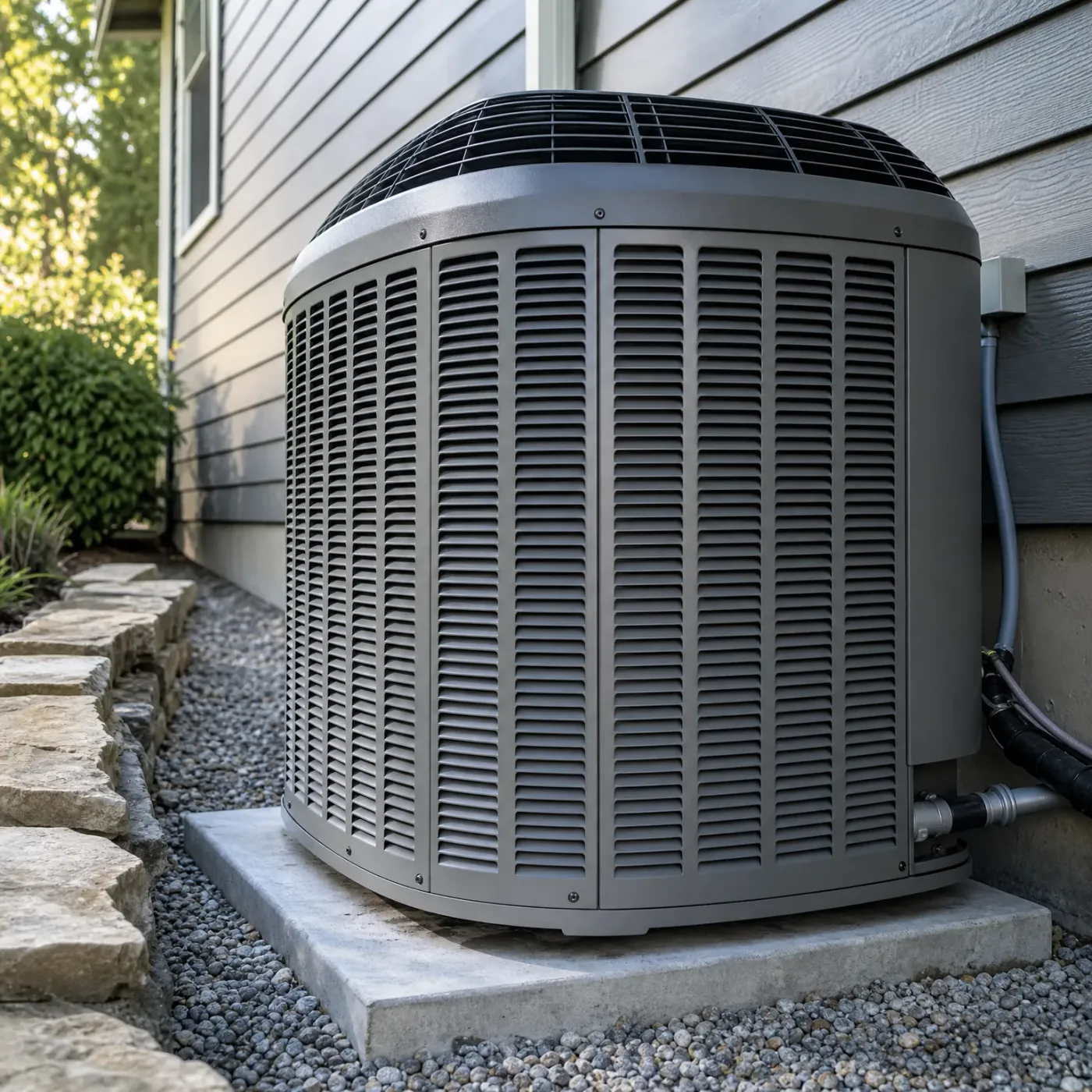
A gray outdoor air conditioning condenser unit with louvered sides and a black top grille sits on a concrete pad beside a house with horizontal lap siding, surrounded by gravel and a stone border.

A local pro for your air conditioner installation

Send the form and stop researching installers for the new air conditioner.

Get in touch with a local installer about a new air conditioner.

Get an air conditioner pro

Asking costs nothing, and the choice to hire stays yours.

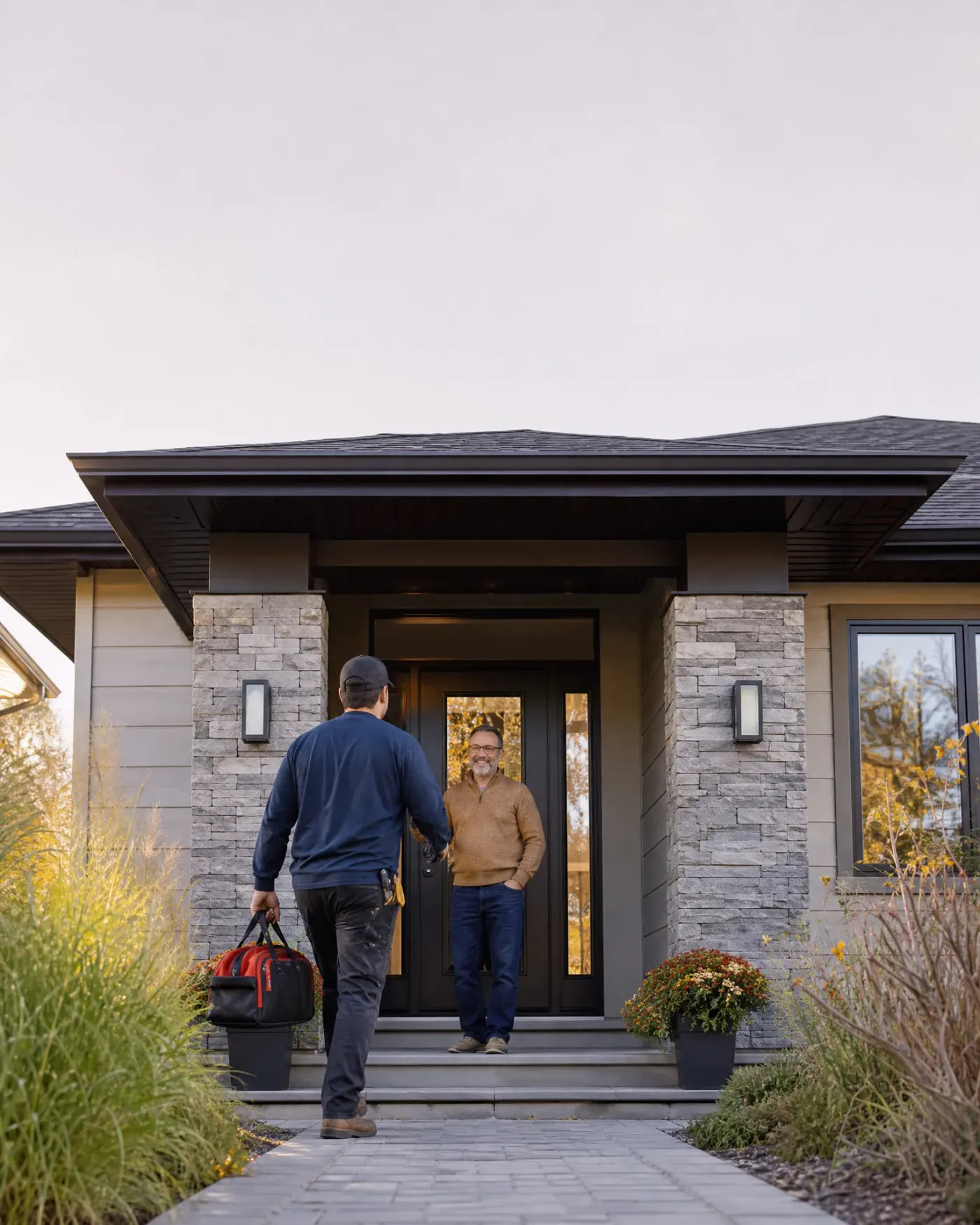
A man in a blue sweatshirt and cap carries a red and black tool bag up a paved walkway toward a house entrance where another man in a tan sweater stands in the open doorway, with stone-clad columns, wall lights, and potted mums nearby.

What a higher SEER rating means for your house

A higher SEER rating on a new system shows up on your power bill, month after month, for as long as you run it against South Carolina heat. Electricity here is priced about like anywhere else, so the saving is in how little of it the unit needs to pull the same heat out of your house. That difference adds up fastest in the rooms that run hardest, the ones that face west or sit over the garage, because those are the rooms calling for cooling the longest each day.

Picking the number is the easy part. What actually matters is whether the unit gets sized and installed to hit that rating in your house, with your ductwork and your layout, not just on the label. That's the part worth getting right before anyone sets a unit on your pad. Send in what you're working with and a contractor who installs in South Carolina homes can look at your situation and tell you what rating makes sense to put in, and what it would take to get there.

Interior corner of a living room with a beige upholstered sofa and dark cushion in the foreground, a ceramic vase of leafy branches on a dark side table by a curtained window, a framed picture on the wall, and a wood-surround fireplace at right.
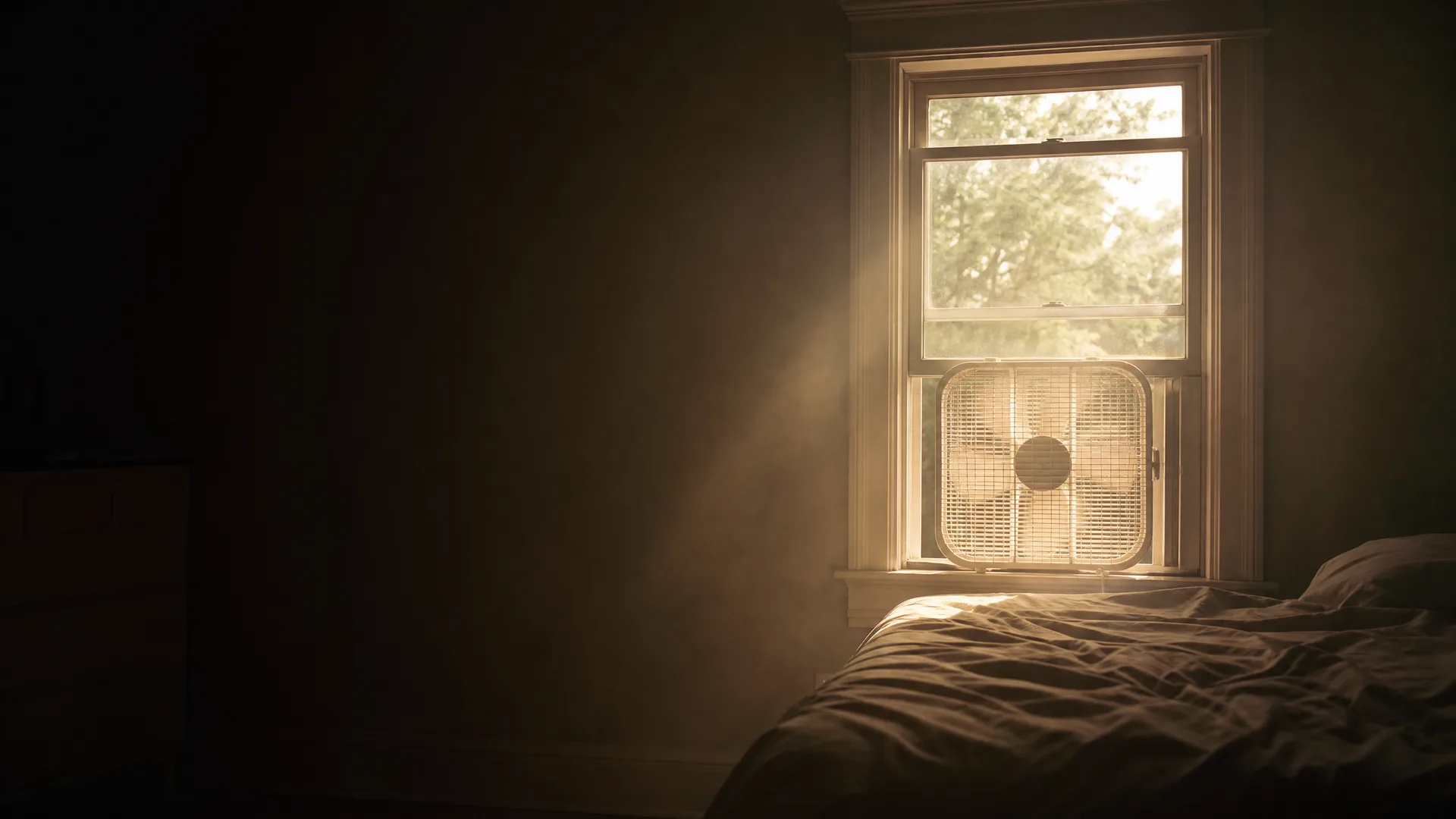
A dim bedroom with a box fan sitting in an open double-hung window, sunlight streaming through the hazy air onto an unmade bed in the foreground.

By nine the sun is down and the room still hasn't let go of the heat. The box fan sits in the window, pulling at air that feels about as warm going out as it does coming in. You're on top of the sheets, not under them. Downstairs the AC is running, you can hear it kick on again through the floor, but up here it barely reaches. The humidity makes it worse, the kind that sits on your skin even with the fan going. You keep thinking you'll fall asleep anyway, and some nights you do, late, after the room finally cools a few degrees past miserable.

Power costs 15.12 cents per kilowatt-hour statewide

At 15 cents a kilowatt-hour, South Carolina sits in the middle of the pack, not the cheap end. Your AC is also doing the heating math in reverse come winter if you run electric heat, so every point of SEER you buy works both seasons, not just the one you're sweating through now.

EIA-861 2025 statewide residential average

A heat pump rated at 16 SEER2 still has to run the house all winter if electric heat is what you've got, so the rating you pick is working twice, not once.

That's the other side of the bill most quotes don't mention. A unit bought for summer in South Carolina is also what keeps you warm come January, and it's pulling the same rated efficiency both times.

An outdoor air conditioner condenser unit on a concrete pad beside a house with horizontal lap siding, with a gray electrical disconnect box and conduit on the wall and a green shrub over pine-needle mulch at left.
Before you get your air conditioner installation
A gray outdoor air conditioner condenser unit on a concrete pad beside a house with light vinyl siding, with an electrical disconnect box and conduit on the wall and a leafy shrub with dark mulch to the right.
After you get your air conditioner installation
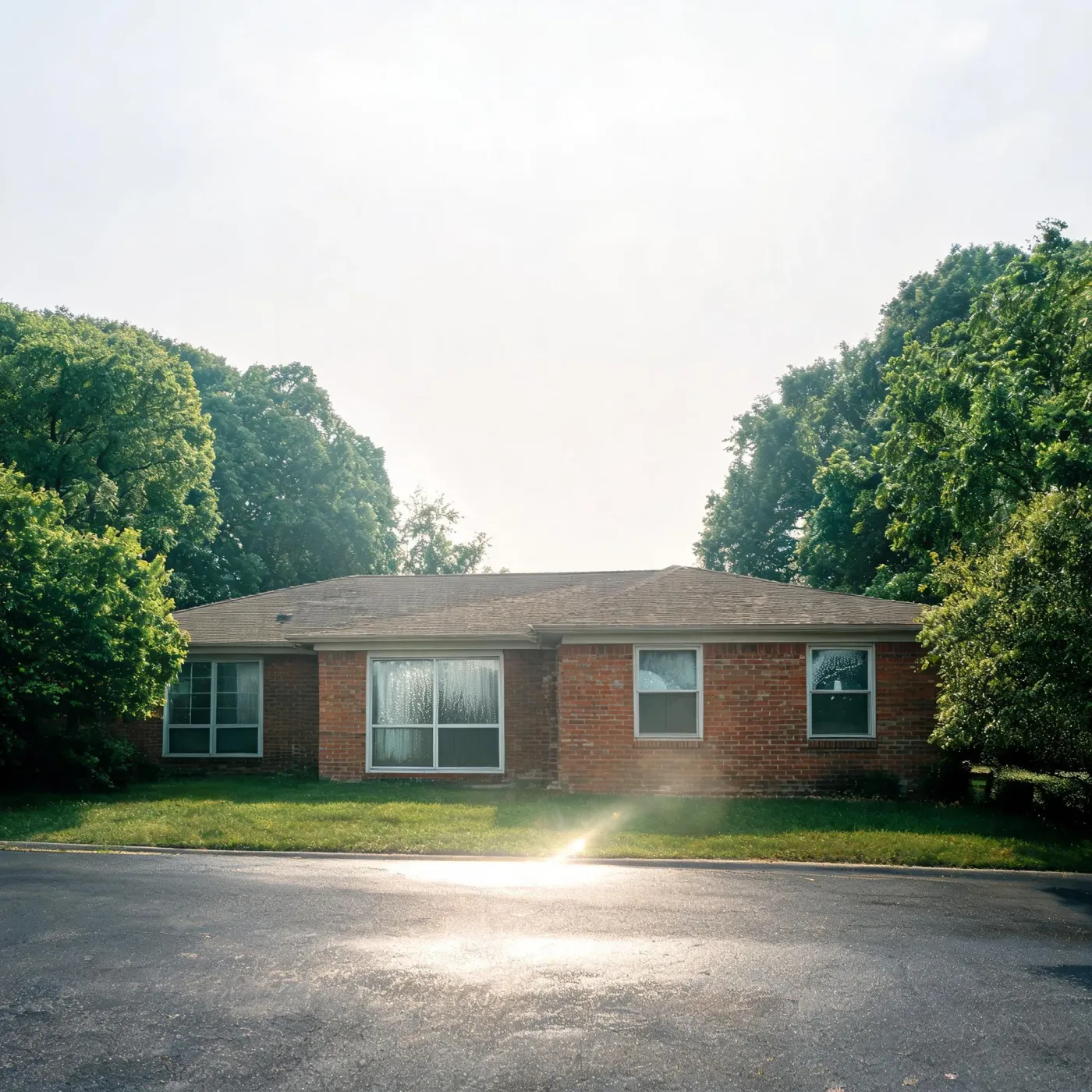
A single-story brick house with a shingled roof and white-framed windows, set behind a mown lawn and an asphalt street, flanked by large deciduous trees under a bright hazy sky with sun flare.

A dew point of 69°F is what sits over South Carolina homes through June, July and August, averaged across the state. That's heavy air, the kind that makes 85 degrees feel worse than it sounds. Your air conditioner has to pull that moisture out before the house feels dry, not just cool, and it keeps pulling it out for as long as the air outside stays that way. That's extra work on top of bringing the temperature down, and it's work the SEER rating on the label doesn't fully capture, since the test behind that number doesn't push humidity this hard. A system sized and installed right handles it without running nonstop. One that isn't will run long and still leave the house feeling damp.

NASA POWER T2MDEW county cells weighted by homes

A SEER rating is a number on a label until it's your power bill in August, and your power bill in January if electric heat is what warms your house. South Carolina asks a system to run long hours both seasons, so the rating you choose keeps working long after the install crew leaves. Pick to the high end of what makes sense for your house, and a clean coil and correct size will keep that number honest for years. You don't have to work out which rating fits your house, your ductwork, and your budget on your own. Send in what you've got, and a contractor who installs these systems in South Carolina homes will reach out and walk through it with you. That's one less thing on your list, and the house still needs to be cool by June.

A single-story house with horizontal siding and large windows lit from within at dusk, beside a lawn, low path lights and a dark gravel driveway, with pine trees and a distant waterway under an orange and blue sky.

Air Conditioner Installation

Get the right pro for your air conditioner

New system or replacementCentral ACSouth Carolina
Step 1 of 2

What ZIP code is the job in?

  • A corner of a room with an upholstered wood-framed armchair holding a floral pillow, a round side table with a ceramic lamp, books and a vase of greenery, a framed landscape painting on the wall, a patterned rug, and a sunlit multi-pane window.
    • Describe your air conditioner job, and a local pro who handles it gets in touch.
    • Say what's going on with your air conditioner, and a pro who works on them reaches out.
  • Interior corner with a wood-framed window showing green foliage outside, a framed landscape print on a beige wall, and a rounded stone vase of leafy branches on a wooden cabinet.
    • Once you send the form, finding a pro is off your list.
    • After you send the request, you're done searching.
  • A pale ceramic vase holding olive branches sits on a dark wooden countertop beside a carved wooden dough bowl, next to a wood-framed window and a light painted plank wall.
    • Skip collecting and comparing quotes for the new air conditioner.
    • Skip the round of in-home estimates for a new air conditioner.
  • A dark wood round side table holding a brass lamp with a cream shade, a blue-and-white patterned bowl, and a white textured pot of greenery, beside an upholstered chair with a gray patterned cushion and a white-framed window showing green trees and flowering shrubs.
    • One installer gets your project, so there's no bidding war over it.
    • Your request stays with one local pro.