





Mini split frozen up in Lexington, SC

RepairMini-splitLexington County, SC
Step 1 of 2

What ZIP code is the job in?

Ice on a mini split usually means airflow is blocked or the refrigerant charge is low. A dirty filter or a coil packed with dust and debris stops warm air from reaching the coil, and the coil gets cold enough to freeze the moisture in the air right onto itself. A leak that's dropped the refrigerant level does the same thing, because the coil runs colder than it should. Running the unit in cold weather on the heat setting can also cause a layer of frost that's normal, but a solid block of ice is not. Right now, turn the system off and let it thaw fully before anyone opens it up, since running it iced over can damage the compressor. Once it's thawed, a technician can check the filter, the coil and the refrigerant charge to find out which one caused it and whether anything needs repair.

A bearded man in a navy long-sleeve shirt sits smiling on a gray sofa in a living room, with a bowl of popcorn on a side table in the foreground and a shelving unit, potted plant, and kitchen area behind him.
A smiling man in a navy long-sleeved shirt reclines on a gray sofa in a living room, with a wooden bowl of popcorn in the foreground and shelves and a potted plant behind him.
A smiling man in a dark green sweater sits on a tan leather sofa in a dimly lit living room, with a bowl of popcorn in the foreground and a kitchen area blurred behind him.
A smiling man in a dark navy sweater sits on a light sofa in a living room, with a glass bowl of popcorn on a wooden coffee table and bookshelves behind him.

Why is ice building up on my mini split

Look at the indoor unit and you'll likely see a white crust or solid ice along the coil fins, sometimes dripping water onto the floor or wall below as it melts. The air coming out feels weak or barely cool, even though the unit is running. Outside, the line set might feel cold to the touch past the point where it enters the wall. You may also notice the system running longer than usual without the room actually cooling down. Left alone, the ice keeps building and can crack the fins or push water into places it shouldn't be, and the compressor can take damage if it keeps running against a frozen coil.

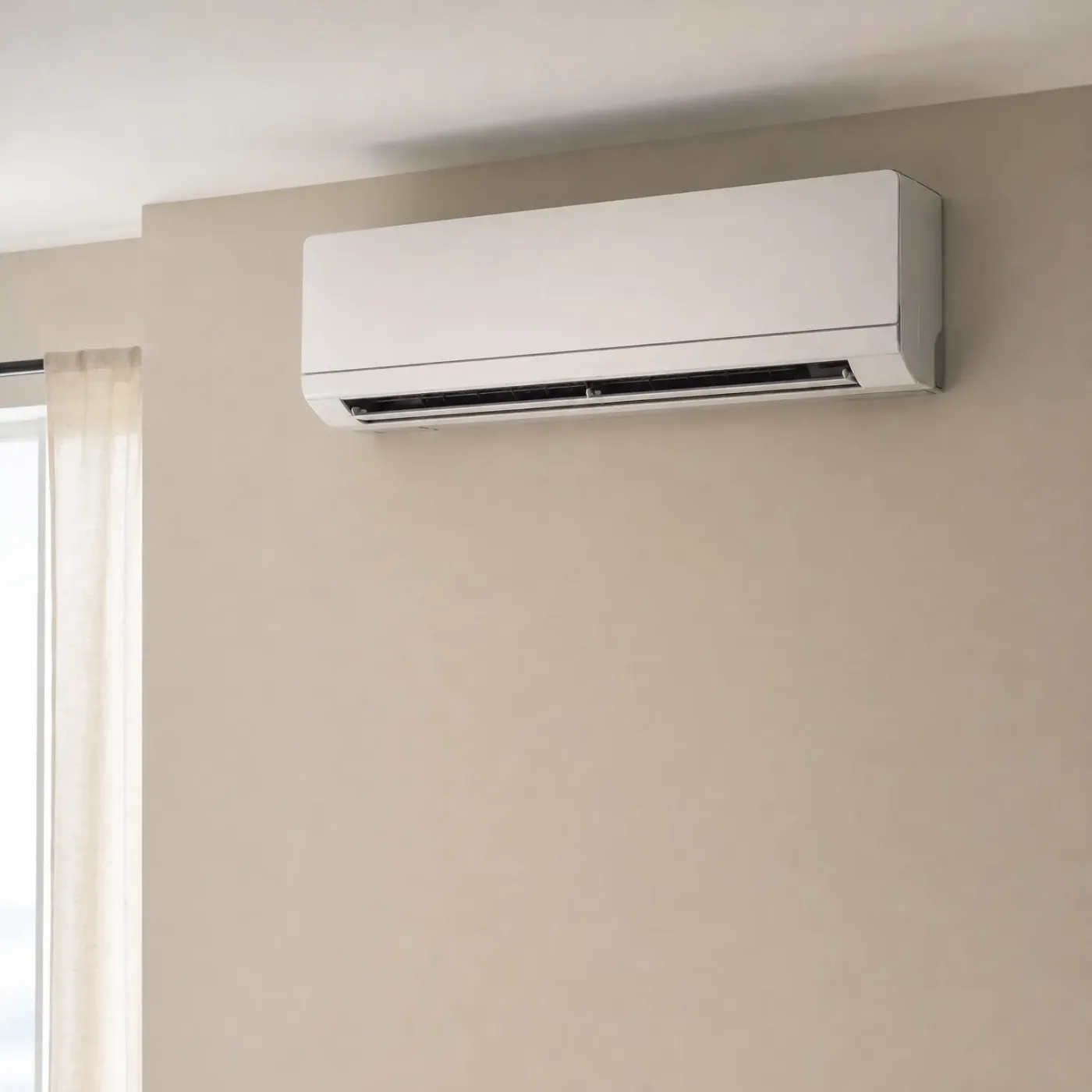
A white wall-mounted mini-split air conditioner installed high on a beige interior wall near the ceiling, with a sheer curtain and window at the left edge.

Running clear

Air moves steadily out of the indoor unit and the coil stays dry behind the vent. You feel real cold air across the room, not just near the unit. The outdoor unit runs without short cycling, and nothing on the indoor panel is blinking a fault code.
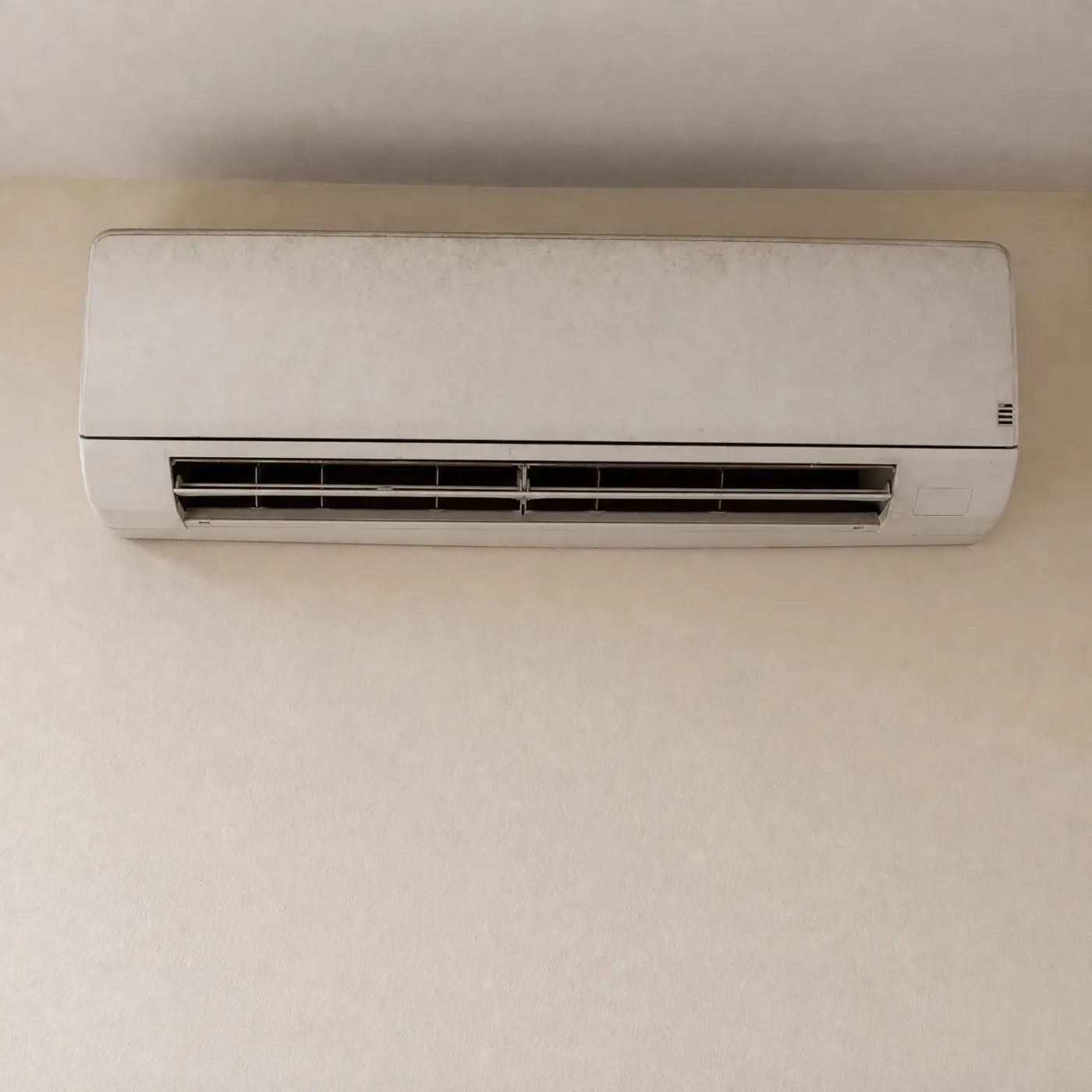

A white wall-mounted mini-split air conditioner indoor unit with visible dust and discoloration, installed near the ceiling on a plain beige wall.

Frozen and struggling

Dust coats the vent and the louvers won't close right. Ice sits along the coil behind them, and what air does come through feels weak and barely cool. Water may be dripping from the unit onto the wall or floor below as the ice melts between cycles.

Why does my mini split keep freezing up even after I turn it off?

Why does my mini split keep freezing up even after I turn it off?

Turning it off stops the freezing but not the cause

Shutting the unit down lets the ice melt, because the coil stops pulling heat and warms back up to room temperature. That feels like it fixed something, but the airflow blockage or the low refrigerant charge that caused the ice in the first place is still there. Turn the mini split back on and the coil starts pulling heat again, hits that same cold point, and ice starts forming within the hour. In Lexington, with units running most of the day through a long muggy summer, that cycle of freeze, melt, freeze can repeat for days before anyone traces it back to a dirty filter, a blocked coil, or a slow refrigerant leak.

A single-story red brick ranch house with a white front door, white-framed windows and a shallow shingled roof, fronted by a wide asphalt parking area and backed by leafy green trees under a bright hazy sky.

Summer air in Lexington County carries a dew point around 68°F through June, July and August, according to NOAA climate data. Air that heavy holds a lot of moisture, and a mini split has to pull that moisture out along with the heat. When the filter or coil is already dirty, the unit is working against that load with less airflow to spare, and that's often where freezing starts. You'll notice it as weaker cold air than usual, maybe some water where there shouldn't be any. A tech who works on these units around Lexington all summer knows this pattern well, since the humidity here pushes mini splits harder than most places. One local contractor takes the call, so it's a straight conversation about your unit, not a queue of competing bids.

NASA POWER T2MDEW

Hand off the search today

A mini split that's frozen up won't clear on its own, and running it while it's iced over just pushes liquid refrigerant back toward the compressor, which is how a simple airflow problem turns into a compressor replacement. Lexington summers keep the coil working against thick, humid air for months at a stretch, and once ice forms it only grows the longer the unit runs. This isn't a wait and see situation. A licensed contractor local to Lexington County sees frozen mini splits all summer and knows whether it's a filter choked with dust, a coil that needs cleaning, or a refrigerant charge that's dropped low enough to start icing the fins. Send the request and it goes to that one contractor, not a handful of companies competing for the job. From there, finding someone to look at your unit stops being something you have to chase down yourself.

Shut it off and let it thaw

Turn the mini split off and leave it off until every bit of ice is gone from the coil, not just the frost you can see from the vent. That can mean several hours. Running the fan-only setting speeds this up without the compressor pumping more refrigerant through a coil that's still cold. Wipe up the water as it drips, since it will run for a while. Don't chip at the ice or run the unit partway through to check on it. A coil that's still part frozen means the blockage is still there, and starting the compressor again just refreezes it.

What a tech checks first

A tech who works on these year-round starts at the filter and the indoor coil, since a blocked one is the most common cause by far. Next comes the outdoor unit, checking that the fan spins freely and the coil isn't packed with leaves or grass clippings. If airflow checks out on both ends, the gauges come out to check the refrigerant charge, because a slow leak lets the coil run too cold even with clean air moving across it. Each step rules something out before moving to the next.

How much does Lexington County weather ask of your mini split?

  • Cooling runs May through September

    Cooling runs May through September. That's five straight months of the coil pulling moisture out of thick, humid air, which is exactly the kind of load that turns a clogged filter into a frozen coil.

  • Heat runs November through March

    Heat runs November through March. A mini split that froze up in summer is the same unit working the other side of the year, so whatever caused the ice is worth fixing before it runs again.

  • Power here costs 16.52 cents per kilowatt-hour

    Power here costs 16.52 cents per kilowatt-hour. A mini split iced over and run anyway works harder for less cooling, and that shows up on the bill before anyone notices the real problem.

NOAA nClimDiv 1991-2020 · EIA-861 2025

What the ice is telling you

  • A frozen mini split almost always traces back to blocked airflow or a low refrigerant charge, not a failing unit.
  • Shutting the system off and letting the coil thaw fully comes before any other step, even if that takes several hours.
  • A technician who works mini splits all summer in Lexington County has seen this exact ice pattern many times before.
  • You get matched with one licensed local contractor, so you're not fielding calls from several companies at once.
  • Getting someone out to look at it stops being something you have to chase down yourself.
  • Running the unit again before the coil is clear is how a filter problem turns into a compressor repair.

Ice on the coil almost always comes down to one of two things: something is blocking airflow, or the system is low on refrigerant. Neither one means the unit is done for. It means something specific is wrong, and that specific thing can be found and fixed. The part that matters most right now is patience. Turn the system off and give the coil time to thaw completely before anyone touches it again, because running it iced over is how a dirty filter turns into a compressor job. Lexington County summers push mini splits hard for five months straight, pulling moisture out of thick, humid air every day, and that load is exactly what turns a clogged filter or a sagging charge into frozen coil fins. A technician who services this equipment through a Lexington summer has already seen this pattern more times than they can count, on units just like yours. Once you send the request, you're matched with one licensed local contractor, not a handful of companies calling you back at once. That contractor is the one who inspects the coil, checks the charge, and clears whatever's blocking the airflow. From there, finding the right person for the job is no longer something you have to sort out on your own. The unit can run normally again once the real cause, not just the ice, has been dealt with.

A dark metal roof with a stone chimney in the foreground, framed by moss-draped trees on the left and pines on the right, with forested ridges and hazy mountains under a cloudy sky beyond.

Hand off the mini split problem

I'm done searching

No charge to send it. You decide if you hire them.

A mini split that stays frozen through another humid week in Lexington isn't getting better on its own, and running it iced up is how a filter problem turns into a compressor problem. Getting someone local out to check the charge and airflow now is what keeps this a simple repair instead of a replacement.