Running it while frozen
Letting the unit keep running once ice has formed can push the compressor to pull in liquid refrigerant instead of gas, which is what wears it out.
A frozen mini split almost always comes down to airflow or refrigerant. If the indoor filter or coil is caked with dust, the coil gets too cold and ice builds across it instead of warm air moving past it. In South Carolina, summers run long and muggy, and that humidity gives a struggling unit more moisture to freeze once airflow drops or the charge is low. A dirty filter is the simplest cause and the easiest to rule out. A low refrigerant charge means a leak somewhere in the line, and that ice is a sign of a problem, not the problem itself. Running the system with a frozen coil can push the compressor harder than it should work, so it is worth shutting it off and letting it thaw rather than running it through the ice. Once it is thawed, whatever caused it is still there waiting.


The indoor coil is supposed to stay cold enough to pull moisture out of the air but not so cold that the moisture itself turns to ice. Airflow is what keeps that balance. A dirty filter or a fan set too low slows the air moving across the coil, and in a muggy South Carolina summer that's often enough to tip it below freezing. Once frost starts, it works against itself. Ice blocks part of the coil, less air gets through, and more ice forms on what's left, until a thin layer of frost becomes a solid block. Refrigerant problems show up the same way from the other direction. If the charge is low, the pressure inside the coil drops low enough that the line itself freezes, and that often shows up as ice on the outdoor unit too. A clogged condensate drain adds another way in, since water sitting on the coil freezes faster than air moving past it ever would. Different starting points, same result on the coil.




Letting the unit keep running once ice has formed can push the compressor to pull in liquid refrigerant instead of gas, which is what wears it out.
Instead of searching, calling around, and repeating the same explanation to each one, you get matched with a contractor who reaches out to you directly.

You're at your desk on a July afternoon, the mini split humming away somewhere behind the laptop, and you catch it out of the corner of your eye: a dark streak running down the wall under the indoor unit. You get up and there's already a towel down, soaked through. The unit's been running flat out against the heat and humidity outside, and now it's dripping instead of cooling. You wipe the wall, move the laptop off the desk, and wonder how long it's been doing this while you sat there working with your back to it.
A frozen mini split in South Carolina usually shows up in July or August, right when you need the thing running nonstop and can least afford to be without it. By the time ice has built across the coil, the fix isn't something to put off. The unit needs to thaw fully, then someone has to find out whether the problem is a filter, a coil, or a refrigerant leak, because running it again before that gets sorted just refreezes it. That's a different visit than a routine tune-up, and not every contractor who answers the phone handles it the same day. Rather than working down a list of HVAC companies, sitting on hold, and describing the same dripping wall and iced-over coil to each one, you can hand off those details once. A contractor who works on mini splits gets your situation and reaches out to you directly, while the water keeps finding its way down your wall.
You can leave the unit on and hope it clears itself, since the fan still blows and the house still feels cool near the vent. But a mini split doesn't thaw while it's running the same cycle that froze it. Ice keeps building on the coil, airflow keeps dropping, and the compressor keeps working against a block it can't push past. Within a day or two the line outside may sweat and drip, and the indoor unit can start leaking where the condensate has nowhere to drain. Waiting costs you nothing up front, but it trades a simple fix now for a bigger one later.
Turning the unit off and switching the fan on lets the coil thaw on its own, usually within a few hours, without forcing the compressor through more cycles while it's iced over. That protects the compressor while you line up a contractor to find out whether it's a dirty filter, a weak airflow path, or refrigerant running low. Instead of searching for who repairs mini splits in South Carolina, calling a few, and explaining the ice and the dripping wall each time, you fill out one request and a contractor who handles this equipment reaches out to you directly.



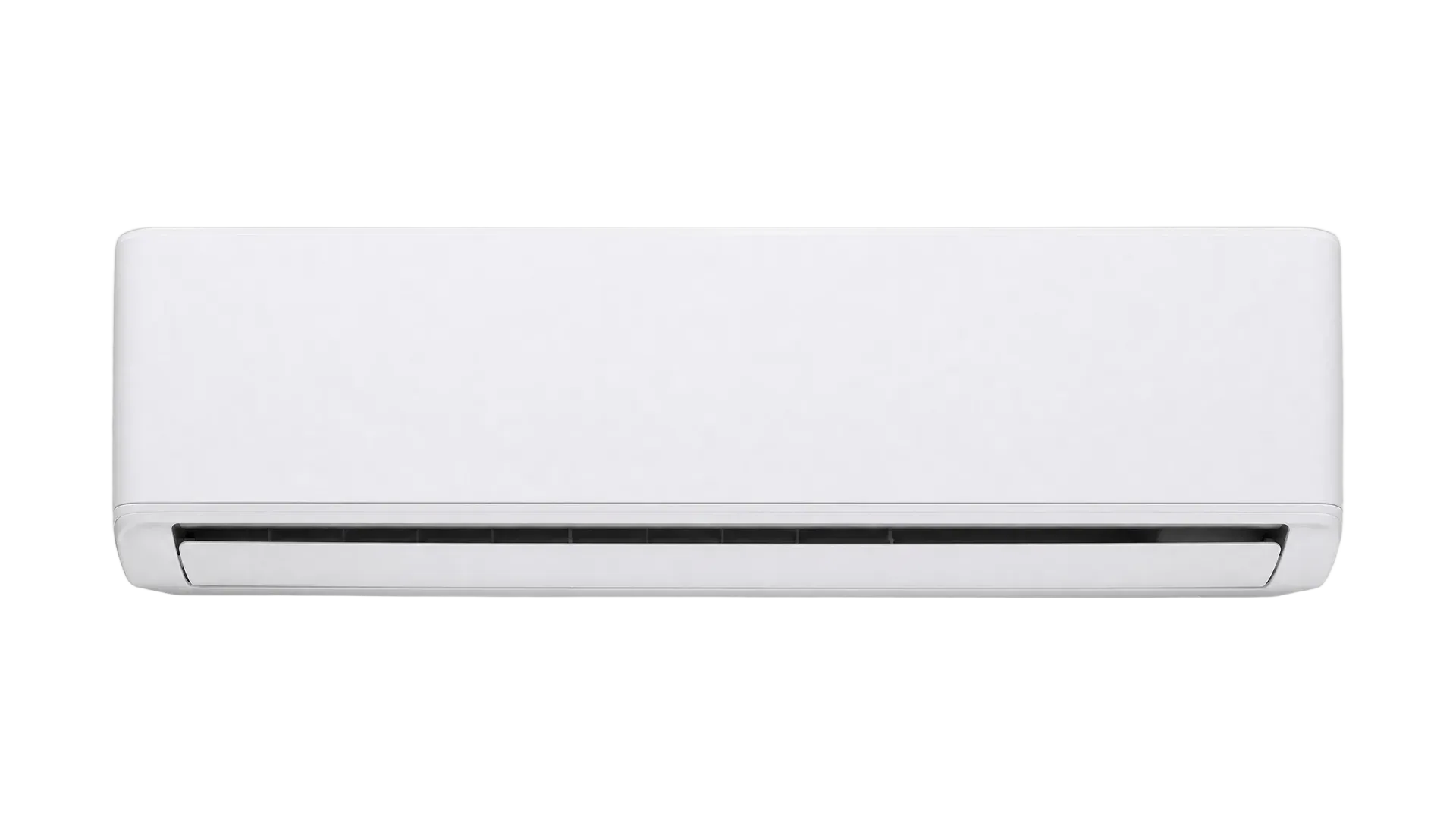
This is what a mini split looks like when air is moving the way it should across the coil. No frost, no drip marks on the wall below it, just steady cool air out of the vents. The casing stays clean because dust isn't building up faster than it clears.

A yellowed, dusty casing like this usually means the filter and coil behind it have been collecting dirt for a while. Once a coil that choked gets cold enough, ice forms across the louvers you can see here, and the unit stops cooling the room the way it used to.
At 15.12 cents per kilowatt-hour, running a frozen mini split doesn't just risk the compressor, it keeps pulling power while it fights ice it can't clear on its own. A unit that's iced up and still running is working against itself, and that shows up on the bill before anyone notices the streak on the wall.
EIA-861 2025 statewide residential average



That muggy air outside is exactly what your mini split is working against all summer. Averaged across South Carolina homes, the summer dew point runs 69°F from June through August, according to NOAA climate data. That's heavy air, thick with moisture the unit has to pull out before it can cool anything. The indoor coil is doing double duty, stripping humidity and chilling air at the same time, and that extra moisture load is exactly what tips a coil with poor airflow or low refrigerant into freezing over. The wetter the air coming in, the faster ice forms once something's already off with the unit.
NASA POWER T2MDEW county cells weighted by homes
Look at the indoor unit while it's running. A thin white line along the edge of the coil is frost starting. Left alone, that line turns into a solid sheet of ice across the whole coil, and you'll feel warm, weak air out of the vents instead of cool air, because the ice is blocking what should be passing through. Water starts showing up where it shouldn't, a wet patch on the floor below the unit or a stain spreading down the wall under it, as the ice melts faster than the drain can carry it off. The outdoor unit can ice over too, along the lines or around the base. Left running, the unit keeps drawing power without cooling the house, and the strain on the compressor is the expensive part to ignore.

Air moves straight across the coil and out through the vents near the ceiling. The casing stays white, the vents stay open, and nothing drips down the wall below it. This is what lets the unit cool the room instead of fighting itself.

Grime has built up along the vents and the lower intake, the kind of buildup that blocks air before it ever reaches the coil. Once airflow is choked like this, the coil runs colder than it should and frost starts to form.

Airflow or refrigerant. That's it. Dust on the filter or the coil, or a charge that's dropped below what the system needs. Either one lets the coil run too cold, and a coil that cold pulls moisture out of the air as ice instead of condensate. South Carolina summers hand it plenty of moisture to work with, which is why this shows up here as often as it does.
Once you know which it is, there isn't much to decide. You don't want to be the one pulling the unit apart to check a charge or clean a coil, and you don't need to be. Finding someone licensed for it, explaining the drip marks and the ice on the phone more than once, sorting through who actually works on mini splits in your area: that's the part that gets handled. You end up matched with a contractor who takes it from here, and they're the one who calls you.


One form replaces the calls you'd make to find a mini split pro.