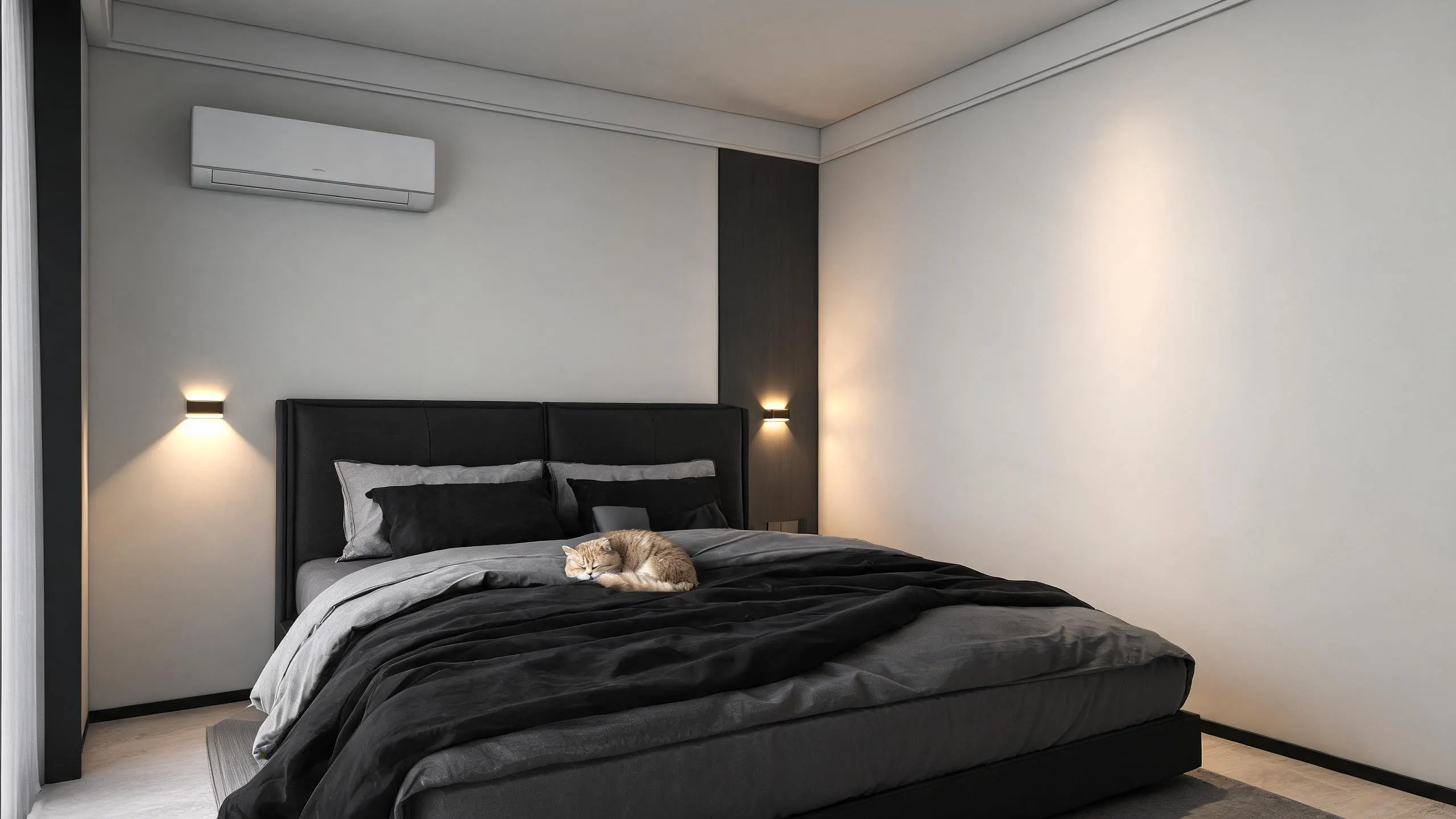






An orange cat sleeps on a neatly made bed with dark grey bedding in a minimalist bedroom with wall sconces and a mounted air conditioner.

Mini Split Installation in Anderson, SC

Tell us about the job

Takes about a minute. No obligation.

New system or replacementMini-splitAnderson County, SC
Step 1 of 2

What ZIP code is the job in?

Anderson County has logged 111 damaging wind events and 33 hail events over the past decade, and a mini split's outdoor unit sits right in the path of both. Where the installer mounts that unit matters here more than in calmer places. It needs to be clear of falling branches and shielded from wind-driven debris if it's near a roofline. Hail can dent the cabinet and bend the fins that move heat, so a spot under eaves or away from open sky is worth asking about. Nearly half of South Carolina households lost power for a day or more last year, and a mini split won't run without it. If backup power matters to you, that's worth raising with the installer before the first outage, not after.

5 months
November through March, your system heats
5 months
May through September, it cools
34°F
the average winter night it heats against
89°F
the average summer afternoon it cools against
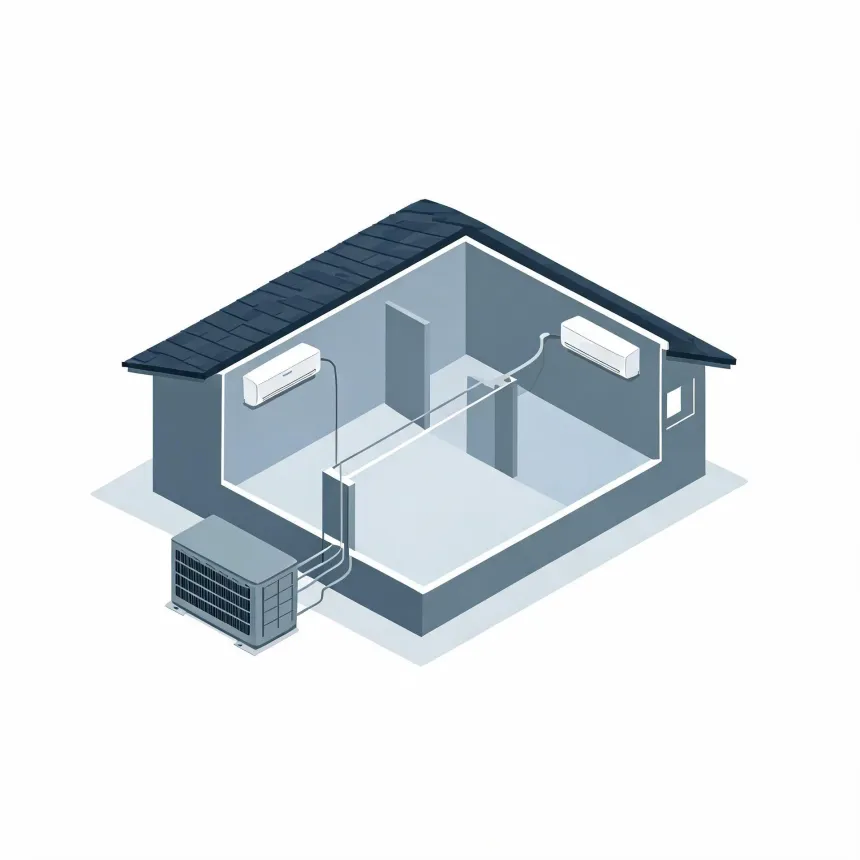
Isometric illustration of a cutaway house showing two wall-mounted mini-split indoor units connected by line sets to a single outdoor condenser beside the exterior wall.
Your system heats November through March and cools May through September.

NOAA nClimDiv, 1991–2020 normals

Electricity heats 64.4% of homes in Anderson County, more than any other fuel.

A mini split runs on electricity, so it fits the setup most homes here already have.

Five months of 89°F afternoons, and the system has to keep up

Cooling runs May through September
Summer afternoons average 89°F
111 damaging wind events from 2015 to 2024
Get it in before MayCooling runs May through September here. April is the month to have it done.

Anderson County falls under zone 3A, the warm, humid part of the energy code map. Any new mini split installed here has to clear the federal minimums for a split-system heat pump, 14.3 SEER2 for cooling and 7.5 HSPF2 for heating. That rule applies to ductless systems the same as ducted ones, so there's no lower bar for going ductless. A unit already sitting in a warehouse might carry older ratings, so check the nameplate before you buy. Install one that meets these minimums and a federal tax credit is available toward the cost.

Power costs more here, so efficiency pays you back

Electricity in South Carolina runs 14.23 cents per kilowatthour, and a mini split here is working most of the year. A system that clears the federal minimums instead of just meeting them costs less to run on every one of those bills.

Find a contractor
A man in a cap, dark jacket and brown work pants climbs porch steps toward a dark green front door, carrying a waxed canvas tool bag, with a potted shrub to the right.
A white outdoor air conditioner condenser unit mounted on metal wall brackets against gray horizontal siding, with a blue sky and white clouds behind it.

The old unit has to come out before the new one goes in

Whoever installs the new system still has to deal with the one coming out. An old mini split or window unit holds refrigerant, and that refrigerant isn't supposed to vent into the air. A licensed installer will recover it with a pump and store it, the same way they'd handle it going in. If the old system used an older refrigerant, that recovery step matters even more, since that refrigerant isn't made anymore and has to be reclaimed rather than lost. The outdoor unit and line set come out next, along with the mounting bracket on the wall. None of that gets left behind for the new unit to work around. If the old system was ducted, the installer will check whether those ducts get reused or capped off, since a ductless system doesn't need them. Ask what happens to the old equipment before the crew arrives. Most of it gets scrapped for the metal and the compressor, but that's the installer's call to make, not something to assume.

Ask how many zones it's rated for, not just the one

A mini split system is sized as a whole, outdoor compressor plus every indoor head attached to it. Ask what happens to performance when every zone runs at once, not just the one the showroom demo shows you. Some multi-zone compressors lose capacity when all heads call for cooling at the same time, which matters if you're covering more than one room.
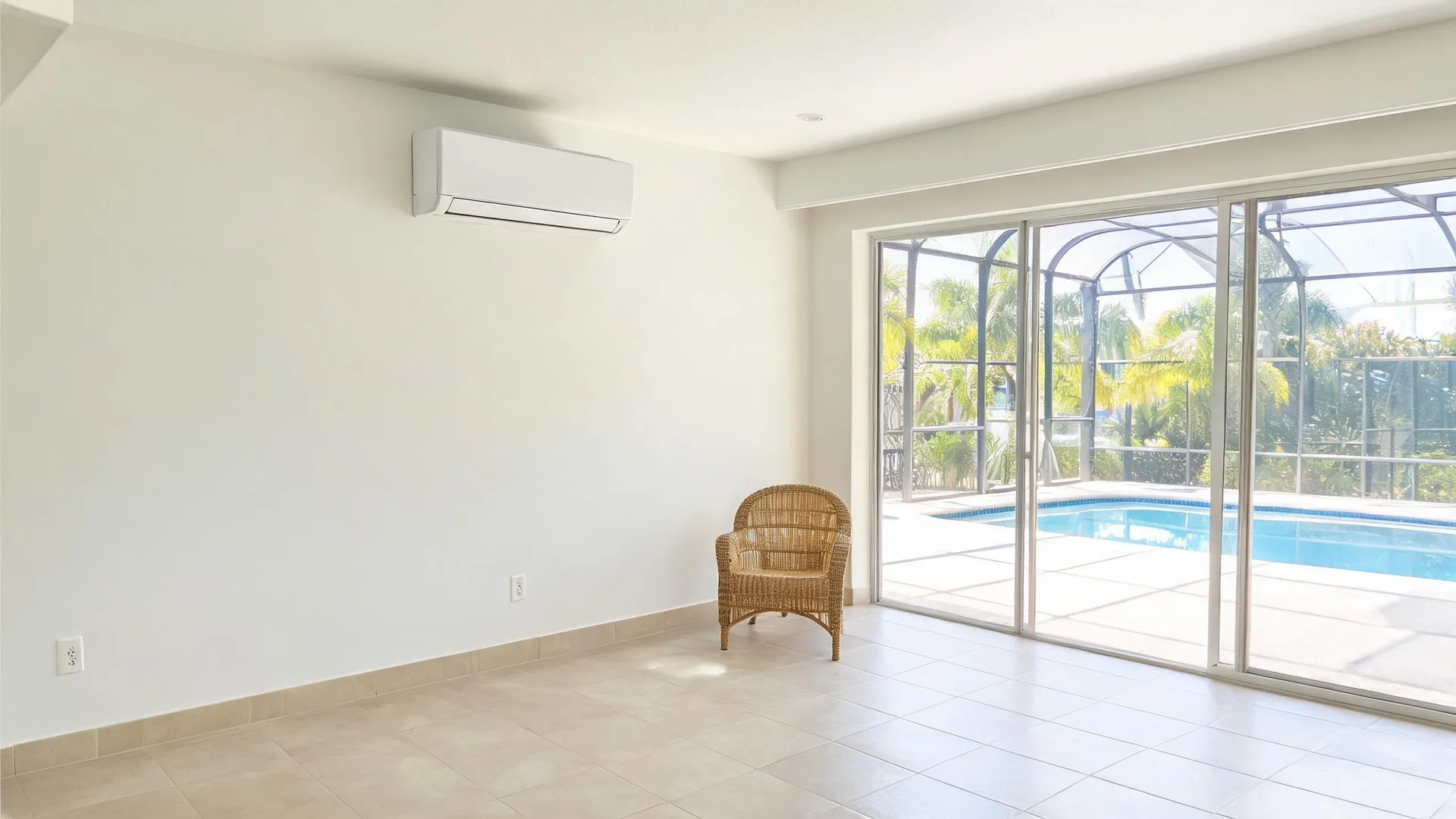
Ask where the line set runs before you ask about the wall unit

The indoor head is the part you'll look at, but the line set connecting it to the outdoor compressor is the part that determines your options. Ask each installer where that line set will run, how many walls or floors it crosses, and whether that path is already open or needs to be cut. A longer or more complicated run changes the installation even when the equipment quoted is identical.

A mini split that's too big will cool a room fast and shut off before it pulls the moisture out of the air, so the space ends up cold and clammy at once. One that's too small runs flat out all day and still doesn't reach the temperature you set. Getting the size right starts with a load calculation, not the square footage on a listing. A tech works through the walls, the windows, the insulation, which way the room faces, and what's generating heat inside it, then adds all that up to a number the equipment has to match. Skip that step and the unit on the wall is a guess, no matter how good the brand is. For a multi-zone setup, that calculation has to account for every indoor head pulling from the same outdoor compressor, not each room on its own.

Installation day starts outside, not in. The outdoor compressor gets set on a pad or mounted on brackets first, leveled so the compressor inside it doesn't strain, then the electrical disconnect goes in nearby. Indoors, the mounting plate goes on the wall, and from there the installer drills a single hole through to the outside for the line set, the drain hose and the electrical whip to pass through together. Those lines get run, then connected to both the indoor head and the outdoor unit, and that's the point where the system gets pressure tested for leaks before anything is charged with refrigerant. Once it holds pressure, the lines get charged, the system gets powered on, and the installer checks airflow and temperature at the head before calling it done. A single-zone job can wrap in a day. Add zones, and each indoor head adds its own line set, its own hole, its own mounting and testing, so the day gets longer with every room added.