




A gray tabby cat sleeps curled up on a dark gray bed in a dimly lit modern bedroom with warm ceiling cove lighting and a wall-mounted air conditioning unit.

Mini Split Installation in Barnwell, SC

Tell us about the job

Takes about a minute. No obligation.

New system or replacementMini-splitBarnwell County, SC
Step 1 of 2

What ZIP code is the job in?

Electricity in South Carolina ran 14.23 cents per kilowatt-hour in 2024. A mini split uses a variable-speed compressor that scales output to the room instead of switching on at full blast and shutting off, so it draws less power than a window unit or old central system doing the same job. In a climate where cooling runs for months at a stretch, that difference shows up on the bill every cycle, not just a few times a year. The efficiency rating on the unit matters more here than it would somewhere power is cheap, because every kilowatt costs more to begin with.

5 months
November through March, your system heats
5 months
May through September, it cools
37°F
the average winter night it heats against
91°F
the average summer afternoon it cools against
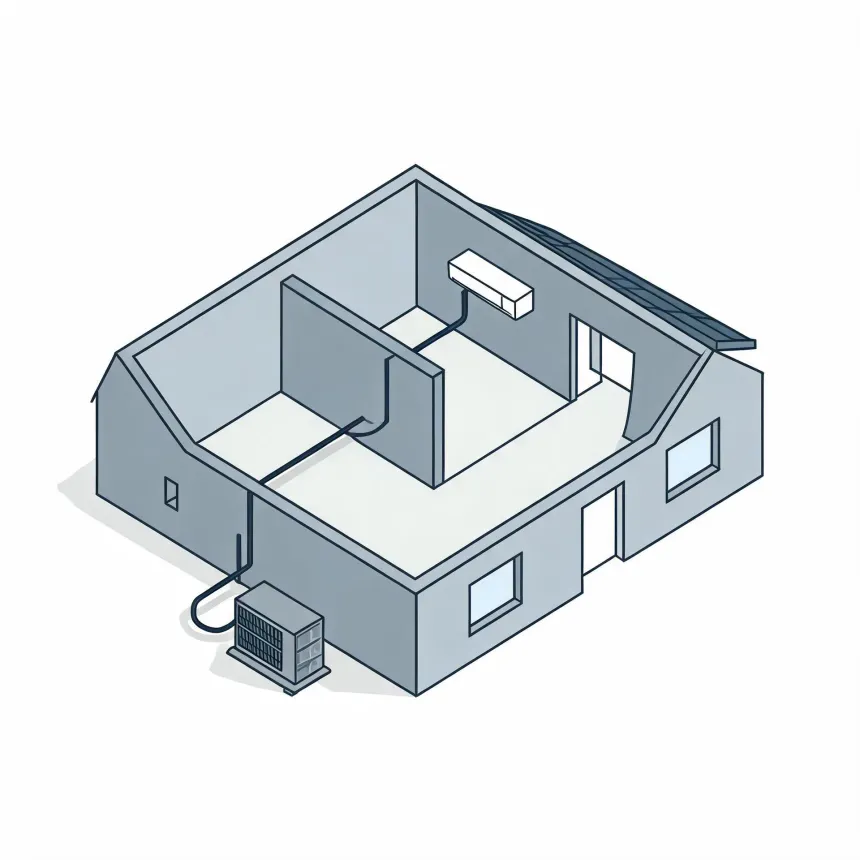
Isometric line illustration of a cutaway house showing an interior wall-mounted air conditioning unit connected by a line to an outdoor condenser beside the exterior wall.
Your system heats November through March and cools May through September.

NOAA nClimDiv, 1991–2020 normals

75.6% of homes in Barnwell County heat with electricity.

A mini split runs on electricity too, so it can replace that system directly instead of fighting against what's already wired in.

Barnwell sees its share of storms, so where the outdoor unit sits and how it's protected matters

67 severe weather events from 2015 to 2024
45% of homes statewide lost power a day or more in 2024
53 damaging wind events from 2015 to 2024

Cooling starts in May here and runs through September. April is the month before that, and it's the better time to put in a mini split than after the heat's already settled in. If the old system is still running, it can cover you while the install gets scheduled, instead of you going without cooling while you wait. A mini split install means mounting indoor heads, running line sets to the outdoor unit, and in most cases an electrician checking the circuit. None of that goes faster because the weather's already warm, and doing it in April means it's done before you need it.

The right size, installed before summer sets in

A standard size and efficiency unit handles a Barnwell County home fine. Nothing about the houses here calls for oversizing or for paying up for a bigger system than the space needs. Getting the size right still takes a contractor measuring the actual rooms, not guessing from square footage alone.

Find a contractor
A man in a dark shirt and tan pants, seen from behind, climbs porch steps toward a dark green paneled door while carrying a worn canvas tool bag, with a potted shrub beside the entry.
A beige split-system air conditioner outdoor condenser unit mounted on metal wall brackets atop a stucco wall.

Five months of afternoons near 91°F

Cooling runs about five months here, May through September, and the afternoon high averages 91°F through June, July and August. That's the compressor cycling on through the hottest part of the day, five months straight, not just on the occasional hot week. A mini split sized right for the rooms it serves will carry that load without strain. One sized wrong, too big or too small, works harder than it should every one of those days, and the parts that run hardest are the ones that wear first.

How many rooms it conditions

A single zone with one indoor head costs less to put in than a multi-zone setup running several heads off one outdoor unit. Every extra zone means another line set, another mounting spot, and another head wired in, so the price climbs with each room added, not just with the size of the house.
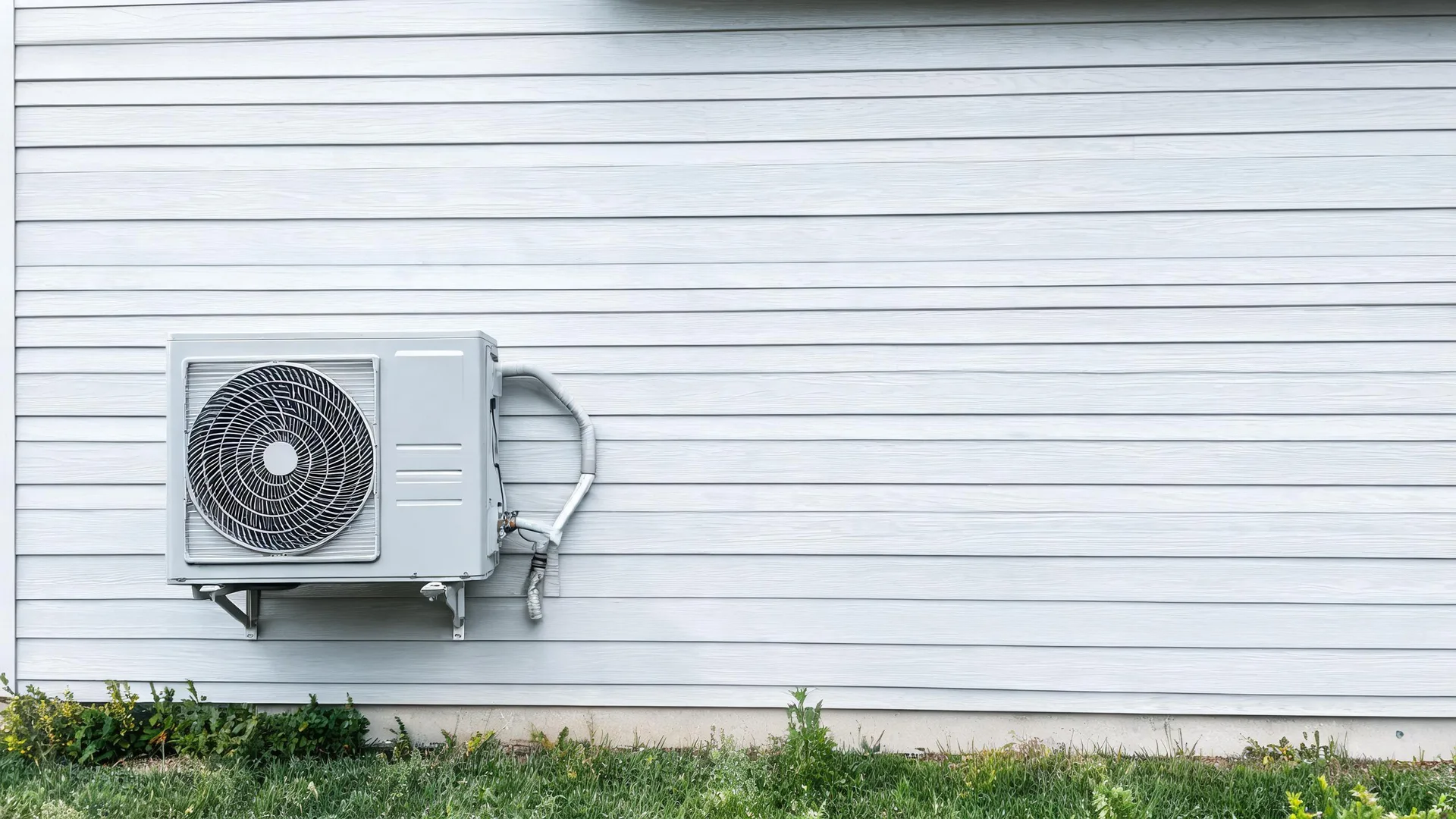
What the line set run looks like

The refrigerant line between the indoor head and the outdoor unit has to go somewhere, and a straight run through a nearby wall costs less than one that has to snake through an attic or drop down an exterior wall to reach where the outdoor unit sits. A longer or harder run means more refrigerant, more mounting hardware, and more time on the roof or ladder.

The number on the label, usually written as a SEER2 rating, tells you how much cooling a unit delivers for the power it draws over a full season, not just at one moment. A higher number means the compressor is doing more work per watt, which matters most on a system that runs for months at a stretch rather than a few days a year. It's a rating of efficiency, not of size or power, so units with the same rating can still cool very different rooms depending on how they're matched to the space. Going with a higher rated unit than the space calls for doesn't make it cool faster, it just means paying for efficiency that never gets used. The rating is worth comparing between the units you're actually choosing between, not a number to chase on its own.

Install day starts with the outdoor unit getting set on its pad or bracket and the indoor heads going up on the wall, usually before any line gets connected. The crew runs the line set between them next, the refrigerant lines, a drain line, and the wiring, through whatever wall or chase gets them from one to the other. Before any refrigerant moves, that line set gets pressure tested, so a bad joint shows up on a gauge right then instead of as a unit that won't cool right down the road. Once it holds pressure, the system gets charged to what the manufacturer specifies for that length of line, not topped off by feel. Last comes running it, checking that each head is actually pulling heat out of the air and cooling the room it's mounted in. A line set that's protected where it runs outside and a mount that's level matter to how the system holds up as much as anything sealed inside the unit.