




A gray cat sleeps curled up on a dark-made bed in a moody, minimalist bedroom with a wall-mounted air conditioning unit and warm accent lighting.

Mini Split Installation in Bennettsville, SC

Tell us about the job

Takes about a minute. No obligation.

New system or replacementMini-splitMarlboro County, SC
Step 1 of 2

What ZIP code is the job in?

Electricity in South Carolina ran 14.23 cents per kilowatthour in 2024. A mini split works in your favor here because it only heats or cools the room it's in, not the whole house through ductwork. Each head has its own thermostat, so a room nobody's using can sit off while the rest run. That matters more in a state where every kilowatthour costs what it does. Look at the SEER2 and HSPF2 numbers when you compare units, since those tell you how much you get back for the power you put in.

5 months
November through March, your system heats
5 months
May through September, it cools
35°F
the average winter night it heats against
90°F
the average summer afternoon it cools against
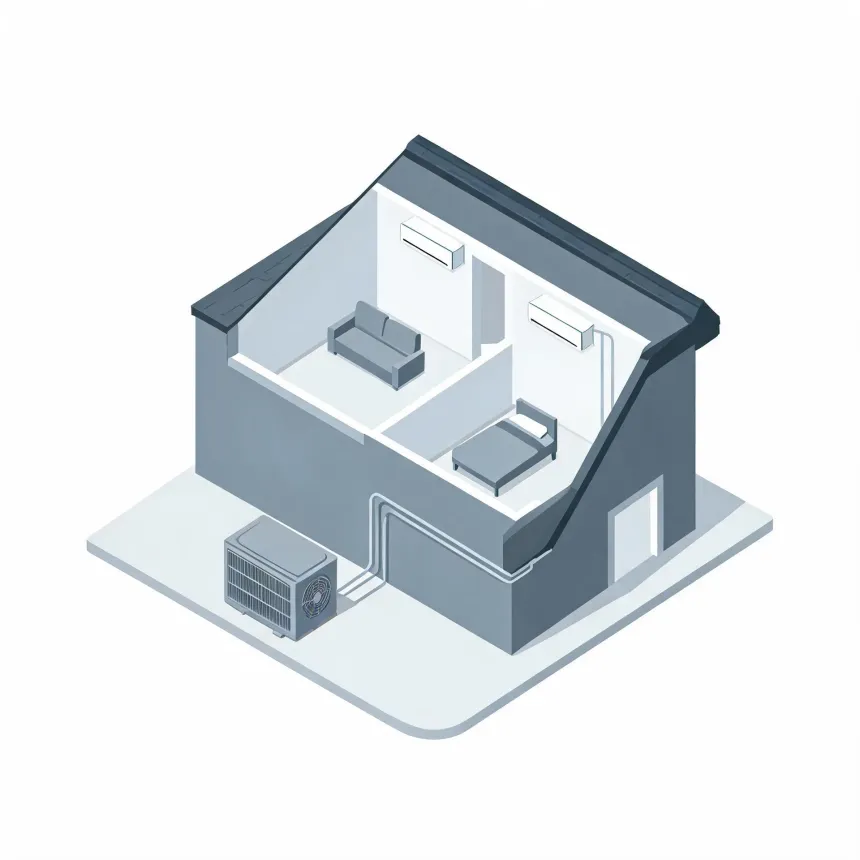
Isometric cutaway illustration of a two-room house showing two wall-mounted indoor air conditioning units connected by line sets to an outdoor condenser unit on the ground outside.
Your system heats November through March and cools May through September.

NOAA nClimDiv, 1991–2020 normals

Cooling runs May through September here.

Get the mini split in before May and it's ready on your schedule, not during a stretch of hot days.

74.9% of homes here already run on electricity, so a mini split fits what's already in place

74.9% of homes heat with electricity
Cooling runs May through September
Summer afternoons average 90°F

Cooling runs five months here, and the afternoon high averages 90°F through June, July and August. That's the stretch a mini split has to hold steady, not just on the worst afternoon but on all the ordinary ones around it. A unit sized too small for the room runs flat out the whole season and still falls behind when it matters most. A unit sized right handles June the same as September. Marlboro County has also seen tropical storms and hurricanes affect it several times over the past decade, and a system mounted and wired the way it's supposed to be holds up better through that kind of weather than one put in wrong.

An older home doesn't have to be built around a mini split to fit one

Half the homes in Marlboro County were built in 1977 or earlier. A mini split doesn't need new ductwork, which matters if your walls and attic weren't built around a central system to begin with. Each head mounts on its own line, run to wherever the indoor unit makes sense for how the room is actually laid out.

Find a contractor
A man in a dark long-sleeved shirt and tan pants, seen from behind, carries a worn canvas tote bag as he climbs wooden steps toward a dark green front door flanked by a potted shrub.
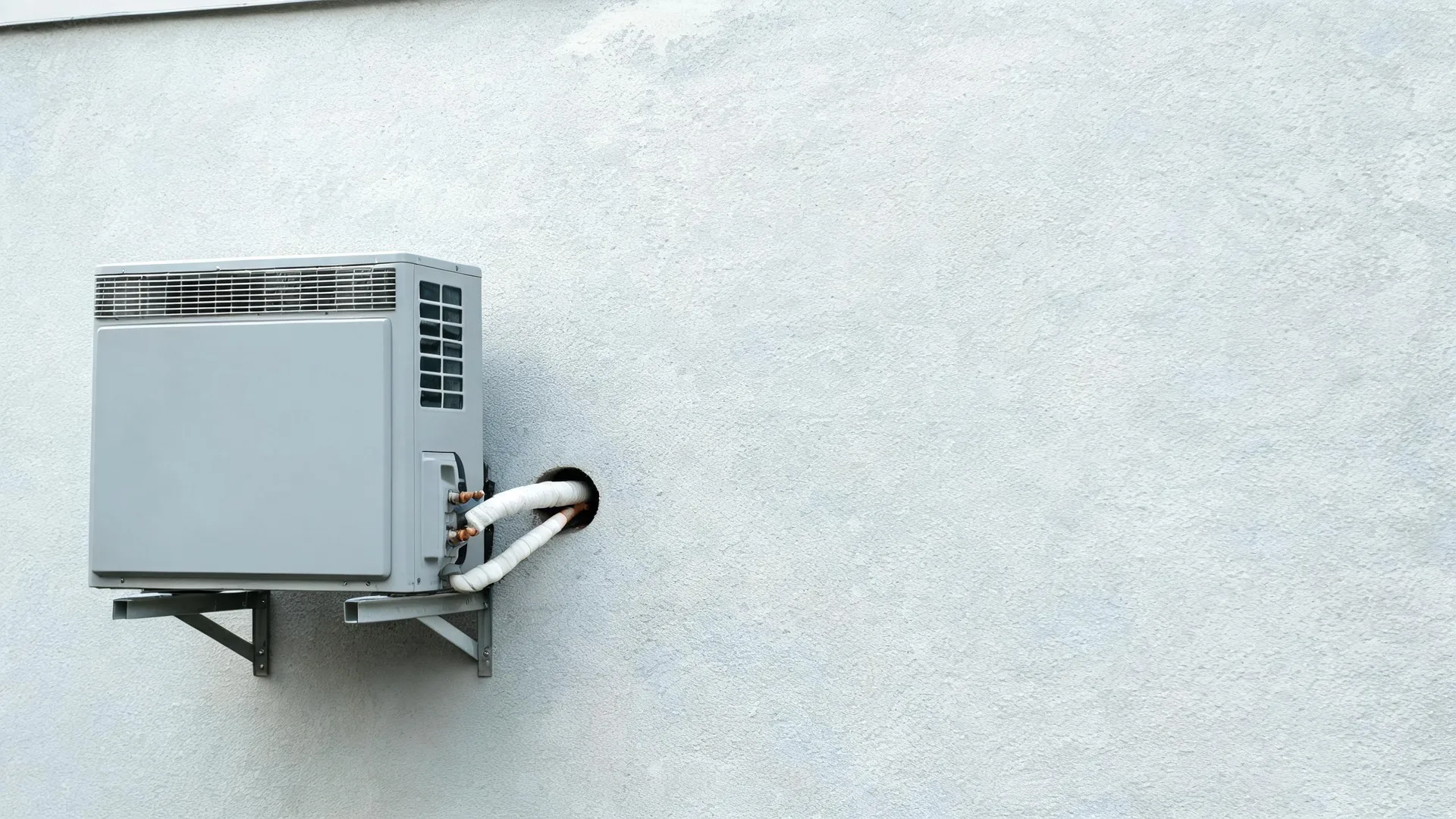
A beige split-system air conditioner outdoor condenser unit mounted on metal wall brackets atop a stucco wall.

Five months a year, every year

Five months of cooling, afternoon highs near 90, storms passing through most years. That's the load this system sits under once it's running, every year it's installed. Ask what size the room calls for and have the contractor show the load calculation, not just a number they're used to selling. The unit that fits the room is the one that holds up through June and still holds up through a storm season.

Ask for a room by room load calculation

A contractor should measure the room, the windows, the insulation, and what's on the other side of each wall before naming a unit size. If someone quotes you a number before looking at the room, that's a guess, not a calculation. The right size cools and heats evenly without the compressor cycling on and off all day.
Ask how many zones one outdoor unit will carry

Some systems pair one outdoor unit with several indoor heads, others run one to one. Loading too many heads onto a single outdoor unit means every room competes for the same capacity when all of them are running at once. Ask what happens on the hottest day when every head in the house is calling for cooling at the same time.

SEER2 and HSPF2 are both ratios, how much heating or cooling you get back for the electricity you put in. A higher number means the unit pulls less power to do the same job, every season it runs, not just the first one. HSPF2 is the one to check if you're counting on the mini split for winter heat, since it's a separate rating from the cooling side and a unit can be strong at one and weak at the other. These numbers describe the equipment, not the room, so a high rating on an undersized or oversized unit still won't hold the room the way it should. Compare the rating alongside the load calculation, not instead of it.

Installation starts outside. The outdoor unit needs clearance on all sides for airflow, and a spot where condensation and defrost runoff can drain away without pooling near the foundation. Inside, the contractor mounts a wall plate and drills a hole for the line set. Refrigerant lines, wiring, and the condensate drain all run through that same hole out to the outdoor unit. Once everything connects, the system gets pulled down with a vacuum pump before any refrigerant moves into the lines. That step matters. Any moisture left behind in the lines can damage the compressor later. After that, each head gets powered up, the thermostat response gets checked, and refrigerant pressure and airflow get confirmed at every indoor unit before the job is called done.