




A low-angle view along a red brick wall with shrubs at its base, facing a mown grass lawn with a single-story light-colored house and pine trees under an overcast sky.

Mini Split Installation in Camden, SC

Tell us about the job

Takes about a minute. No obligation.

New system or replacementMini-splitKershaw County, SC
Step 1 of 2

What ZIP code is the job in?

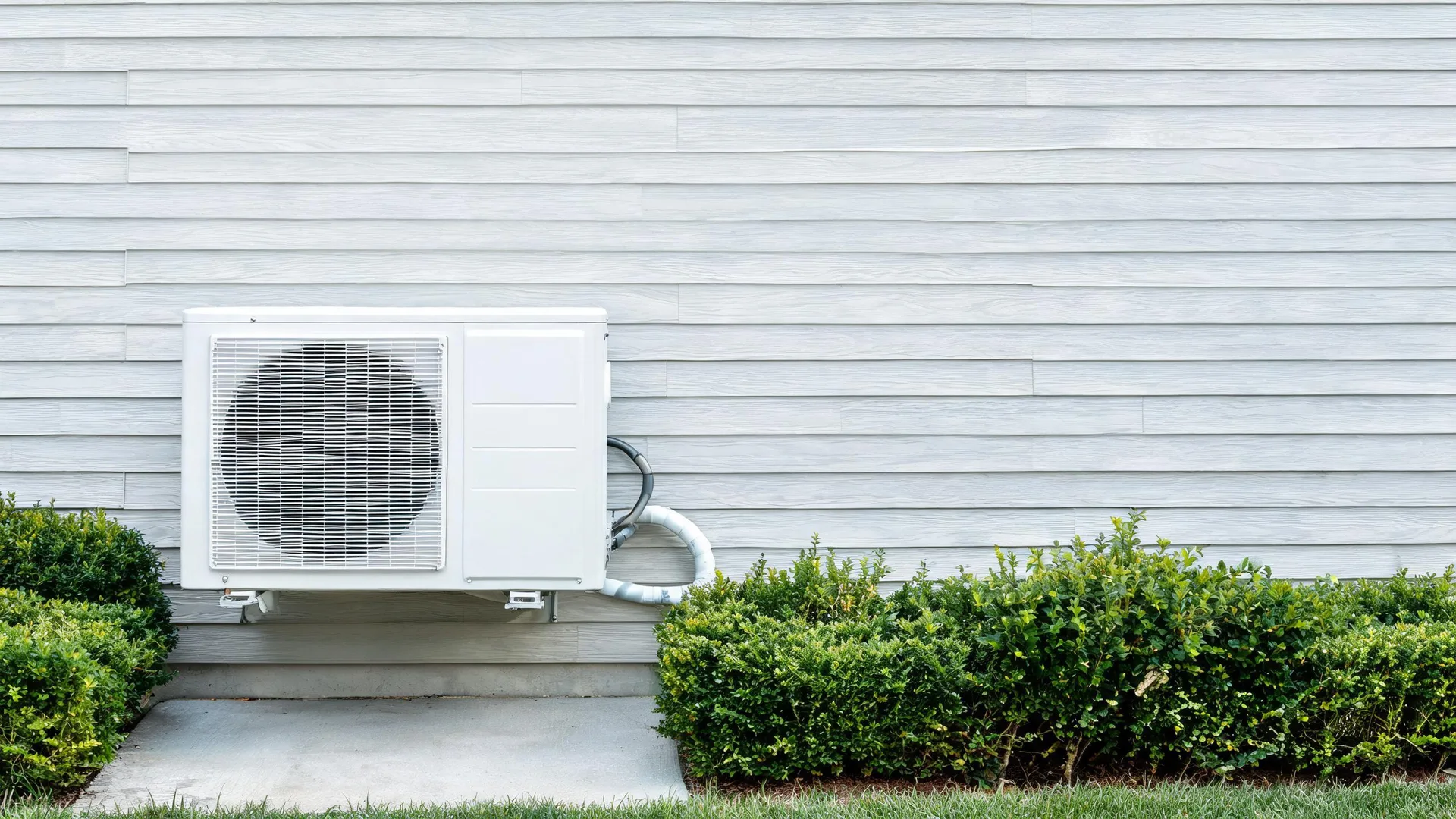
Kershaw County has logged 116 damaging wind events and 24 hail events over the past decade. Whoever installs your mini split should plan the outdoor unit's spot with that in mind. Mount it where siding or a roofline breaks the wind, not out in the open, and keep it clear of branches that could come down on it. A mini split also gives you a way to handle outages that central systems don't. A few indoor heads running off a small generator can keep a bedroom or the main living space livable while the power is out. Worth asking about, since almost half of South Carolina households went a full day or more without power last year.

5 months
November through March, your system heats
5 months
May through September, it cools
34°F
the average winter night it heats against
90°F
the average summer afternoon it cools against
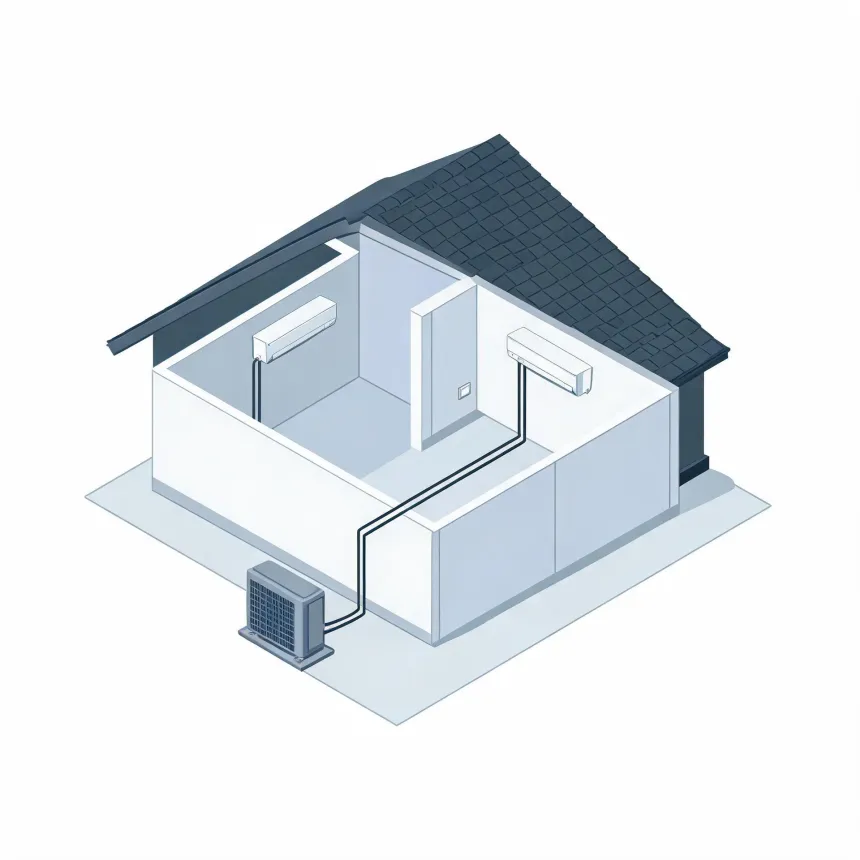
Isometric cutaway illustration of a small house with a dark shingled roof, showing two wall-mounted indoor air conditioning units in separate rooms connected by lines to an outdoor condenser unit on the ground outside.
Your system heats November through March and cools May through September.

NOAA nClimDiv, 1991–2020 normals

Electricity in South Carolina runs 14.23 cents per kilowatthour.

A mini split that holds its efficiency keeps that rate from showing up on every bill.

Electricity already heats most homes in Kershaw County, and a mini split fits that setup

71.5% of homes heat with electricity
Cooling runs May through September
Summer afternoons average 90°F
Cooling that runs five months straightAfternoon highs average 90°F in Kershaw County all through June, July and August.

Kershaw County sits in climate zone 3A, warm with a long stretch of air conditioning weather and a short mild winter. Any mini split installed here has to clear the federal minimum for that equipment. That rule treats a ductless system the same as any other split system, so there's no separate, lower bar for it. The minimum is 14.3 SEER2 for cooling and 7.5 HSPF2 for heating. That's a floor, not a ceiling, and plenty of units on the market clear it by a wide margin. A system that meets it is built to run efficiently through the long cooling stretch this county gets.

Get it installed before May

Cooling starts in May here and runs through September. An install finished in April gives it a full season to settle in, with time to sort out any issue before the heat sets in and the unit is running every day.

Find a contractor
A beige split-system air conditioner outdoor condenser unit mounted on metal wall brackets atop a stucco wall.

What a long service life depends on

A mini split runs more hours in a year than almost anything else in the house, so the question worth asking isn't just what it costs but what it does every day for years. Ask what the compressor is rated for and whether it's a variable speed or single stage unit. A variable speed compressor ramps up and down to match the load instead of switching fully on and off, which means less wear over the long run and steadier temperatures day to day. Ask about the warranty on the compressor specifically, not just the system as a whole, since that part is the one most likely to fail after years of steady cycling. Ask who services it and whether parts are easy to get, because a unit that's cheap to buy but hard to find parts for later costs more over its life than one that's simple to maintain.

The line set and where the units go

A mini split needs a line set run between the outdoor unit and each indoor head. That path drives a lot of the labor. A straight shot through one wall is quick work. A run across the house, up through an attic or down through a chase takes more time and more material. The number of indoor heads matters too. A single zone is a simpler job than a multi-zone system feeding several rooms off one outdoor unit.
What you're comparing against

A multi-zone system costs more up front than adding one head, but it runs off one outdoor unit instead of several. Compare quotes on what's actually being installed. Look at the number of zones, the tier of equipment, and whether the electrical work to feed the outdoor unit is included. A low number that skips the disconnect or breaker work isn't the full job.

Sizing a mini split means working out the heat load of the room it's serving, not matching tonnage to square footage. A contractor measures wall and window area, checks which way the room faces, and accounts for things like a vaulted ceiling or a room over a garage. Too big and the compressor short cycles, cooling the room fast then shutting off before it pulls the moisture out of the air, so the room feels cold and damp at once. Too small and it runs flat out all afternoon without ever catching up, which wears on the compressor and still leaves the room warm. The right size lands in between, running long steady cycles that hold the temperature without straining. That measurement has to happen before anyone names a number, since a unit picked off a chart instead of a room is a guess wearing the shape of a calculation.

Installation starts with the line set, not the equipment. The crew runs refrigerant lines and wiring between the outdoor unit and each indoor head, then pulls a vacuum on the lines to clear out moisture and air before any refrigerant moves through them. That step matters more than it looks. Any moisture left in the line set turns to acid once the system runs, and that acid eats away at the compressor from the inside. Once the vacuum holds, the system gets charged, the indoor head gets mounted and leveled, and the whole thing gets tested running in both directions before anyone calls it done. A good installer checks the vacuum gauge and shows you it held, rather than just saying it did.