Electricity here runs 14.23 cents per kilowatt-hour
South Carolina power costs more than the national average, and a mini split that holds its efficiency rating keeps that cost down every month it runs.

Takes about a minute. No obligation.
South Carolina power costs more than the national average, and a mini split that holds its efficiency rating keeps that cost down every month it runs.
Cooling and heating stretch across a long part of the calendar here, so the rate you pay per kilowatt-hour hits far more bills than it would somewhere with just a few hot months.
NOAA nClimDiv, 1991–2020 normals
Electricity heats 80.6% of homes in Chesterfield County, the fuel almost everyone here is already set up for.
A mini split runs on that same electric power, so adding one means working with the wiring already there, not against it.




Chesterfield County sits in zone 3A, and any mini split installed here has to meet the federal split-system minimum of 14.3 SEER2 for cooling and 7.5 HSPF2 for heating. That rule applies to ductless systems the same as it does to any other split heat pump. It sets a floor, not a ceiling, so units rated higher than that minimum are on the market too. A system that clears this bar is built for the cooling load this climate puts on it, not just rated for a cooler zone. Installing one here may also qualify for the federal tax credit on heat pump equipment.
Cooling starts in May here and runs through September. Put a mini split in before April ends and it's ready on day one of the season, with the install itself done at a pace that works for you instead of squeezed in after the heat has already arrived.
Find a contractorFive summers of afternoons near 90 means the outdoor unit runs long hours, season after season. A mini split sized right for this heat holds its output without straining to keep up. Get the load calculated for the space you're cooling before you pick a unit, not after, so the one going in matches what this county actually asks of it.
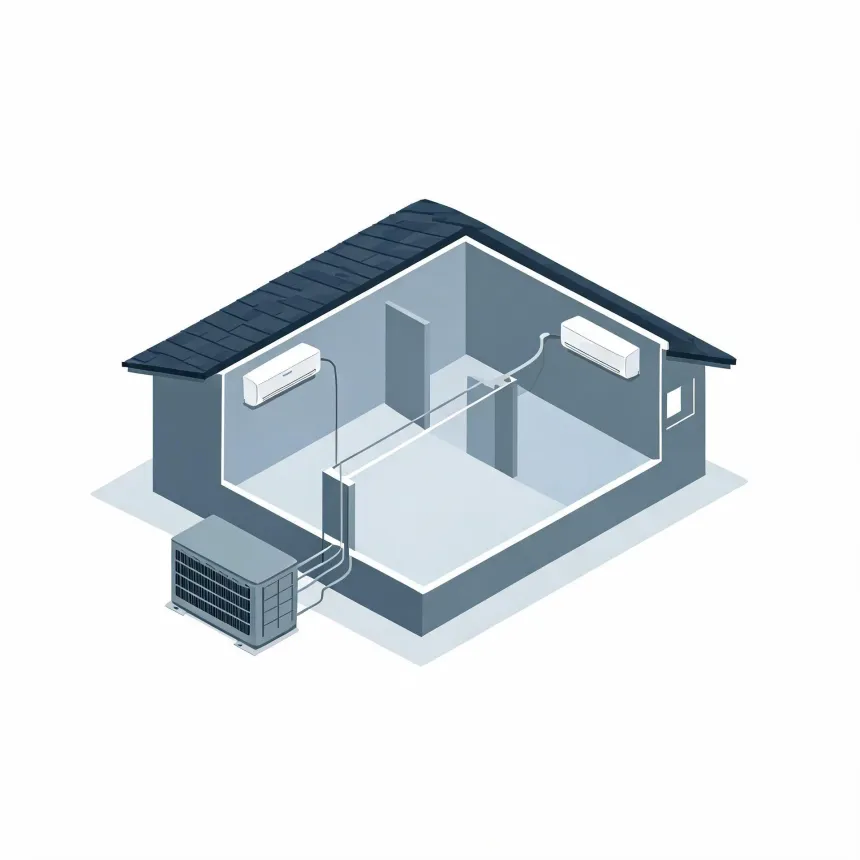
A multi-zone system runs several indoor heads off one outdoor unit, but each head has a limit to how far it can be from that unit and how the lines run between them. Ask what happens if one zone needs service. On some systems the whole outdoor unit shuts down, on others each zone runs independent of the rest. That difference matters more once the system's in than it does on paper.
Every heat pump has a point where it stops pulling enough heat from outside air to keep up, and a point on the cooling side where it runs flat out just to hold the set temperature. Ask for that cutoff, not just the average efficiency rating. A unit that holds its output at the extremes is doing the job it was sized for. One that leans on backup heat or struggles on the hottest afternoons was sized for a milder place than this one.
Whatever is getting replaced still has a refrigerant charge in it, and that has to come out the right way rather than vented into the air. A licensed contractor recovers it with the same equipment used on the install, so that part of the job is never skipped, just handled out of sight. If the old system ran on ducts, those ducts don't disappear. They can stay in place for another zone or get sealed off if the mini split is taking over the whole load. The old indoor and outdoor units themselves get hauled off and the line set either gets reused or pulled out, depending on whether the new lines run the same path through the wall. None of that is something you need to manage. It happens as part of the same visit that puts the new system in.
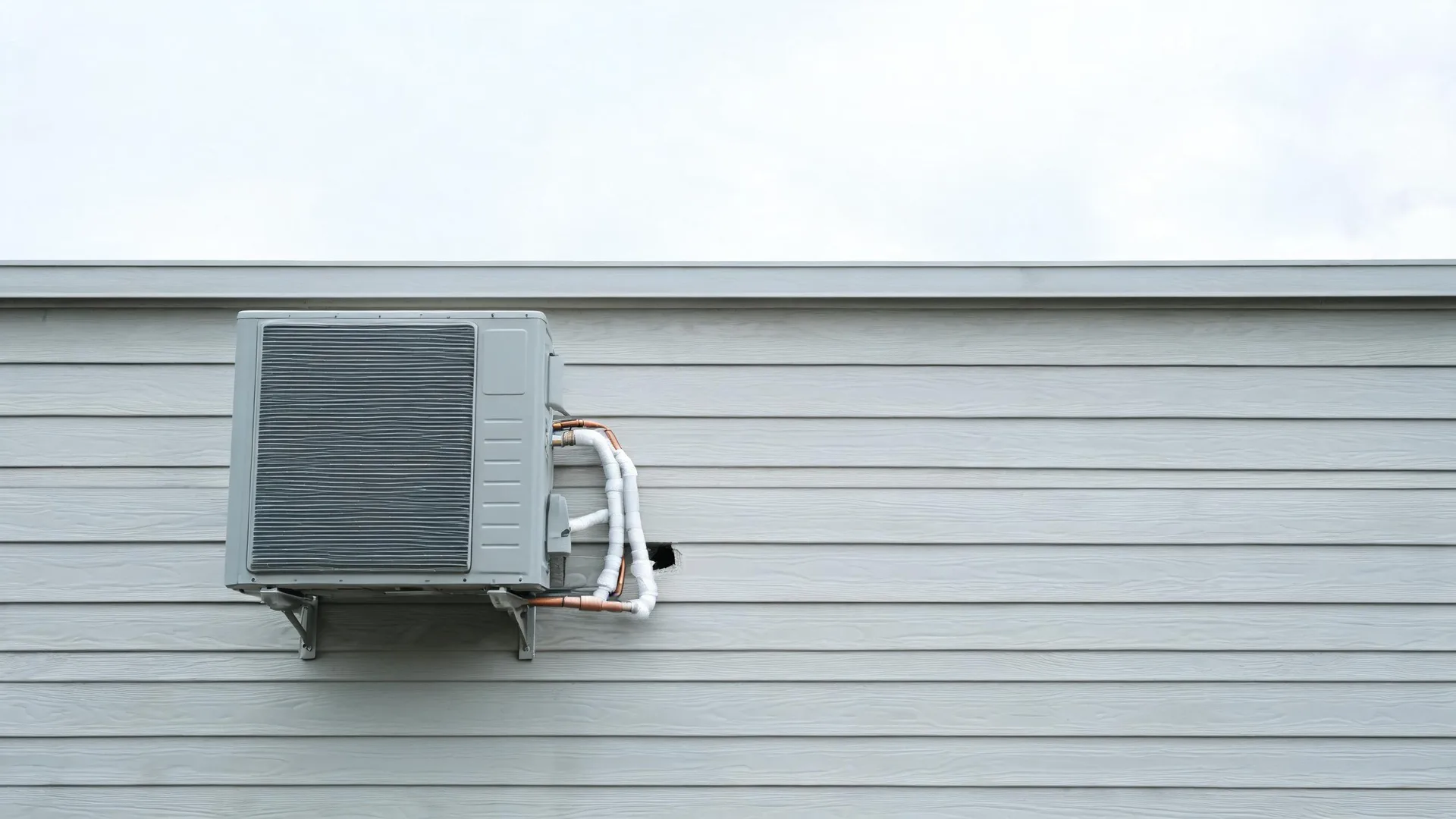
Installation starts outside, with a spot picked for the outdoor unit that has clearance on all sides and a clean path for drainage. Inside, each indoor head needs a run to that outdoor unit, and that line set and a small drain line have to pass through an exterior wall, which means a hole gets drilled before anything gets mounted. The indoor head goes up on a mounting plate, usually high on the wall, so it needs a stud or backing that can hold its weight. Once the lines are run and connected, the system gets pressure tested to make sure every joint holds, then the lines are vacuumed out to pull any moisture and air from inside them before refrigerant ever goes in. Only after that test passes does the system get charged and switched on, and the last step is checking that each head is actually moving the air it's supposed to at the setting it's given.