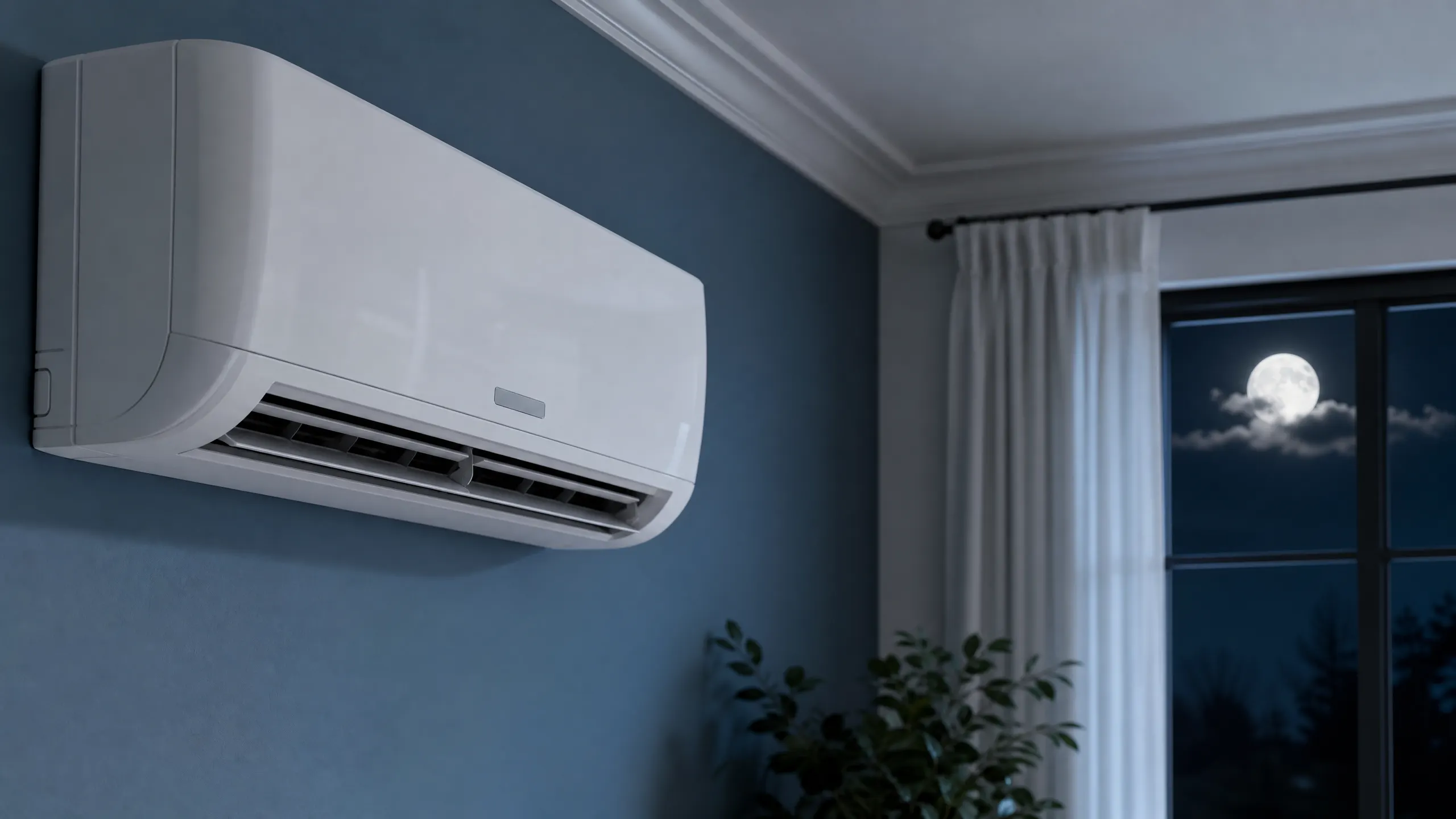






A white wall-mounted split-system air conditioner on a blue-grey wall, with a full moon visible through a curtained window at night.

Mini Split Installation in Chester, SC

Tell us about the job

Takes about a minute. No obligation.

New system or replacementMini-splitChester County, SC
Step 1 of 2

What ZIP code is the job in?

Electricity in South Carolina ran 14.23 cents per kilowatthour in 2024. A mini split works in your favor against that rate, because it moves heat instead of burning fuel or resisting current for it. Run one room or zone at a time instead of conditioning the whole house, and you're only paying for the space you're using. The efficiency rating on the unit tells you how much heat it moves per watt, and a higher one costs you less over a Chester summer or winter. Ask whoever installs it to size the unit to the room, not just the square footage, since an oversized unit cycles on and off and wastes power doing it.

5 months
November through March, your system heats
5 months
May through September, it cools
33°F
the average winter night it heats against
89°F
the average summer afternoon it cools against
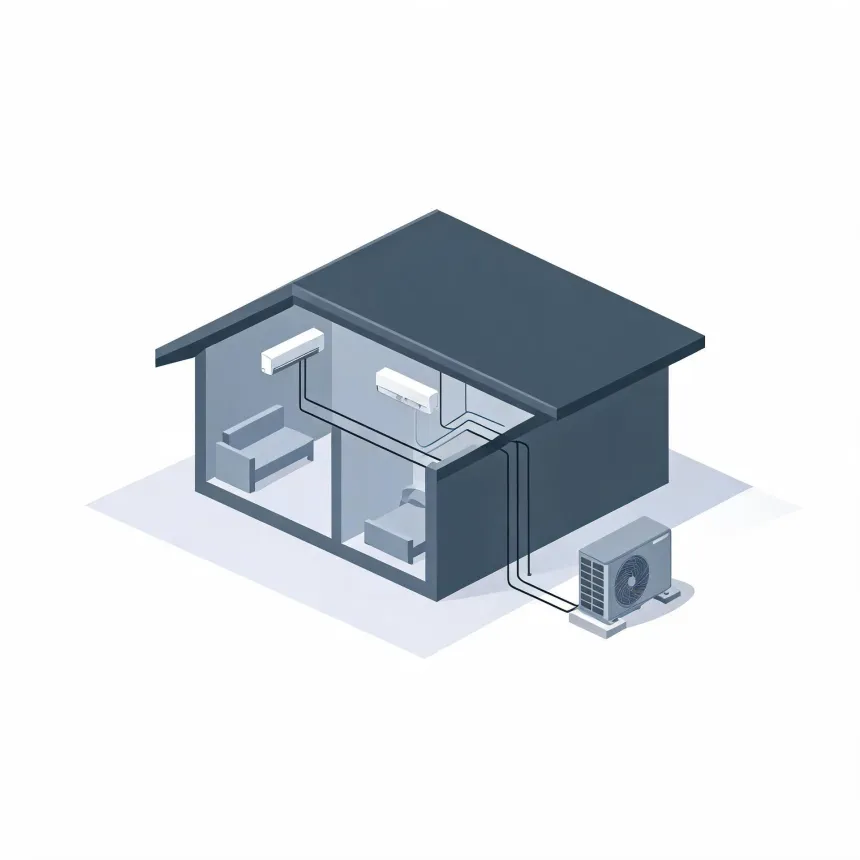
Isometric illustration of a cutaway house showing two wall-mounted mini-split indoor units connected by line sets to an outdoor condenser on a pad outside.
Your system heats November through March and cools May through September.

NOAA nClimDiv, 1991–2020 normals

More than half the homes in Chester County heat with electricity.

A mini split runs on the same power already in your walls, so adding one rarely means new wiring for the fuel source.

A standard mini split handles a Chester County home, built before 1980 or after

Half the homes here were built by 1980
Climate zone 3A
Power costs 14.23 cents a kWh statewide
Get It In Before MayCooling runs May through September here, so April is the month to get it done.

Ask about the SEER2 and HSPF2 numbers before you settle on a unit. Those two ratings tell you what you'll be paying every month after the install, not just the price on the quote. A unit with a higher HSPF2 costs more up front most of the time, but it's the one pulling less from the meter on a cold morning here. If you're putting one in a room you use daily, year round, spend the extra on efficiency. If it's for a sunroom you use a few weekends a year, the cheaper unit may be the one that actually saves you money, since you won't run it enough to earn back the difference.

New here has to clear 14.3 SEER2

Chester County sits in zone 3A, warm with a short mild winter. Any mini split installed here, manufactured from 2023 on, has to hit at least 14.3 SEER2 and 7.5 HSPF2 to meet the federal minimum. A federal tax credit is available toward the cost of a qualifying unit, worth asking about before you pick one.

Find a contractor
A man in a gray work shirt and tan pants carries a canvas tool bag up wooden porch steps toward a dark green front door, with a potted shrub to the right.
A white outdoor air conditioner condenser unit mounted on metal wall brackets against gray horizontal siding, with a blue sky and white clouds behind it.

Five months of heat to work against

Cooling runs here from May through September, five months of the year, and afternoons in June, July and August average 89°F. That's the stretch your mini split has to keep up with, not just the mild days around it. A unit sized to the room handles that heat without running flat out all afternoon. One sized wrong for the space works harder than it should, all five months, every year it's in that wall.

The number of zones sets the price

A single indoor head paired with one outdoor unit costs less than a multi-zone setup running several heads off one condenser. Each extra zone means another line set, another indoor head mounted and another spot for the installer to run refrigerant line through the wall. Decide first how many rooms actually need their own control before pricing it out.
Where the lines have to travel

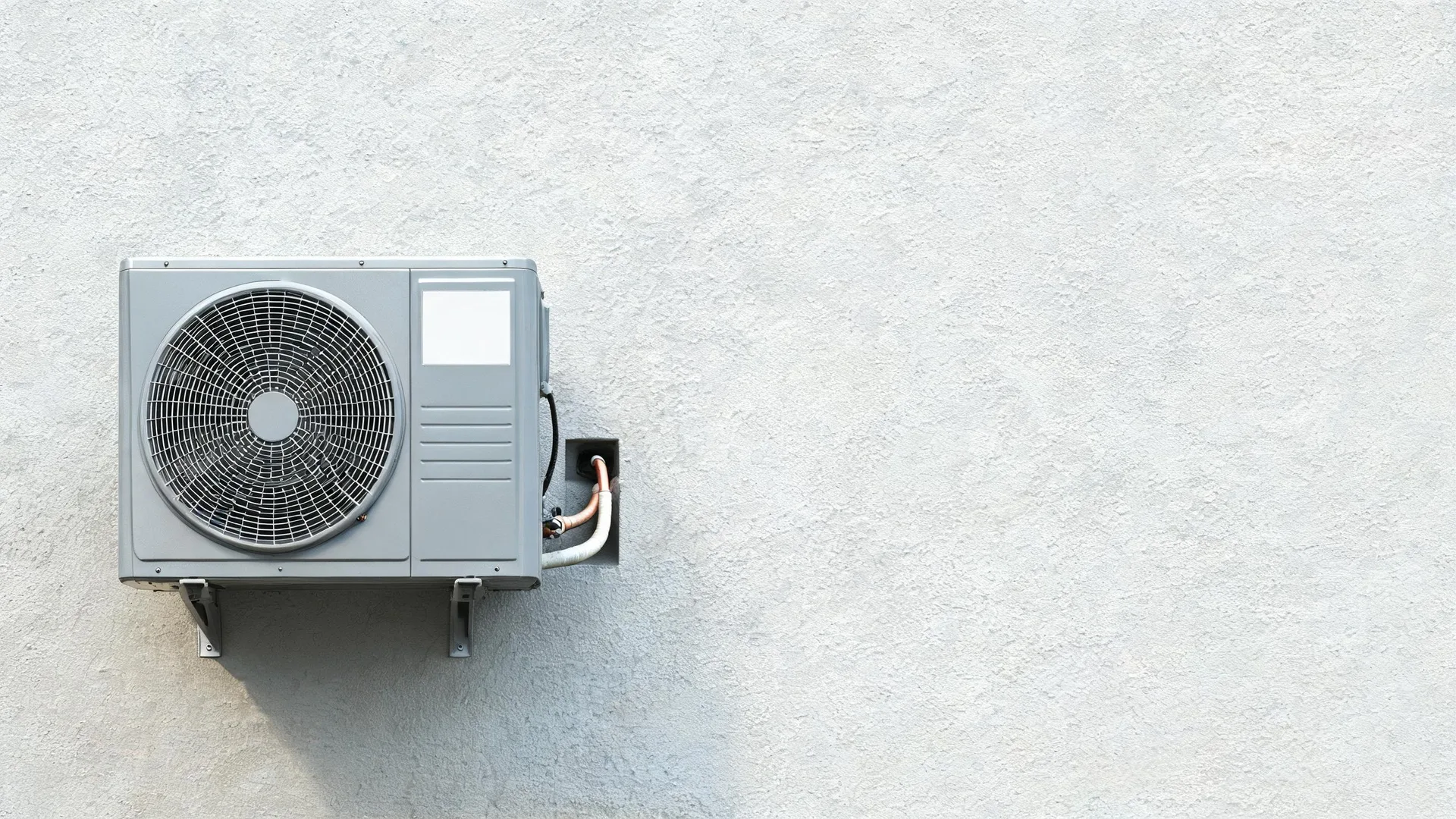
The outdoor condenser and the indoor head connect through a refrigerant line set, a drain line and electrical wiring, all of which have to get from one to the other. A straight shot through a nearby exterior wall is simple work. Routing that same line through an attic, down an interior wall or around the house to reach the only spot with space for a condenser adds labor the straight shot never would.

Sizing a mini split is not the same as sizing a furnace or a window unit. It comes down to the heat load of the room. How much sun it gets, how many exterior walls it has, what's on the other side of the ceiling. A tech works that out room by room, not by guessing off square footage alone. Go too big and the unit blasts the room cold or hot in a few minutes, then shuts off, then kicks back on again through the afternoon. That short cycling is hard on the compressor and it leaves the room clammy, because the unit never runs long enough to pull moisture out of the air. Go too small and it runs constantly without ever quite catching up on the hottest or coldest days. The right size runs longer, steadier stretches, and that's what keeps the room comfortable and the equipment lasting.

Installation starts outside, with the condenser. The crew picks a spot with clearance on all sides for airflow, sets it on a pad or brackets, and keeps it clear of the dryer vent and downspouts. Inside, the indoor head gets mounted high on the wall, level, with room above and below for air to move through the coil. The installer drills through the wall to run the line set, the drain line and the electrical wiring, then seals that opening against weather. Before any refrigerant goes in, the system gets pressure tested, since a leak is far easier to fix before the charge than after. Once it holds, the lines are charged, the drain line is checked for a steady slope so condensation actually leaves the house, and the unit gets run through a full cycle, heating and cooling, before the crew considers the job done.