





Single-story brick and siding houses with lawns behind a long trimmed hedge, framed by large oak branches draped with Spanish moss under an overcast sky.

Mini Split Installation in Dillon, SC

Tell us about the job

Takes about a minute. No obligation.

New system or replacementMini-splitDillon County, SC
Step 1 of 2

What ZIP code is the job in?

Electricity in South Carolina ran 14.23 cents per kilowatthour in 2024. A mini split runs on that rate every time it cycles on, so the efficiency rating matters more here than in a state where power is cheap. Mini splits condition only the room or zone they're set up to serve, without duct losses pulling at the number. The higher the unit's efficiency rating, the less of that 14.23 cents goes into each hour of heating or cooling. Over a system that might run for years, the difference between a mid-range unit and a high-efficiency one shows up on every bill that follows.

5 months
November through March, your system heats
5 months
May through September, it cools
35°F
the average winter night it heats against
90°F
the average summer afternoon it cools against
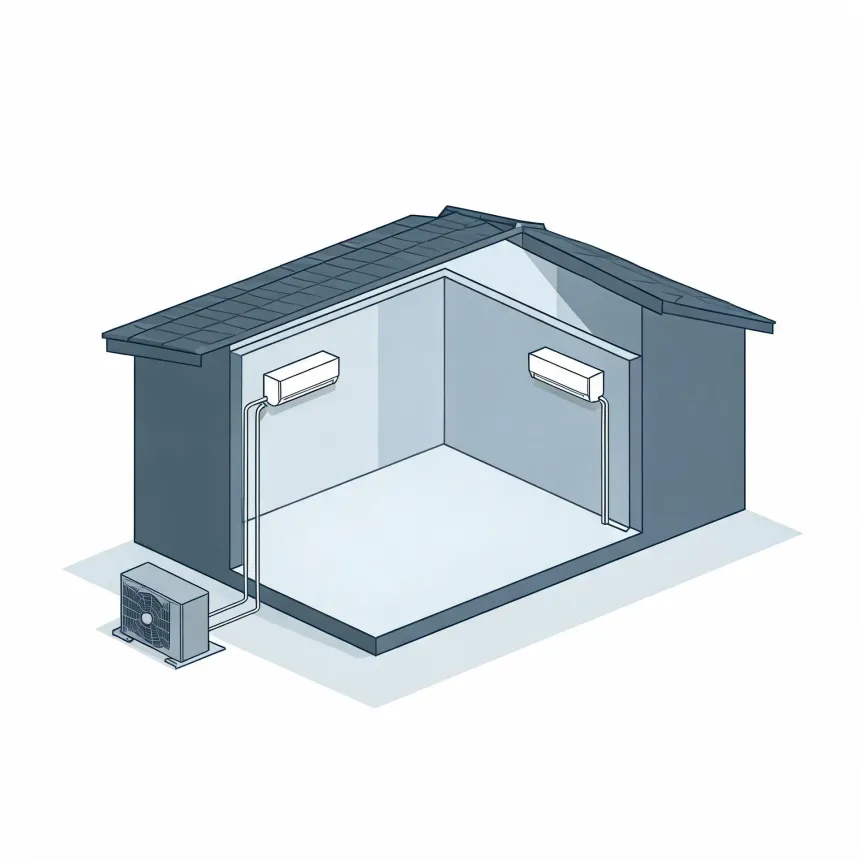
Cutaway isometric illustration of a small building interior showing two wall-mounted indoor air conditioning units connected by line sets running down to a single outdoor condenser unit on the ground outside.
Your system heats November through March and cools May through September.

NOAA nClimDiv, 1991–2020 normals

Dillon County logged 48 severe weather events between 2015 and 2024, most of it damaging wind.

A mini split's outdoor unit sits right in that wind, so where it gets mounted and what shields it matters.

May through September here, so get it in before May

Cooling runs May through September
Summer afternoons average 90°F
Power costs 14.23 cents a kWh statewide

Electricity heats 90.1% of homes in Dillon County. Gas, piped or bottled, barely shows up here. A mini split runs on electricity already, so it fits into wiring the house has rather than asking for a gas line most homes don't have. It can also take over for a baseboard heater or window unit, working off the same electric service those relied on. For a home in this county, that makes a mini split a straightforward swap, not a change in how the house gets its power.

Five months of 90 degree afternoons. Size this one right.

June through August, that outdoor unit works against a 90°F afternoon most days, and it keeps that up from May into September. A mini split sized to match this place handles that load without straining. One sized wrong for the room is the one still running at full tilt past dark.

Find a contractor
A man in a cap, work shirt and tan pants, seen from behind, carries a canvas tool bag up concrete steps toward a dark green front door, with a potted shrub to the right.
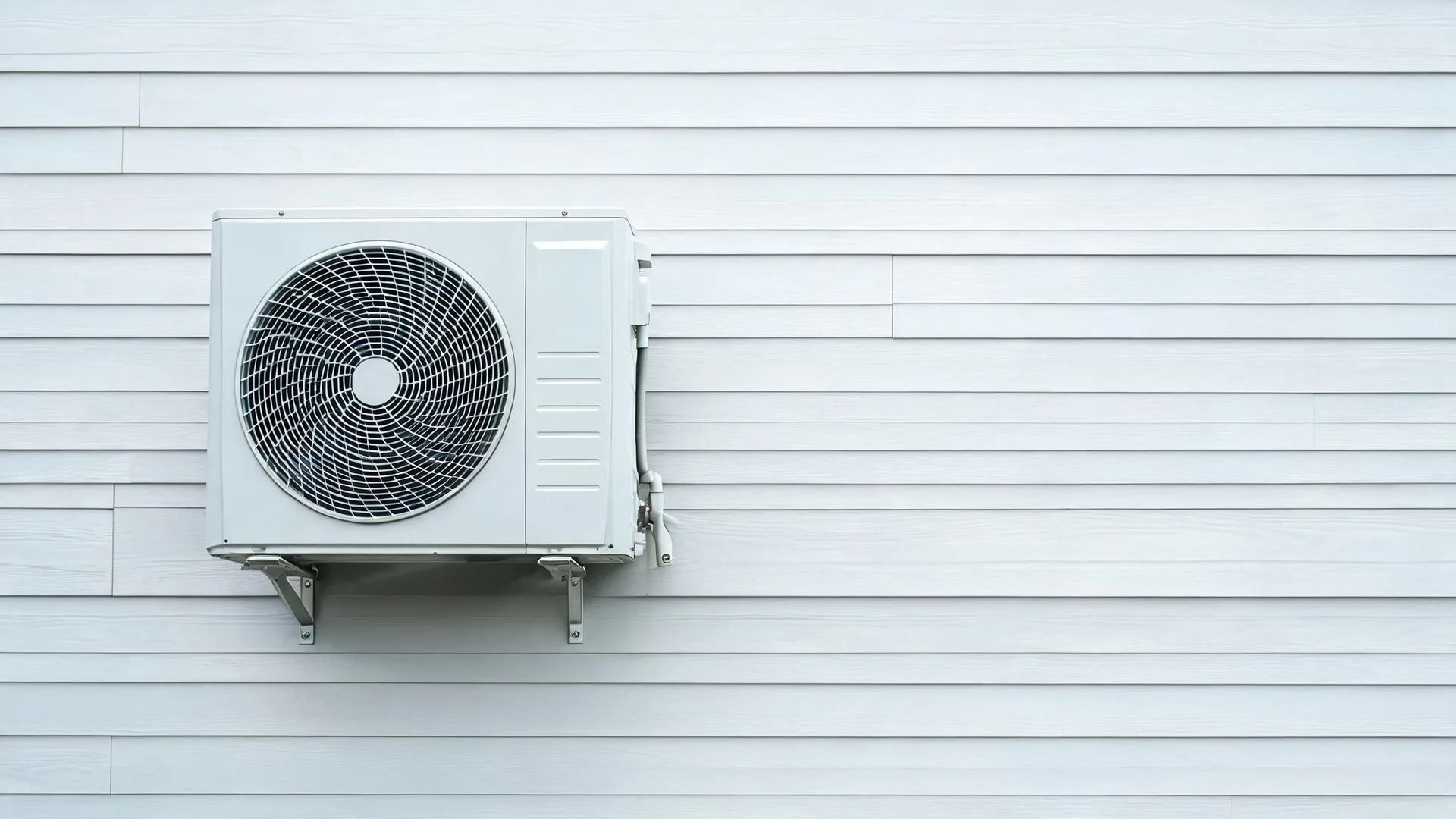
A beige split-system air conditioner outdoor condenser unit mounted on metal wall brackets atop a stucco wall.

Sized for the room, not the truck

A mini split gets sized to the heat load of the room it serves, not by a rule of thumb or whatever unit happened to be on the truck. That load depends on the room's square footage, its ceiling height, how many windows it has and which way they face, how well insulated the walls are, and what else is generating heat in there. A contractor works through that math before recommending a unit. Skip that step and size by guesswork instead, and the system runs wrong in both directions. Too big, and it cools the room fast, shuts off, then starts again a few minutes later. That short cycling never lets the unit run long enough to pull moisture out of the air, so the room feels cold and damp instead of just comfortable. Too small, and it runs flat out without ever catching up, which wears on the compressor and still leaves the room short of where the thermostat is set. A unit sized right for the room runs longer, steadier cycles and holds the temperature without swinging.

Ask what happens at the temperature extremes, not just the rated capacity

Every mini split has a capacity number, but that number is usually measured under mild conditions. Ask what the unit actually puts out in a hard freeze or a brutal afternoon. A unit that holds its output at the extremes is doing more work than one that only hits its rated number in easy weather.
Ask how the outdoor unit splits its output across zones

Some outdoor units serve a single indoor head. Others are built to feed several rooms at once, dividing their total capacity across whichever zones are calling for heating or cooling. If a contractor is proposing a setup with multiple indoor heads, ask what each room gets when all of them are running at the same time, not just what the system is rated for overall.

What drives the cost of putting one of these in has less to do with the unit itself than with what it takes to get refrigerant line and power to where the indoor head goes. A straight shot through an exterior wall to an outdoor unit sitting right outside costs less than a run that has to travel through framing, up a chase, or across a longer distance to reach the condenser. Multi-zone systems add cost per head, since each indoor unit needs its own line set and its own mounting work, even though they share one outdoor unit. Electrical matters too. A mini split needs a dedicated circuit, and if the panel has room and capacity already, that's a simpler job than one where the panel needs upgrading first. Where the outdoor unit gets mounted, on a pad, a wall bracket, or somewhere elevated, changes the labor as well. None of this shows up in the unit's price tag, but all of it shows up in the bill.

Installation starts with a walkthrough, picking the spot on the wall for the indoor head and the spot outside for the condenser, then running a line set between them. That line carries refrigerant, usually through a hole bored straight through the exterior wall behind the indoor unit. Every joint in that line set gets flared and connected with real care, since a leak there lets refrigerant out over time and the system loses capacity for good. Before any refrigerant flows, the installer pulls a vacuum on the line set to clear out moisture and air. Skipping that step is one of the most common reasons a new system underperforms from the start. After that it's mounting the outdoor unit, securing the indoor head level on its bracket, and running it to check it's heating and cooling the way it should before the job is called done.