A row of single-story houses with covered porches, the nearest clad in red brick, seen behind a trimmed hedge and lawn beneath large moss-draped oak branches.

Mini Split Installation in Easley, SC

Tell us about the job

Takes about a minute. No obligation.

New system or replacementMini-splitPickens County, SC
Step 1 of 2

What ZIP code is the job in?

This county sees a lot of severe weather

Pickens County logged 113 severe weather events between 2015 and 2024, including damaging wind, hail, and tornadoes. An outdoor condenser set where debris or hail can reach it takes the brunt of that, so where the installer places it matters.

Power cuts matter more with a mini split

Nearly half of South Carolina households went at least 24 hours without power in 2024. A mini split runs on electricity alone, with no backup heat source built in, so when the power goes, so does your heating and cooling until it's back.

7 months
October through April, your system heats
5 months
May through September, it cools
33°F
the average winter night it heats against
87°F
the average summer afternoon it cools against
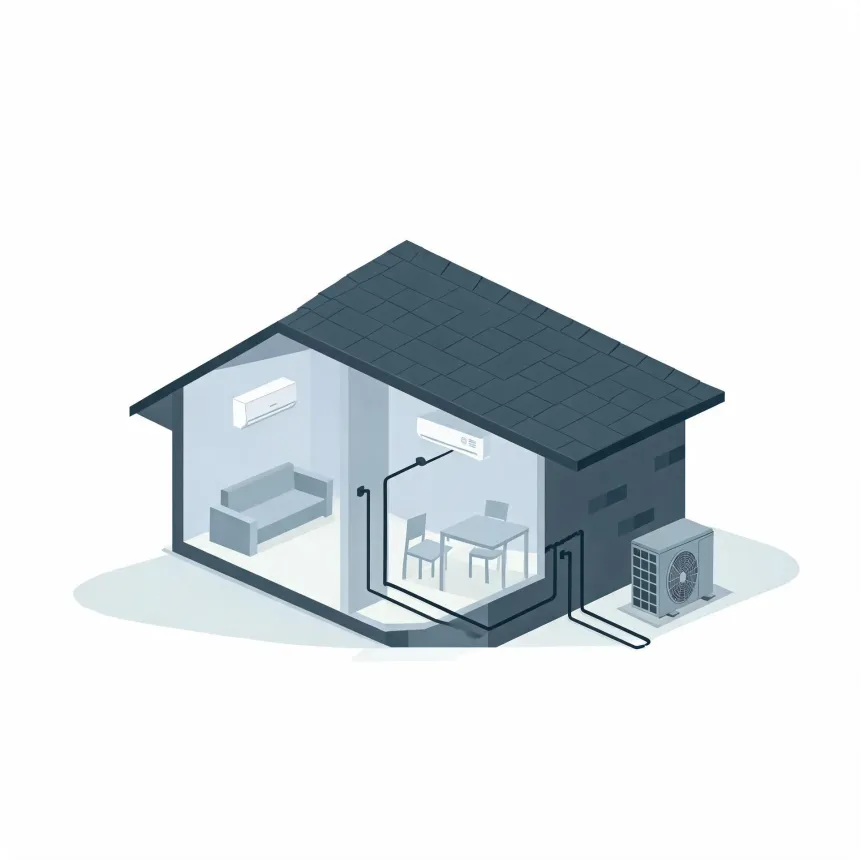
Isometric illustration of a cutaway single-story house showing two wall-mounted mini-split indoor units connected by line sets to an outdoor condenser beside the building, with a sofa, table and chairs inside.
Your system heats October through April and cools May through September.

NOAA nClimDiv, 1991–2020 normals

Electricity heats 60.5% of homes in Pickens County, more than any other fuel.

A mini split runs on electricity too, so it fits right into how this county already heats.

A normal size, sized right, runs fine here

Cooling runs May through September
Summer afternoons average 87°F
69 damaging wind events from 2015 to 2024
No reason to size this bigger than the room needsSouth Carolina homes paid 14.23 cents per kilowatthour in 2024

Pickens County sits in zone 3A under the 2021 energy code. Any mini split installed here has to meet the federal minimum for that zone, 14.3 SEER2 for cooling and 7.5 HSPF2 for heating. That rule covers ductless systems the same as any other split-system heat pump. There's no separate, lower bar for the equipment going up on your wall. A federal tax credit is available on top of that for heat pumps that qualify. Ask an installer which models on their truck clear both marks.

Get it installed before May

Cooling runs May through September here. Have the mini split installed in April and it's already tested and running before the first hot week hits, not during it.

Find a contractor
A man in a dark long-sleeve shirt, tan pants, cap and work boots carries a canvas tool bag up gray porch steps toward a dark green front door, with a potted shrub beside the entry.
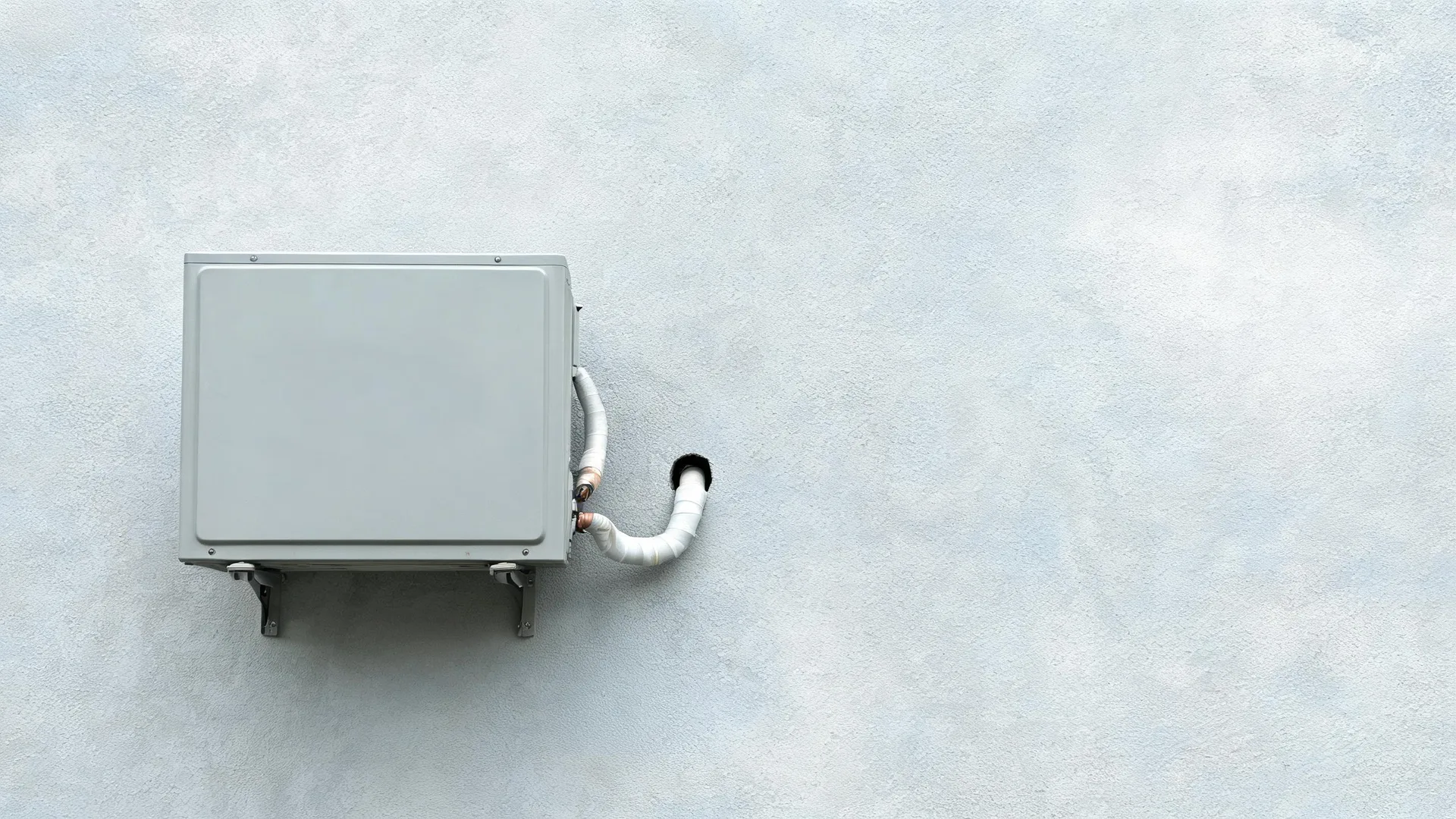
A white mini-split air conditioner outdoor condenser unit mounted on metal brackets against a beige stucco exterior wall, with a blue sky and scattered clouds in the background.

Ask how it performs at the extremes, not just on a mild day

A mini split runs whenever the room needs it, not on a fixed schedule. In mild weather the outdoor unit may cycle on and off most of the day. In deep summer or a hard freeze it can run close to steady. That's normal. What matters when you're comparing systems is how each one handles those extremes, not how it performs on a mild afternoon. Every heat pump loses some heating capacity as the outdoor temperature drops. Ask what each system is rated to deliver well below freezing, and at what point it needs backup heat to make up the difference. Ask the same question about a hot, humid day. Some compressors modulate down to match a small load. Others just cycle on and off at full output no matter how little the room needs. A system that modulates holds a steadier temperature and starts and stops less, which means less wear on the compressor over the years.

The outdoor unit and the indoor heads both factor in

A mini split install prices out the condenser outside and each wall or ceiling head inside, plus the line set and wiring that connect them. Add a second or third indoor head for another room and the job grows with it, since each one needs its own line run and its own mount point.

Where the lines have to travel changes the labor

The refrigerant lines and wiring need a path between the indoor head and the outdoor unit, usually through an exterior wall. A straight run through an accessible wall goes faster than one that has to clear framing, brick, or a longer distance to reach where the condenser sits.

If you're replacing a central system, the old equipment doesn't disappear on its own. The indoor furnace or air handler, the outdoor condenser, and all the ductwork running through the house are still there until someone removes them. A mini split doesn't use any of that ductwork, so once it's in, the old ducts just sit empty unless you have them taken out too. Removing the old condenser means recovering whatever refrigerant is left in the lines before anything gets disconnected, since it can't just be vented into the air. If the old system ran on gas, the gas line feeding the furnace has to be capped off properly once it's no longer in use. None of this is required to make the mini split work. It's a separate conversation about what happens to the equipment you're walking away from.

An installer will mount the indoor head first, usually high on a wall, bolted to a plate that holds it level. From there a hole gets drilled through to the outside, sized just for the line set, the wiring, and the condensate drain to pass through. The copper lines get bent to fit the path, connected at both ends, then pressure tested before anything gets charged with refrigerant. That test matters more than it sounds. A line set that leaks slowly won't show up as a problem until months later, once the charge has bled down enough to hurt performance. Once the lines hold pressure, the system gets charged, the outdoor unit gets leveled on its pad or bracket, and the whole thing runs through a cycle in both heating and cooling before the installer calls it done.