Two white Southern-style homes with wraparound porches lit by landscape lighting at night, flanked by live oak trees hung with Spanish moss.

Mini Split Installation in Gaffney, SC

Tell us about the job

Takes about a minute. No obligation.

New system or replacementMini-splitCherokee County, SC
Step 1 of 2

What ZIP code is the job in?

Cherokee County sees its share of storms

Cherokee County logged 80 severe weather events between 2015 and 2024, including damaging wind, hail and a handful of tornadoes. A mini split's outdoor unit sits outside through all of it, exposed to whatever comes through.

Where the installer puts the outdoor unit matters

Ask about mounting it away from the roof line and anything overhead that could come loose in wind. Nearly half of South Carolina households went a full day or more without power in 2024, so it's worth asking the installer what it takes to run the system on a generator if the power goes out.

7 months
October through April, your system heats
5 months
May through September, it cools
32°F
the average winter night it heats against
88°F
the average summer afternoon it cools against
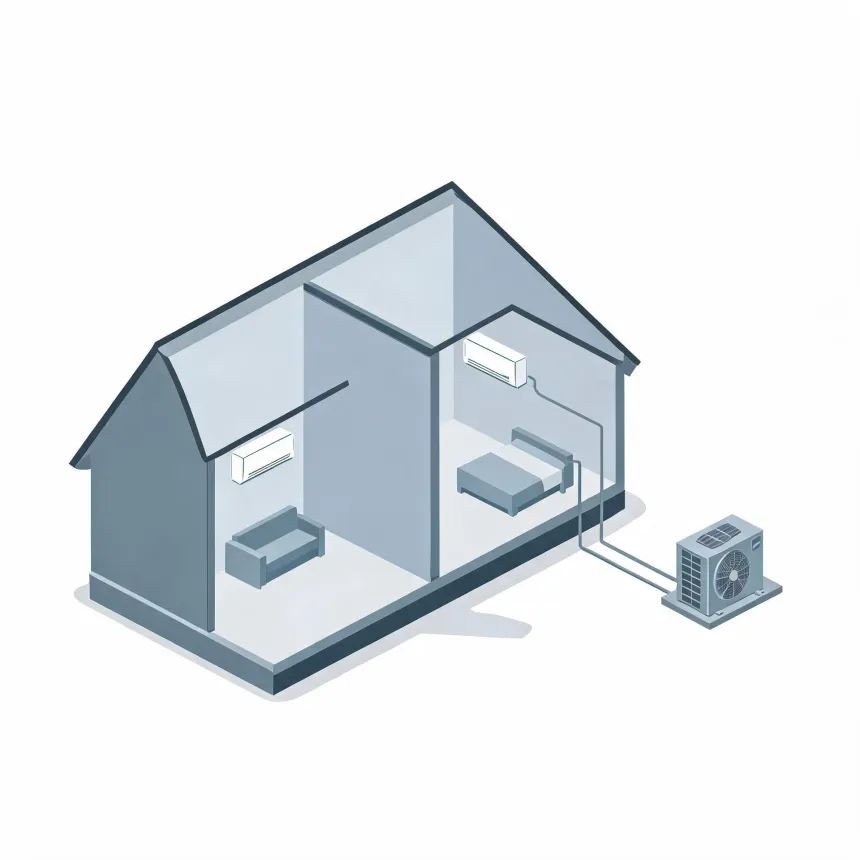
Isometric grey illustration of a cutaway house showing two rooms with wall-mounted indoor air conditioning units connected by lines to an outdoor condenser unit beside the building.
Your system heats October through April and cools May through September.

NOAA nClimDiv, 1991–2020 normals

Electricity heats close to seven in ten homes in Cherokee County.

A mini split runs on electricity too, so it ties into wiring most homes here already have for heat.

A standard mini split fits most homes here

Half the homes here were built by 1984
Climate zone 3A
Power costs 14.23 cents a kWh statewide
Put a mini split in before MayCooling starts in May here, so April is the month to get it done

Cherokee County sits in climate zone 3A, long summers, short mild winters. Any mini split installed here has to meet 14.3 SEER2 for cooling and 7.5 HSPF2 for heating, same as any other split-system heat pump under the federal standard. There's no separate, looser rule just because it's ductless. Ask the installer for the SEER2 and HSPF2 numbers on the actual unit they're quoting, not just the model name, since that's what tells you if it clears the bar.

Get the efficiency right, since you're paying South Carolina power rates either way

Electricity here runs 14.23 cents per kilowatthour, and a mini split pulls from that meter every time it heats or cools. A unit that clears SEER2 and HSPF2 by a wide margin instead of just squeaking by costs less to run on every one of those bills.

Find a contractor
A man in a dark T-shirt, tan work pants and a backward cap walks up stone steps toward a dark green door, carrying a worn canvas tool bag, with a potted shrub in a green ceramic planter beside him.
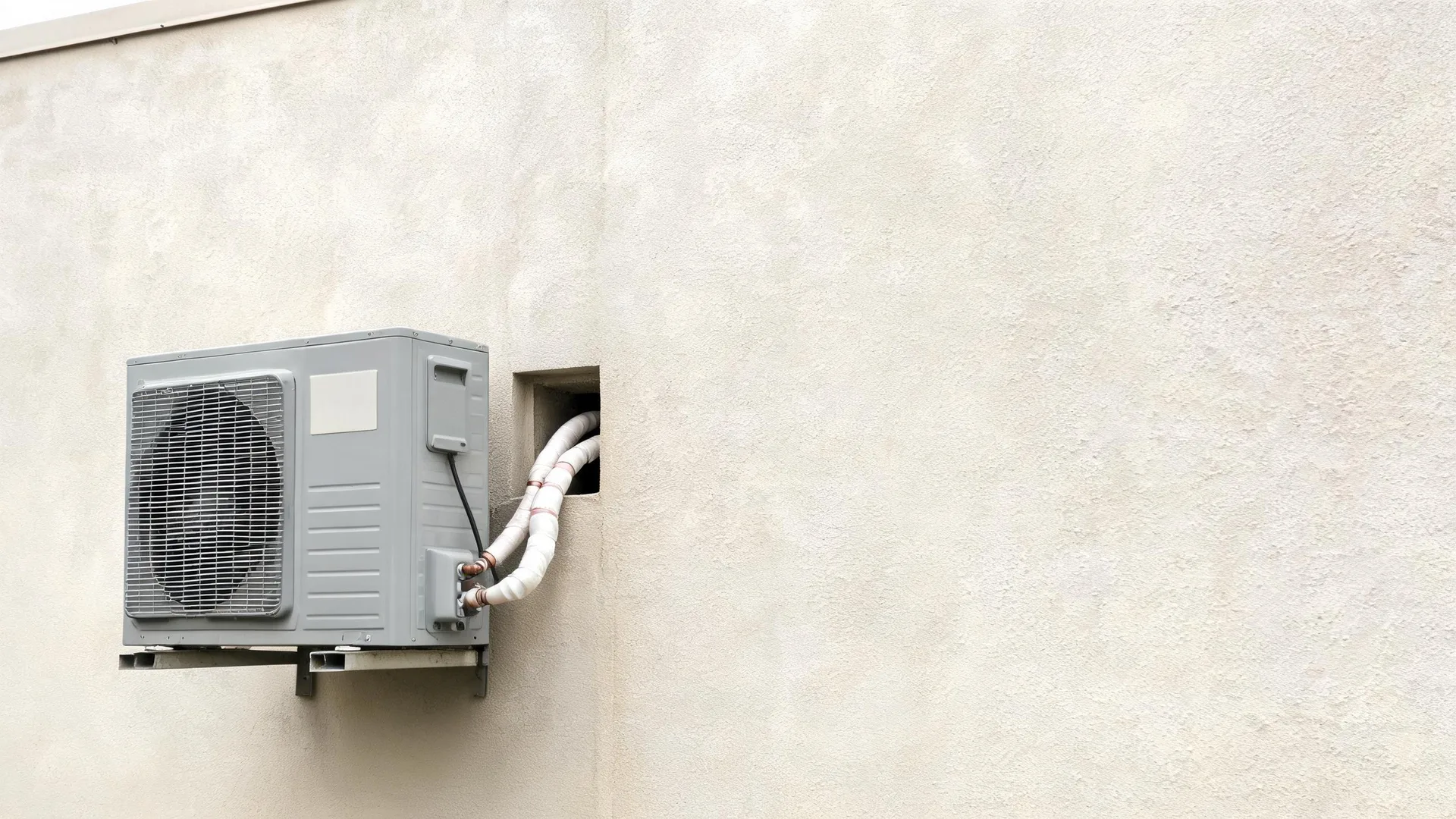
A beige split-system air conditioner outdoor condenser unit mounted on metal wall brackets atop a stucco wall.

Five months of work a year, nothing out of the ordinary

Five months of cooling here, May through September, with afternoon highs averaging 88°F through June, July and August. That's a normal summer load, not a heavy one. A standard size and efficiency rating holds up fine against it. The unit will run most days in those months and sit idle the rest of the year, which is the kind of duty cycle a mini split is built for.

How many zones, and where the heads go

A mini split can run one indoor head off one outdoor unit, or several heads off a single outdoor unit covering different rooms. Ask how many zones the quote is based on and why. Each indoor head should match the room it's heating and cooling, a head sized for a bedroom won't carry an open living area, and one sized too big for a small room will short cycle instead of running steady.

What happens if one zone needs work later

On a multi-zone system, the indoor heads share one outdoor compressor. Ask what it takes to service or replace a single head, whether that compressor and the line set design support adding a zone later if you need one, and whether the manufacturer's parts and warranty cover the system as a whole or each head separately.

Sizing a mini split isn't about picking the biggest unit available. Too big, and it cools the room fast, shuts off, then kicks back on a few minutes later, over and over. That short cycling never lets the system run long enough to pull moisture out of the air, so the room feels cold and clammy at the same time. Too small, and it runs constantly without ever catching up on the hottest afternoons. The right size comes from a load calculation, a room by room look at square footage, window area, insulation and what direction the walls face, not a rule of thumb based on floor space alone. A tech who skips that step and sizes off a chart is guessing, and the unit pays for it every season it runs.

Installation starts outside, with the line set. The installer runs a small refrigerant line and a drain line from the outdoor unit to each indoor head, usually through one hole in the wall behind the head, so there's no ductwork to open up or patch. The outdoor unit gets set on a pad or bracket and leveled, since a unit that sits tilted drains wrong and strains the compressor over time. Once the lines are connected, the system gets evacuated with a vacuum pump to pull out air and moisture before the refrigerant goes in. Any moisture left in the line can damage the compressor down the road, so that step isn't one to rush. After that it's a charge check, a power-up, and a test run in both heating and cooling to make sure every head is blowing the temperature it's set to.