Electricity here runs 14.23 cents per kilowatthour
South Carolina homes paid that rate in 2024. A mini split that runs through a humid Georgetown summer puts that rate to work on every bill it sends.
Takes about a minute. No obligation.
South Carolina homes paid that rate in 2024. A mini split that runs through a humid Georgetown summer puts that rate to work on every bill it sends.
A mini split with a strong efficiency rating moves the same amount of heat using less power. In Georgetown, that difference between one unit and another shows up every month on the power bill, not just once on the install.
NOAA nClimDiv, 1991–2020 normals
Electricity heats 87.6% of the homes in Georgetown County.
A mini split runs on electricity already, so it fits the wiring this house was built around.




Cooling in Georgetown starts in May, which makes April the month to get a mini split installed, not the month to start shopping after the old system quits on the first hot day. Installed in April, it gets set up and checked with nobody sweating it out in the living room while the work gets done. Georgetown runs cooling about six months a year, May through October, so a system put in during April is already working within weeks of the first hot stretch. Wait past April and you're scheduling around the start of the season instead of ahead of it.
Any mini split installed in Georgetown has to clear 14.3 SEER2 and 7.5 HSPF2, the federal minimum for split-system heat pumps. That floor is what keeps a unit from running up your power bill in a zone 3A summer. A federal tax credit is available on qualifying equipment, which offsets part of what it costs to meet that standard.
Find a contractorThe SEER2 number on the label is a ceiling, not a guarantee. It's measured in a lab, cycling the system under conditions nobody's living room actually sees, so the unit in your yard won't hit that number every hour it runs. What the rating does tell you is how much heat the system moves for the power it draws, compared to another unit with a lower number. A higher rating means the compressor and the outdoor coil are doing more work per watt, which matters most on the hours it runs longest, not the mild days. HSPF2 is the same idea for heating, moving heat into the house instead of out of it. Neither number says anything about how big a space the unit can handle. A high efficiency rating on an undersized or oversized unit still leaves you with a system that short cycles or never catches up, because the rating only describes how it uses power once it's running, not whether it's running the right amount.
A single zone with a short line set costs less to put in than a multi zone system feeding several rooms. Every indoor head needs its own line set run through the wall to the outdoor unit, and every added zone means more refrigerant line, more wiring and more labor. A straightforward wall away from the outdoor unit location is cheap to run. A line set that has to go up through an attic or around the house costs more in time and material before the system ever turns on.
A contractor sizes the unit to the house with a load calculation, not a guess based on square footage. That number drives which unit gets quoted, and capacity costs money in both directions. Undersized equipment is cheaper to buy but never keeps up. Oversized equipment costs more up front and still runs poorly, short cycling instead of settling into a steady run. Getting the size right the first time is what keeps the installation cost tied to what the house actually needs.
The old system does not just get unplugged and left in the garage. A contractor recovers the refrigerant from the lines before anything gets disconnected, since it cannot legally be vented into the air. Once that is done, the indoor head, the outdoor unit and the line set all come out, and the old wall penetration either gets reused for the new line set or patched over. If the old system ran on a different voltage or circuit than the new mini split needs, the electrical gets adjusted at the same time. None of this adds much to the timeline when it is planned for upfront, which is the advantage of scheduling the replacement instead of reacting to a breakdown.
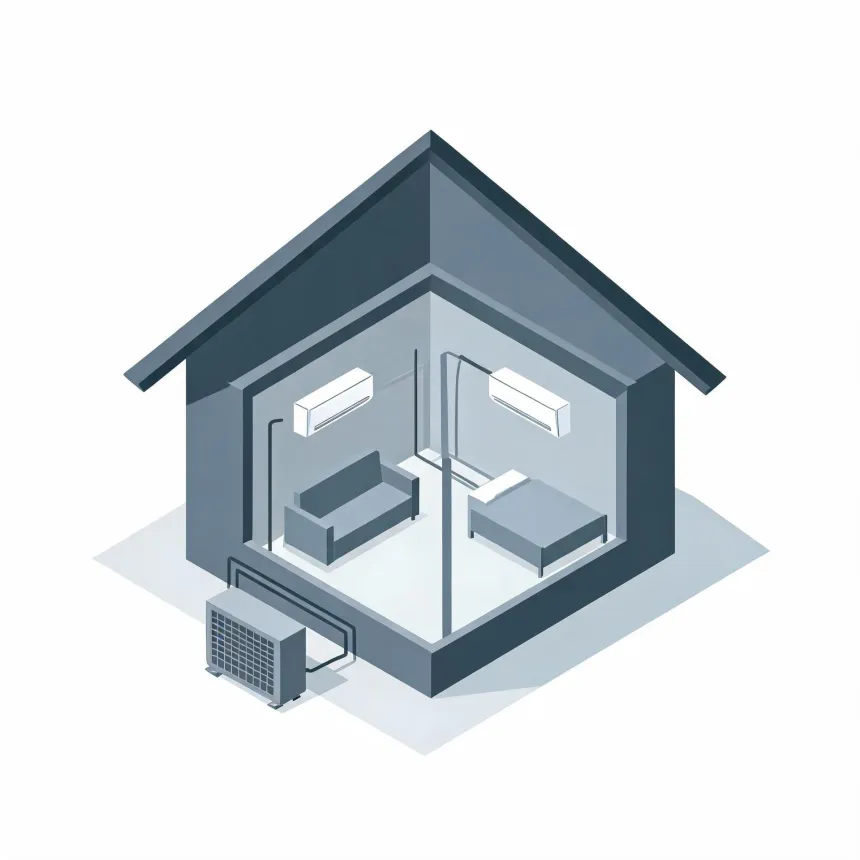
Install day starts with the outdoor unit location and the line set path already decided, not figured out on the spot. A mounting bracket goes on the wall for the indoor head, and a small hole gets drilled through to the outside for the line set, the refrigerant lines, drain line and wiring bundled together. The outdoor unit sits on a pad or brackets, close enough that the line set run stays short. Once both ends are in place, the lines get connected, the system gets pulled into a vacuum to clear out moisture and air before any refrigerant moves, and only then does the line get charged. A working mini split gets tested on both heating and cooling before anyone calls the job done, since a leak or a bad connection shows up under a load, not sitting idle. The indoor head gets leveled and the condensate drain gets checked for a proper slope, because a drain line that cannot drain backs up into the house instead of outside.