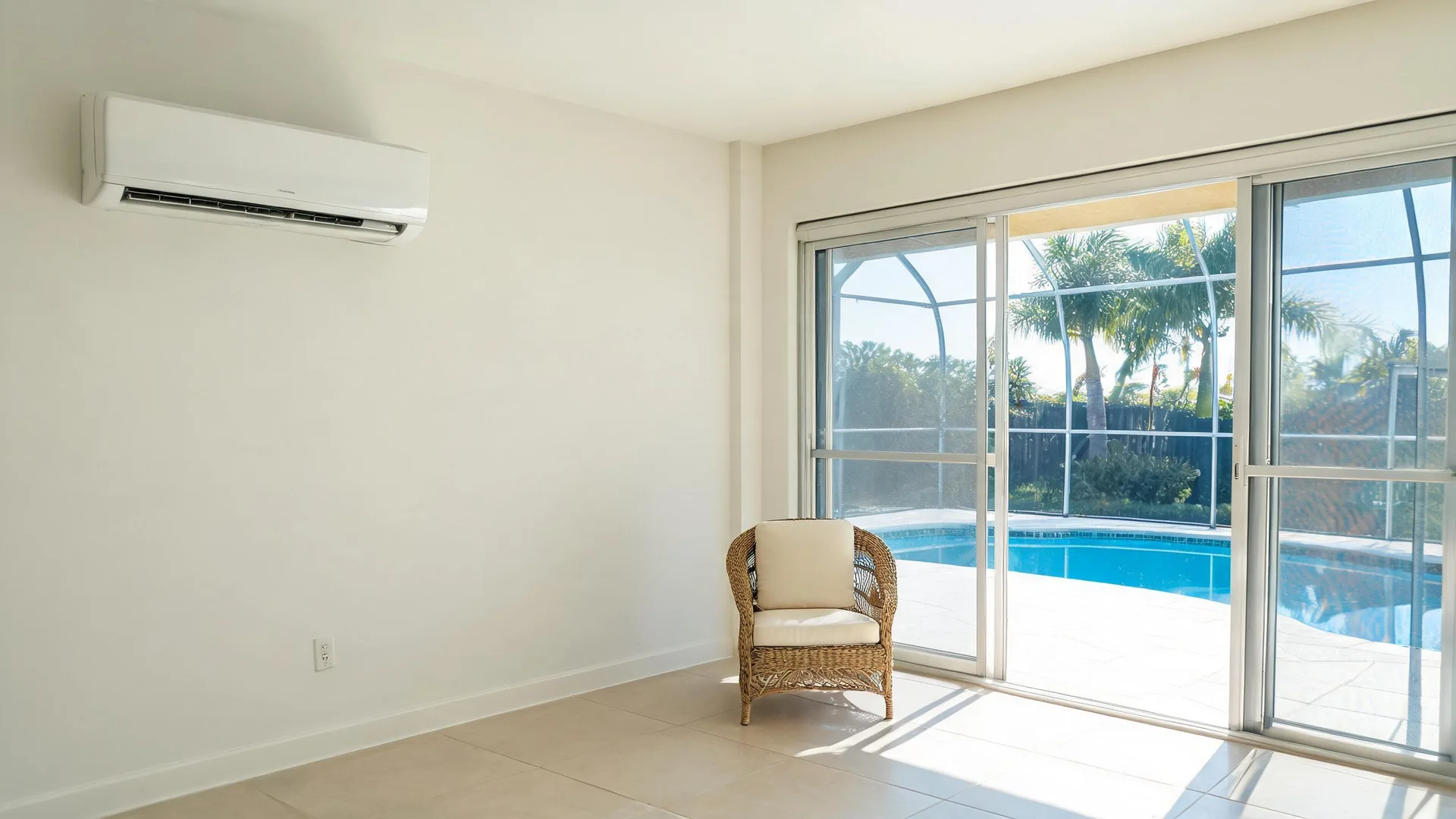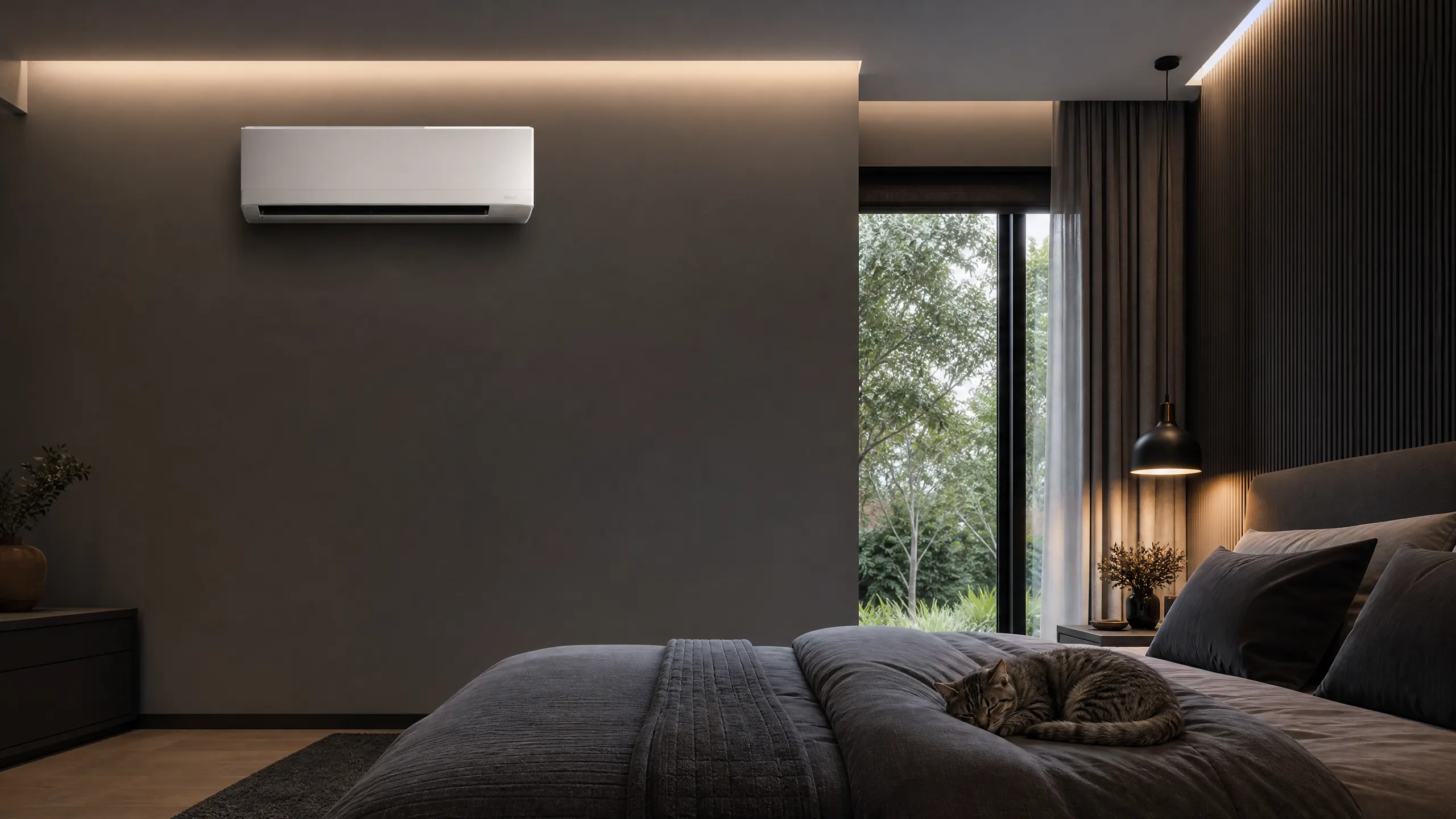
A tabby cat sleeps curled up on a dark grey bed in a modern bedroom equipped with a wall-mounted air conditioning unit.

Mini Split Installation in Goose Creek, SC

Tell us about the job

Takes about a minute. No obligation.

New system or replacementMini-splitBerkeley County, SC
Step 1 of 2

What ZIP code is the job in?

Weather here is hard on outdoor units

Berkeley County logged 146 damaging wind events between 2015 and 2024, along with hail, tornadoes and tropical storms. The outdoor unit sits outside through all of it, so where it gets mounted and what shields it matters.

Power cuts don't have to mean no heat

Nearly half of South Carolina households went at least 24 hours without power in 2024. A mini split needs electricity to run either direction, so if backup power matters to you, work that out with your installer before the unit goes in, not after the next storm.

5 months
November through March, your system heats
6 months
May through October, it cools
38°F
the average winter night it heats against
91°F
the average summer afternoon it cools against
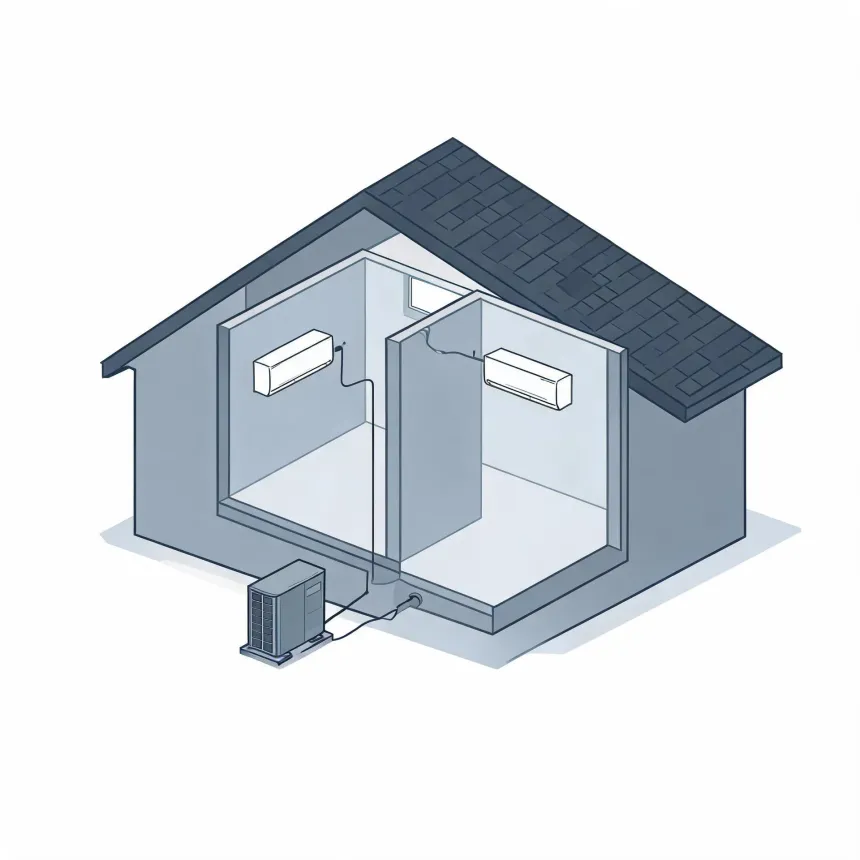
Isometric line illustration of a cutaway house with two rooms, each with a wall-mounted indoor air conditioning unit connected by lines to an outdoor condenser unit on the ground outside.
Your system heats November through March and cools May through October.

NOAA nClimDiv, 1991–2020 normals

Electricity in South Carolina ran 14.23 cents per kilowatt-hour in 2024.

A mini split's efficiency rating is what keeps that rate from showing up in full on your bill.

Cooling starts in May here. Get the mini split in while April is still quiet.

Cooling runs May through October
Summer afternoons average 91°F
146 damaging wind events from 2015 to 2024
Six months of cooling, every yearAfternoon highs average 91°F through June, July and August here, and the season runs May through October.

Electricity heats 77.2% of homes in Berkeley County, and gas of any kind reaches barely one in five. A mini split fits that setup well because it runs on the same electric circuit most of these homes already have, with no gas line to add or work around. That's a big part of why it's a common choice for replacements and additions here rather than a furnace or a gas pack. It also means the install itself tends to be more about placement and sizing than about tying into new fuel lines.

A new mini split here has to meet zone 3A's efficiency minimum

Goose Creek sits in climate zone 3A, built for a hot, humid summer and a short winter. Any mini split installed here has to clear 14.3 SEER2 for cooling and 7.5 HSPF2 for heating, the federal minimum for split-system heat pumps. A federal tax credit is available for qualifying systems, worth checking against before you pick a model.

Find a contractor
A white mini-split air conditioner outdoor condenser unit mounted on metal brackets against a beige stucco exterior wall, with a blue sky and scattered clouds in the background.

Running this hard all season, the size has to be right

Six months of 91 degree afternoons is a steady load, day after day, not a handful of spikes a system can coast through. A mini split sized too small will run flat out from May to October trying to keep up, and the compressor carries that strain the whole time. One sized right for the house cycles on and off the way it's built to. That's the case for having an installer run a load calculation on this house rather than matching whatever size is already there.

A mini split sized wrong fails in opposite directions

One sized too big cools the room fast and shuts off before it pulls the moisture out of the air, so the space feels clammy even at the right temperature. One sized too small never gets to shut off at all, straining to keep up on the hottest afternoons. Either way the compressor carries the wear, just for different reasons.

The size comes from the room, not the old equipment

A proper load calculation looks at the square footage of the space, how many windows it has and which way they face, how much insulation is behind the walls, and what else gives off heat nearby. Square footage alone leaves out too much to get the number right. Matching whatever size was there before carries the same risk as guessing, since that system may never have been sized correctly either.

If this install is replacing an old system, that equipment doesn't need to come out before the new one goes in. A mini split can usually go in with the old unit still running, so the house keeps cooling or heating through the changeover instead of sitting without either. Once the new system is in and checked out, the old condenser, air handler or furnace gets disconnected and hauled off. Anything holding refrigerant has to be recovered properly rather than just cut loose, since venting it isn't legal. If ductwork was part of the old setup and nothing in the new install uses it, that gets capped off or removed too, depending on what else the ducts might still be doing in the house.

Install day starts with the outdoor unit and the indoor head going up, then the line set between them, the copper tubing that carries refrigerant from one to the other. That line runs through a hole drilled in the wall, usually the shortest straight path between where the indoor head sits and where the outdoor unit will land. Once the line set is run and connected, the system gets evacuated with a vacuum pump before any refrigerant moves into it. That step pulls out air and moisture, because either one left in the lines causes problems later, and skipping it is the kind of shortcut that doesn't show up until months in. After the vacuum holds, the refrigerant gets released into the lines, the electrical gets tied in, and the installer runs the system both directions to check that it's cooling and heating the way it should before calling the job done.