




A golden retriever sleeps on a neatly made bed in a minimalist bedroom equipped with a wall-mounted air conditioning unit.

Mini Split Installation in Hardeeville, SC

Tell us about the job

Takes about a minute. No obligation.

New system or replacementMini-splitJasper County, SC
Step 1 of 2

What ZIP code is the job in?

A mini split sized by square footage alone usually ends up wrong. The right way is a load calculation, room by room, that accounts for your windows, insulation, ceiling height and which way the walls face. Oversize it and the unit short cycles, blasting cold or hot air then shutting off before it pulls moisture out of the room, so the space feels clammy even at the right temperature. Undersize it and it runs flat out all day trying to catch up, which wears on the compressor and still leaves you uncomfortable. For a multi-zone setup, each indoor head has to be matched to its own room, not just the total split evenly, or some rooms end up overcooled while others never get there. Getting this right at installation is what decides whether the system actually keeps you comfortable for years, not just on paper.

5 months
November through March, your system heats
6 months
May through October, it cools
40°F
the average winter night it heats against
90°F
the average summer afternoon it cools against
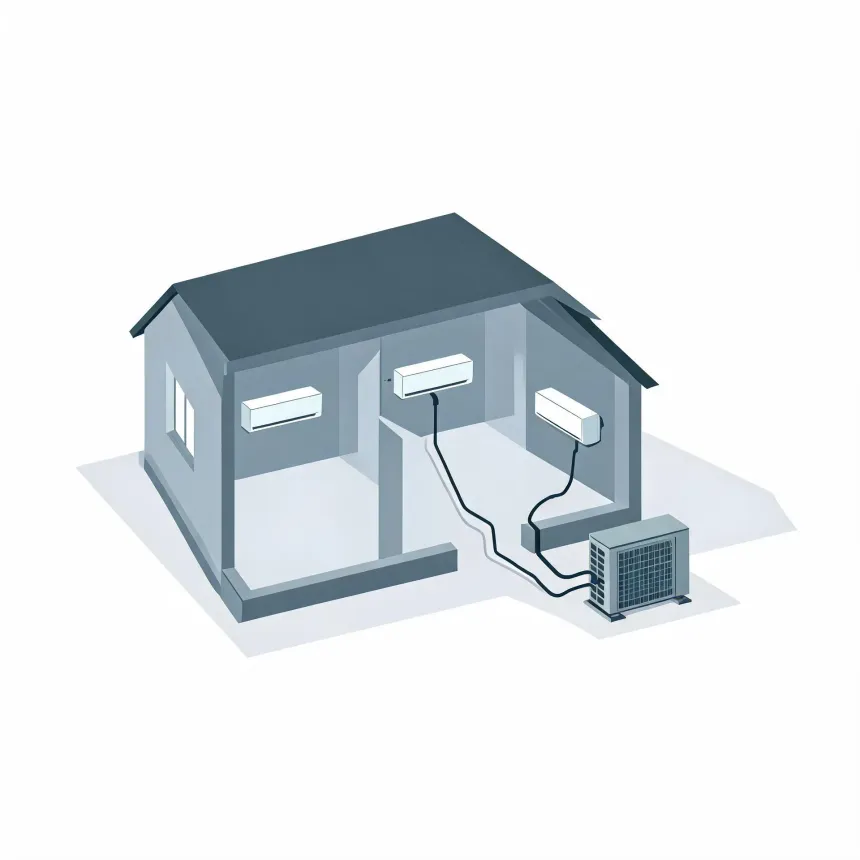
Isometric illustration of a cutaway single-story house with three wall-mounted indoor air conditioning units connected by lines to an outdoor condenser unit on the ground outside.
Your system heats November through March and cools May through October.

NOAA nClimDiv, 1991–2020 normals

The number of indoor heads drives the cost more than the size of the outdoor unit.

Every extra zone needs its own line set, its own wiring, and its own spot on the wall, and that adds up faster than most people expect.

Most homes in Jasper County heat with electricity, and a mini split fits right into that

75.3% of homes heat with electricity
Cooling runs May through October
Summer afternoons average 90°F
Have it in before MayHomes here run cooling May through October, six months straight.

Electricity here ran 14.23 cents per kilowatthour in 2024, and in a county that already heats with it, that rate hits every month of the year. A mini split's efficiency is rated for exactly this, moving heat instead of burning fuel to make it. That rating only holds if the unit is sized right for the room it's in. Run one flat out because it's undersized, or let one short cycle because it's oversized, and you're paying that 14.23 cents for a machine that isn't doing what it's rated to do.

A new mini split here has to meet zone 2A's efficiency floor

Jasper County falls in climate zone 2A, and any mini split installed here has to meet 14.3 SEER2 for cooling and 7.5 HSPF2 for heating, the federal minimum for split-system heat pumps. That floor applies to ductless systems too, since the standard doesn't set a separate class for them. A unit that clears it can also qualify for the federal tax credit on heat pump installations.

Find a contractor
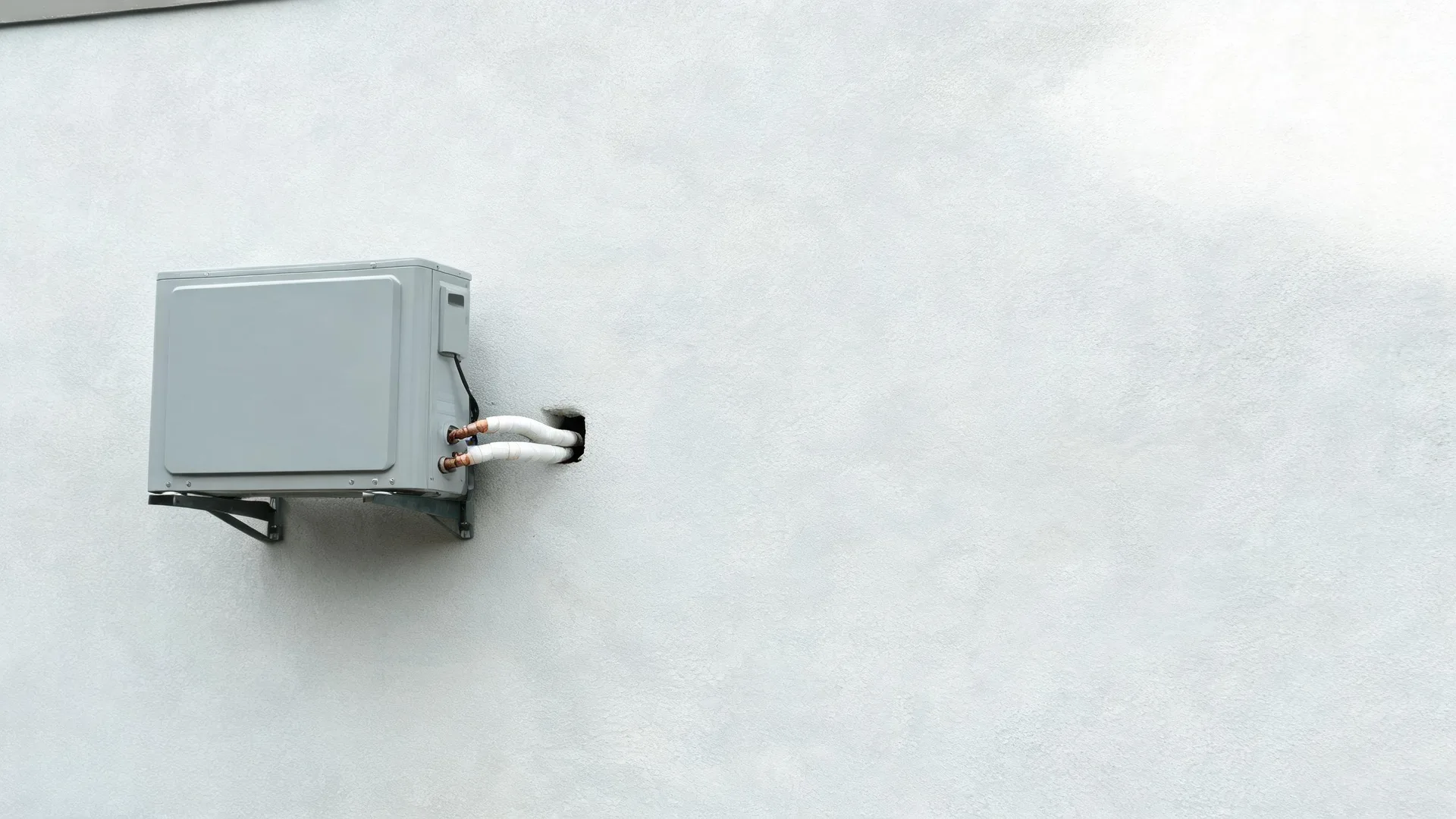
A white outdoor air conditioner condenser unit mounted on metal wall brackets against gray horizontal siding, with a blue sky and white clouds behind it.

Six months of cooling, and weather that doesn't let up

Six months of cooling here means a mini split runs from May through October against afternoons that average 90 degrees in June, July and August. That's long runtime at a hard setpoint, not occasional use. Jasper County also sees damaging wind often, and tropical storms or hurricanes come through on top of that. A unit sized right for the room handles the long stretch of heat without strain. One sized off square footage alone is already working harder than it should before a storm even hits.

The rating covers cooling and heating separately

SEER2 measures how the system performs cooling a room, and HSPF2 measures how it performs heating one, and a mini split carries both because the same outdoor unit does both jobs. A higher number on either means the system moves more heat per unit of electricity it draws. Neither number says how big the unit is or how much space it can condition. That's capacity, a separate figure, and sizing still comes from the load calculation.
The rating comes from a lab, not the room it ends up in

The numbers on the label are measured under set conditions, not in the room the unit actually serves. A system sized right for its load can run close to that rating over the season. A system fighting the wrong load, running flat out or shutting on and off before it should, falls short of it no matter what the label says.

When you're comparing systems side by side, ask what each quote actually includes. Does it cover the line set and wiring between the outdoor unit and every indoor head, or just the equipment. Does it include the load calculation, room by room, or is the sizing a guess off square footage. Ask what happens to the old system, whether it's removed and disposed of or left for you to deal with. Ask where the outdoor unit goes and why that spot, since airflow around it and distance from the indoor heads both affect how hard it has to work. Ask what warranty covers the compressor versus the labor to replace it, because those are often different lengths. A quote that answers all of this plainly is worth more than one that only lists a price.

Installation starts with the outdoor unit, set on a pad or mounted bracket somewhere with clear airflow on all sides and no roof runoff dripping onto it. From there, a line set runs to each indoor head, carrying refrigerant through a hole drilled in the wall, sealed and insulated where it passes through. Once the lines are connected, the system gets evacuated with a vacuum pump to pull out moisture and air, because any left behind ruins the refrigerant charge and the compressor along with it. Only after that vacuum holds does the refrigerant get released to charge the system. Each indoor head gets mounted, leveled, and wired back to the outdoor unit before anyone turns it on. The last step is running the system through its paces in both modes, checking that every head is actually cooling and heating the room it's supposed to, not just blowing air.