Two white Southern-style homes with wraparound porches lit by landscape lighting at night, flanked by live oak trees hung with Spanish moss.

Mini Split Installation in Hartsville, SC

Tell us about the job

Takes about a minute. No obligation.

New system or replacementMini-splitDarlington County, SC
Step 1 of 2

What ZIP code is the job in?

Weather here is hard on outdoor units

Darlington County logged 159 severe weather events between 2015 and 2024, including damaging wind and hail. A mini split's outdoor unit sits outside year round, so where the installer mounts it and what shields it from wind-driven debris and hail is worth asking about before the job starts.

Power cuts here last longer than a few minutes

Almost half of South Carolina households went at least 24 hours without power in 2024. A mini split needs electricity to run, both for heat and for cooling, so a long outage means no heat or cooling from it until power is back, same as any electric system.

5 months
November through March, your system heats
5 months
May through September, it cools
35°F
the average winter night it heats against
90°F
the average summer afternoon it cools against
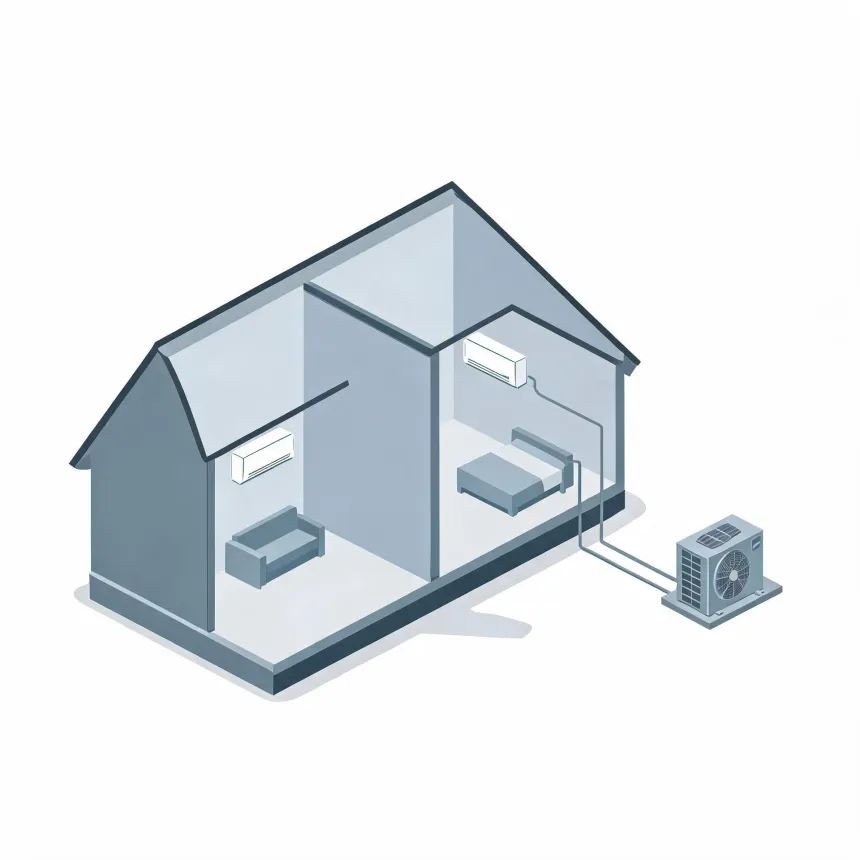
Isometric grey illustration of a cutaway house showing two rooms with wall-mounted indoor air conditioning units connected by lines to an outdoor condenser unit beside the building.
Your system heats November through March and cools May through September.

NOAA nClimDiv, 1991–2020 normals

Electricity heats 88.9% of homes in Darlington County.

A mini split runs on electricity like almost everything else here, so it fits the panel most homes already have.

Get it installed before May, so you're not waiting on a contractor in the first hot week

Cooling runs May through September
Summer afternoons average 90°F
129 damaging wind events from 2015 to 2024
No reason to size up for this county30.2% of homes here are mobile homes, and the rest split evenly between built before 1984 and after

Darlington County is zone 3A, warm with a short mild winter and summer running long. A mini split counts as a split-system heat pump under federal rules, ductless or not, so any unit installed new has to hit 14.3 SEER2 for cooling and 7.5 HSPF2 for heating. That floor applies everywhere in the country, not just here, but it decides what a contractor can sell you. A federal tax credit is available for equipment that qualifies, worth asking about alongside the installation quote.

A mini split that's efficient earns its keep on every bill

Electricity in South Carolina ran 14.23 cents per kilowatthour in 2024, and a mini split runs on electricity for both heat and cooling. A unit that meets the federal efficiency floor costs less to run on every one of those bills than one that just scrapes by.

Find a contractor
A man in a dark T-shirt, tan work pants and a backward cap walks up stone steps toward a dark green door, carrying a worn canvas tool bag, with a potted shrub in a green ceramic planter beside him.
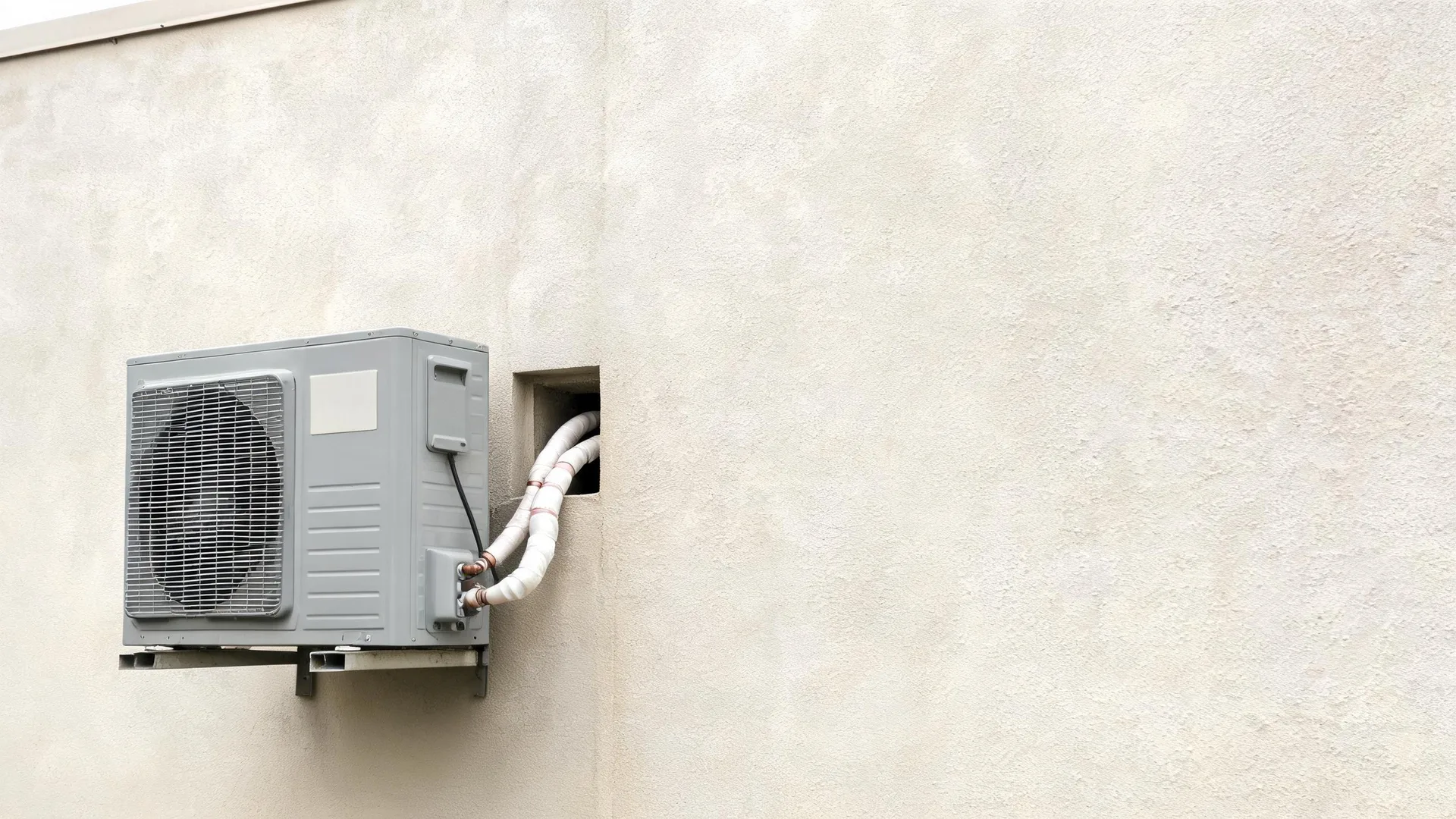
A beige split-system air conditioner outdoor condenser unit mounted on metal wall brackets atop a stucco wall.

The label tells you how it performs new, not what it costs to run for good

The SEER2 and HSPF2 numbers on the label describe one thing. They say how much heat the unit moves for the electricity it uses, cooling in summer and pulling heat from outside air in winter. A higher number moves more heat per watt in both directions. That rating comes from a fixed lab test, so it tells you how the equipment stacks up against other equipment, not what your exact bill will look like. It does tell you something about how the thing is built. Equipment that hits a higher rating usually runs a variable-speed compressor instead of cycling on and off at one speed, so it spends more of its life running gently rather than slamming on at full output every time it starts. Less of that start-stop strain tends to mean less wear on the compressor over years of sitting outside and working. None of that shows up once the unit is old. The rating is tested new, and a dirty filter, a low charge, or a coil packed with debris will drag real performance down below whatever number is on that label.

Ask how they size it, not just what size they picked

A mini split sized by a quick look at square footage runs short cycles that never pull the moisture out of the air, and one sized for the worst day of the year runs too big the rest of the time. A contractor should walk every room getting a head, check the windows and the ceiling height, and show you the load calculation. If the quote comes back before anyone measures, that's worth asking about.

Ask what happens at each wall

Every indoor head needs a line set running to the outdoor unit, carrying refrigerant line, a drain line, and power. Where that line runs, how it's hidden or boxed, and how many feet it has to travel all change what the installer can do and how the finished wall looks. Ask to see where the lines will go before the work starts, not after the holes are already cut.

The number of indoor heads is the first thing that moves the price. A single zone costs less than a multi-zone setup feeding several rooms off one outdoor unit, since every added head means another line set, another mounting job, another spot that needs power. Where the outdoor unit goes matters too. A short, straight run from outside to in costs less than a line that has to snake through a wall cavity, around a corner, or up to a second floor. Ductless means no duct work, but it doesn't mean no construction. Line hiding, a condensate pump if gravity can't drain the unit on its own, and any electrical panel work to feed a new circuit all add to the job. The unit itself varies too. Higher efficiency equipment and larger capacity both cost more up front than a basic system sized for one room.

Installation day starts with the outdoor unit going up on its mounting bracket or pad, set level so the compressor inside doesn't wear unevenly. Indoors, the installer mounts the wall plate, drills one hole through the wall for the line set, and runs the refrigerant lines, drain line, and electrical wiring through it to the outdoor unit. The lines get connected and the system is pressure tested before anyone adds refrigerant, since a line set that leaks needs to be caught now, not after the charge goes in. Once the system holds pressure, the installer evacuates the lines to pull out moisture and air, then releases the refrigerant charge. The last steps are power, a test run in both heating and cooling if the system does both, and a check that the head is blowing at the temperature it should. A straightforward single-zone job is usually done in a day. Add more heads, a longer line run, or electrical panel work and it stretches past that.