




A tall red brick wall with a row of shrubs runs along the left side of a mown lawn, with a single-story light-colored house and tall pine trees in the background under an overcast sky.

Mini Split Installation in Hilton Head Island, SC

Tell us about the job

Takes about a minute. No obligation.

New system or replacementMini-splitBeaufort County, SC
Step 1 of 2

What ZIP code is the job in?

The biggest factor is how many zones you're installing and how far the condenser sits from each indoor head. Every additional indoor unit means another line set run, another mounting job, another spot where the installer has to find a clean path through the wall. Where the condenser sits matters too. A short, straight line set run costs less than one that has to snake around a roofline or down through a crawlspace. The indoor head plays a role as well. A wall-mounted unit is the simplest to hang. A ducted or ceiling cassette style takes more work to fit into place and often means opening up a soffit or framing a new chase. Electrical factors in as well, since a mini split needs its own dedicated circuit. If the panel has no room left for one, that circuit has to get added before the system ever goes on the wall.

5 months
November through March, your system heats
6 months
May through October, it cools
42°F
the average winter night it heats against
89°F
the average summer afternoon it cools against
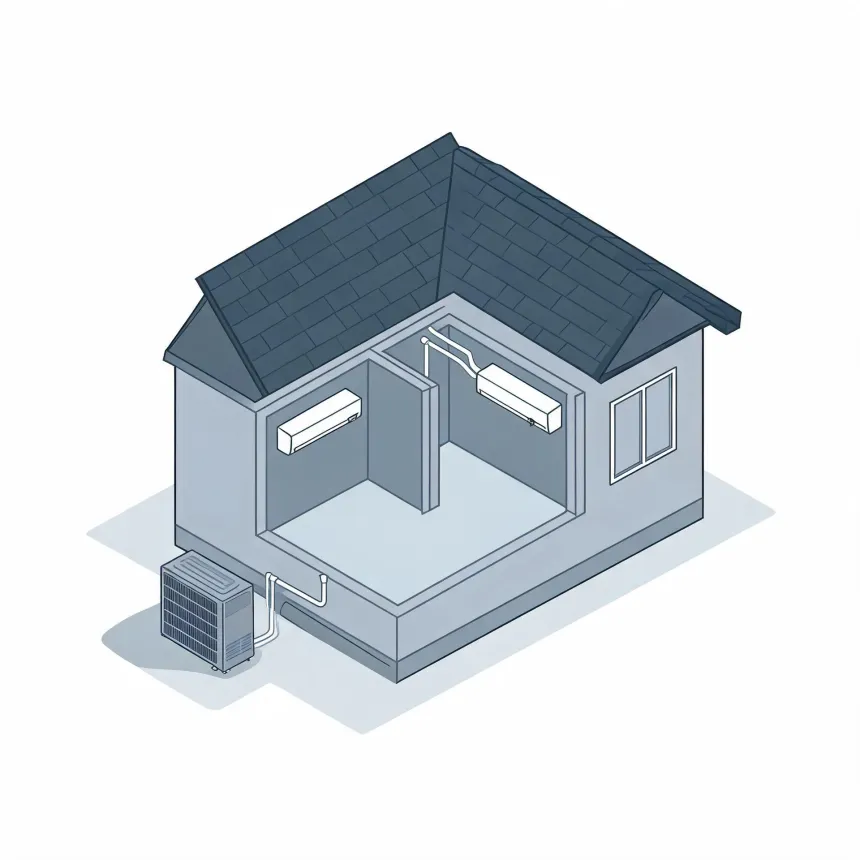
Isometric line illustration of a cutaway house with a shingled gable roof, showing two wall-mounted indoor air conditioning units connected by piping to an outdoor condenser unit on the ground outside.
Your system heats November through March and cools May through October.

NOAA nClimDiv, 1991–2020 normals

A mini split sized too big will cool the room fast and shut off before it pulls the moisture out of the air.

Sizing comes from a load calculation on the room itself, not a guess based on square footage alone.

At 14.23 cents a kilowatt-hour, the system you pick decides what every summer bill looks like

Power costs 14.23 cents a kWh statewide
Cooling runs May through October
Summer afternoons average 89°F
Beaufort County runs on electric heat79.8% of homes in Beaufort County run on electric heat.

Cooling here runs May through October, about six months a year. April is the month to get a mini split installed, not the month it finally gets done. Wait until the first hot week and you're choosing from whatever's on the truck and whoever's free that day. Installed in April, the system gets tested and the refrigerant charge checked under mild weather instead of a heat wave. That matters for a mini split, since the charge has to match the line set length the installer ran, and a problem with it is easier to catch when the weather isn't already working against the system.

Zone 2A sets the floor. Know it before you buy.

Beaufort County falls in climate zone 2A, and any mini split installed here has to clear 14.3 SEER2 for cooling and 7.5 HSPF2 for heating, the federal minimum for split-system heat pumps. That rules out older, lower-rated units regardless of price. A system that meets the standard may also qualify for the federal tax credit available on qualifying heat pumps.

Find a contractor
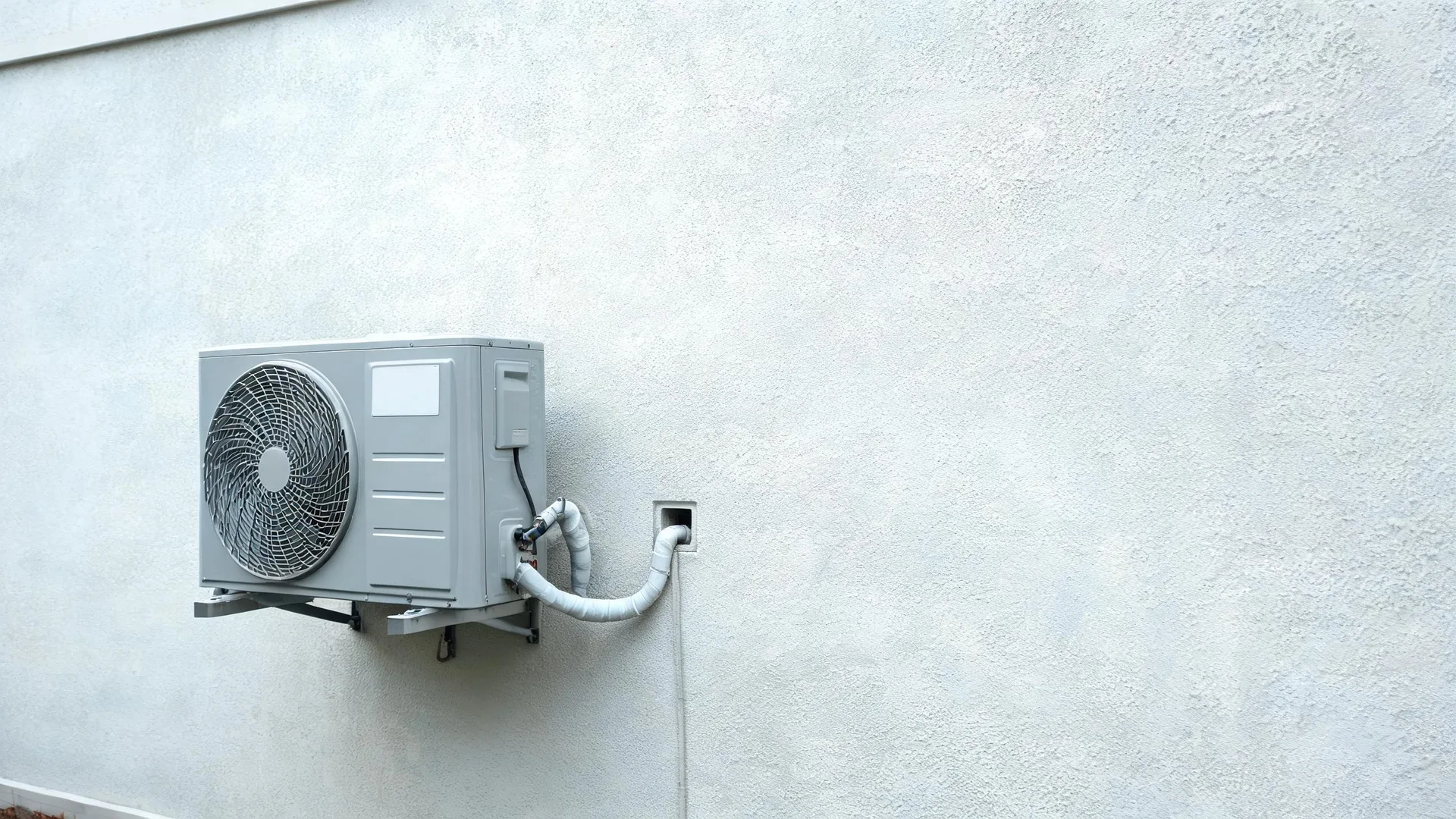
A white outdoor air conditioner condenser unit mounted on metal wall brackets against gray horizontal siding, with a blue sky and white clouds behind it.

The label tells you what the system can do, not what it will do

The rating on the label tells you what the system can do under test conditions, not what it will do in your house on the hottest day of the year or the coldest night. It's a ceiling, not a promise. As the unit ages, it drifts further from that number. A dirty filter, a coil caked with dust, a refrigerant charge that's drifted low, any of these pull real performance below the rated number, and nothing on the label warns you about that. The rating also only measures the system working the way it was designed to work. A mini split sized wrong for the room, or installed with a line set longer than the condenser was matched for, won't hit its rated number no matter how high that number is. What keeps a system performing close to its rating over the years isn't the number itself. It's whether the coil stays clean, whether the charge stays correct, and whether the filter gets changed before it chokes the airflow down.

The old system doesn't just unplug

Whatever's being replaced has to come out first. A central system means disconnecting ducts, pulling out the air handler, and capping off whatever line set or wiring fed it. Window units and old wall sleeves get pulled and the opening gets dealt with, patched or left ready for the new line set to pass through. None of that is part of hanging the new mini split, but it has to happen before the new one goes up.
The refrigerant in the old unit has to be recovered

A system with a sealed refrigerant circuit can't just get cut open and tossed. The refrigerant has to be recovered into a tank before any line gets disconnected, and that's a step with its own equipment and its own time attached. Skipping it isn't an option, it's handled as part of removing the old system, not folded into installing the new one.

Ask how many indoor heads one outdoor condenser is running. A single-zone system ties one head to one condenser, but a multi-zone setup splits one condenser across several rooms, and that changes how it behaves. Run too many zones off one condenser and the system can struggle to deliver full output to every room if more than one calls for cooling at the same time. Ask what happens if one indoor head ever needs a repair, since on some multi-zone systems the whole system has to shut down for service on just one zone. Ask about the compressor too. A variable-speed compressor ramps up and down to match the load, where a single-speed compressor only runs full blast or not at all. That difference affects comfort and how well the system holds a steady temperature, not just how it cycles on and off.

Installation starts with the mounting plate going up on the wall, leveled and set high enough for even airflow across the room. The indoor head hangs on that plate, then the installer drills a single small hole through the wall for the line set, the power cable and the condensate drain to pass through together. Outside, the condenser sits on a pad or wall brackets, far enough from the wall for air to pull through the coil freely. The line set gets connected at both ends, then the whole system is pulled down to a vacuum to clear out moisture and air before any refrigerant moves through it. That vacuum test matters more than people expect. Any moisture left in the line set turns to acid once refrigerant hits it, and that shortens the life of the compressor. Once the vacuum holds, the refrigerant valves get opened, the charge gets checked against the line set length, and the system runs through a cooling and heating cycle before the installer calls it done.