A dark modern bedroom with grey bedding, a wall-mounted air conditioning unit, and a cat resting on the bed.

Mini Split Installation in Lancaster, SC

Tell us about the job

Takes about a minute. No obligation.

New system or replacementMini-splitLancaster County, SC
Step 1 of 2

What ZIP code is the job in?

Bigger is not better

A mini split sized too large for the room cools the air fast and shuts off before it pulls the moisture out. The room feels clammy even though the thermostat says it hit the set point. One sized too small just runs and runs, struggling to catch up on the hottest or coldest days, and wears out sooner for the work it's doing.

It comes down to a load calculation

A contractor works out the right size by looking at the square footage, the windows, the insulation, and which way the room faces, not by matching whatever was there before. Each indoor head gets sized to the room it serves, so a sunroom and a bedroom down the hall might need different capacity even if they're close in size.

5 months
November through March, your system heats
5 months
May through September, it cools
33°F
the average winter night it heats against
89°F
the average summer afternoon it cools against
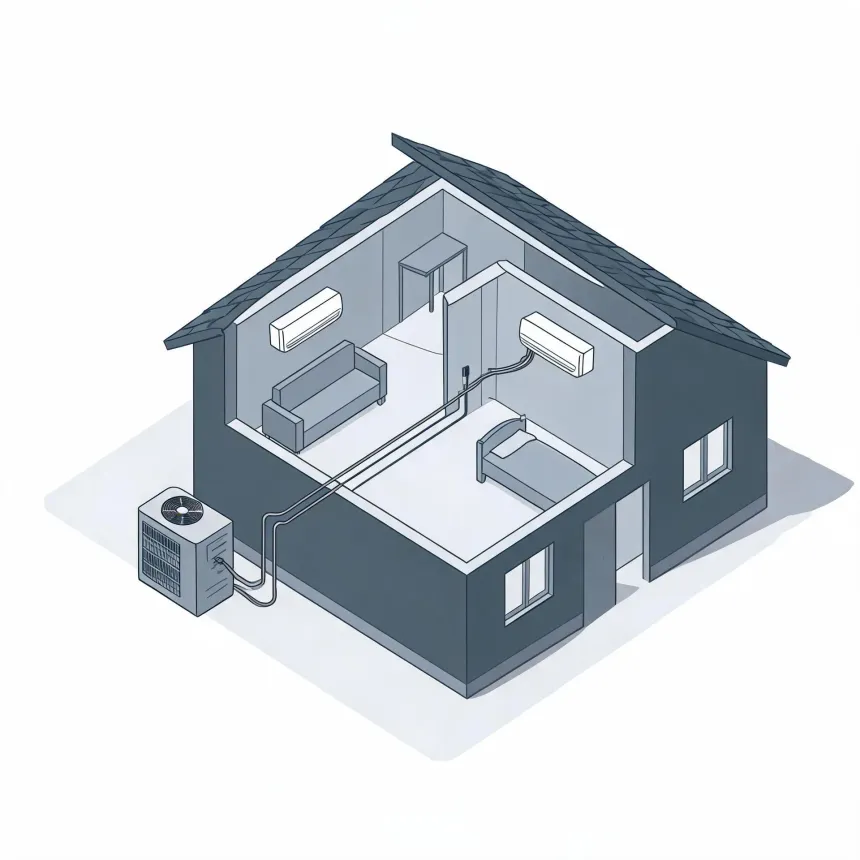
Isometric cutaway illustration of a small house showing two wall-mounted indoor air conditioning units connected by line sets to an outdoor condenser unit beside the exterior wall, with a sofa in one room and a bed in another.
Your system heats November through March and cools May through September.

NOAA nClimDiv, 1991–2020 normals

The old system doesn't just get unplugged and left in place.

Whoever installs the mini split disconnects the old lines, removes the equipment, and if it's a central system, can cap off or remove the ductwork that's no longer doing any work.

Put a mini split in before May and it's ready on your schedule, not in a May heat wave

Cooling runs May through September
Summer afternoons average 89°F
133 damaging wind events from 2015 to 2024
Lancaster runs on gas, mostlyGas heats 50.4% of homes here, with electric heat in another 46.3%

That rating on the label tells you how much cooling or heating you get out of the electricity you put in. A higher number means more output per unit of power, so the unit sips rather than gulps to hold the room at the set point. It matters more over a full season than on any single day, since the unit spends most of its time running at part load, cycling to hold steady, not working flat out. A mini split earns a higher rating partly because it has an inverter driven compressor, which ramps up and down to match the room instead of switching fully on and off like older systems do. That rating only holds up if the unit is sized right for the room. An oversized unit never settles into the steady, efficient run the rating assumes, and an undersized one just runs flat out trying to keep up.

Zone 3A sets the minimum. Not every mini split clears it.

Zone 3A sets the floor for what a contractor can install here. Any new split-system heat pump, ductless included, has to hit at least 14.3 SEER2 for cooling and 7.5 HSPF2 for heating. That's a federal minimum, not a suggestion, and it narrows the lineup to equipment built to clear that bar. A federal tax credit is available for qualifying equipment, on top of whatever that efficiency saves on the power bill.

Find a contractor
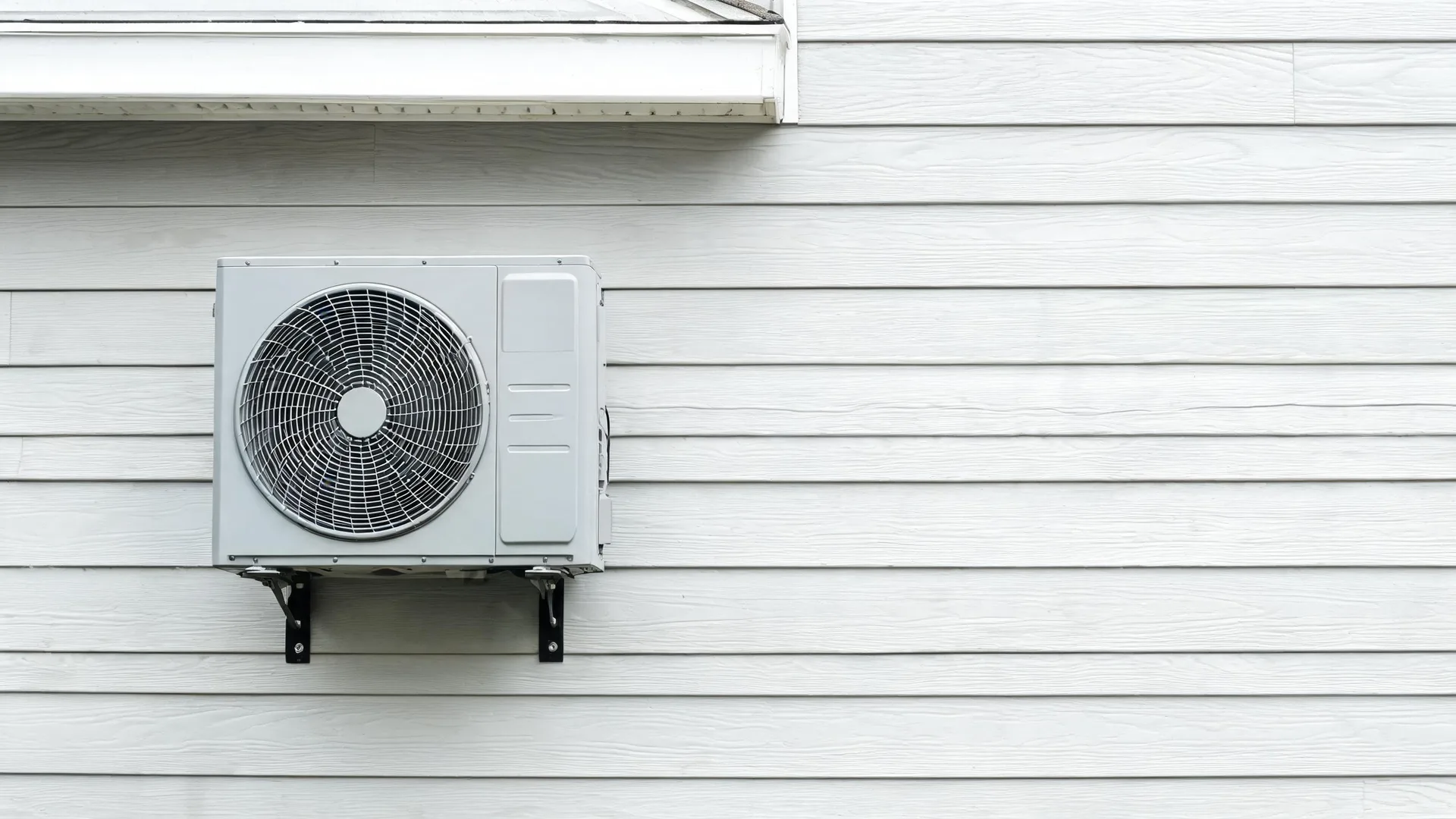
A white outdoor air conditioner condenser unit mounted on metal wall brackets against gray horizontal siding, with a blue sky and white clouds behind it.

Five months of summer, every year

Cooling runs about five months here, May through September, and the afternoon high averages 89 through June, July and August. That's a long stretch of hard running, not a few hot weeks. A mini split sized right for the room will cycle on and off through those months, holding steady rather than working flat out. One sized wrong spends the whole summer struggling or short-cycling, and five months of that adds up faster than it would somewhere milder.

The number of heads changes everything

A single room needs one indoor head, one line set, one spot for the outdoor unit to sit. A whole house done with mini splits means a head in every room that needs one, each with its own line running back to an outdoor unit that has to be sized to carry all of them. More heads means more refrigerant line, more wall penetrations, and more time on the install. A contractor working out a whole-house job is pricing something closer to a full system replacement than a single add-on unit.

Where the lines have to run matters

The indoor head and outdoor unit connect through a line set that carries refrigerant between them, and that line has to pass through a wall and get routed to wherever the outdoor unit sits. A straight shot through an exterior wall is the easy case. If the head goes in a room on the far side of the house, or the outdoor unit can't sit anywhere close by, that line has to run further, sometimes through framing or up through an attic, and whoever installs it has to plan a path before anything gets mounted.

When you're comparing systems, ask what the manufacturer rates the equipment down to, not just up to. A mini split is a heat pump, and heat pumps lose capacity as the outdoor temperature drops. Units with the same rated output on the spec sheet can perform very differently on the coldest night of the year. Ask about the sound rating for the outdoor unit too, since it sits right outside a window or a patio and runs for long stretches. Ask whether the warranty covers parts only or parts and the labor to replace them, since a compressor failure down the road is a different bill depending on which one you have. And ask who services the brand locally. A system backed by a manufacturer with no nearby parts supply or trained techs can leave you waiting on a repair that a more common brand would have sorted quickly.

Install day starts with the line set, not the equipment. A contractor mounts the indoor head first, then drills through the wall where the lines will pass, usually a small hole hidden behind the unit once it's hung. The line set, a drain hose, and the electrical wiring all route through that same opening out to where the outdoor unit sits. Once the outdoor unit is set on its pad or bracket, the lines get connected, and the whole system gets evacuated with a vacuum pump before any refrigerant moves, which pulls out the air and moisture that would otherwise sit in the lines and cause trouble later. After that the refrigerant charge gets checked against what the manufacturer specifies for that line length, the system gets powered up, and the contractor tests each head for heating and cooling before calling it done.