An orange cat rests on a dark grey bed in a minimalist monochrome bedroom.

Mini Split Installation in Laurens, SC

Tell us about the job

Takes about a minute. No obligation.

New system or replacementMini-splitLaurens County, SC
Step 1 of 2

What ZIP code is the job in?

14.3 SEER2 is the floor here

Laurens County is zone 3A, warm with summer running long and winter short. Any split-system heat pump installed now has to hit at least 14.3 SEER2 for cooling and 7.5 HSPF2 for heating. A mini-split counts as a split system under that rule. There's no lower bar for ductless.

That narrows what a contractor can quote you

A mini-split rated below 14.3 SEER2 or 7.5 HSPF2 can't legally go in your house, whatever the price or the brand. Ask to see both numbers on anything you're quoted, and check them before you decide.

5 months
November through March, your system heats
5 months
May through September, it cools
34°F
the average winter night it heats against
89°F
the average summer afternoon it cools against
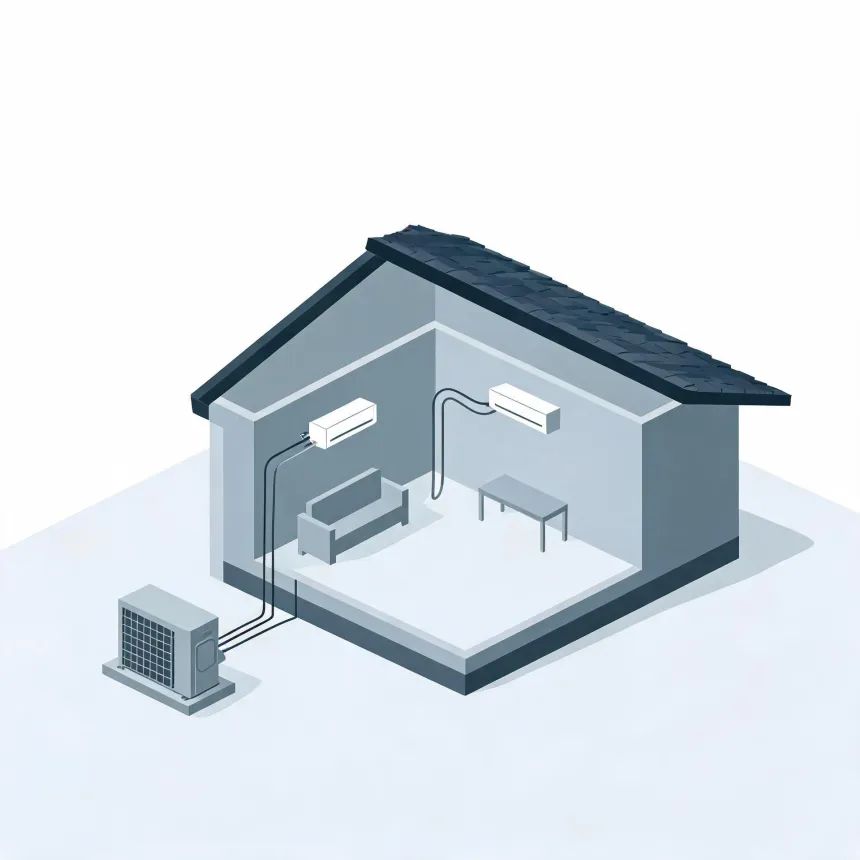
Isometric illustration of a cutaway house showing two wall-mounted indoor air conditioning units connected by line sets to an outdoor condenser unit, with a sofa and table inside the room.
Your system heats November through March and cools May through September.

NOAA nClimDiv, 1991–2020 normals

A standard mini-split sized right for one or two rooms works fine in Laurens County homes.

Nothing about the housing stock here calls for oversizing or a higher-tier system than the job needs.

Cooling starts in May. Put the mini-split in before then.

Cooling runs May through September
Summer afternoons average 89°F
Power costs 14.23 cents a kWh statewide
Summer here runs longAfternoon highs average 89°F through June, July and August, five months of cooling each year

Electricity in South Carolina ran 14.23 cents per kilowatt-hour in 2024. A mini-split moves heat instead of burning fuel to make it, so it uses less power to cover the same room than a window unit or electric baseboard. That gap matters more here than in a state with cheaper power, because every kilowatt-hour it saves you is worth more at that rate. The SEER2 and HSPF2 numbers on the unit you pick tell you how much less it will draw. A higher number on either one means lower draw every time it runs, and in Laurens County that's most of the year.

Most homes here already run on electricity. A mini-split keeps it that way.

Electricity heats 62.9% of homes in Laurens County, more than every other fuel combined. A mini-split runs on a heat pump, so it fits right into that setup. No gas line to add, no tank to fill. If your current system runs on electricity, this is the same fuel you already have, just put into the zone you need covered.

Find a contractor
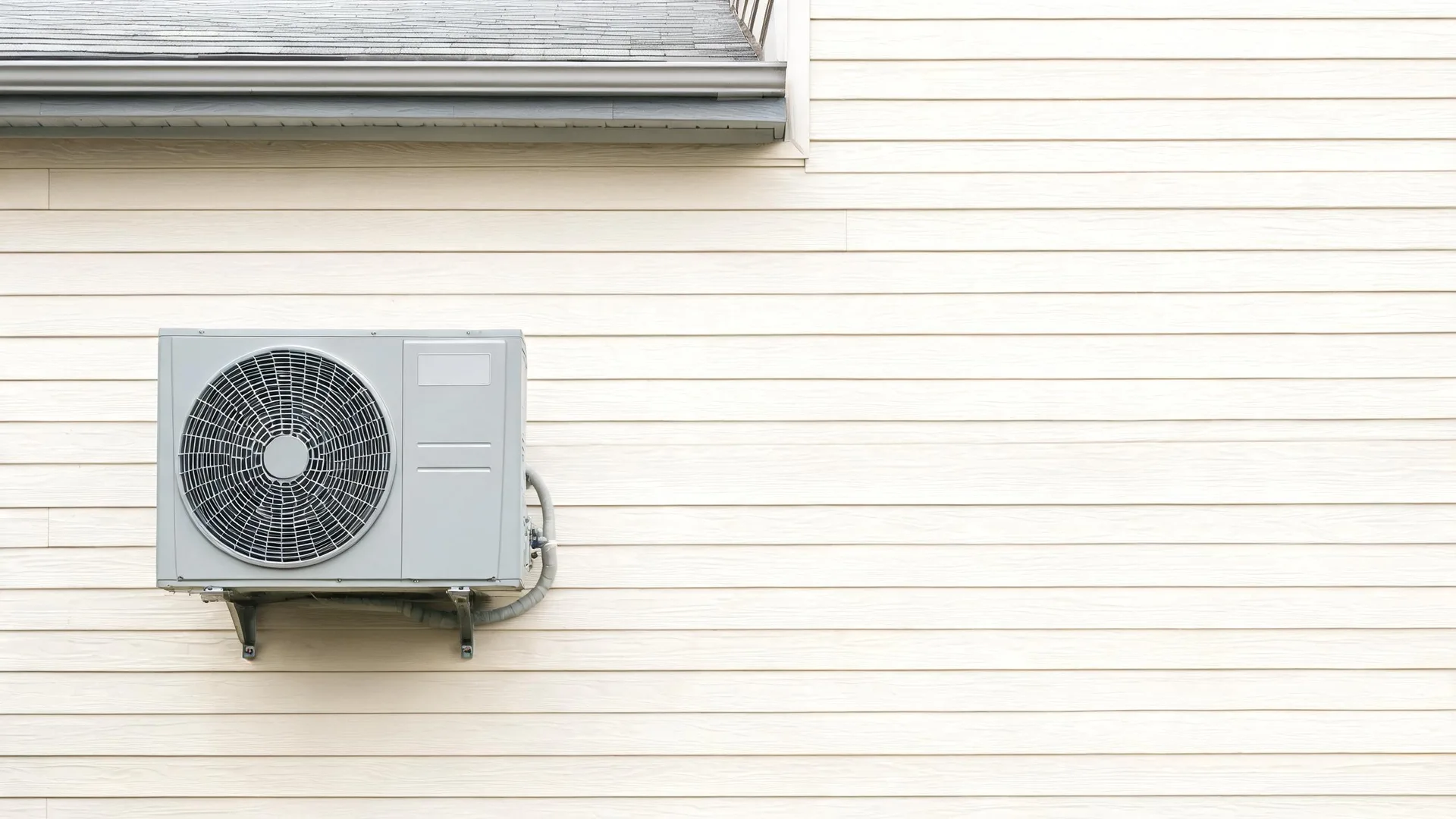
A beige split-system air conditioner outdoor condenser unit mounted on metal wall brackets atop a stucco wall.

The number on the label is a ratio, not a promise

That SEER2 and HSPF2 pair on the label is a ratio, cooling or heat output against the power it takes to make it. A unit built to hit a high number does it with a bigger coil, a compressor that can slow down instead of just switching on and off, and a fan that moves more air without working as hard. None of that changes once the unit is running. What wears a system down early is dirt on the coil, a filter that never gets washed, or a tech skipping the vacuum step during install. Moisture left in the lines wrecks the compressor no matter what number is printed on the box. The rating tells you what the unit is built to do under normal conditions. Keeping the coil clean and the lines free of moisture at install is what lets it actually do that, year after year.

Ask how many zones it can run

A single outdoor unit can power one indoor head or several, but each one has a limit on how many it supports and how they split the output. If you might add a second room later, ask whether this condenser has room for it, because adding a zone after the fact can mean swapping the outdoor unit instead of just adding a head.

Ask where the line set will run

The refrigerant lines, drain, and power wiring have to get from the outdoor unit to the indoor head through a wall, and the path affects both the look of the job and how well it holds up. A short, direct run is easier to insulate fully and less likely to develop a slow leak at a joint. Ask where the lines will go before you agree to a price, not after the holes are drilled.

If you're replacing an old system, ask the contractor what happens to it before the work starts. A window unit or through-wall sleeve just gets pulled and hauled off. Central air is more involved. The old outdoor condenser gets disconnected and removed, the indoor coil comes out of the plenum, and any refrigerant still in the lines has to be recovered properly, not vented, since that's the law in most places. If the old system ran on electric baseboard or resistance heat, those get pulled off the wall and the circuit gets capped or reused for the new unit. None of this is optional work tacked on to pad the job. It has to happen for the mini-split to go in clean. Ask upfront whether removal and disposal are part of the quote or billed separately, because that changes what the number on paper actually covers.

Installation day starts with the outdoor unit. It needs a pad or wall bracket set level, with clearance on every side so air can move through the coil. Next comes the line set. The refrigerant lines, a drain line, and power wiring all run from the outdoor condenser to the indoor head through a single wall penetration. The tech flares or brazes the refrigerant lines at both ends, then pressure tests the whole run with nitrogen to check for leaks before any refrigerant goes in. Once that holds, the system gets evacuated with a vacuum pump to pull out moisture and air. Either one left behind will wreck the compressor over time. Only after the vacuum holds does the indoor head get mounted, wired, and the system charged and tested on both cooling and heating before anyone calls the job done.