Most homes here run on electricity
Electricity heats 69.3% of homes in Lexington County, far ahead of gas at 25.2%. A mini split fits that setup without asking for a gas line or a new electrical service in most cases.
Takes about a minute. No obligation.
Electricity heats 69.3% of homes in Lexington County, far ahead of gas at 25.2%. A mini split fits that setup without asking for a gas line or a new electrical service in most cases.
A contractor sizing a mini split here isn't working around a furnace or ductwork tied to gas. The main questions are where the outdoor unit goes and how many zones the home needs.
NOAA nClimDiv, 1991–2020 normals
Electricity in South Carolina runs 14.23 cents per kilowatt hour.
A mini split that holds a high SEER2 rating keeps that rate from showing up on every bill.



Lexington County sits in climate zone 3A, warm with humid summers and a short winter. Any mini split installed here has to meet the federal minimum for that equipment, 14.3 SEER2 for cooling and 7.5 HSPF2 for heating. That floor applies whether you're adding a zone or replacing one that wore out. It narrows what a contractor can quote you, but the lowest-efficiency option simply isn't sold anymore. A system that clears 14.3 SEER2 is built to handle the kind of summer this county gets.
Cooling runs May through September here, five months of steady work for whatever system you install. Put the new mini split in during April and it's tested and ready before the first hot afternoon asks anything of it. Wait and you're choosing equipment after the house is already uncomfortable.
Find a contractor
Five months of 91 degree afternoons is a lot to ask of one condenser, year after year. A mini split sized to the room it serves won't strain the way an oversized or undersized unit does, and it will see this kind of summer every year it runs. Ask what size the contractor is putting in and why. The number on the quote matters less than whether that number fits the room.
SEER2 compares the cooling a system puts out against the electricity it uses over the season. A higher number means more cooling for the same power, nothing about how big a room it can handle. A mini split can carry a high SEER2 rating and still be the wrong size for the space it's serving. Sizing and efficiency are separate questions, and a quote should answer both.
A mini split heats as well as cools, and HSPF2 is the rating for that side of the work, the same idea applied to the colder months. A unit with a strong SEER2 number doesn't automatically carry a strong HSPF2 number. If the system is replacing a heat source too, that rating is worth asking about, not just the one on the sticker that catches your eye.
Most mini split jobs leave the old equipment behind for the contractor to deal with, not the homeowner. A window unit or a ducted system coming out gets disconnected, drained of refrigerant, and hauled off as part of the install. Refrigerant can't just be vented into the air. It has to be recovered with the right equipment and handled the way the law requires, which is one reason this isn't a job for whoever's handy with tools. If what's coming out is a central system, there may be a line set or ductwork left behind that the new mini split won't use, and that's worth asking about before the work starts. Ask what happens to the old unit and the refrigerant inside it before the crew shows up, not after.
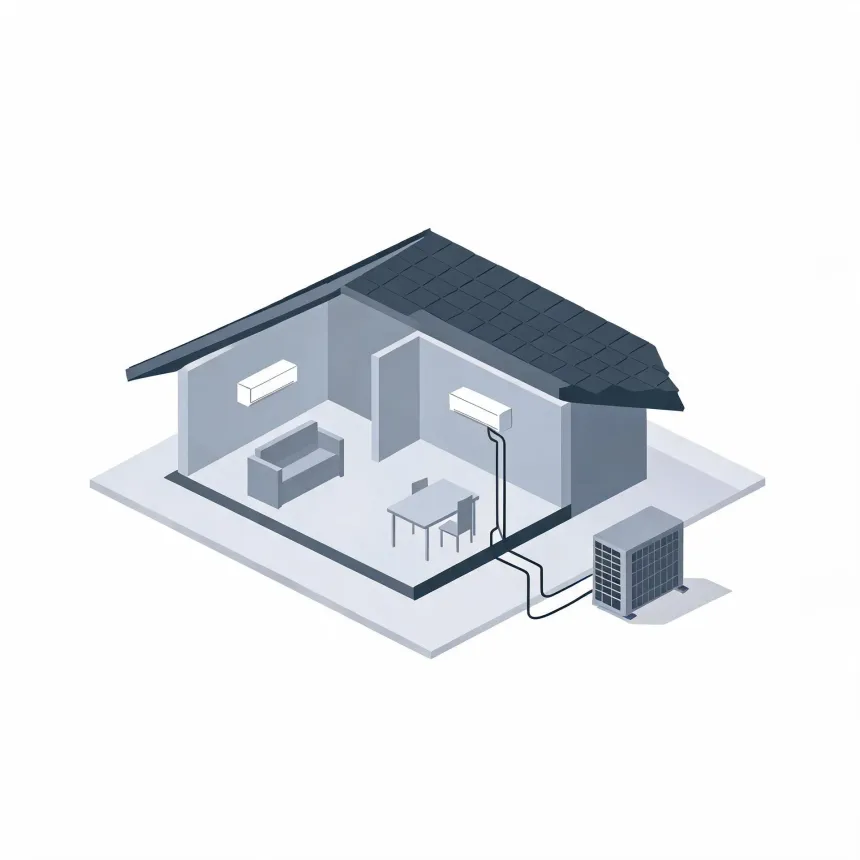
The outdoor unit goes up on a bracket or a pad, and that part is quick. Most of the day goes into the line set, the copper tubing that carries refrigerant between the outdoor unit and the indoor head. It has to be run through a wall, bent carefully around whatever's in the way, then connected at both ends and tested for leaks before anyone turns the system on. After that comes the vacuum, pulling moisture and air out of the lines so the refrigerant isn't working against anything it shouldn't be. Skip that step or rush it and the system can run fine for a while, then fail early. The indoor head goes on last, mounted high on the wall it's meant to serve, and the crew checks the airflow and the drainage before they call it finished.