




White plantation-style houses with wraparound porches lit at night, surrounded by Spanish moss-draped live oak trees.

Mini Split Installation in Marion, SC

Tell us about the job

Takes about a minute. No obligation.

New system or replacementMini-splitMarion County, SC
Step 1 of 2

What ZIP code is the job in?

South Carolina homes paid 14.23 cents per kilowatthour in 2024. A mini split moves heat instead of burning fuel or running resistance coils, so it gets more warmth or cooling out of every watt it draws. That matters more here than in a state with cheap power, because every inefficient hour on the meter costs you more than it would somewhere else. The same logic holds whether you're cooling a single room or adding capacity to a whole house. A unit sized and installed correctly for the space will keep earning that back for as long as it runs.

5 months
November through March, your system heats
5 months
May through September, it cools
36°F
the average winter night it heats against
90°F
the average summer afternoon it cools against
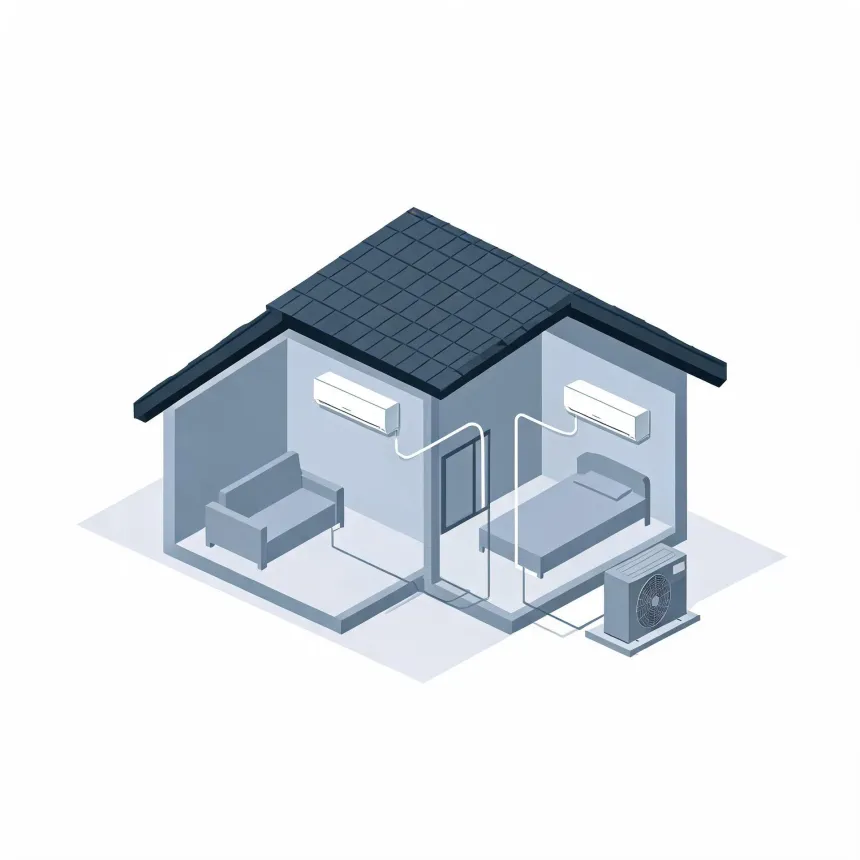
Isometric illustration of a cutaway house with two rooms, showing two wall-mounted indoor air conditioning units connected by lines to a single outdoor condenser unit outside the building.
Your system heats November through March and cools May through September.

NOAA nClimDiv, 1991–2020 normals

Electricity heats 86 percent of homes in Marion County.

A mini split is an electric system, so it fits the setup already running here.

Marion County sees 62 severe weather events a decade, so where the outdoor unit goes and how it's protected both matter

62 severe weather events from 2015 to 2024
45% of homes statewide lost power a day or more in 2024
48 damaging wind events from 2015 to 2024

Cooling runs five months a year here, May through September, and the afternoon high averages 90°F across June, July and August. That is not a system cycling on for a few hot afternoons. That is a mini split working near its limit for most of the summer. A unit sized right for the space can hold up to that kind of load. One sized wrong, either too small for the rooms it covers or too big and short-cycling, will run harder than it should and wear sooner. Correct sizing matters more in a place like this, where the unit does not get much of a break once summer sets in.

Have it installed before May, not after

Cooling starts in May here. A mini split put in during April goes in on a quiet day, with time to get the sizing and the setup right, instead of during the first hot week when the old system is already struggling to keep up.

Find a contractor
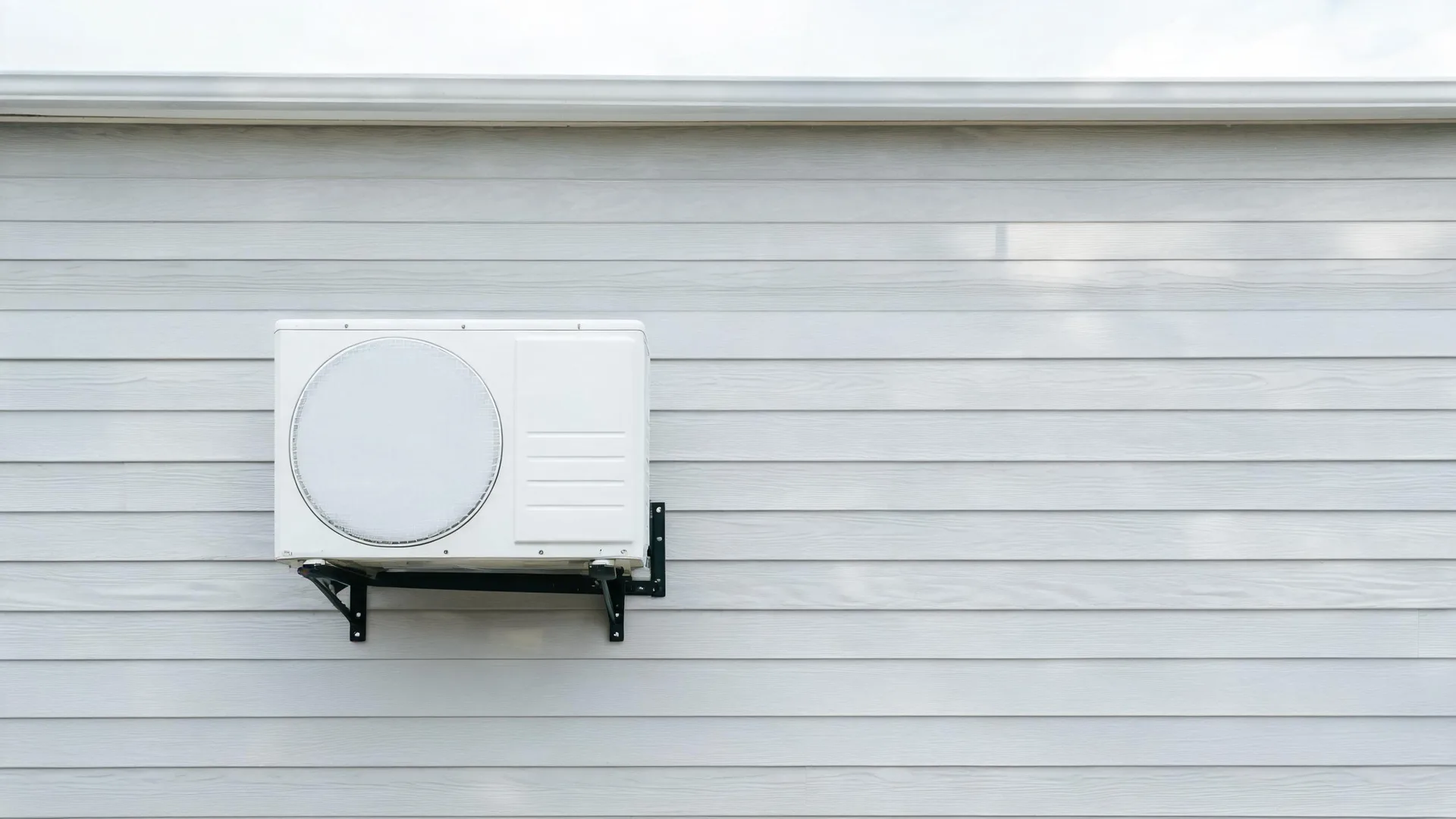
A white mini-split air conditioner outdoor condenser unit mounted on metal brackets against a beige stucco exterior wall, with a blue sky and scattered clouds in the background.

What to ask before you pick one

Every system you're comparing will get sized to the room, and that number only means something if someone measured the space instead of guessing off the old equipment. Ask how they're arriving at it. Beyond sizing, ask what the unit is rated to do at the coldest and hottest temperatures it will actually see, because every mini split loses some capacity at the extremes and the spec sheet will show you where that line is. Ask about the line set, the copper running between the outdoor unit and the indoor head, since a longer run or more bends can change how the system performs even when the equipment itself is identical. Ask who services it if the compressor or the board fails, and whether parts are something a local contractor can get quickly or something that has to be ordered in. A mini split that runs for years does so because it was matched to the space and installed by someone who can still work on it later, not because of a number printed on the box.

The rating is measured at one point, not every point

The efficiency number on a mini split's label comes from a lab test, run at a set temperature and a set load. Your rooms rarely sit at that exact point. The unit still earns that rating somewhere in its range, but the number alone does not tell you how it performs on the coldest morning or the hottest afternoon, only that it was tested against other systems the same way.
A high rating does not fix bad sizing or a bad install

Units with the same rating on the label can run very differently once they are mounted. An outdoor unit set far from the space it conditions, or connected with a line set longer than it needs to be, works harder to hit the same temperature. The rating describes the equipment. It does not describe the room it ends up in or the hands that installed it.

Sizing a mini split starts with the room, not the equipment. A contractor measures the square footage, the window area, the ceiling height, and how the room is used, then works out how much heat it gains in summer and loses in winter. That number tells them which unit to install, not the other way around. Too small and the unit runs flat out without ever catching up on the hottest or coldest days. Too big and it cools the room fast, shuts off, then starts again a few minutes later, cycling on and off instead of running steady. That short-cycling is hard on the compressor and leaves the room colder in spots and warmer in others, because the system never runs long enough to pull moisture out of the air or even out the temperature. A unit sized to the actual load runs longer, steadier stretches, which is the opposite of wear.

Installation day starts with the outdoor unit and where it sits, since that was decided well before anyone shows up with equipment. The indoor head gets mounted high on a wall or ceiling, and a small hole gets drilled through to run the line set, the power wire, and the condensate drain out to the compressor. That line set gets connected, then pulled down to a vacuum to clear out air and moisture before any refrigerant moves through it. Skip that step or rush it, and moisture left in the lines turns into problems for the compressor months later, not that day. Once the system is charged and powered on, a contractor checks the temperature split between the air going in and the air coming out, confirms the drain is actually draining, and walks the line set and wall plate to make sure nothing is pinched or exposed. None of this takes a crew long once the unit is mounted, but each step either gets done right the first time or gets paid for later.