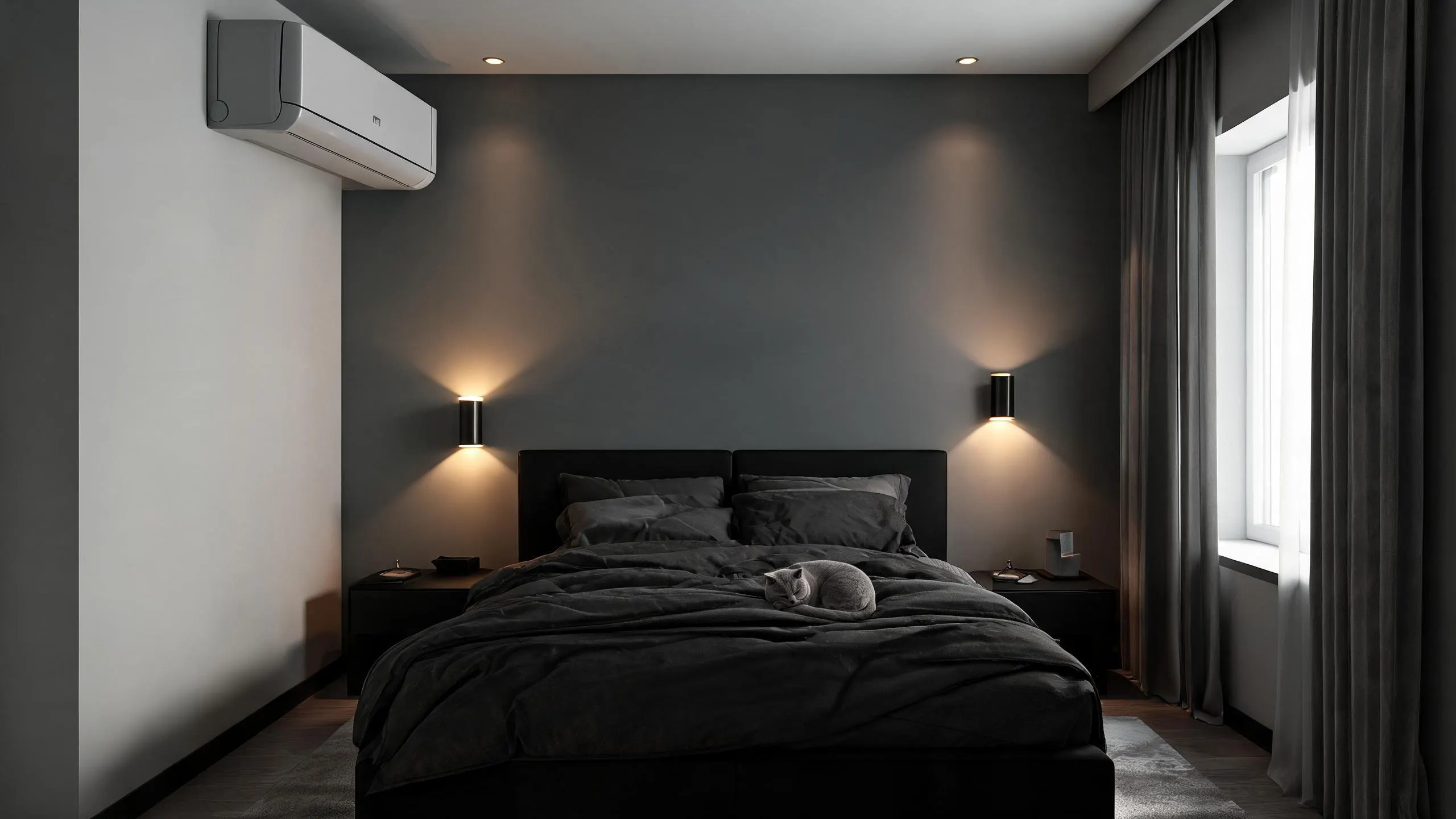
A minimalist bedroom with dark grey walls, a large bed with charcoal bedding, a sleeping cat, two warm-toned wall sconces, and a wall-mounted air conditioning unit.

Mini Split Installation in Newberry, SC

Tell us about the job

Takes about a minute. No obligation.

New system or replacementMini-splitNewberry County, SC
Step 1 of 2

What ZIP code is the job in?

Ask about the load calculation

A mini split sized off square footage alone can end up wrong for the room. A contractor should walk the space, check windows and insulation, and run a real load calculation before quoting equipment. The right size keeps the unit running in long, steady cycles instead of shutting on and off, which is what actually controls humidity and comfort.

Ask what happens to the old lineset and wiring

If a system is coming out, find out whether the new install reuses the existing lineset or runs new line. Old linesets can have the wrong diameter or residue from the old refrigerant, which causes problems in the new system. New wiring and a dedicated circuit matter too, since mini splits draw differently than what was there before.

5 months
November through March, your system heats
5 months
May through September, it cools
34°F
the average winter night it heats against
91°F
the average summer afternoon it cools against
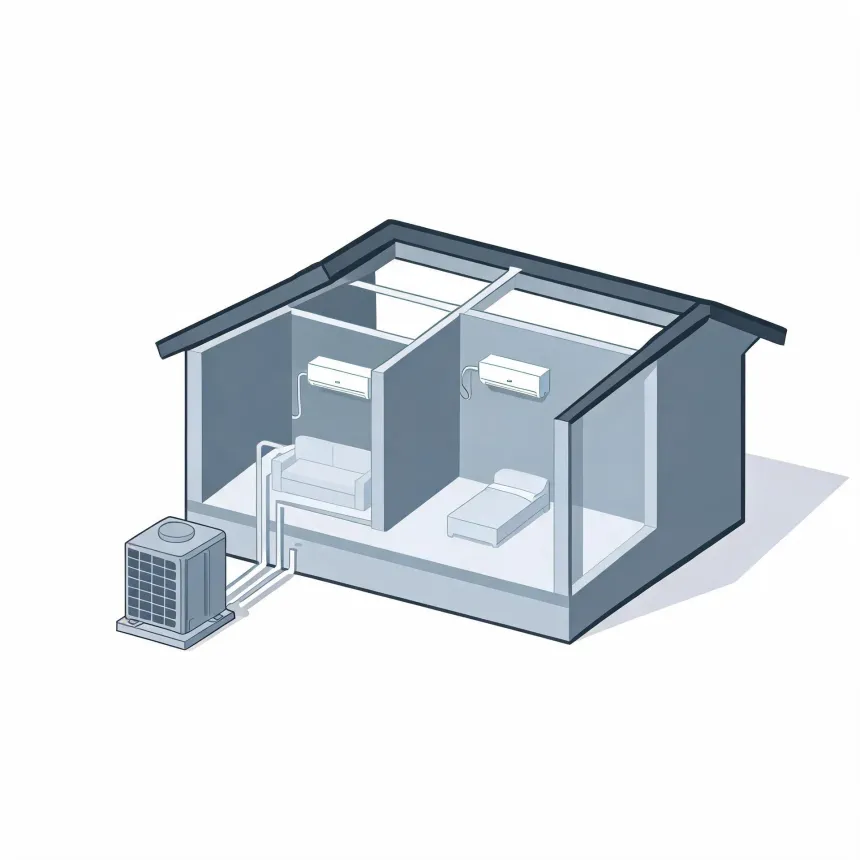
Illustrated cutaway of a two-room house showing two wall-mounted indoor air conditioning units connected by pipes to an outdoor condenser unit on the ground outside.
Your system heats November through March and cools May through September.

NOAA nClimDiv, 1991–2020 normals

The efficiency number on a mini split is a ratio, not a guarantee of what you'll see.

Hitting that number depends on correct sizing and a clean installation, not just the equipment you buy.

Five months of 91 degree afternoons, every year

Cooling runs May through September
Summer afternoons average 91°F
189 damaging wind events from 2015 to 2024
Power here isn't cheapSouth Carolina electricity ran 14.23 cents per kilowatthour in 2024, so an efficient mini split earns its keep on every bill.

Electricity heats 66.0% of occupied homes in Newberry County, and only 25.9% have utility gas. A mini split works with that. It runs on electricity and needs no gas line, so it fits a home that was never set up to burn gas for heat. If your house is one of the ones on electric heat already, adding or replacing a mini split means working with the wiring already at the house, not adding a fuel source that isn't there. For the smaller share of homes on gas or propane, a mini split still runs on its own circuit, separate from whatever heats the rest of the house now.

A correctly sized mini split is the one that works here

Half the homes in this county were built in 1981 or earlier, half in 1981 or later. That spread doesn't call for oversized equipment or a premium line, it calls for a unit sized to the room it's going in. A contractor who runs the load calculation will land on the right fit for your house, not a bigger one.

Find a contractor
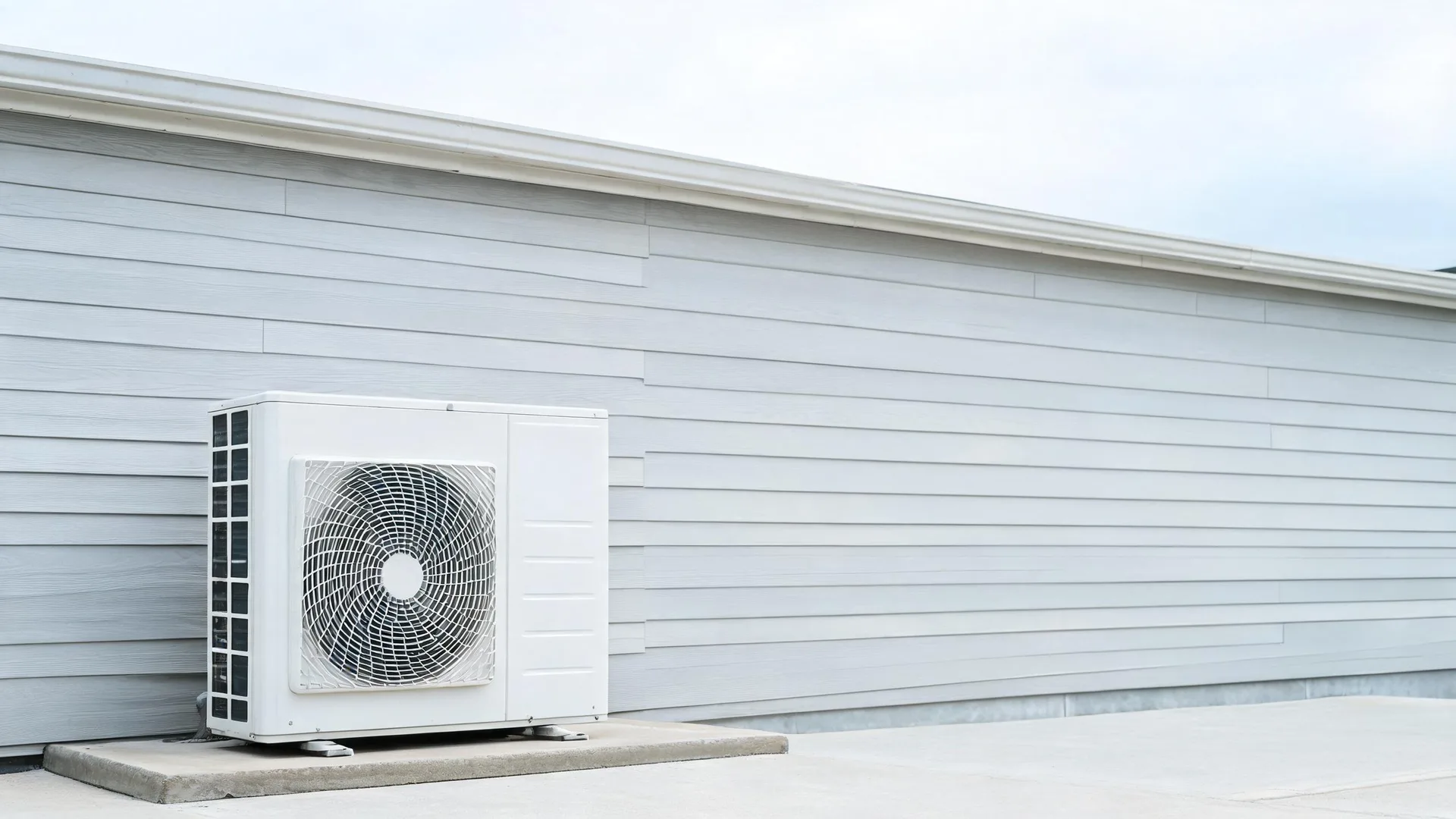
A white outdoor air conditioner condenser unit mounted on metal wall brackets against gray horizontal siding, with a blue sky and white clouds behind it.

Install before May, not during it

Cooling runs here from May through September, five months of the year. Put a mini split in during April and it's sized, installed, and tested before that first hot stretch, not in the middle of it. Wait until the heat's already on and you're choosing equipment while the room is uncomfortable, which pushes toward whatever's in stock instead of what the load calculation actually calls for.

Old equipment has to be recovered, not just unplugged

If the old system used refrigerant, a contractor has to recover it before the unit comes apart. That's not optional, and it's not something you do by cutting a line and pulling the unit off the wall. Ask how removal is handled before work starts, not after.

The old condenser pad and mounting may not carry over

A mini split condenser sits outside on its own pad or bracket, and the old one was sized and placed for the old equipment. The new outdoor unit may need its own footing or wall bracket in a different spot, especially if the new system has a different footprint or more than one indoor head tied to it.

The equipment itself is one line item, but it's not the only one. How many indoor heads the system needs to cover the space, how far the lineset has to run between the outdoor unit and each head, and whether that run goes through a wall, an attic, or a finished ceiling all change what the job takes. A single head feeding one room is a shorter job than a multi-zone system feeding several. Electrical work adds to it too, since a mini split usually needs its own dedicated circuit, and if the panel doesn't have room for one, that's its own piece of work before the mini split goes in at all. Where the outdoor unit ends up matters as well. A pad or bracket that needs to be built or moved takes more time than one that's already in the right spot.

Install day starts outside, mounting the outdoor unit on its pad or bracket and running the lineset to where each indoor head will hang. That line carries refrigerant, so once it's connected, the contractor has to pull a vacuum on it before anything turns on. This pulls out moisture and air, because either one left in the line causes problems with the refrigerant later. Skip that step or rush it, and the system can still power on and blow air, but it won't cool or heat the way it should. After the vacuum holds, the lines get charged, the indoor head gets set and leveled, and the whole system runs through a test cycle before the contractor calls it done. None of that depends on how big the job is. A single head or a multi-zone system both need the same vacuum and the same test before anyone trusts it to run on its own.