A illuminated white antebellum-style house with a wraparound porch, white columns, and Spanish-moss-draped oak trees, photographed at dusk.

Mini Split Installation in Orangeburg, SC

Tell us about the job

Takes about a minute. No obligation.

New system or replacementMini-splitOrangeburg County, SC
Step 1 of 2

What ZIP code is the job in?

Weather here is rough on outdoor equipment

Orangeburg County logged 241 severe weather events between 2015 and 2024, with damaging wind the most common of them. A mini split's outdoor unit sits exposed to all of it, so where it gets mounted and what shields it matters as much as the install itself.

Outages last longer than people expect

Almost half of South Carolina households went at least a full day without power in 2024. A mini split runs on electricity alone, so when the power drops, heating or cooling drops with it. Worth asking your installer about backup options if that's a real concern for your household.

5 months
November through March, your system heats
5 months
May through September, it cools
37°F
the average winter night it heats against
91°F
the average summer afternoon it cools against
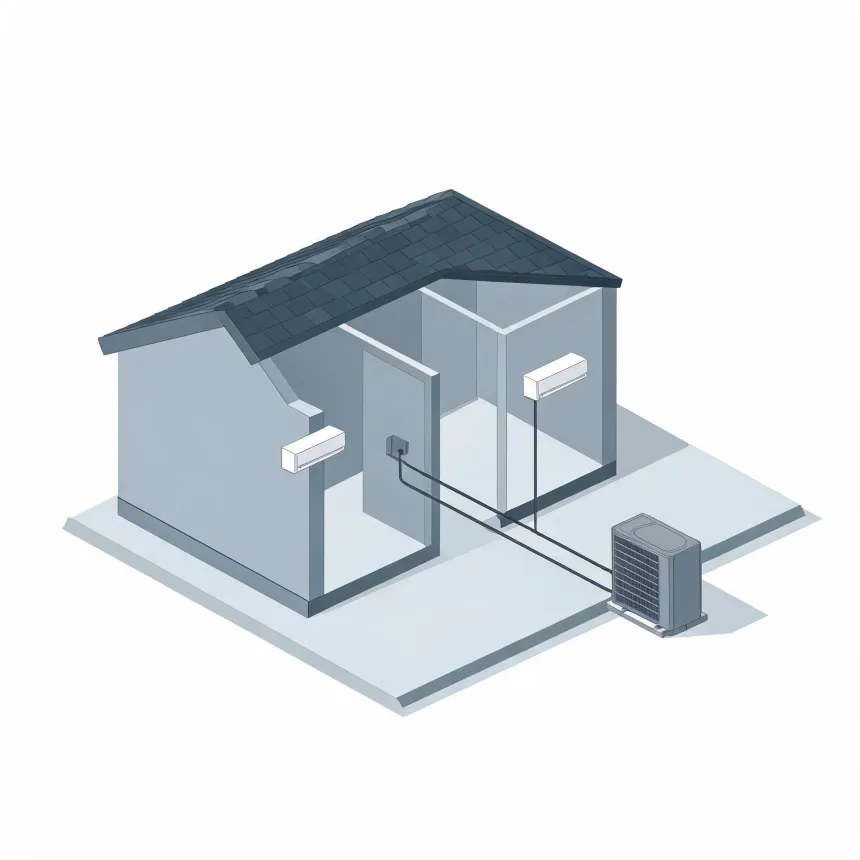
Isometric illustration of a cutaway gray house with a dark shingled roof, showing two wall-mounted indoor air handlers connected by line sets to an outdoor condenser unit on a pad outside.
Your system heats November through March and cools May through September.

NOAA nClimDiv, 1991–2020 normals

Electricity in South Carolina runs 14.23 cents per kilowatt-hour.

A mini split uses that power efficiently, so the rate you pay works less against you.

Almost 8 in 10 homes here already run on electricity

79.8% of homes heat with electricity
Cooling runs May through September
Summer afternoons average 91°F
Get it in before MayCooling runs May through September here, so April is the month to get it done.

Orangeburg County sits in climate zone 3A, warm with a long stretch of air conditioning weather and a short, mild winter. A mini split counts as a split-system heat pump under federal rules, so any unit built from 2023 on has to hit at least 14.3 SEER2 for cooling and 7.5 HSPF2 for heating. That floor applies here the same as it would anywhere else in the zone. The standard doesn't carve out a separate class for ductless systems, so the mini split you're looking at has to clear the same bar a ducted heat pump would.

A standard mini split fits most homes here

A mid-size mini split sized to code is right for most homes in Orangeburg County, old or new. Nothing about the housing stock here calls for upsizing or a special unit, so you're paying for what the room actually needs.

Find a contractor
A man in a dark long-sleeve shirt and tan work pants, seen from behind, steps onto a porch toward a dark green paneled door while carrying a canvas tool bag with tools in its outer pockets, with a potted shrub to the right.
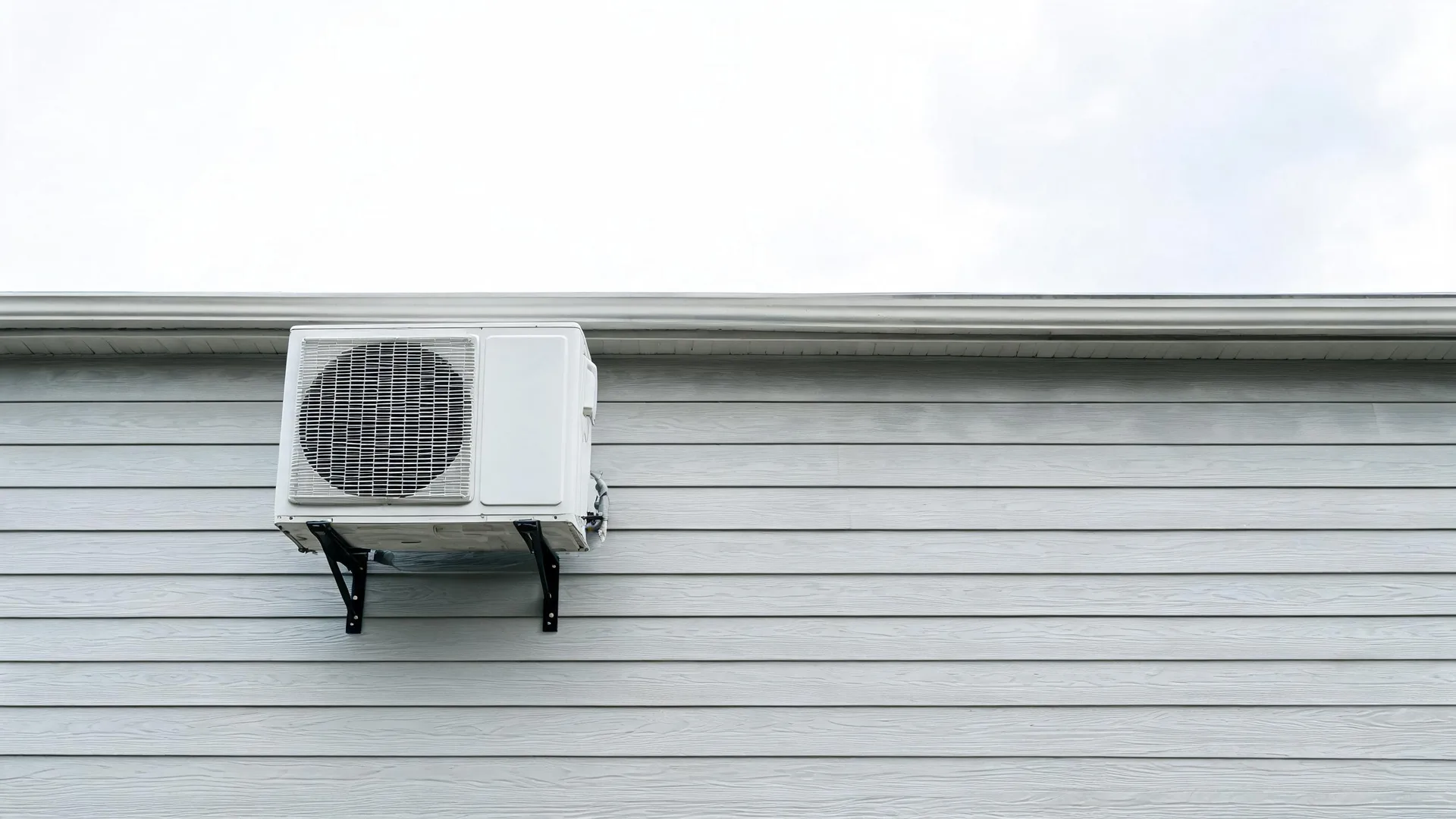
A white outdoor air conditioner condenser unit mounted on metal wall brackets against gray horizontal siding, with a blue sky and white clouds behind it.

The size gets worked out room by room, not guessed

Sizing a mini split means matching the capacity of the indoor head to the room it's cooling and heating, not the square footage of the house as a whole. Every room loses or gains heat at a different rate depending on how many walls face outside, how much glass is in them, and what's above and below. A unit sized too big cools the room fast, shuts off, and starts again a few minutes later, which is hard on the compressor and leaves the room damp since the system never runs long enough to pull moisture out of the air. A unit sized too small runs constantly and still can't hold the temperature on the hottest afternoons or the coldest nights. Getting it right means a contractor actually calculates the load room by room, not eyeballing it or going by what worked at a different house. That calculation accounts for insulation, window area, ceiling height, and which direction the room faces, among other things. It's worth asking whether your installer is doing that math or just sizing off the room it's replacing.

Ask how many zones one outdoor unit can run

A single outdoor condenser can feed more than one indoor head, but each one splits the capacity. Pushing too many rooms off one outdoor unit means none of them get full output on the hottest or coldest days. Ask whether the quote is one outdoor unit per room or one outdoor unit covering several, and what that does to performance in the room farthest from it.

Ask where the line set and drain will run

The refrigerant lines and condensate drain have to get from the indoor head to the outdoor unit somehow, usually through an exterior wall. That path matters for how the wall looks when it's done and how well the drain line keeps draining instead of backing up. A contractor who can point to the exact wall and route before the work starts is one who's actually planned the job, not just priced a box.

If you're taking out a window unit or a central system to put in a mini split, someone has to deal with what comes out. A window unit just gets pulled and hauled off. A central system is more involved. The old outdoor condenser, the indoor coil, and the line set all come out, and if the ductwork isn't being reused, that's a separate conversation with whoever's doing the install. Refrigerant in the old system can't just be vented. It has to be recovered properly, which is one more reason this isn't a job for whoever's cheapest. If the old unit used a refrigerant that's being phased out, ask what happens to it rather than assuming it gets reused anywhere. None of this changes what the new mini split needs to run well, but it's worth asking who's responsible for the old equipment before work starts, not after it's sitting in the driveway.

The indoor head goes up first, usually high on a wall, mounted to a bracket that holds it level while the line set and drain tubing get connected. That line set runs through a small hole drilled straight through the wall, and that hole gets sealed properly when the work is done right. Outside, the condenser sits on a pad or wall bracket, and the lines get connected, purged of air, and checked for leaks before anything gets charged. The system then gets evacuated with a vacuum pump to pull out moisture and air, because either one left in the lines will wreck performance and can damage the compressor over time. Once that's done, the refrigerant valves open and the system gets tested running in both heating and cooling before anyone calls it finished. A straightforward single-zone job is usually done in a day. Add more indoor heads, a longer line set run, or a trickier wall to drill through, and it stretches from there.