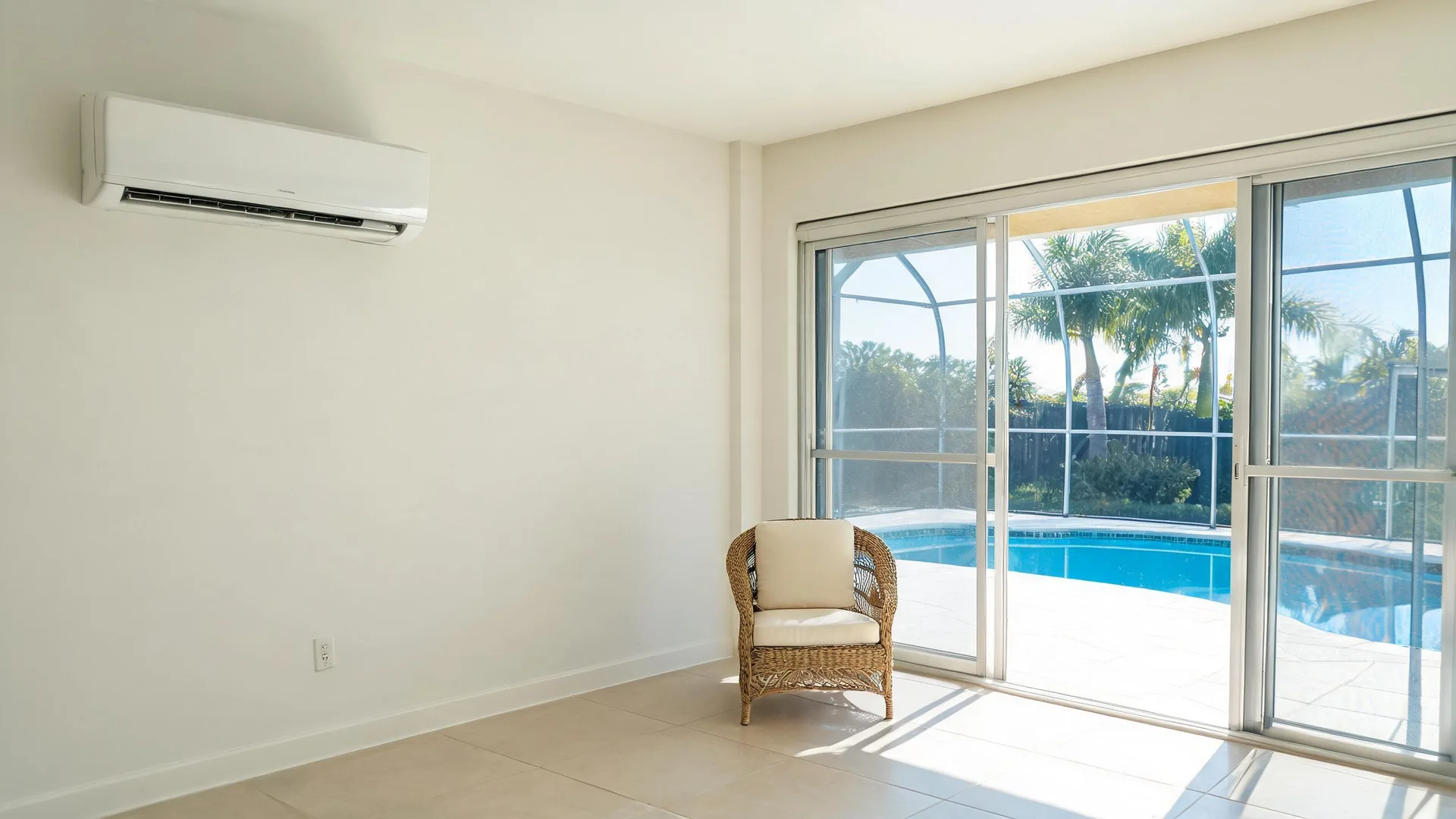
Electricity here runs 14.23 cents a kilowatthour
South Carolina's 2024 average was 14.23 cents per kilowatthour. A mini split's efficiency matters more here than in a state where power is cheap, because that rate hits every kilowatt it pulls.
Takes about a minute. No obligation.
South Carolina's 2024 average was 14.23 cents per kilowatthour. A mini split's efficiency matters more here than in a state where power is cheap, because that rate hits every kilowatt it pulls.
When you're pricing out a mini split for your home, look at its SEER2 rating before anything else. A higher rated unit pulls fewer kilowatts to do the same job, and at Saluda's rate that difference shows up on every bill it sends you.
NOAA nClimDiv, 1991–2020 normals
Saluda County logged 74 damaging wind events between 2015 and 2024.
An outdoor condenser needs a mounting spot clear of flying debris and falling branches before install day.




Half the homes in Saluda County were built in 1987 or earlier, half in 1987 or later, and that split doesn't call for anything special here. A mini split sized to the room it's heating and cooling works the same whether the house is older or newer. Mobile homes make up close to a third of the housing in the county, and those need a unit sized to the space just like any other home does. Get the room measured and match the unit to it. There's no case here for oversizing or for paying up for a bigger system than the space needs.
Saluda is zone 3A. Any mini split installed here, ductless or not, has to meet the same federal minimum. That means 14.3 SEER2 for cooling and 7.5 HSPF2 for heating. A unit that clears that floor also qualifies for the federal tax credit on heat pumps.
Find a contractorCooling runs May through September here, and the afternoon high across June, July and August averages 91°F. That's five straight months of full load, not a few hot spells mixed into milder weather. A mini split sized right for the room handles that load without strain. One sized wrong, too big or too small, shows wear in the compressor and the coil sooner than it should.
A single indoor head paired with one outdoor unit costs less than a setup with several heads running off one outdoor compressor. Each zone needs its own line set, its own wiring run, and its own mounting job, so the labor adds up zone by zone as much as the equipment does.
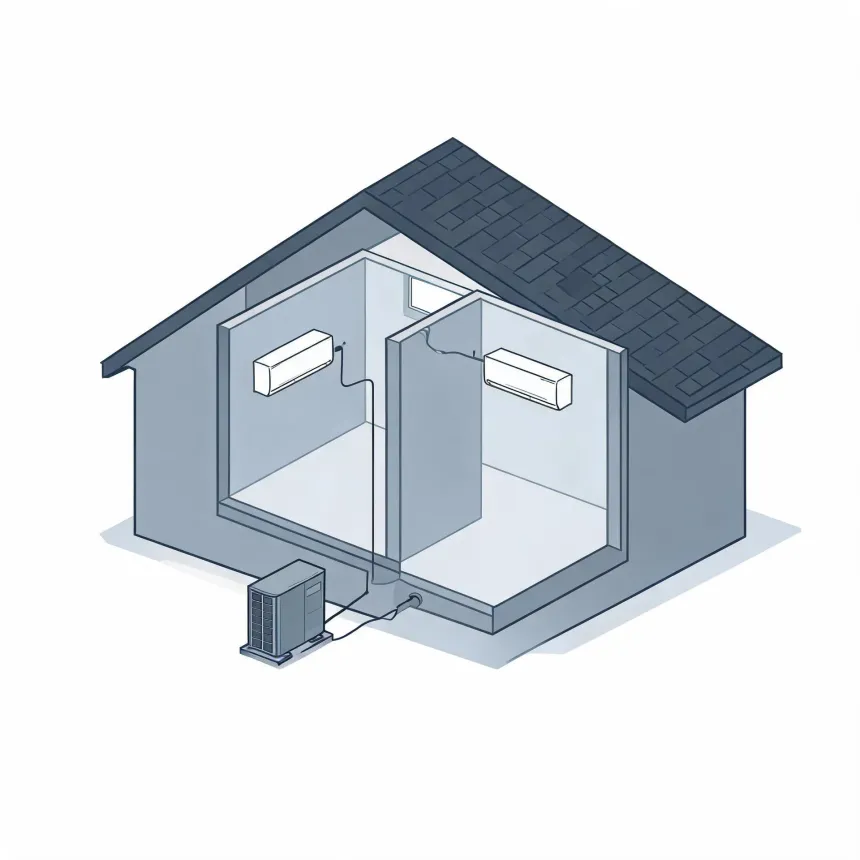
The outdoor unit and each indoor head connect through a line set carrying refrigerant, and that line has to pass through a wall and reach the outdoor unit without excessive bends or length. A straight shot through one exterior wall is a quick job. Running the line up through a chase, across an attic, or along multiple walls to reach a mounting spot takes more time and more material, and that shows up in the cost.
SEER2 and HSPF2 are ratios, not a cap on how well the unit works. SEER2 measures cooling output against the electricity it pulls over a full season, and HSPF2 does the same for heating. A higher number means the compressor gets more cooling or heating out of the power it draws, not that it cools or heats a bigger room. A unit with a strong rating can still underperform if it's the wrong size for the space, because a mini split that's too big or too small works harder than its rating suggests and cycles in a way that wastes power. The rating also holds up over the life of the system only if the coil stays clean and the refrigerant charge stays correct. Compare the rating between units, but let the room size decide the capacity.
Install day starts outside, not in. The crew mounts the outdoor condenser on a pad or bracket, then runs the line set through the wall to each indoor head. That wall penetration is the one cut that can't be undone easily, so where it goes matters more than almost anything else that happens that day. Each indoor head gets mounted to a wall bracket, leveled, and connected to the line set, the condensate drain, and the electrical whip. Once everything's connected, the line gets pulled down to a vacuum to clear out moisture and air before the refrigerant charge is released into the system. A system that skips the vacuum step can run fine for a while and then fail early, because trapped moisture corrodes the coil from the inside. The last step is checking the charge against what the manufacturer specifies for that line length, not just running the unit and calling it done.