




A red brick single-story house with a covered porch and a nearby cream-colored house with a wraparound porch, seen across a lawn behind a trimmed hedge, framed by large moss-draped oak branches.

Mini Split Installation in Seneca, SC

Tell us about the job

Takes about a minute. No obligation.

New system or replacementMini-splitOconee County, SC
Step 1 of 2

What ZIP code is the job in?

Oconee County sits in zone 3A, a warm, humid climate with cooling running from spring into fall and winters that stay mild. Any mini-split installed now has to meet the federal minimum for a split-system heat pump, 14.3 SEER2 for cooling and 7.5 HSPF2 for heating, even without a duct system attached to it. That rules out the lower-efficiency units still sold in some states. A system that clears that bar is also worth checking against the federal energy efficiency tax credit before you settle on a model.

7 months
October through April, your system heats
5 months
May through September, it cools
33°F
the average winter night it heats against
87°F
the average summer afternoon it cools against
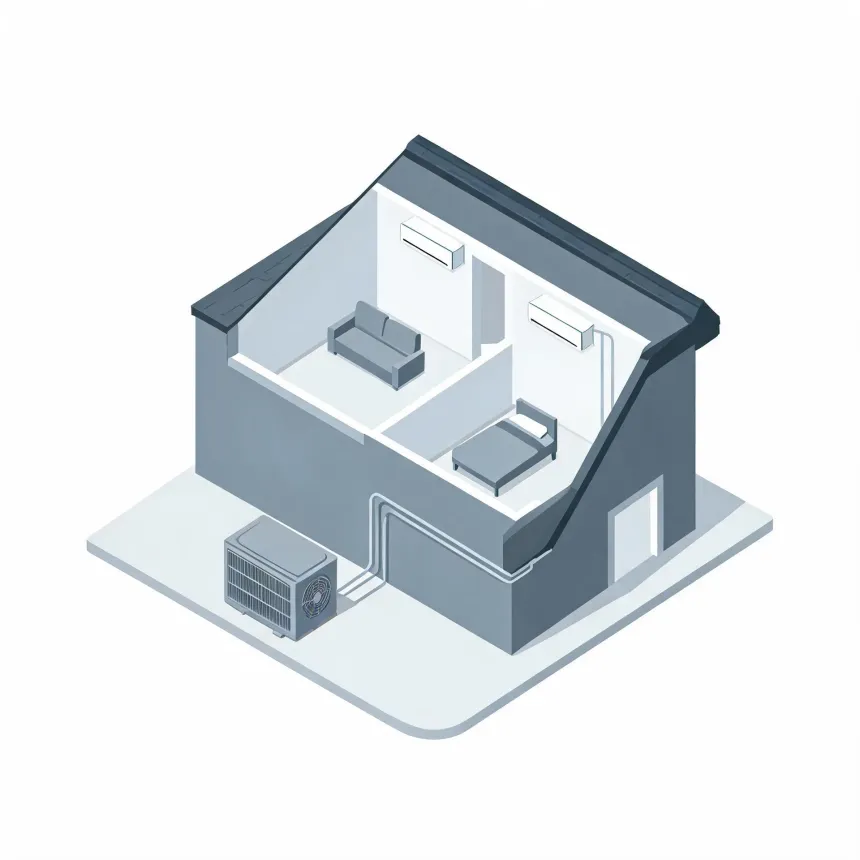
Isometric cutaway illustration of a two-room house showing two wall-mounted indoor air conditioning units connected by line sets to an outdoor condenser unit on the ground outside.
Your system heats October through April and cools May through September.

NOAA nClimDiv, 1991–2020 normals

Cooling runs May through September here.

Put the mini-split in during April and it's ready before the first hot day, not after it.

A standard mini-split handles Seneca summers fine

Cooling runs May through September
Summer afternoons average 87°F
92 damaging wind events from 2015 to 2024

A standard single-zone or multi-zone mini-split, sized to the room or rooms it's serving, is enough for this climate. There's no local reason to size up or chase a higher efficiency tier than the federal minimum already sets. Oversizing a mini-split doesn't make it handle summer better, it just cycles on and off more and does a worse job pulling humidity out of the air. At 14.23 cents per kilowatt-hour, a correctly sized unit also costs less to run than one that's bigger than the space needs. Let the contractor size it to the room with a load calculation, not a guess based on square footage alone.

Most Oconee County homes already run on electric heat

Electricity heats 69.2% of homes in Oconee County, more than any other fuel. A mini-split is an electric heat pump, so for most homes here it's adding to wiring already built for electric heat, not working against it.

Find a contractor
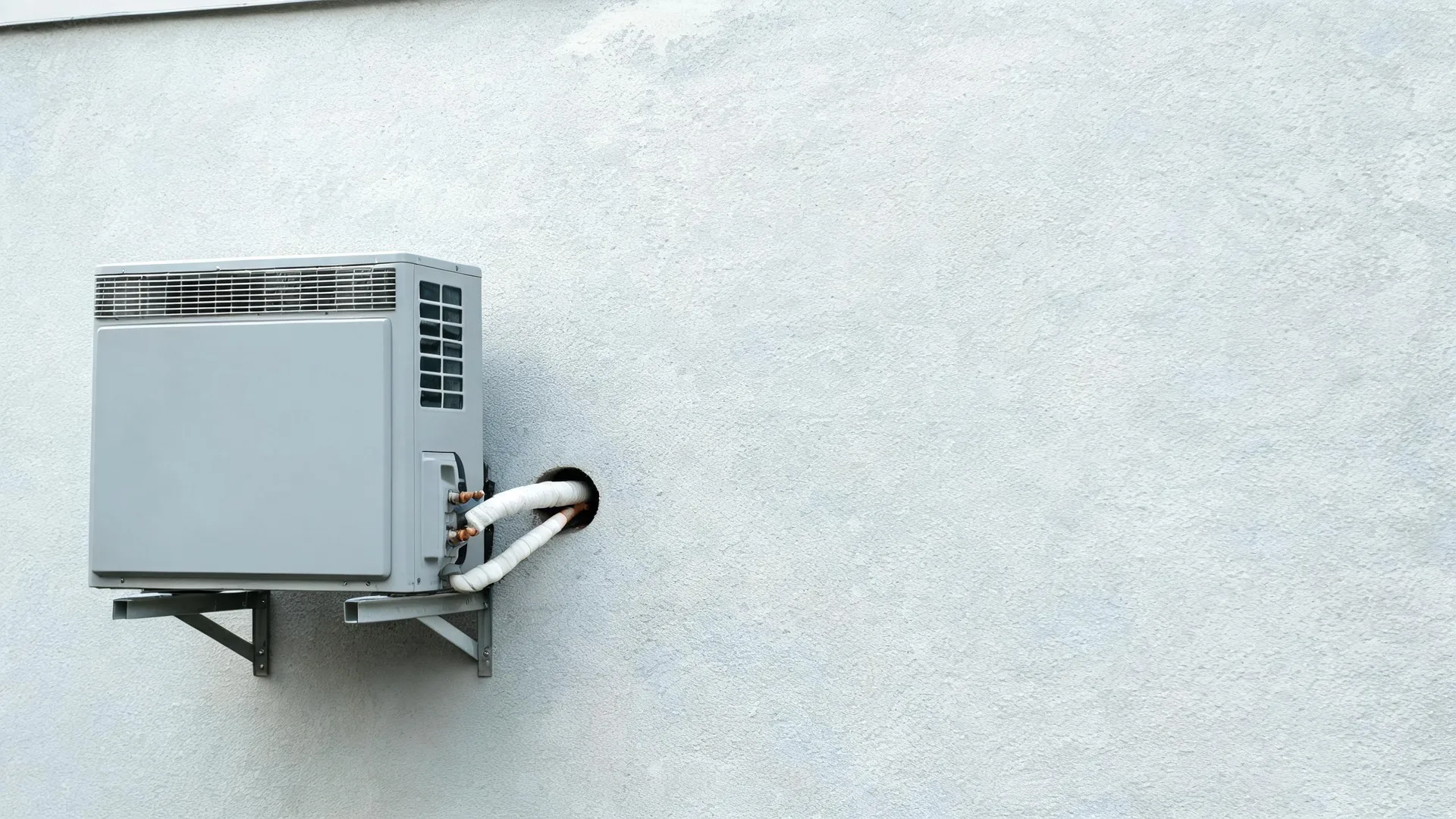
A beige split-system air conditioner outdoor condenser unit mounted on metal wall brackets atop a stucco wall.

A compressor that matches the room outlasts one that overpowers it

A mini-split that's sized right runs long, slow cycles. It brings the room down to temperature and then holds it there, moving just enough refrigerant to match the heat coming in. That's the compressor doing the least work it can, which is also the state it lasts longest in. An oversized unit can't do that. It blasts the room down fast, shuts off, then starts again soon after, and every one of those starts puts more wear on the compressor than steady running would. Short cycling like that also means the coil never runs long enough to pull humidity out of the air, so the room can feel cool and still feel damp. Sizing comes from a load calculation, which weighs the room's windows, insulation and orientation against each other rather than going off floor space alone. Rooms that look alike on paper can call for different sized units once those are counted.

Ask what the load calculation found

A contractor should run a load calculation before quoting equipment, and should show the result, not just a model number. The calculation weighs window area, insulation and which way the room faces against each other. Rooms that look the same size on paper can come back needing different sized units. If a quote lists equipment with no calculation behind it, ask where that number came from.
Ask how many zones the system covers

A single-zone system runs one indoor head off one outdoor compressor, built for one room or an open space. A multi-zone system splits one outdoor compressor across several indoor heads, each with its own thermostat. Adding a zone later to a single-zone system usually means a new outdoor unit, not just another head, so it's worth deciding upfront how many rooms this system needs to reach.

What drives the price of a mini-split install is mostly what the installer has to do to get refrigerant line and electrical from the outdoor unit to the indoor head. A straight shot through an exterior wall costs less than a run that has to go up through an attic or across a long stretch of siding. The outdoor unit needs a mounting pad or bracket and clearance to breathe, and if the spot that works best for the room is far from where the outdoor unit can sit, that extra line length adds to the job. Electrical matters too. A dedicated circuit run to the outdoor unit is part of most installs, and whether the panel has room for that circuit or needs work first changes the scope. Multi-zone systems add cost per head, since each indoor unit needs its own line set and its own mounting, even though they share one outdoor compressor. None of that shows up in the unit's price tag. It shows up in what the walls and the panel make the installer do to reach each room.

Installation starts outside, with the contractor picking a spot for the outdoor unit that has room to breathe on all sides and isn't boxed in by fencing or shrubs. Inside, the indoor head goes up on a wall bracket, usually high enough to throw air across the room. The contractor drills a small hole through the wall between them and runs the line set through it. That bundle carries the refrigerant lines, a condensate drain and the electrical whip, sealed where it passes through the wall. The refrigerant lines get connected at both ends, then the system gets pulled into a vacuum to clear out air and moisture before refrigerant is allowed to charge the lines. That vacuum step matters more than people expect. Any moisture left behind turns into acid once the system runs, and that eats at the compressor from the inside. Once the charge is in and the lines are tight, the contractor powers it up, checks the temperature split between the air going in and the air coming out, and confirms the condensate drains the way it should instead of pooling anywhere.