





Low-angle view across a lawn and pine-needle mulch toward a single-story brick house with a dark hipped roof and covered porch, framed by pines and a moss-draped oak branch.

Mini Split Installation in Union, SC

Tell us about the job

Takes about a minute. No obligation.

New system or replacementMini-splitUnion County, SC
Step 1 of 2

What ZIP code is the job in?

A mini split earns its keep in Union, where electricity ran 14.23 cents per kilowatthour in 2024. That's higher than a lot of the country pays, and it changes the math on what you install. A mini split moves heat instead of burning fuel or running pure resistance heat, so it gets more warmth or cooling out of every kilowatthour you buy. The efficiency rating on the unit you pick matters more here than it would somewhere with cheap power, because that rating is multiplied by every hour the system runs. Put two systems side by side and the one with the better rating is the one that costs less to live with, month after month.

5 months
November through March, your system heats
5 months
May through September, it cools
33°F
the average winter night it heats against
90°F
the average summer afternoon it cools against
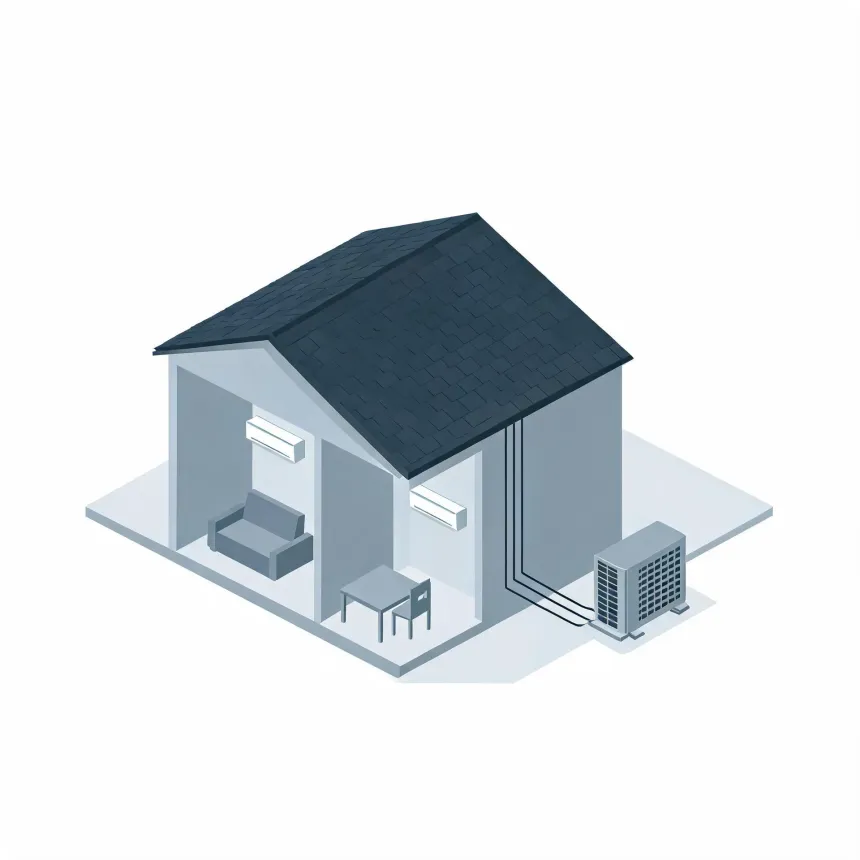
Isometric illustration of a cutaway house with a dark shingled gable roof, showing two wall-mounted indoor air handlers, a sofa, table and chair inside, and refrigerant lines running to an outdoor condenser unit beside the building.
Your system heats November through March and cools May through September.

NOAA nClimDiv, 1991–2020 normals

Electricity heats 58.3% of homes in Union County, more than gas, propane and oil combined.

A mini split runs on electricity too, so swapping one in means working with wiring already in place instead of adding a fuel line.

Five months of 90 degree afternoons is real work for a compressor

Cooling runs May through September
Summer afternoons average 90°F
Power costs 14.23 cents a kWh statewide
The unit's rating is the number that pays you backAt 14.23 cents a kilowatthour, a higher SEER2 rating earns its keep here.

Union County falls under zone 3A in the federal efficiency rules. Any mini split installed here has to meet the split-system heat pump minimum for that zone. That floor applies to ductless equipment the same as any other heat pump, there's no separate category that lets a unit come in lower. A unit manufactured from 2023 onward has to clear that minimum before it can go in at all, so whatever you're comparing starts above that line, not below it. A federal tax credit is available on top of that for equipment that qualifies, and it's worth asking about before you settle on a model.

Your new system has to fit the house you already have

Half the homes in Union County were built in 1972 or earlier. An older house usually means the mini split has to work with the wiring and the wall layout already there, not the other way around. That's part of sizing the job right, matching the unit to the house instead of the other way around.

Find a contractor
A white mini-split air conditioner outdoor condenser unit mounted on metal brackets against a beige stucco exterior wall, with a blue sky and scattered clouds in the background.

April is the month to get this done

Cooling in Union County runs May through September, five months of the compressor working against real heat. Install a mini split in April and it's mounted, charged and tested before that first hot stretch arrives. Any adjustment, any part that needs ordering, gets handled while the house is still comfortable, not after it stops being comfortable. That's the difference between picking the right unit and picking whatever's available that week.

Ask what each zone is rated for, not just the whole system

A mini split with multiple heads lets each zone run at a different capacity, and each indoor unit has its own rating for how much heat or cooling it can move. A contractor sizing the job should walk through each room with you and explain why that head was chosen for that space. If nobody can tell you why a bedroom got a smaller head than the living room, the load calculation probably didn't happen.
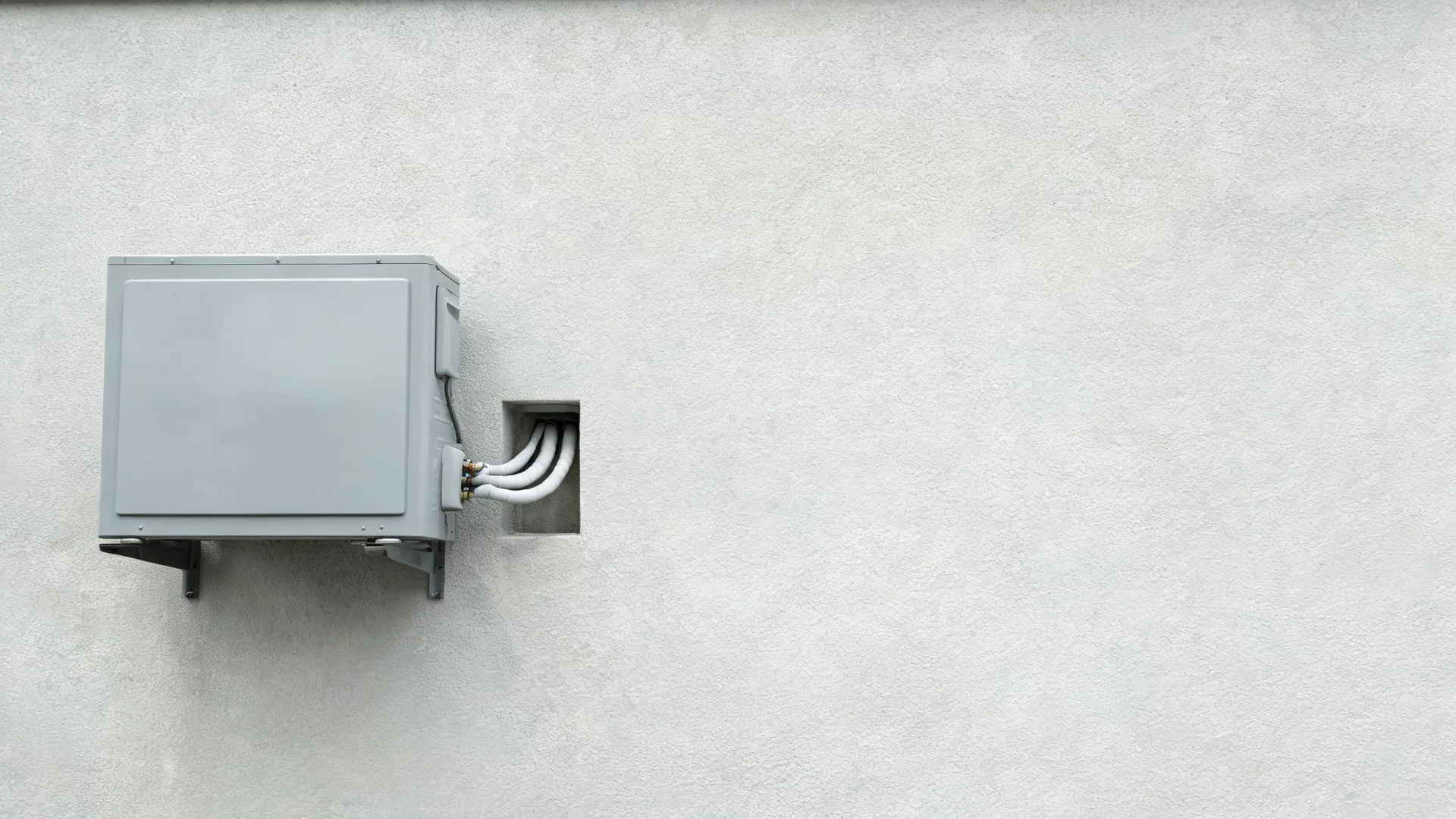
Ask how the line set is routed before the wall gets a hole in it

The refrigerant lines running between the outdoor compressor and each indoor head have to go somewhere, through a wall, up a chase, along an exterior line. Where that path runs affects how the finished job looks and how easy the system is to service later. Get this settled before anything is mounted, because moving a line set after installation means patching what was already closed up.

Sizing a mini split means working out how much heat the room gains in summer and loses in winter, then matching a head to that number, not to the size of the room next door. Too big and the unit short cycles, reaching the temperature fast and shutting off before it pulls any moisture out of the air, so the room feels cool and clammy at once. Too small and it runs flat out all afternoon without ever catching up, which wears on the compressor and still leaves the room warm. The calculation accounts for windows, which direction the room faces, how much insulation is behind the walls, and what else is generating heat inside, a kitchen or a room full of electronics needs more capacity than a bedroom of the same size. Wall thickness and ceiling height change the number too, so a contractor measuring one room and assuming the rest match is skipping a step that shows up later as an uneven house. The rating on the box tells you what the equipment can do. Only a load calculation tells you what it needs to do.

A few things push the price of this job around more than people expect. How many zones you're running matters most, since every indoor head needs its own line set, its own mounting bracket, its own tap into the circuit. A single zone cooling one room is a different job than a system feeding heads into several rooms at once. Where the outdoor unit sits plays a part too. A compressor placed close to the wall it's feeding is a shorter job than one that has to route line set around the house or up through a chase. The wall itself matters, a stud and drywall bore quickly, brick or block takes longer and different tools. And the electrical panel either has room for a new circuit or it doesn't. If it's already full, that's its own job before the mini split goes in at all.