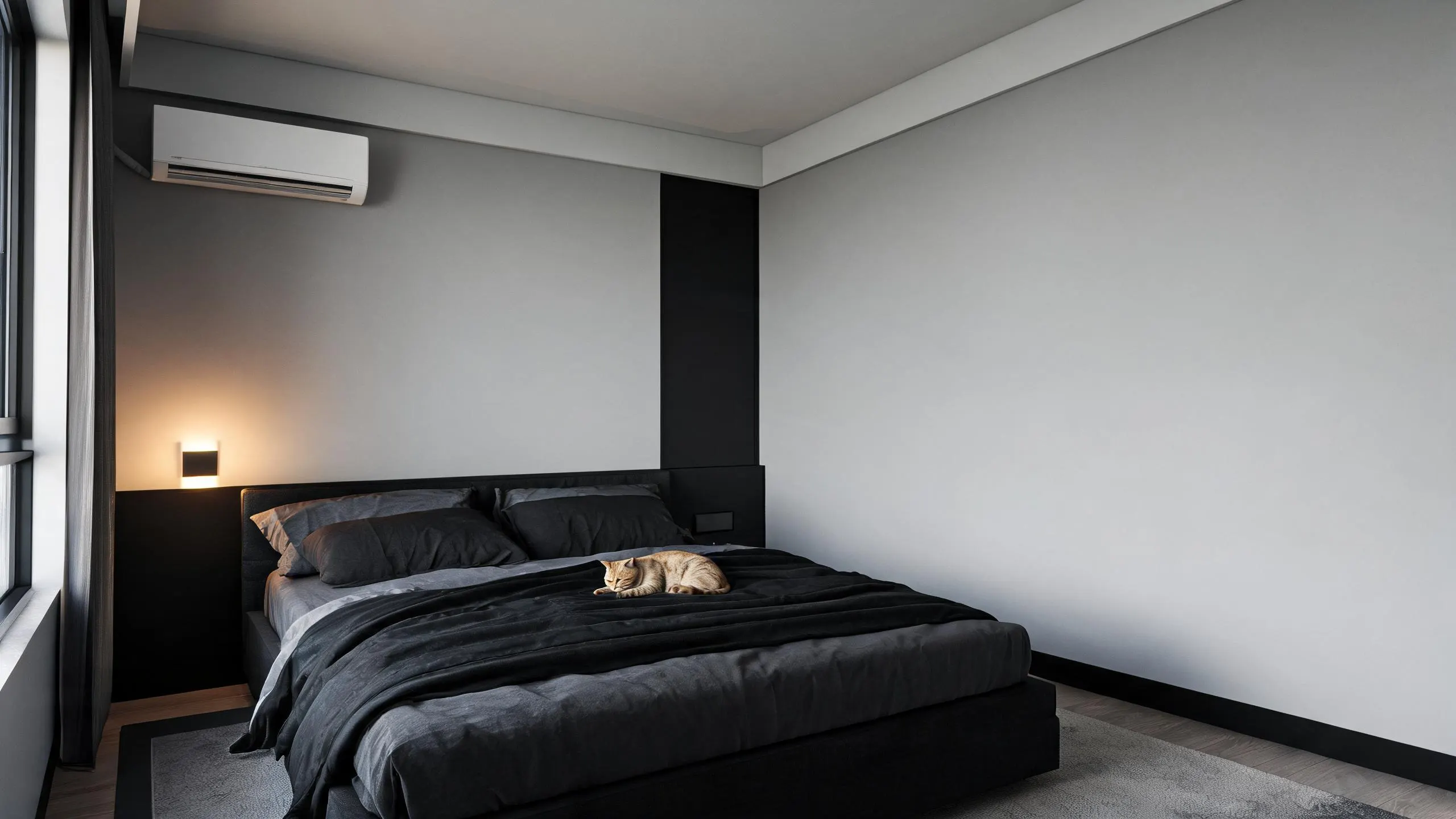
An orange cat rests on a dark grey bed in a minimalist monochrome bedroom.

Mini Split Installation in Winnsboro, SC

Tell us about the job

Takes about a minute. No obligation.

New system or replacementMini-splitFairfield County, SC
Step 1 of 2

What ZIP code is the job in?

Ask about the load calculation

A mini split should be sized room by room, based on windows, insulation and how the space is used, not guessed from square footage alone. A unit that's too big cycles on and off and never pulls moisture out of the air. One that's too small runs constantly and still can't keep up.

Ask what happens to the old line set

If this is replacing ductwork or another mini split, find out whether the installer reuses existing line sets or runs new ones. Old line sets can have the wrong diameter or leftover oil that doesn't match the new refrigerant, and that causes problems long after the install is done.

5 months
November through March, your system heats
5 months
May through September, it cools
34°F
the average winter night it heats against
90°F
the average summer afternoon it cools against
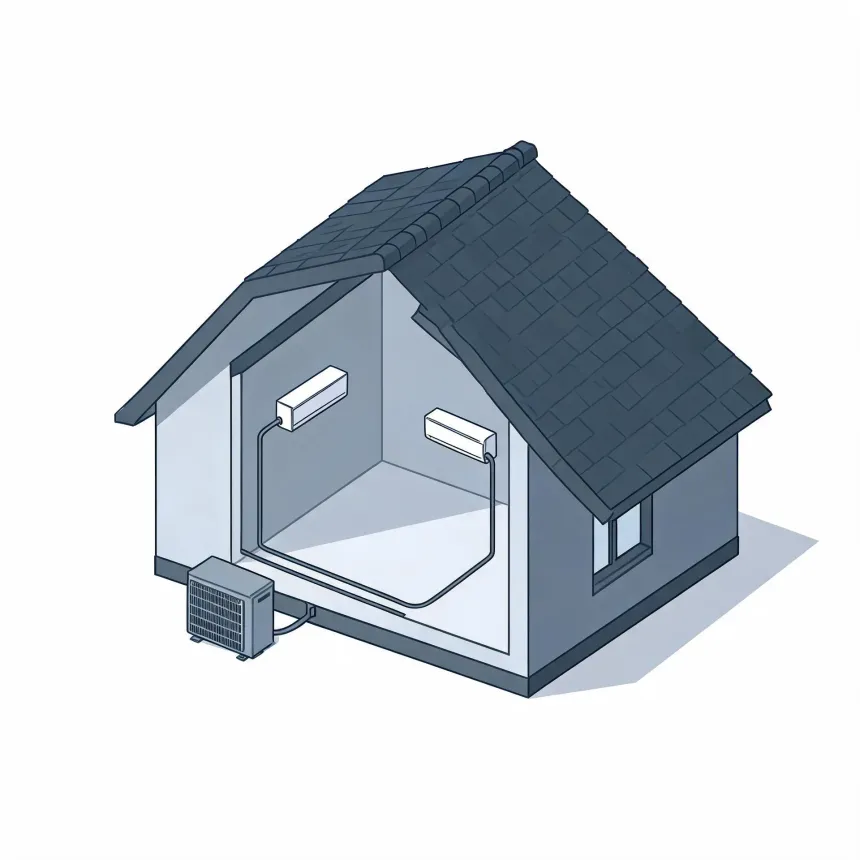
Isometric cutaway illustration of a small house with a shingled gable roof, showing two wall-mounted indoor air conditioning units connected by refrigerant lines to an outdoor condenser unit on the ground outside.
Your system heats November through March and cools May through September.

NOAA nClimDiv, 1991–2020 normals

Electricity heats 68.3% of homes in Fairfield County.

A mini split runs on electricity already, so it fits the setup most houses here have.

Cooling runs May through September here, so get it installed before May

Cooling runs May through September
Summer afternoons average 90°F
131 damaging wind events from 2015 to 2024
Electricity here costs you more, so efficiency pays you backSouth Carolina homes paid 14.23 cents per kilowatthour in 2024

Summer here means five months of the outdoor unit running most afternoons, with highs averaging 90°F through June, July and August. A mini split sized right for the room handles that load without strain. One sized wrong either cycles too much to ever cool the room properly or runs nonstop trying to keep up, and either way the compressor takes the wear. Fairfield County also sees damaging wind often enough that it's worth asking the installer where the outdoor unit will sit and how well it's secured. A unit mounted low or out in the open is more exposed than one placed with that in mind.

A mini split here has to meet 14.3 SEER2 and 7.5 HSPF2, and that can mean a tax credit

Fairfield County is zone 3A, and any mini split installed here now has to meet 14.3 SEER2 for cooling and 7.5 HSPF2 for heating, the federal minimum for split-system heat pumps. That's the floor, not a special ductless rule. A unit that clears it can also qualify for the federal tax credit on heat pump installations.

Find a contractor
A white mini-split air conditioner outdoor condenser unit mounted on metal brackets against a beige stucco exterior wall, with a blue sky and scattered clouds in the background.

The old unit doesn't just get unplugged

Whatever system is coming out stays live until the new one goes in. If it's another mini split, the old indoor and outdoor units get disconnected and the refrigerant recovered, not vented, that's the law regardless of what's being replaced. If it's a furnace or central air paired with ductwork, the installer needs to decide whether that ductwork stays in play for anything or gets capped off for good. An old outdoor unit sitting on its pad doesn't need to be hauled off the same day, but refrigerant can't just be released to make room faster. Ask who handles the disposal and whether that's part of the job or an extra call.

The number of zones changes the job

A single indoor unit tied to one outdoor unit is the simplest setup. Add a second or third zone and the outdoor unit has to be sized for all of them together, plus the installer is running more line set and more wiring to more parts of the house. More zones means more labor and a bigger outdoor unit, not just another indoor head bolted on.

Where the outdoor unit goes matters

Mounting the outdoor unit takes a pad or bracket, and if it's going on a wall or up on a roof that's more work than setting it on ground level. The line set run between indoor and outdoor units also costs more the longer and more complicated the path, especially if it has to go through a wall, around corners, or up multiple floors.

SEER2 and HSPF2 tell you how the unit performed in a lab test, not how it will perform in a specific room. A mini split with a high rating that's oversized for the space still short-cycles and still leaves the air clammy, rating or no rating. The label number is worth comparing between units you're actually choosing between, but it doesn't replace a load calculation, and it won't fix a bad install. It's also worth asking whether the rating applies to the exact indoor and outdoor pairing going into the house, since matching a head to a different outdoor unit than it was tested with can change the number on the quote.

Install day starts with the outdoor unit and works inward. The installer mounts the outdoor condenser first, usually on a pad or bracket, then runs the line set through a sleeved hole in the wall to each indoor head. That hole gets sealed once the lines, wiring and drain tube are through it, so water and air can't follow them back in. Each indoor unit gets mounted on a bracket, leveled, and connected before anyone touches refrigerant. The system then gets evacuated with a vacuum pump to pull out moisture and air, because either one left in the lines causes problems later. Only after that vacuum holds does the installer open the valves and let refrigerant into the lines, then run the system to check airflow, temperature split and drainage at each head.