Side profile of a bearded man wearing a dark gray baseball cap and a gray T-shirt against a plain off-white background.

What size heat pump a South Carolina home needs

New system or replacementHeat PumpSouth Carolina
Step 1 of 2

What ZIP code is the job in?

What size heat pump do I need for my house in South Carolina?

You want a straight answer before a contractor ever walks through your door, something to check their number against. Heat pumps get sized wrong more often than people think, and in South Carolina that mistake shows up fast, either in a system that runs constantly through the muggy months or one that short cycles and never quite dries the air out.

It depends on your home's square footage and how well it holds heat, not a flat rule

There's no single number that fits every house. A properly sized heat pump comes from a load calculation that weighs your square footage, insulation, window area, and how much shade your house gets, not just a chart that matches tonnage to size. A contractor doing this right walks the house and runs the numbers rather than guessing off the square footage alone. In South Carolina, getting this right matters more than in milder climates, because an oversized unit will cool the air fast but shut off before it pulls the humidity out, leaving rooms feeling damp even when the thermostat says you're comfortable. An undersized one runs nonstop through the summer and still struggles to keep up on the coldest nights in winter, when the same system is carrying your heat.

  1. A contractor measures every room's walls, windows and ceiling

  2. That measurement becomes a load calculation, not a guess

  3. The load number points to the correct heat pump tonnage

  4. Ductwork gets checked to see if it can carry that size

A man in a blue sweatshirt reclines with his eyes closed in an armchair in a living room, with a folded newspaper and ceramic mug on a side table and bookshelves and a couch behind him.
A bearded man in a navy sweater leans back in a brown leather armchair with his eyes closed and a slight smile, beside a window and a side table holding newspapers and a lamp.
A man in a dark gray sweater reclines with closed eyes and a slight smile in a brown leather armchair in a living room with bookshelves, a sofa, a lamp, large windows, and a folded newspaper on a round wooden table.
A man in a gray fleece pullover sits in a leather armchair with his eyes closed and a slight smile, beside a table with newspapers and a lamp, with a window, potted plant and bookshelves behind him.

Why oversizing backfires here

A heat pump too big for the house cools the air fast and shuts off before it pulls the moisture out. That leaves rooms cold and damp at the same time, which matters in South Carolina summers where the humidity is doing as much to make you uncomfortable as the temperature is. The unit also cycles on and off more often than it should, and every start draws more power than running steady does. A correctly sized system runs longer, lower, and actually dries the air while it cools it.

What the load calculation accounts for

A Manual J load calculation looks at your square footage, but also your windows, insulation and ceiling height, because two houses the same size can need different tonnage. It also factors in that most homes here heat with electricity, since the same system that cools your house in July carries the load in January. That's why the contractor measures the whole house instead of quoting off square footage alone. The number it produces is specific to your house, not a rule of thumb applied to it.

A weathered outdoor condenser unit on a concrete pad beside a house with light horizontal siding, surrounded by bare dirt and a shrub.
Before you get your heat pump installation
A dark gray outdoor condenser unit on a concrete pad beside a house with beige horizontal siding, with a gray electrical disconnect box and conduit on the wall, mulch beds, a hosta plant, a shrub, and mowed lawn in front.
After you get your heat pump installation
A gray outdoor condenser unit on a raised pad beside a house with horizontal lap siding, with refrigerant lines, conduit and an electrical disconnect box on the wall, and shrubs on a mulch bed to the left.

Sized right and running clean

This is what a correctly sized heat pump looks like outside your house: a clear coil, steady refrigerant lines, and a disconnect box with room to breathe. Air moves through it the way the load calculation assumed it would, so it holds the tonnage it was built for.

An outdoor air conditioner condenser unit on a gray composite pad beside a house with horizontal lap siding, with refrigerant lines and a conduit running to a wall-mounted disconnect box, and a shrub at left.

Sized wrong, and it shows

A unit this caked with dirt and grass clippings has to work past a clogged coil just to move the same air. An oversized heat pump already short-cycles before it pulls humidity out, and buildup like this makes it fight even harder for less.

A gray-haired man in a blue sweater over a checked collared shirt sits in an armchair with his eyes closed and head tilted back near a bright window, with a houseplant and lamp nearby.
A woman in a grey knit sweater leans back with closed eyes in an armchair beside a window, with a ceramic mug on a round wooden side table and a yellow-leaved tree outside.

Stop chasing a heat pump pro

A load calculation only matters if the install that follows it is done right. Someone has to run the numbers, pick the matching equipment, and set the refrigerant charge and airflow so the tonnage on paper is the tonnage you actually get in your rooms. That's the work this button gets moving. It goes to a local contractor who sizes and installs heat pumps in South Carolina homes all the time, so the humidity problem and the sizing mistakes behind it aren't new territory. Your request goes to that one contractor, not out to a handful of companies at once, so you're dealing with someone who has your details, not fielding competing calls while you're still trying to figure out what size unit your house needs. You've got the answer now. Handing the rest to someone who installs these year-round is how you get from knowing the right tonnage to actually having it running outside your house.

What Wrong Sizing Costs You

  • A unit too small runs nonstop on the hottest July days and still loses ground to the heat outside.
  • A unit too big cycles off before it pulls the humidity out, leaving rooms cold and clammy at once.
  • Either mistake raises your electric bill, since most homes here heat with electricity and the heat pump works harder than it should.
  • Short cycling from an oversized unit wears on the compressor faster than steady, longer runs do.
  • A room farther from the air handler stays warmer in summer and colder in winter when the sizing is off.
  • Correct sizing shows up as steady temperatures room to room and a system that keeps pace with August afternoons.

A heat pump that doesn't match your house shows up in ways you can feel before you ever see a number on a bill. Too small, and it runs through the hottest part of a July afternoon without catching up, because it was never built to move that much heat in the first place. Too big, and it blasts the house cold in a few minutes, shuts off, and leaves the air damp since it never ran long enough to pull the moisture out. You end up adjusting the thermostat to fix a problem the equipment should have handled on its own. Since most homes here heat with electricity, that extra strain comes straight out of your pocket every month, not just in summer but through the winter stretch too. The wear adds up on the equipment itself. A compressor that short cycles, turning on and off instead of running a steady stretch, takes more wear than one sized to run longer and gentler. Rooms tell the story as clearly as the bill does. A bedroom at the far end of the duct run runs warmer than the rest of the house in summer and colder in winter when the tonnage is off, because an undersized or oversized unit never moves air through the whole house the way it should. Get the sizing right and that unevenness goes away. Every room settles near the thermostat setting, and the system holds that line through an August afternoon without straining to get there.


Power costs 15.12 cents per kilowatt-hour statewide

At 15.12 cents per kilowatt-hour, every ton of oversized or undersized capacity shows up on your bill. Since most homes here run on electric heat, a heat pump sized to the wrong load keeps drawing power all winter to make up for it. Getting the tonnage right the first time is what keeps that rate from working against you.

EIA-861 2025 statewide residential average

The right size for your house comes from a load calculation, not a chart, and that number is what tells a contractor which tonnage to install. Getting that match is the whole job, and it takes someone who works on this equipment every week in South Carolina to size it, install it, and set the charge and airflow so the paper number holds up in your rooms. When you send a request through this page, it goes to one licensed local contractor, not a handful of companies competing for your callback. That contractor has seen what a heat pump sized wrong looks like here, the short-cycling, the rooms that stay clammy, the unit that never catches up on a July afternoon, and knows what to check first. You are not left sorting through quotes or explaining your situation more than once. The answer to what size you need is already in the load calculation. What happens next is making sure the equipment matches it.

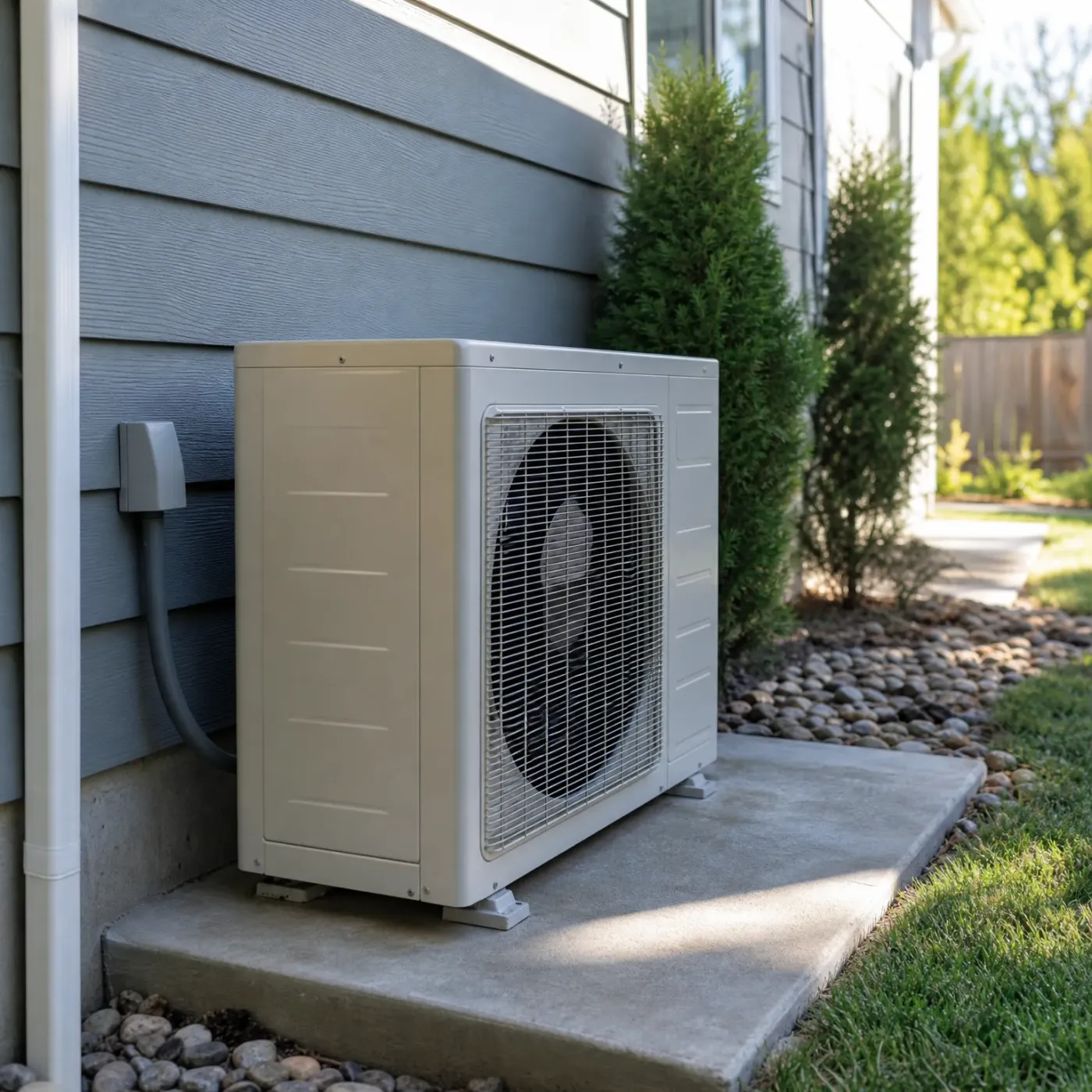
A beige outdoor heat pump or air conditioner condenser unit on a concrete pad beside a gray horizontal-siding house, with a disconnect box and conduit on the wall, shrubs, river rock and lawn nearby.

Send one request and you're done looking

Hand it over

Only one pro gets your request, so you hear from one company.

No charge to send it. You decide if you hire them.