




Why your heat pump runs nonstop in a South Carolina winter

RepairHeat PumpSouth Carolina
Step 1 of 2

What ZIP code is the job in?

Why does my heat pump run nonstop in winter?

Cold snaps bring this question fast. You notice the outdoor unit never shuts off, the air at the vents feels cool rather than warm, and you start wondering if something is broken or if this is just what a heat pump does once the temperature drops. You want to know if this is normal behavior or a sign the system needs a repair before it gets worse.

It's likely working as designed, unless it's also not keeping the house warm

A heat pump moves heat from the outside air into your house, and the colder it gets outside, the less heat there is to move. Below the mid-30s, the unit has to run long stretches, sometimes without stopping, just to keep pace, and the air coming out of the vents will feel cooler than a furnace's. That alone isn't a problem. It becomes one if the house still isn't holding its temperature, if you notice ice building up on the outdoor unit that doesn't clear on its own, or if the backup heat seems to be carrying the whole load. Any of those point to something a repair can fix, like a low refrigerant charge or a defrost control that isn't cycling right.

A man with graying curly hair and a dark green sweater sits on a gray sofa in a sunlit living room, looking off to the side, with a framed picture, shelving, an armchair and a window with sheer curtains behind him.
A middle-aged man with graying hair and a short beard sits on a blue sofa in a living room, looking toward a window, with a bookshelf, lamp and framed picture in the background.
A gray-haired man in a dark blue sweater sits on a light gray sofa in a sunlit living room, looking off to the side, with a potted plant, shelving unit, and large glass doors behind him.
A gray-haired man in a dark sweater sits on a light gray sofa in a living room, looking toward a sunlit window with trees outside.

Is this normal, or is my heat pump struggling?

You might hear the outdoor unit humming well past midnight, or notice the air from the vents feels barely warm when you hold your hand up to it. Maybe the system switches into a different sound, a deeper hum, and stays there for hours. Frost on the outdoor unit in the morning is normal. Thick ice that doesn't melt off by afternoon is not. If the house still feels cool with the thermostat set the same as always, or you catch the system running backup heat strips more than it used to, that's worth a look. Left alone, a unit working this hard for this long adds up on the power bill, and a part under that kind of strain is more likely to fail when you need it most.

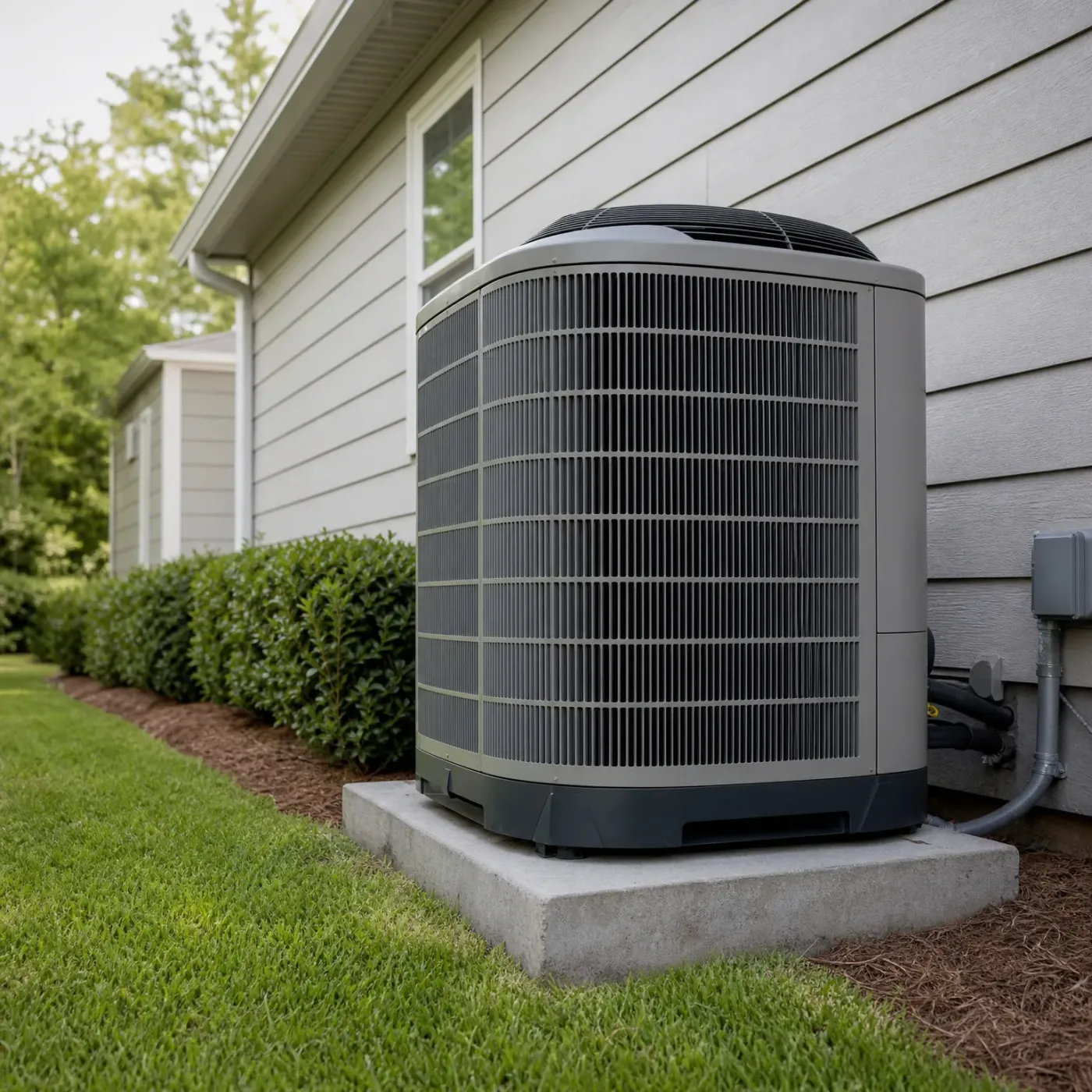
A gray outdoor heat pump unit on a concrete pad beside a house with horizontal lap siding, with a conduit running to a wall-mounted disconnect box and a green shrub to the left.

Running steady, working right

A clean outdoor unit with clear coils moves heat efficiently even when it runs long hours. In a cold snap that's expected, since the colder it gets outside, the harder a heat pump has to work to pull in enough heat. If the coils are clean and the airflow around the unit is open, long run times alone aren't a problem.


An outdoor air conditioner condenser unit on a concrete pad beside a house with horizontal vinyl siding, with refrigerant lines and an electrical disconnect box on the wall and dry leaves on the ground.

Running steady, struggling

Dirty coil fins and leaves piled against the base choke off the airflow a heat pump needs to pull heat from the outside air. A unit fighting through that grime runs long hours and still falls behind, leaving you with weak heat at the vents. That's a sign for a licensed contractor to look at, not just cold weather doing its job.

A woman with shoulder-length graying brown hair, wearing a beige cardigan over a white top, sits in a light upholstered armchair and looks off to the side, with a curtained window, bookshelf, and lamp shade behind her.
A woman and a child with closed eyes sit wrapped together in a cream knitted blanket on a couch, with a lit lamp and shelves blurred in the background.

How a heat pump actually heats

  • A heat pump moves heat from the outside air into your house instead of burning fuel to make it.
  • Below about 35 to 40 degrees, the outdoor coil has less heat to pull from, so the system runs longer to deliver the same warmth.
  • Most heat pumps switch into defrost on their own, reversing briefly to melt frost off the outdoor coil.
  • During defrost the indoor air can blow cool for a few minutes while a backup heat strip or furnace covers the gap.
  • A heat pump sized for South Carolina winters is built to run long stretches on cold mornings without that meaning it's failing.
  • If the outdoor unit stays caked in ice well past a defrost cycle, that's the coil losing its ability to pull in heat at all.

A furnace burns gas to make heat. A heat pump doesn't make heat, it moves it. Even on a cold morning there's heat in the outside air, and the outdoor unit's job is to grab it and carry it inside. That takes a refrigerant cycle, a compressor, and an outdoor coil, and the colder the air gets, the less heat there is to grab. So the system has to run longer to move the same amount of heat into your house. That's physics, not a malfunction.

Frost works against that same coil. As it pulls heat from cold, damp air, moisture collects on the coil and freezes. Left alone, that ice would block airflow and shut the whole process down, so the system runs a defrost cycle on its own, usually reversing briefly to send warm refrigerant through the outdoor coil and melt the frost off. While that's happening, the indoor air can blow cool for a few minutes, because the system isn't heating your house right then, it's clearing the coil. A backup heat strip or furnace usually kicks in to cover that gap so the air doesn't go cold.

None of that means the unit is struggling. A heat pump sized correctly for South Carolina winters is expected to run long stretches on the coldest mornings. What's worth watching for is a coil still caked in ice well after a defrost cycle should have finished. That's the coil losing its ability to pull in heat at all, and that's different from the system just working hard.

An outdoor condenser unit on a concrete pad beside a horizontal-sided house, with insulated refrigerant lines running to a wall-mounted box, surrounded by bare dirt.
Before you get your heat pump repair
A gray outdoor condenser unit on a concrete pad beside a house with horizontal lap siding, with a wall-mounted disconnect box, conduit and insulated refrigerant lines, a shrub at left and gravel at right.
After you get your heat pump repair
An outdoor condenser unit on a concrete pad beside a light-colored lap-sided house, with a trimmed hedge, mulch bed and mowed lawn nearby and an electrical box and conduit on the wall.

Skip the calls to every shop

The pro who reaches out is licensed in South Carolina.

Skip searching for a heat pump pro and answer a few questions instead.

Find a licensed pro

It costs nothing to send, and you don't have to hire anyone.

Working hard, or breaking down

Normal for a cold snap

  • A heat pump pulls heat from outside air, so below freezing it has to run long stretches to keep up.
  • The outdoor unit may hum for hours straight, and the air at the vents stays warm, just not as hot as a furnace would feel.
  • Frost on the outdoor coil that melts off during a defrost cycle is part of how the system runs in winter.
  • If your thermostat holds the set temperature even with the system running constantly, it's working as designed.
  • Older or smaller systems run longer by nature, especially on nights in the 20s and 30s.

Needs a repair call

  • Air at the vents that feels cool rather than warm, even while the outdoor unit runs nonstop, points to a problem moving heat.
  • A system that never catches up and lets the house drift colder despite running all day needs a technician to look at it.
  • Ice building up on the outdoor coil and staying there past a normal defrost cycle usually means a part has failed.
  • A sudden jump in your electric bill with no matching cold snap outside suggests the system is working harder than it should.
  • Short cycling, where the unit shuts off and restarts every few minutes instead of running a steady stretch, is not normal operation.
  • A local contractor who services heat pumps all winter can tell you quickly whether what you're hearing and feeling is the system working hard or the system failing.
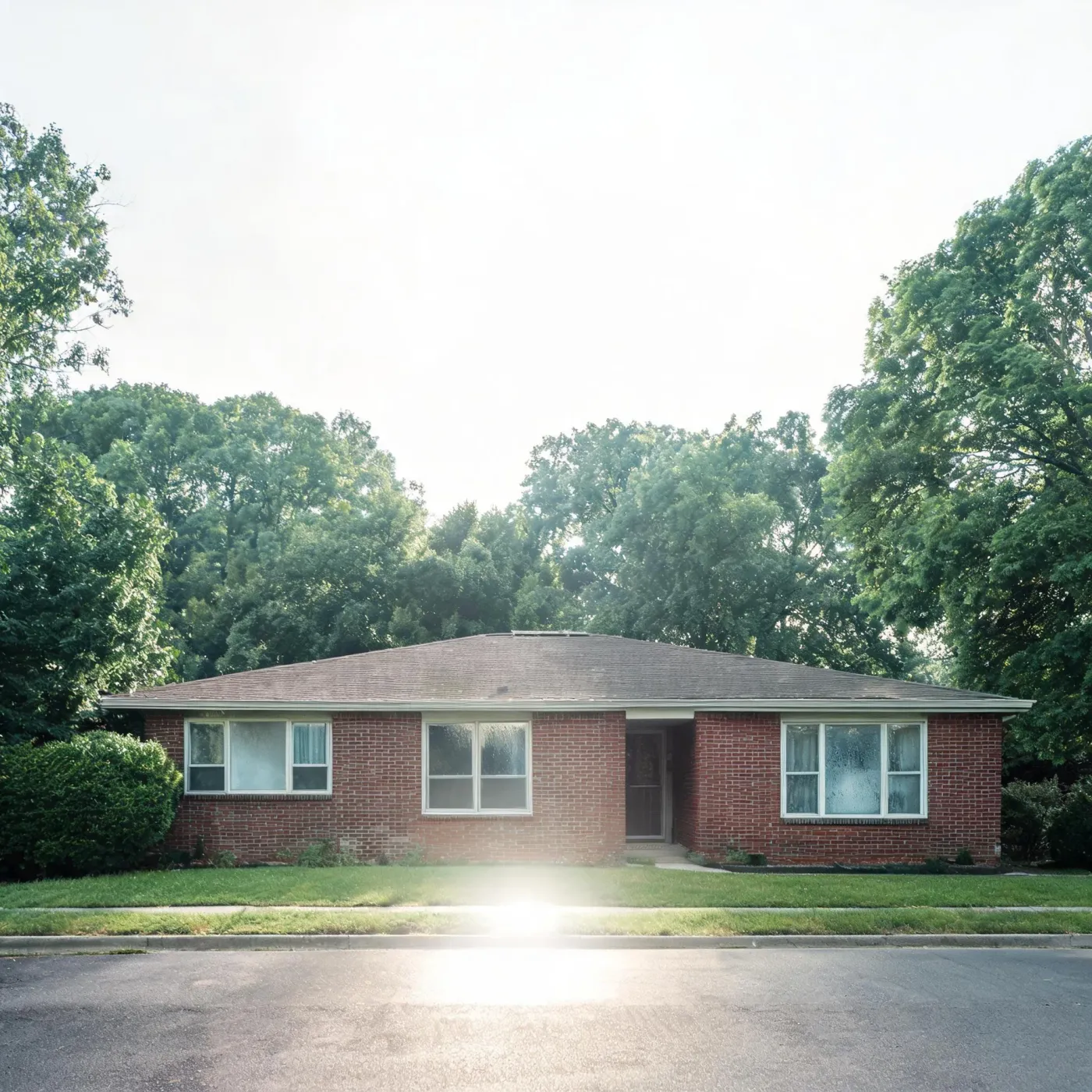
A single-story red brick house with a low hipped shingle roof, white-framed windows and a central door, set behind a mown lawn and street, with large leafy trees behind it under a bright hazy sky.

That long winter runtime is also a summer story. Average the dew point across a South Carolina summer and you get 69°F, according to NOAA climate data, which is the kind of air that sits heavy and doesn't let sweat evaporate. Your heat pump runs this same equipment in reverse come summer, pulling that moisture out of the air as it cools the house. The coil that worked to grab heat from cold air in January works just as hard wringing water out of thick summer air in July. If the coil is dirty or the system is low on charge, you'll notice it as a house that feels damp even with the air conditioner running, not just as warm air at the vents.

NASA POWER T2MDEW county cells weighted by homes

A gray outdoor condenser unit sits on a concrete pad against a house wall with horizontal siding above a stone veneer base, with an electrical disconnect box and conduit on the wall and a leafy shrub in mulch to the left.
Coils are clean, the unit cycles normally, and warm air keeps coming even on the coldest nights.
An outdoor air conditioner condenser unit on a concrete pad beside a house with horizontal siding above a concrete block foundation, with insulated refrigerant lines and a vertical white pipe on the wall.
Ice climbing past the bottom edge or lines caked in buildup means the unit is losing the fight, not just working hard.
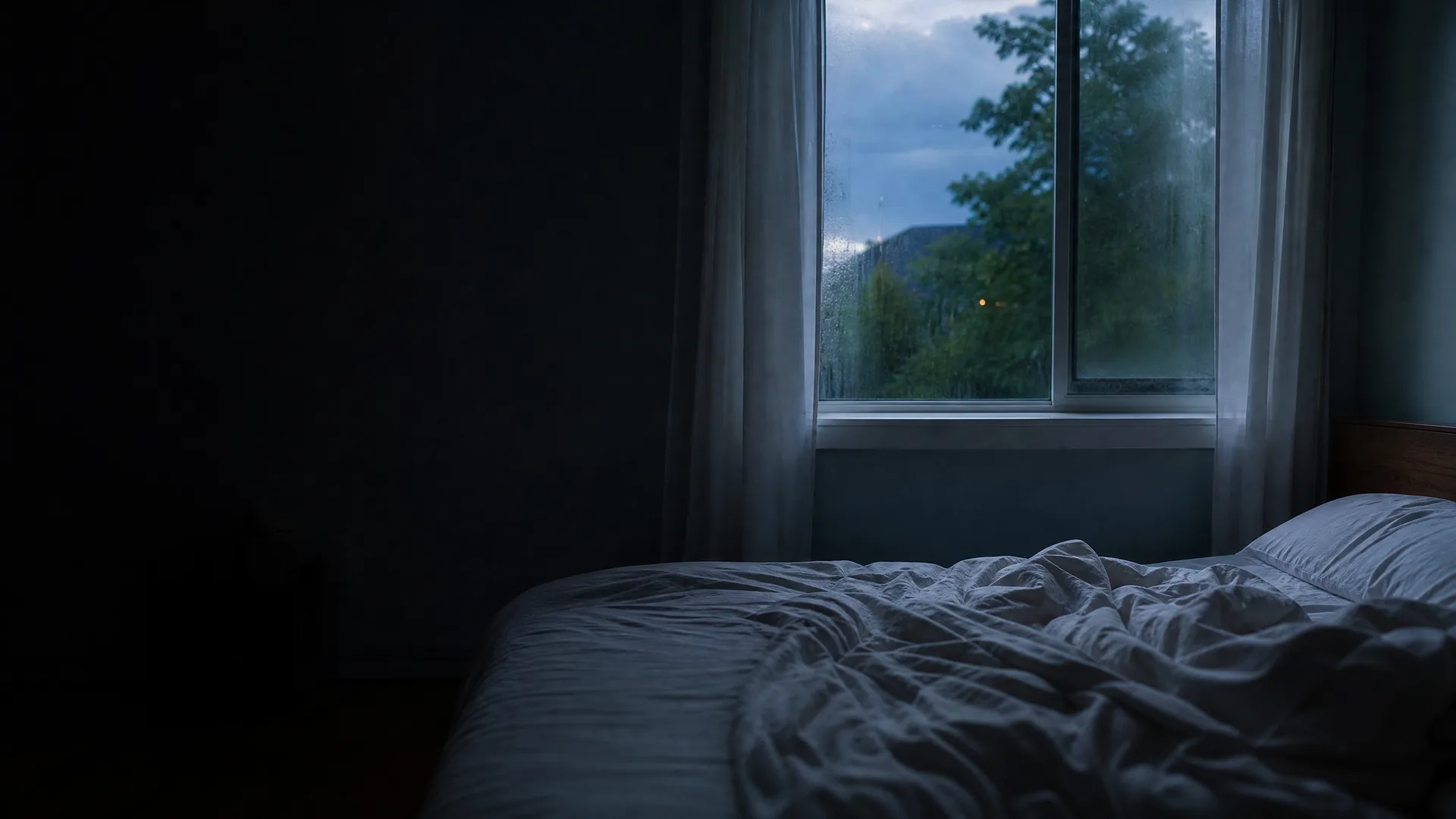
A dimly lit bedroom with an unmade bed and pillows beside a window with sheer curtains, showing trees and a hill under a dusky sky outside.

It's past one in the morning and you're still awake, on top of the sheets because the comforter got kicked off an hour ago. The air coming through the vent by the bed is barely warm, more like someone breathing near your arm than real heat, and outside you can hear the unit still going, that same steady hum it had on at eleven. You pull a blanket back over your feet, then kick it off again a few minutes later. The thermostat on the wall reads the number you set it to, but the room doesn't feel like it. You lie there listening, waiting for the sound outside to change or stop, and it doesn't.

A closed silver laptop and a white mug of dark coffee sit on a wooden table in a sunlit room, with a blurred kitchen counter, shelf and window with plants in the background.

What nonstop running does to your house and your bill

A heat pump that runs long hours but still heats is doing its job. What you'll feel inside is a house that stays at temperature but never feels like it's blasting heat, and an electric bill that reflects all those hours of runtime, since electricity is how most homes in South Carolina heat. If the unit is struggling rather than just working hard, you'll feel it as rooms that won't come up to temperature, or a system that keeps running without the house ever feeling warm. That's when the long hours stop being normal and start costing you comfort along with the power.

If something is actually wrong, the part that usually wears you down isn't the repair itself, it's finding someone to do it. You'd be searching for a contractor, calling a few, describing the same symptoms to each one, then waiting on quotes to compare. A local contractor who works on heat pumps all winter has already seen what tends to fail in a South Carolina cold snap, and you'd be dealing with one licensed contractor instead of fielding calls from several.

A living room corner with a beige sofa and cushion, a round wooden coffee table holding a pale ceramic vase of eucalyptus stems and a wooden bowl, and a curtained window with a potted plant above a latticed radiator cover in the background.
A gray outdoor condenser unit sits on a concrete pad beside a house with horizontal lap siding, with a wall-mounted disconnect box and refrigerant lines, mulched beds and a shrub nearby, and a concrete walkway in the foreground.

Unit's clean and clear

The pad is clear, the coil has room to breathe, and the conduit to the disconnect box is intact. A heat pump kept clean like this can run for hours on a cold night and still be doing exactly what it's built to do.

An outdoor air conditioning condenser unit with dusty coils sits on a concrete pad against light horizontal siding, with an electrical disconnect box and refrigerant lines on the wall and a shrub and mulch at left.

Grime and buildup like this slow it down

Years of dirt on the cabinet and a bed grown in close around the lines make a heat pump work harder than it should. A unit in this shape is worth having a licensed local tech look at, someone who sees this exact setup every winter and knows what fails first.

Power costs 15.12 cents per kilowatt-hour statewide

Since most homes here heat with electricity, every extra hour your heat pump runs during a cold snap shows up on the meter at 15.12 cents per kilowatt-hour. A unit that's clean and cycling normally will cost more to run on the coldest nights, but a system losing the fight against ice or a bad part drives that number up for no good reason.

EIA-861 2025 statewide residential average

A heat pump running long hours in a South Carolina cold snap is usually just doing its job. The sign that it isn't is specific: ice past the bottom edge, coils caked in grime, a hum that turns into a knock, air that stays cold instead of barely warm. If you've checked and something's off, the next step is getting someone to look at the unit itself, not guess over the phone. A contractor who works on heat pumps all winter in this area has likely already seen whatever yours is doing, since the handful of things that actually go wrong on these systems repeat from house to house. You'd be matched with one licensed contractor local to you, not a list of companies to call and compare and explain the same thing to twice. They'll look at the coil, the defrost cycle, the refrigerant charge, and tell you straight whether it needs a repair or whether it's just a cold night asking a lot of your system.

Interior corner showing a white painted column with paneled trim and chair rail meeting a wall with baseboard, beside light wood cabinetry with black bar pulls and a ceramic vase, over dark hardwood flooring.
Interior corner with a white-framed window showing green foliage, a pale wall with baseboard, light oak plank flooring, and a wooden cabinet with a dark ceramic vase on top.
A rustic wooden bench against a pale wall holds a weathered ceramic vase with leafy branches, below a black cone wall sconce, beside a window with sunlight falling on the wood floor.
A bathroom vanity with wood cabinets and a white marble countertop, black widespread faucet and undermount sink, a wood-framed mirror, a fabric-shaded wall sconce, a ceramic vase with green branches, and a window with white blinds.
Empty room corner with taupe walls, white wainscot paneling, crown molding, dark wood floor, and a double-hung window showing green foliage outside.

Skip calling around

Only one pro gets your request, so you hear from one company.

Find a local pro

No charge to send it. You decide if you hire them.